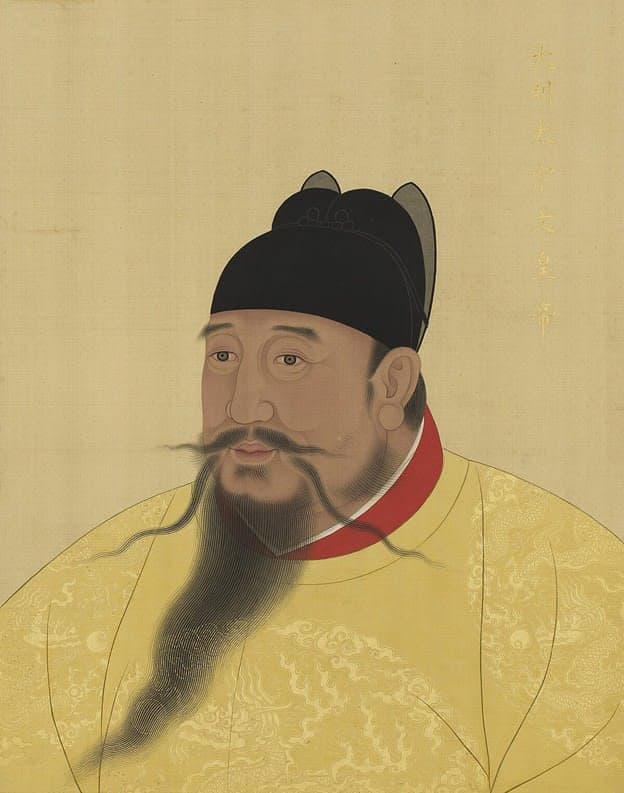
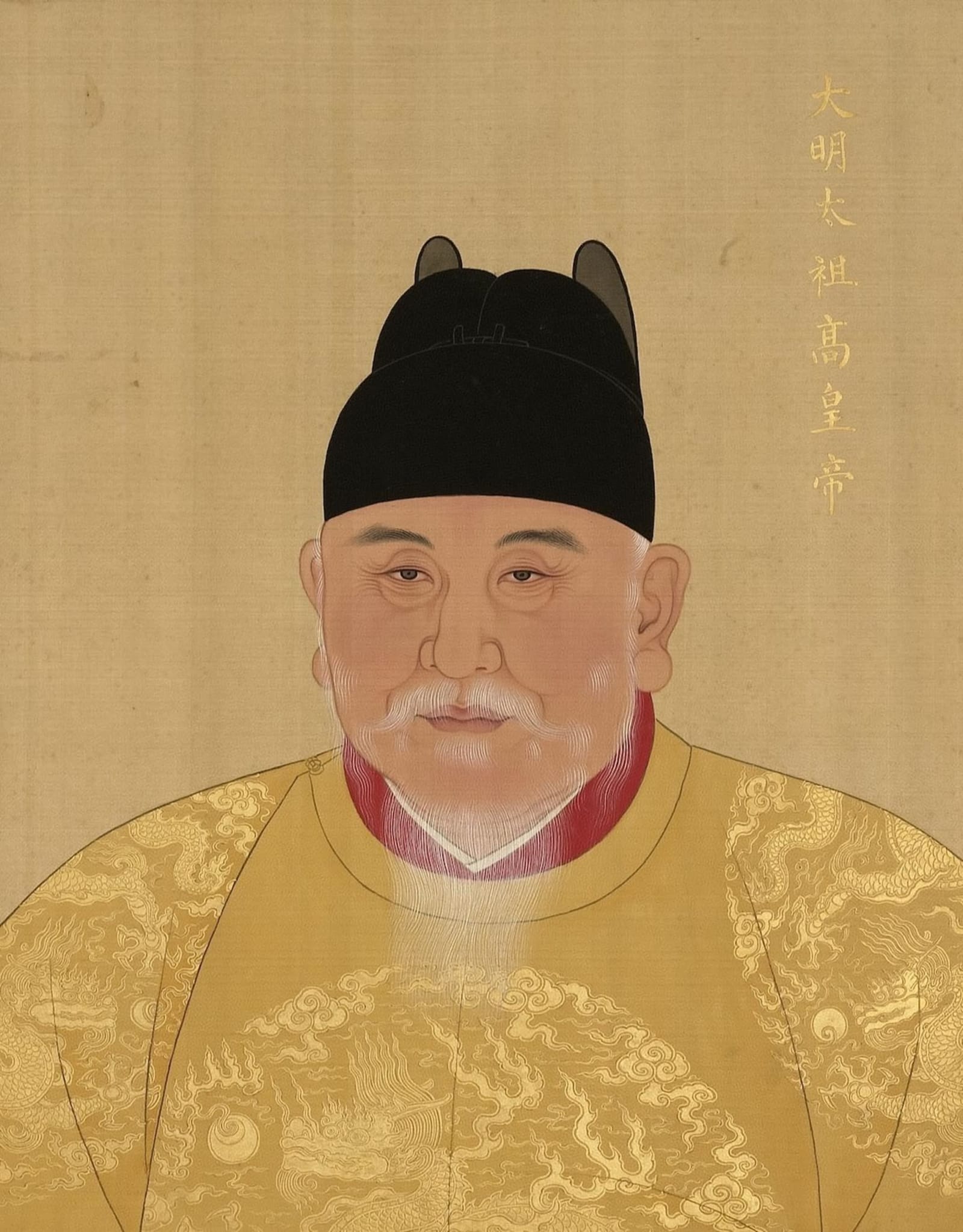
Zhu Di was the fourth son of the Ming dynasty’s founder, Emperor Zhu Yuanzhang (Hongwu). Granted the title Prince of Yan, he lived in Beijing and commanded the army there, successfully fighting the Mongols. He was among his father’s most capable sons and highly esteemed by him.

After Emperor Zhu Yuanzhang died in 1398, the throne passed to his grandson Zhu Yunwen, the son of the deceased heir Zhu Biao. Fearing his powerful uncles, the new emperor adopted a hostile policy toward them and did not even allow Zhu Di to attend his father’s funeral. Fearing for his life and position, Zhu Di prepared to revolt. Popular among the generals and well versed in the art of war, he even drew Mongol forces to his side. General Li Jinglong took the field against him, but suffered several defeats. On January 15, 1402, Zhu Di marched on the capital, Nanjing. When his army reached the city, Li Jinglong opened the gates. Panic ensued, and the imperial palace went up in flames. Zhu Yunwen most likely perished in the fire. Having seized the throne, Zhu Di unleashed harsh reprisals against his nephew’s supporters, including the execution of the renowned historian Fang Xiaoru, whose clan was “exterminated in ten generations” for refusing to recognize the new emperor.
Despite the severe terror at the start of his reign, the Yongle era is considered one of the most brilliant in Ming history. Zhu Di sought to uphold Confucian traditions while also encouraging Buddhism and Daoism to placate the populace. He carried out sweeping administrative reforms, revising provincial boundaries and establishing a rational system of governance.
To win over the scholarly elite, Zhu Di ordered the compilation of the Yongle Encyclopedia, then the largest in the world. It ran to more than half a million pages and encompassed the contents of all the books held in the imperial library—canonical, historical, philosophical, literary works—produced by a thousand scholars. Although only about 4% of it survives today, it was an unprecedented project for its time.
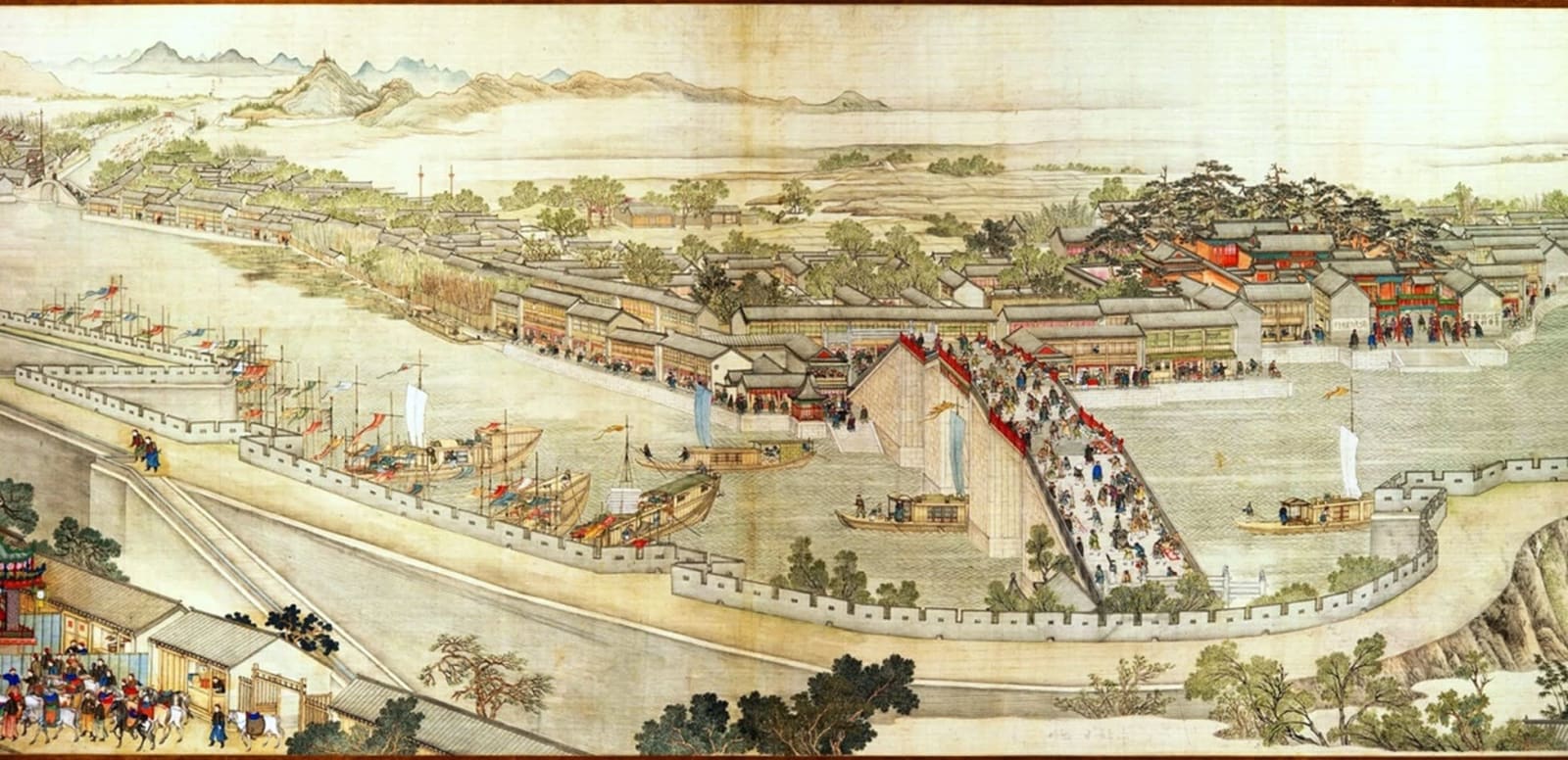
The economy also received fresh stimulus. The emperor fought corruption, encouraged manufacturing and agriculture, and drained lands in the Yangtze Delta. His most important project was the reconstruction of the Grand Canal, which was reopened in 1415. This spurred the flourishing of inland shipping and commerce, while at the same time contributing to the decline of the coastal cabotage fleet.
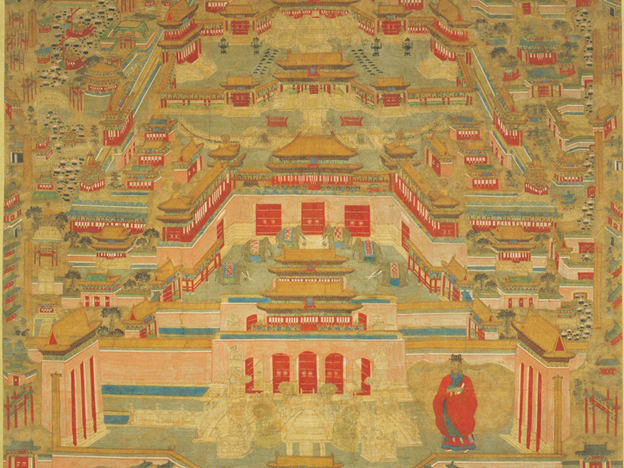
Zhu Di also moved the capital from Nanjing to Beijing and built the Forbidden City there, which became the principal residence of Chinese emperors for the next 500 years. Another monumental endeavor was the construction of the Daoist temple complex on Mount Wudang (Wudangshan), intended to bolster his popularity among the people.
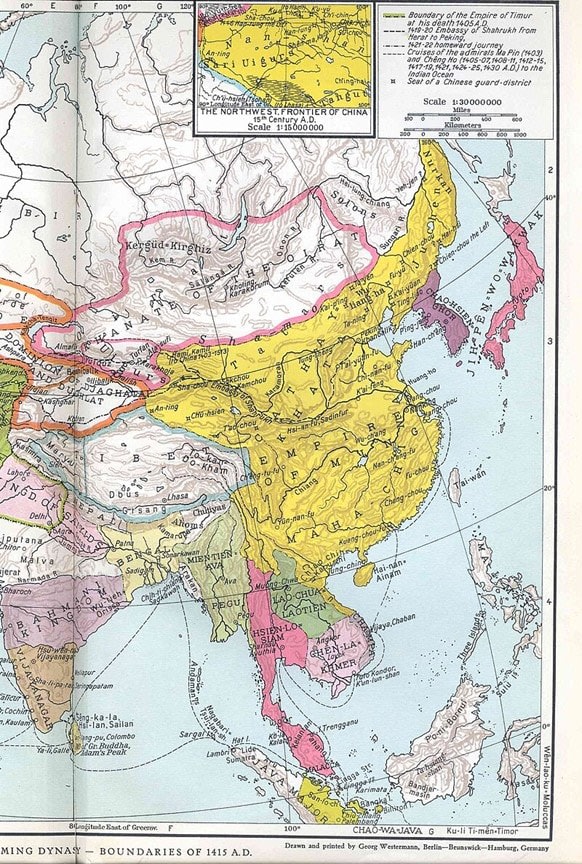
Zhu Di’s foreign policy aimed to affirm the Ming Empire’s primacy as the “Middle Kingdom.” In the east he secured Korea’s vassalage; in the west his envoys visited the courts of Timur and his successor Shahrukh; in the north he led five military campaigns against the Mongols, crushing the remaining forces of the Yuan. In the south, in 1406 he launched an invasion of the Vietnamese state of Dai Ngu, which was annexed to the Ming Empire; however, in 1418 a rebellion broke out there, and Vietnam’s independence was restored after Zhu Di’s death.
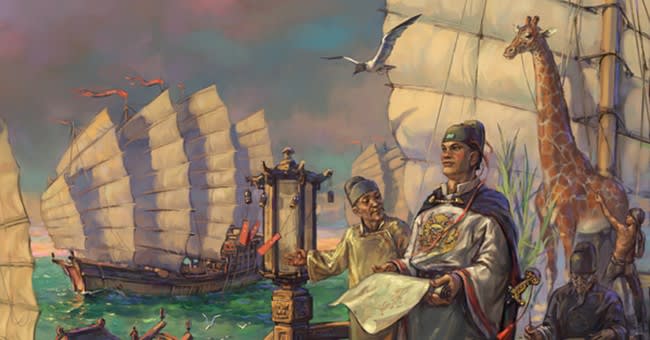
The most famous undertakings were the maritime expeditions led by Zheng He. From 1405 to 1433 the Chinese fleet carried out seven voyages into the Indian Ocean, reaching the coasts of India, the Persian Gulf, Arabia, and Africa. These expeditions were intended to showcase power and cement Chinese influence, but later emperors discontinued them due to their high cost.
Zhu Di died on August 8, 1424, during his last campaign against the Mongols. He had suffered several strokes and died in a state of depression. He was buried in the Changling Mausoleum near Beijing. Despite the usurpation by which he gained the throne, his reign is remembered as a time of brilliant achievements and consolidation for the Ming dynasty.


