
By the mid-16th century, the Muscovite Tsardom—having consolidated its position in the East after the capture of Kazan—faced a new threat. The new Siberian khan, Kuchum, who had come to power in 1563, at first paid tribute to Muscovy but soon adopted an aggressive policy, killing a Russian envoy and thereby declaring war. At this time Tsar Ivan the Terrible was occupied with the Livonian War and could not respond immediately.

Meanwhile, Siberian Tatars and the Mansi began raiding the possessions of the influential Stroganov merchants in the Cis-Urals. In 1578 the Stroganovs, who had royal permission to settle these lands, appealed to the Don Cossacks for help. A detachment of Cossacks led by Ataman Yermak Timofeyevich and other seasoned commanders—such as Ivan Koltso, Matvei Meshcheryak, and Nikita Pan—arrived on the Kama River.
A force of about 840 men was mustered at Orlé-Gorodok in the Stroganovs’ domain. In September 1581 the Cossacks set out on their legendary march, ascending the Chusovaya and Serebryanaya rivers toward the Ural Mountains. Crossing the “Stone” (the Urals) was extremely arduous; the Cossacks had to haul their boats overland by hand. They built the fort of Kokuy-Gorodok, where they spent the winter.
Descending from the mountains, Yermak’s detachment reached the Tura River. The first clash with the Siberian Tatars took place in the yurts of Prince Yepanchi, where the Cossacks, thanks to their firearms, routed the Tatar cavalry. Continuing down the Tura, they devastated Tatar settlements and on 1 August took the town of Chingi-Tura (Tyumen) without a fight.
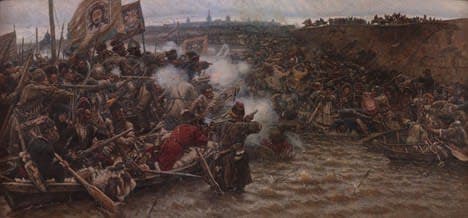
On the Tobol River the Cossacks encountered the forces of Kuchum’s commander, Mametkul, and after a series of bloody battles won the upper hand. On 4 October the decisive engagement took place at Chuvash Cape, where Kuchum had gathered an army of nearly ten thousand. However, the local Ostyaks and Voguls (Khanty and Mansi), dissatisfied with the khan, deserted him in the midst of the battle. Kuchum was defeated and fled. On 26 October (5 November) 1582, Yermak occupied the capital of the Siberian Khanate, Kashlyk.
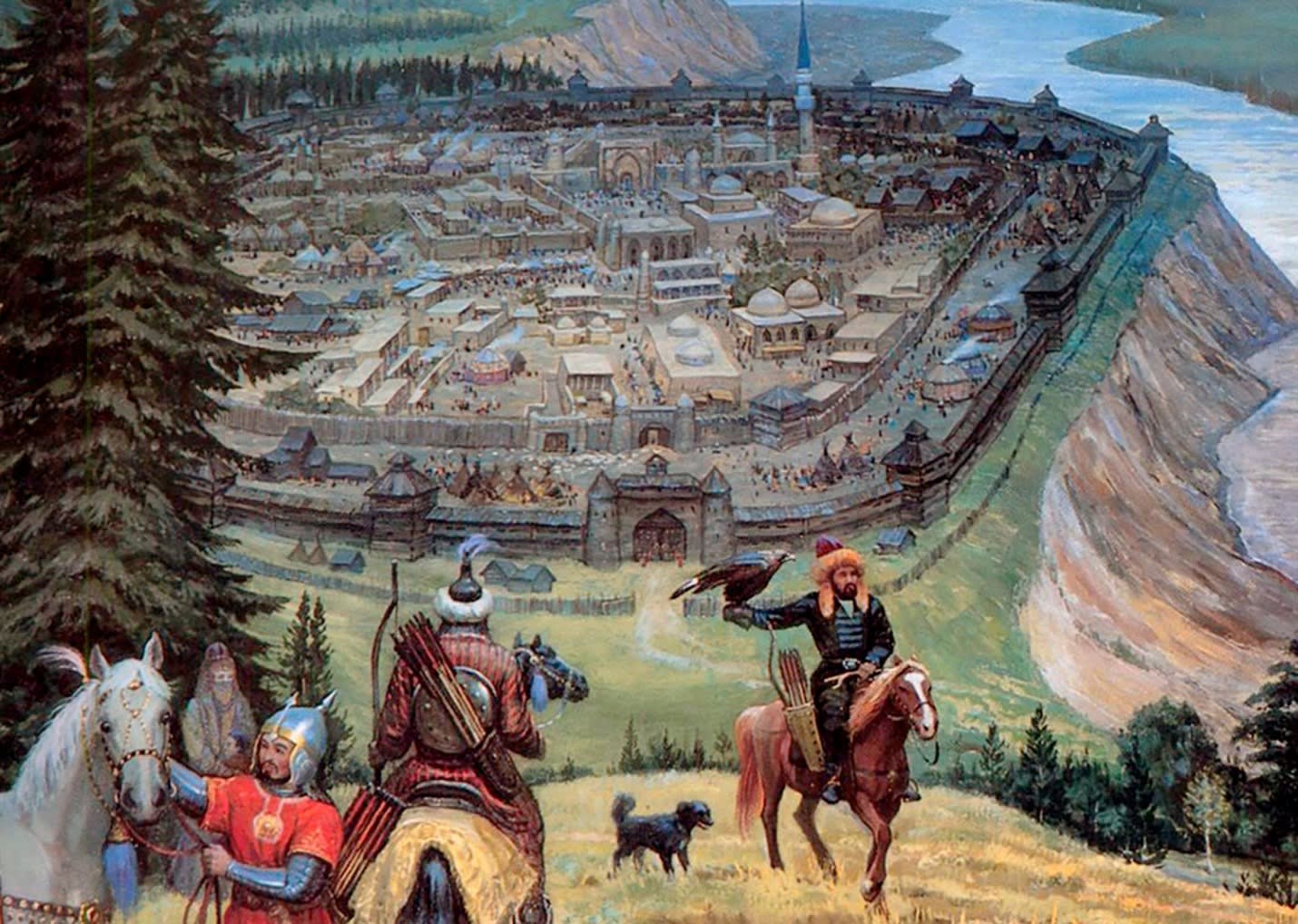

After taking the capital, Yermak began collecting yasak (tribute) from the local tribes and promised them his protection. At the end of 1582 he sent an embassy to Moscow headed by Ivan Koltso to inform the tsar of Kuchum’s defeat. Ivan the Terrible honored the Cossacks and dispatched a reinforcement of 500 streltsy, but they arrived only in November 1584, when the Cossacks were already suffering from famine.

The hungry winter of 1584–1585 claimed the lives of many Cossacks and streltsy, and Yermak’s force shrank sharply. In the spring of 1585 the murza Karacha rose in rebellion, annihilated several Cossack detachments, and blockaded Yermak in Kashlyk.
In the night of 6 (16) August 1585, Yermak, together with a small party, was killed at the mouth of the Vagay River, falling into an ambush. Only one Cossack escaped to bring news of his death. The remaining Cossacks then abandoned Kashlyk and returned to the lands of the Russian state.
Although Yermak’s campaign ended with his death and a retreat, it had colossal historical significance. In 1586 a new detachment of servitors under Voivode Vasily Sukin was sent to Siberia; he founded Tyumen, the first Russian town in Siberia. This marked the beginning of the systematic Russian colonization of Siberia.


