Yemelyan Pugachev’s uprising—one of the most significant civil wars in Russian history was sparked by a web of deep social contradictions that had accumulated in the eighteenth century. Although the revolt began with the proclamation of a “miraculously saved tsar,” its foundations lay in the discontent of many different strata of society.
The main driving force was the Yaik (Ural) Cossacks, who throughout the eighteenth century were losing their ancient liberties. In 1721 Peter I subordinated Cossack hosts to the Military Collegium, abolishing the election of atamans. This produced a split between the “elders’ side” and the “host’s side.” The situation worsened in 1754, when the state introduced a monopoly on salt—a product strategically important to the Cossack economy, which was based on selling fish and caviar.

Tensions mounted, and in 1771 the Cossacks refused to pursue the Kalmyks who had migrated away. In response, the government issued a decree punishing 1,965 “disobedient” men, 43 of whom were sentenced to exile in Siberia. This sentence became the immediate cause of the Yaik Cossack uprising of 1772, during which Generals Traubenberg and Tambovtsev were killed. The revolt was brutally suppressed, but many participants went into hiding on distant farmsteads, awaiting a new pretext for rebellion.
No less discontent reigned among the indigenous peoples of the Volga and Ural regions Bashkirs, Tatars, Kazakhs, and Kalmyks. Active colonization of their lands, fortress building, and an intolerant religious policy led to numerous uprisings.
The situation at the Ural factories was also explosive. Assigned peasants, forced into grueling labor, hated it, and their families lived in poverty. Harsh working conditions and lack of rights pushed them toward protest and armed rebellion.
The position of serfs in central Russia was no better. In the 1760s they found themselves in a state of near-slavery. Landlords increased corvée to four–six days a week, and Catherine II’s decree of 1767 forbade peasants from lodging complaints against their masters. Against the backdrop of economic hardship and constant wars, rumors about a “surviving tsar” fell on fertile ground.
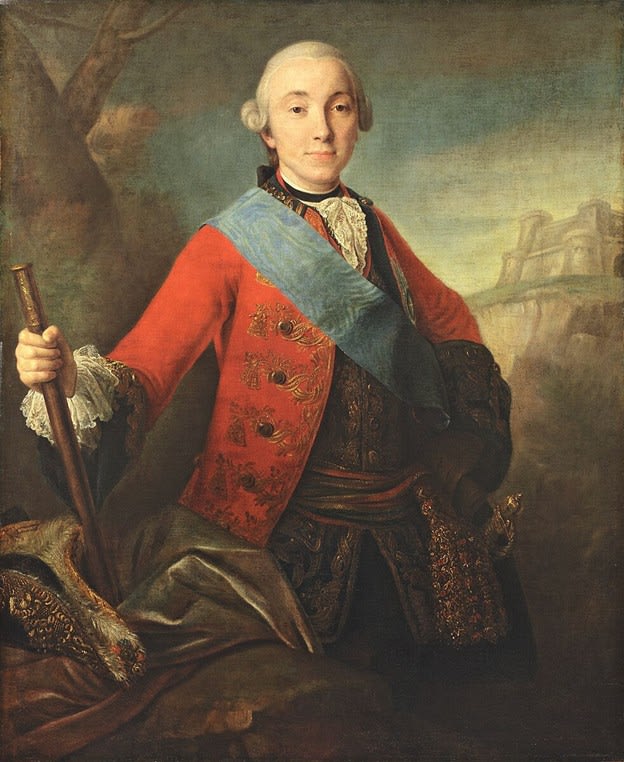
The image of Emperor Peter III overthrown and killed in a palace coup yet remembered for reforms favoring the common people gave rise to an “epidemic of imposture.” Pugachev was one of many who capitalized on this myth, but he alone succeeded in uniting disparate disaffected groups into a single force.

Despite the Cossacks’ readiness to rebel, they lacked a unifying idea. Then, in September 1773, Yemelyan Ivanovich Pugachev appeared a Don Cossack and veteran of the Seven Years’ War and the Russo-Turkish War. He was not the first to claim to be Peter III, but he was the one who managed to lead the people.
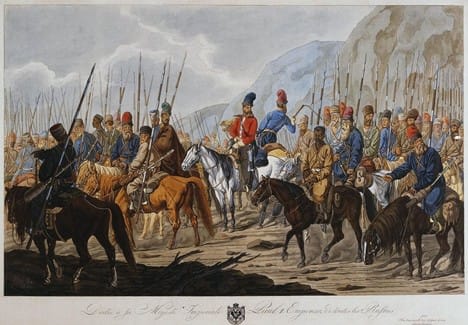
Hiding from the authorities, Pugachev returned to the Yaik and on 17 (28) September 1773 issued his first decree to the Cossacks. In it he promised them “eternal liberty and the river” and other privileges. His detachment just eighty Cossacks at first grew quickly; by the time it approached Yaik Town it numbered three hundred.
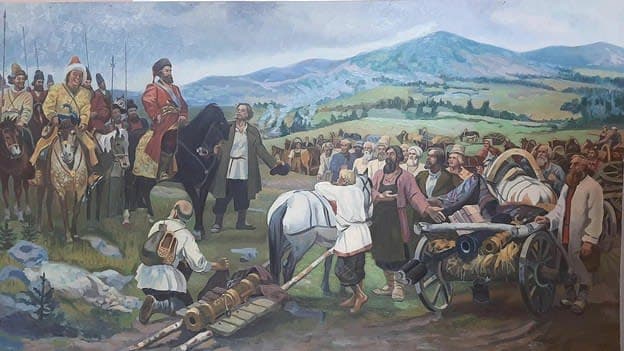
After a failed attempt to take the town, the rebels moved upriver. At Iletsk the local Cossacks greeted Pugachev with pealing bells and bread-and-salt. The entire garrison swore allegiance to him, and the town’s guns became the first artillery of his army.
The rebels’ main target was Orenburg, the capital of the vast Orenburg region and a symbol of tsarist power. Small frontier forts lay on the road to it. Their garrisons were weak, and many soldiers, seeing the rebels’ strength, went over to their side.
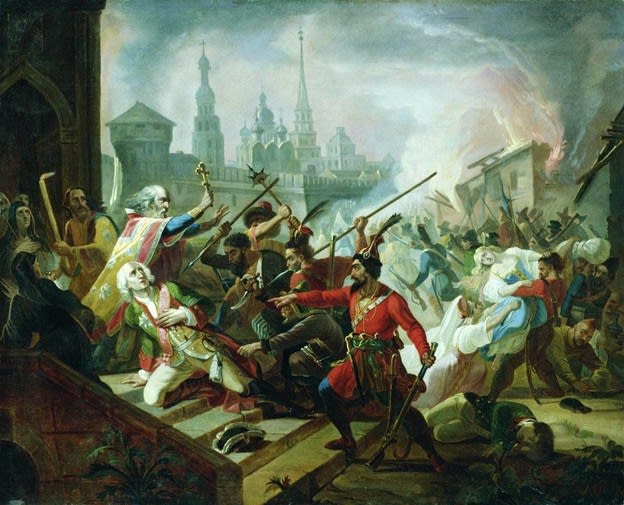
The forts of Rassypnaya, Nizhneozernaya, and others were seized in lightning assaults. The stronger Tatishcheva Fortress fell on 27 September. Its commandant, Yelagin, was killed, and his daughter the widow of the slain commandant of Nizhneozernaya was taken as a concubine.
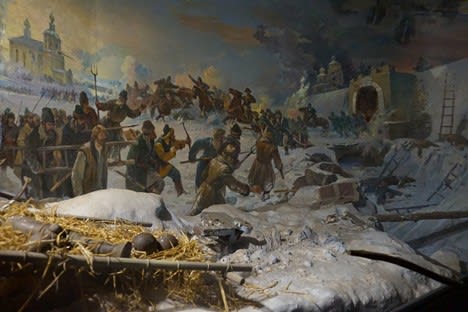
On learning of the uprising, Orenburg’s governor Reinsdorf sent a detachment under Brigadier Bilov to suppress it, but Bilov, frightened by exaggerated reports of rebel numbers, retreated. On 5 October Pugachev’s army now 2,500 strong with dozens of guns reached Orenburg and began the siege.
Although the Orenburg garrison was strong, Reinsdorf, fearing treason, decided to remain behind the walls. The siege dragged on for six months. The Pugachevites tried twice to storm the city, but were repulsed.
The first victories over government troops came in November 1773. Rebel atamans Ovchinnikov and Zarubin-Chika defeated General Kar’s corps and then captured Colonel Chernyshev’s detachment. These successes greatly emboldened the rebels and led to a mass influx of new supporters. In late November the Pugachevites took Ilyinskaya Fortress.
By the end of 1773 Pugachev’s army before Orenburg numbered up to forty thousand. To manage such a force, Pugachev created a Military Collegium, which became the military-administrative center of the revolt. It sent out “alluring letters” (prelestnye pis’ma) proclamations and manifestos addressed to different estates and peoples. In them Pugachev promised the Cossacks “eternal liberty,” the Old Believers their “ancient cross and prayer,” and indigenous peoples land and forests. Thanks to this, his ideas spread quickly and the uprising engulfed ever more territories.
Within the rebel army, regiments were formed that included Cossacks, ethnic minorities, factory peasants, and others. Strict discipline was maintained and drills conducted.
In besieged Orenburg famine began, and in January 1774 Reinsdorf attempted a sortie to lift the siege. But the rebels led by atamans Shigaev, Lysov, Podurov, and Khlopusha defeated the government troops and forced them to retreat with heavy losses.
The revolt spread rapidly along the Samara line of fortifications, where detachments under D. Lysov and F. I. Derbetev seized a number of forts. Derbetev, who commanded a Kalmyk regiment, disseminated Pugachev’s decrees and ultimately took the town of Stavropol.
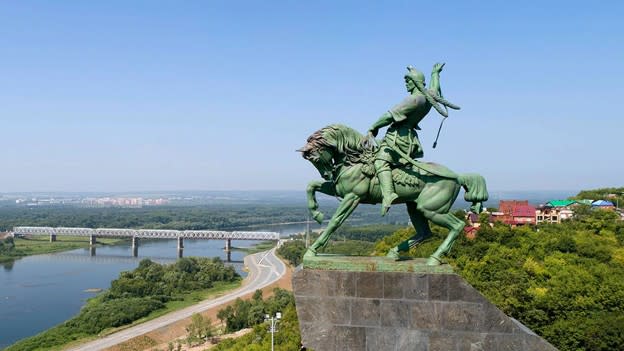
From October 1773 large numbers of Bashkirs, Mishars, and Tatars joined the uprising. The Bashkir elder Kinzy Arslanov and the ataman Salavat Yulayev became among the best-known rebel commanders. In November 1773 Bashkir detachments besieged Ufa, and in early 1774 they launched several unsuccessful assaults on Kungur.

In Bashkiria the rebel forces were led by Ataman Chika-Zarubin, who managed to unite disparate national detachments under his command, becoming “complete master of Bashkiria.” He directed the siege of Ufa, which became the second major center of the insurrection after the camp before Orenburg.
In December 1773, already the leader of a large-scale rebellion, Pugachev sent Ataman Mikhail Tolkachyov to the rulers of the Kazakh Junior Zhuz, urging them to join his army. Yet despite some Kazakhs’ participation, deep mutual distrust among the region’s peoples Cossacks, Bashkirs, Kazakhs, and others prevented the creation of a united front.


On the return journey from the khan’s headquarters, Tolkachyov gathered men and guns as he went and approached Yaik Town. On 30 December he defeated and captured the tsarist command and that evening occupied the old town district, the Kureni. Most of the Cossacks joined Tolkachyov, but the loyalists Cossacks and soldiers under Lieutenant Colonel Simonov and Captain Krylov shut themselves up in the fortress of the Archangel Michael Cathedral.
Pugachev himself joined the siege of Yaik Town. He personally directed the works and ordered a mine to be laid beneath the rampart. On 20 January 1774 it was detonated, but without the expected success. The assault was repulsed with heavy rebel losses. Nevertheless, at the end of January the Cossacks married Pugachev to a young Cossack woman, Ustinya Kuznetsova, to “kin” the “tsar” with the host. On 19 February the rebels tried again, blasting a mine under the cathedral’s bell tower, but that assault too was beaten back. The siege dragged on, tying down substantial rebel forces.
While Pugachev’s main forces besieged Orenburg, the uprising spread rapidly eastward into Kazan Province. The authorities tried to recruit service Tatars, Bashkirs, and Mishars into the army, but many deserted to Pugachev. This sowed chaos in government ranks and fueled mass unrest among serfs.

In southern Kazan Province up to ten rebel detachments operated, besieging towns including Menzelinsk and Zainsk. In late December 1773 Tatar and Udmurt detachments seized the Izhevsk and Votkinsk works.
In the Urals the uprising flared no less fiercely. Under the leadership of Atamans Ivan Gryaznov and Ivan Beloborodov, the rebels captured factories that supplied them with guns, ammunition, and money. By the end of 1773 half the Ural metallurgical plants were in rebel hands. In all, the rebel army obtained 118 guns and more than 170,000 rubles, and over 6,000 factory peasants joined their ranks.
The unrest spread into the western districts of Siberian Province. Local peasants and Cossacks, having received Pugachev’s manifestos, also rose up.
When news of General Kar’s defeat reached St. Petersburg, Empress Catherine II appointed a new commander, General-in-Chief Alexander Bibikov. He gathered substantial forces and, at the end of 1773, began his offensive.
On 22 March (2 April) 1774 a decisive battle took place at Tatishcheva Fortress. There the rebels mustering up to 9,000 men and all their artillery met the combined corps of Generals Pyotr Golitsyn and Pavel Mansurov. The fighting was bitter, but the rebel forces were routed. Pugachev lost about 2,000 killed and 4,000 captured his first major defeat.


After this victory, government troops advanced on all fronts. Ivan Mikhelson’s corps defeated Ataman Chika-Zarubin’s forces near Ufa. Towns in the Samara region and the Urals previously seized by the rebels were retaken. On 16 April Mansurov’s troops finally relieved Yaik Town, which had been under siege since December 1773.
However, Bibikov’s death and intrigues among the generals gave Pugachev a much-needed respite. He withdrew into the mining districts of the southern Urals, where he managed to raise new forces. During this period the rebels began burning factories, and their populations followed them into the steppe.
In May 1774 Pugachev’s detachments, reinforced by factory peasants, resumed the offensive, taking Magnitnaya Fortress and other outposts. But at the battle near Troitsk Fortress on 21 May the rebels suffered a crushing defeat at the hands of de Colon’s corps, losing up to 8,000 men.
Despite these defeats, the uprising did not fade. On 3 June Pugachev’s detachment united with that of the Bashkir elder Salavat Yulayev. By this point the Bashkirs comprised two-thirds of the rebel army.
Taking advantage of a temporary government withdrawal, Pugachev turned toward Kazan. His army grew as peasants, Udmurts, Tatars, and Maris joined him. By mid-June his force numbered some twenty thousand, though many were poorly armed. On the way to Kazan the rebels took Osa Fortress as well as the Votkinsk and Izhevsk works.
In July 1774 Pugachev’s army swelling rapidly with peasants and the peoples of the Volga moved on Kazan. The Kazan governor, Brandt, was confident Mikhelson’s detachment would soon crush the rebels and at first dismissed reports of their approach. But on 8 July panic broke out in the city, and wealthy residents fled in haste.
On 12 (23) July Pugachev’s army, now about 20,000 strong, began its assault on Kazan. Despite resistance from the garrison and armed militia, the rebels took the city, though the kremlin where troops had taken refuge continued to hold out. Looting and fires erupted. Pugachev ordered the prison opened and the inmates freed, including his first wife and children. Soon Mikhelson’s corps entered the burning city, and a fierce five-hour battle ensued. Under cover of night, both sides broke off the fighting.

Two days later, on 15 (26) July, the decisive battle took place on the Arsk Field. Pugachev’s army made up largely of poorly armed peasants could not withstand Mikhelson’s trained, better-equipped regulars. The rebels suffered a crushing defeat: about 2,000 were killed and another 5,000 captured. Pugachev fled across the Volga with the remnants of his army.
After the defeat near Kazan, Pugachev crossed the Volga on 17 July and headed south. Despite the rout, his army again swelled with thousands of peasants, Chuvash, Tatars, and Mordvins. On the river’s right bank, a mass rising began, during which peasants killed landlords, burned their estates, and looted depots.
On 28 July, a manifesto granting freedom to the peasants was read aloud in the central square of Saransk. This document seen by historians as the culmination of the Peasant War made a colossal impression on the populace. It sparked mass uprisings, and Pugachev now advanced in triumph, greeted with pealing bells and bread-and-salt in every town. On 31 July the same celebration met him in Penza. In the summer of 1774 alone, at least three thousand nobles and officials were killed.

Alarmed by the revolt’s scale, Catherine II was forced to make concessions: she appointed General-in-Chief Pyotr Ivanovich Panin commander-in-chief against the rebels and hastened to conclude peace with Turkey to free up troops for suppressing the uprising. In August one of Russia’s best generals, Alexander Vasilyevich Suvorov, was recalled.
After Penza, Pugachev turned south perhaps hoping to win over the Don Cossacks. His army occupied Saratov and Kamyshin, but Mikhelson’s corps was already hot on his heels.
On 25 August (5 September) 1774, near the Solenikova fishing encampment, the last major battle of Pugachev’s main army with tsarist forces took place. Despite numerical superiority, the poorly armed rebels, exhausted by constant retreat, could not withstand the regulars’ onslaught. After several canister volleys and a cavalry charge, they broke in panic. More than two thousand rebels were killed in the fight, including one of the key atamans, Andrei Ovchinnikov.


Pugachev fled across the Volga with a small detachment. But Cossack colonels, weary of the struggle and eager to earn pardon, conspired to betray their leader. On 8 (19) September, on the Bolshoy Uzen River, they seized Pugachev and on 15 September delivered him to Yaik Town. There and later in Simbirsk—the first interrogations took place, one conducted in person by Suvorov. A special narrow cage was built to transport Pugachev.

Even after Pugachev’s capture, the uprising continued. In Bashkiria, Salavat Yulayev and other elders carried on the fight, tying down significant government forces. Only when freed-up detachments were sent against them did the resistance begin to weaken. Yulayev fought his last battle on 20 November and was captured on 25 November (6 December). Isolated pockets of rebellion persisted until the summer of 1775.
After the revolt’s suppression, the authorities faced the task of conducting a sweeping investigation. Empress Catherine II established the first “secret commission” in Kazan, appointing General A. I. Bibikov as its head. The commission included Guards officers Lunín, Mavrin, Sobakin, and the secretary Zryakhov. Later, in January 1774, due to difficulties transporting detainees, Sub-Lieutenant Gavriil Derzhavin was sent to Samara to conduct interrogations on site.
After Bibikov’s death on 26 April 1774, Catherine II established two secret commissions in Kazan and Orenburg. Their membership was expanded, and control was transferred to Governor-Generals Brandt and Reinsdorf. Pugachev’s first family and the hegumen Filaret suspected of being an ideological inspirer were brought to Kazan. The main focus, however, was Orenburg, where Pugachev’s closest associates Shigaev, Padurov, Kargin, Khlopusha, Chika-Zarubin, and others were interrogated.
In June the Empress again altered the investigative procedure, placing it under the control of Major General P. S. Potemkin. In August 1774 a separate Yaik Secret Commission was created under Mavrin, who did extensive work investigating the uprising’s initial phase and was the first to interrogate Pugachev after his capture. In total, 12,438 people passed through all the secret commissions. Of these, four were executed in Orenburg and 38 in Kazan, including Beloborodov and Gubanov. Far more rebels, however, were executed without the commissions’ participation by military order and many perished in custody and in transit due to poor conditions.
In November 1774, eighty-five principal participants including Yemelyan Pugachev were brought to Moscow for a general inquest. Pugachev was held in the Mint building. The investigation was led by the Moscow Governor-General, Prince M. N. Volkonsky, and the Senate’s Secret Expedition senior secretary, S. I. Sheshkovsky. Pugachev gave detailed testimony about his life, his wartime service and wanderings, and the course of the uprising.
Investigators sought to determine whether foreign agents, schismatics, or members of the nobility stood behind the revolt. Catherine II personally followed the interrogations, giving instructions and posing questions. During questioning in Simbirsk, Potemkin used torture to force Pugachev to implicate himself and acquaintances in a “schismatic conspiracy.” But in Moscow it was established that there had been no conspiracy and that the testimony had been coerced. Credit is due to Volkonsky and Sheshkovsky for not tailoring the findings to prevailing political theories. On 5 December they concluded that the uprising arose exclusively within the Yaik Host.
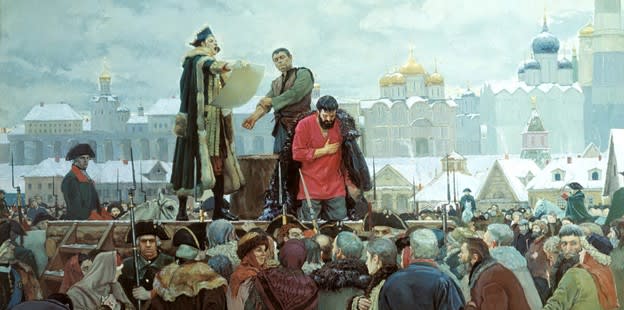
On 30 December the court convened in the Kremlin’s Throne Hall. The next day, 31 December, Pugachev was brought to the Kremlin, forced to kneel, and formally questioned. After he was removed, the judges pronounced sentence: “Emelka Pugachev is to be quartered; his head set upon a stake; the parts of his body borne to the four quarters of the city and placed on wheels; and thereafter burned at those places.” The other defendants also received severe punishments.
On Saturday, 10 (21) January 1775, the execution took place on Moscow’s Bolotnaya Square before a vast crowd. Pugachev bore himself with dignity, crossed himself toward the Kremlin, and asked the people’s forgiveness. At the Empress’s personal wish, he and A. P. Perfiliev both sentenced to quartering were first beheaded.

That same day M. G. Shigaev, T. I. Podurov, and V. I. Tornov were hanged. I. N. Zarubin-Chika was sent to Ufa, where he was executed in early February 1775. Other leaders, including Salavat Yulayev and his father Yulay Aznalin, were exiled to hard labor for life in the Baltic port of Rogervik. The fate of Kinzy Arslanov another Bashkir leader remains unknown.
The government answered the revolt with mass executions. To terrify the populace, gallows were set up on rafts and floated down the rivers. In every village, atamans and other leaders were hanged. In mid-July, Ataman Khlopusha was executed in Orenburg and his head displayed on a pike in the city center.
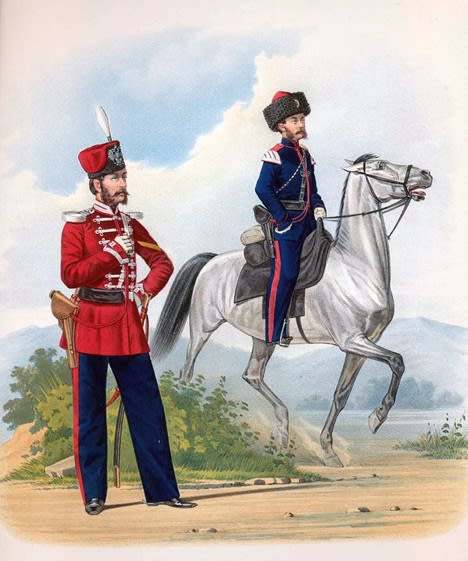
After the uprising’s suppression, Catherine II took resolute measures to erase all memory of it. By her decree, all places associated with Pugachev were renamed: the Yaik River became the Ural, the Yaik Host became the Ural Cossack Host, and Yaik Town was renamed Uralsk. Pugachev’s name was anathematized, and in official documents the uprising was referred to only as the “notorious popular disturbance.”
In 1775 a provincial reform was undertaken, increasing the number of provinces from 20 to 50. This reform together with a police reform and new charters for the nobility and the towns created an administrative system that endured into the nineteenth century. It enabled the government to control the provinces more effectively, and Pugachev’s uprising became the last major peasant and Cossack revolt in Russia until the early twentieth century.
The government also adjusted its policy toward the Cossacks, accelerating their transformation into regular army units. The Zaporizhian Sich was abolished. Cossack officers were granted noble status so they would become pillars of authority in their lands. A similar policy was pursued toward the region’s peoples: Bashkir and Tatar princes and murzas were equated with the Russian nobility, and in Bashkiria canton administration was introduced along military lines.
The uprising inflicted enormous damage on the empire’s industry, especially in the Urals. Of the 129 factories in the region, 89 were attacked. Many enterprises were completely destroyed, with losses estimated at more than five million rubles. Factory peasants who formed the backbone of the Ural phase of the revolt destroyed equipment because they saw the factories as the source of their bondage.
Although the government quickly restored part of the works, the uprising forced it to reconsider its policy toward hired labor. It showed that the country desperately needed reforms and that the divide between estates had reached a critical point. Despite its total defeat, the Peasant War demonstrated the power of popular anger and served as a grim warning to future monarchs.


