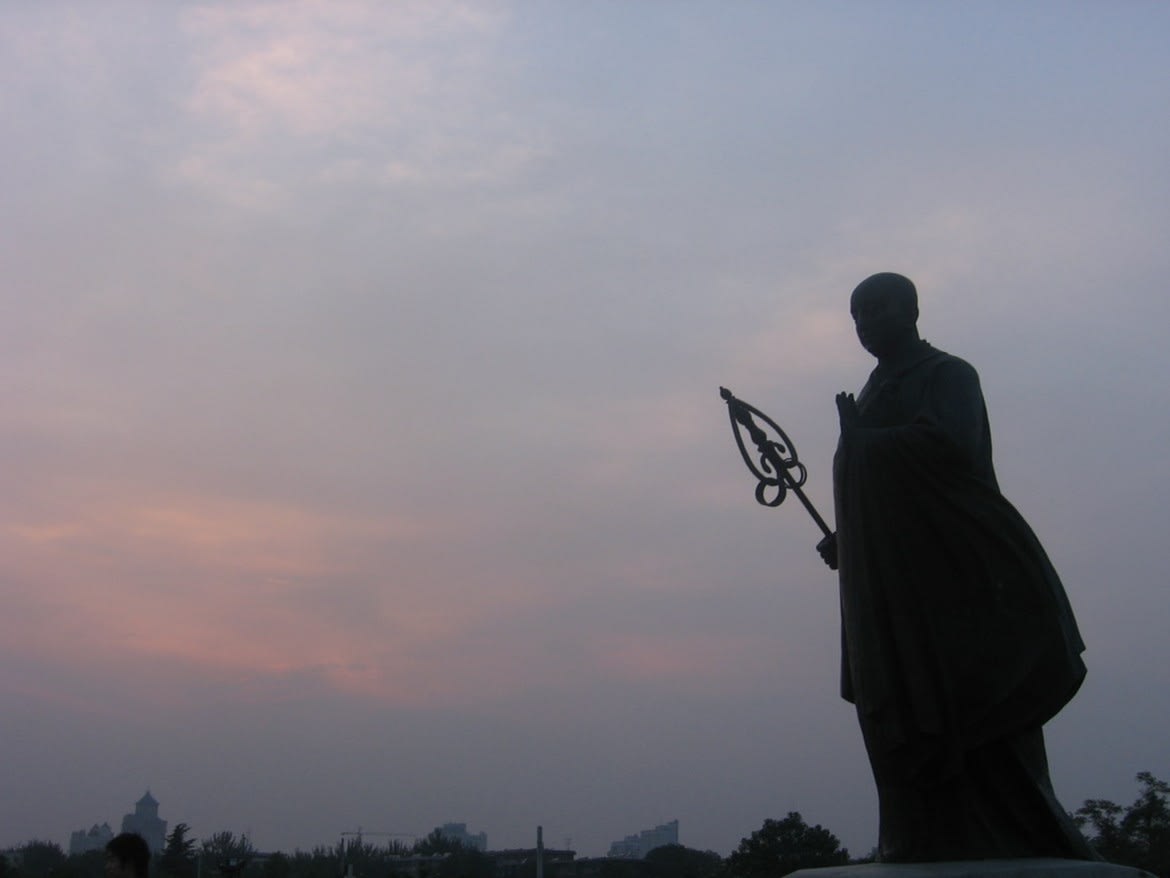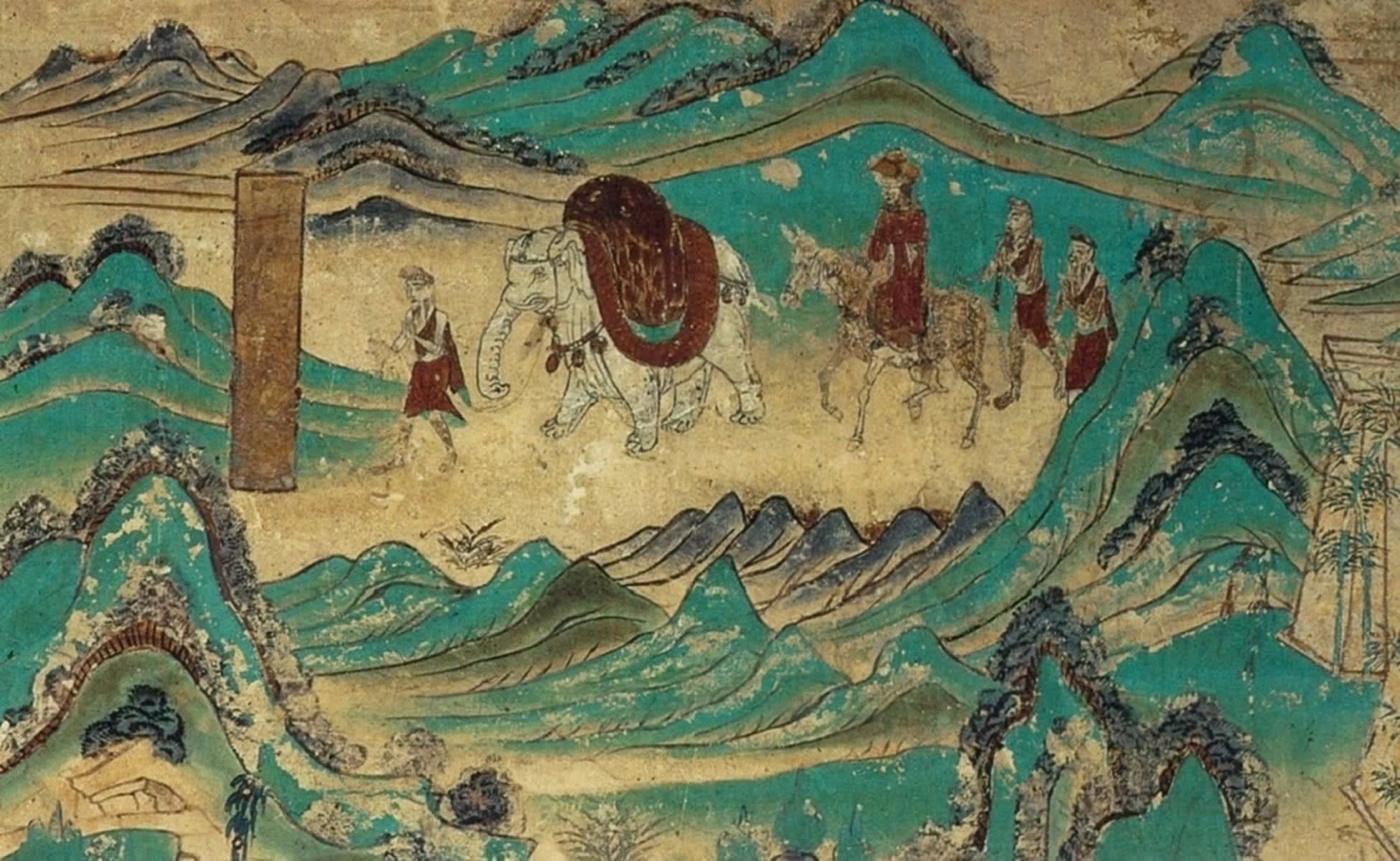
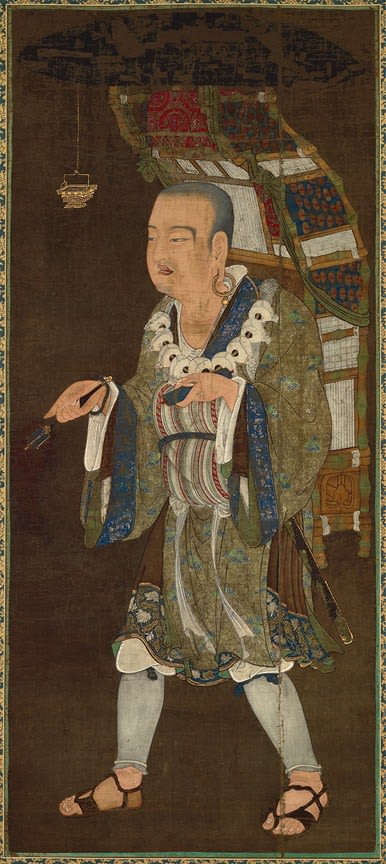
From an early age, Xuanzang devoted himself to the study of Buddhism, quickly acquiring broad learning. He moved to Chang’an, then the capital of the Tang Empire, where he worked with eminent Buddhist scholars. Soon, however, Xuanzang encountered a serious problem that gave him no peace: the many discrepancies and contradictions among various schools of Chinese Buddhism. He concluded that the root of these disputes lay in poor, incomplete, or simply missing translations of key Buddhist texts.
What troubled Xuanzang most was the absence of a complete translation of the Yogācārabhūmi-śāstra, the encyclopedic treatise by the Indian master Asaṅga. In his view, this work could resolve many disagreements. The Indian monk Paramārtha had translated part of it into Chinese in the sixth century, but the text was incomplete. Thus there took shape in Xuanzang’s mind a grand idea: to travel to India, the homeland of Buddhism, to find the original, complete text and bring it to China for a proper translation.
In 629 Xuanzang had a prophetic dream that strengthened his resolve to undertake the dangerous pilgrimage. At the time, China was at war, and any foreign travel was strictly forbidden. Failing to obtain the emperor’s permission, Xuanzang was forced to flee. Under cover of night he deceived the guards at the Yumen Pass and left the empire.
His route was full of trials: he crossed the lifeless Gobi Desert, traversed the treacherous passes of the Tian Shan, and in 630 reached Turfan. Fortunately, the ruler of Turfan was a Buddhist. Impressed by Xuanzang’s determination, he not only provided all necessary supplies but also gave him letters of introduction to the rulers of neighboring states.
With these letters Xuanzang continued westward. He safely passed through Yanqi and reached the Sarvāstivāda monasteries in Kucha. Then, after a long crossing of the Bedel Pass in the Tian Shan, he entered the territory of present-day Kyrgyzstan. There, at Suyab (near modern Tokmok), he met the khagan of the Western Turks, who received him with honor and offered support.
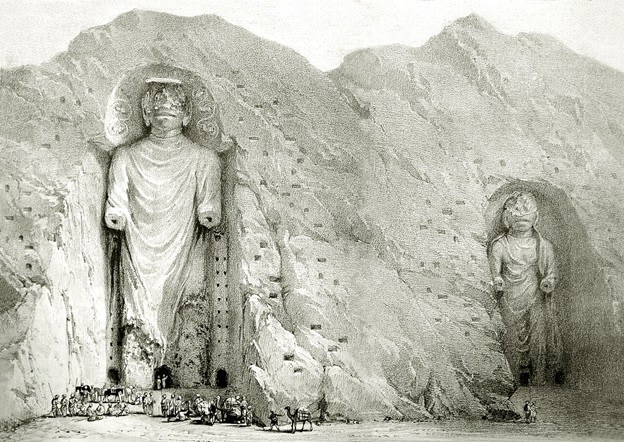
His path then led through Tashkent and Samarkand, where he found abandoned Buddhist temples yet still received backing from the local king. After surmounting the high passes of the Pamirs and the Iron Gate, he descended into the Amu Darya valley and entered Termez, where he was struck by a large community of a thousand Buddhist monks. Xuanzang continued on via Balkh and Bamiyan, where he saw the famous giant statues of the Buddha carved into the cliffs. At last, in 630, he arrived at Jalalabad, then regarded as the gateway to India.

Xuanzang’s travels in India were no less arduous than his passage through Central Asia. He visited many holy places, including Peshawar the former capital of Gandhara and the Swat Valley, where he found many old monasteries but few monks. He reached Taxila, where he spent two years (631–633) studying Mahāyāna doctrine and taking part in Buddhist debates. It was there that he learned about the Fourth Buddhist Council, convened at the initiative of King Kaniṣka.
Traveling through the Indus Valley and Punjab, he visited the cities of Mathura and Kanyākubja (Kannauj), where he was received by King Harṣa. He studied different Buddhist schools, visited Ayodhyā the home of the Yogācāra school and Kauśāmbī, where a famous statue of the Buddha stood.

The culmination of his pilgrimage was a visit to the sacred places associated with the Buddha’s life. In 637 Xuanzang reached Lumbinī, where the Buddha was born, and saw the pillar erected by King Aśoka. He visited Kuśinagara, the place of the Buddha’s passing, and Sarnath, where the Buddha delivered his first teaching.
The most important stage of his Indian journey was two years of study at Nālandā University, then home to several thousand learned monks. Under his teacher Śīlabhadra he studied logic, grammar, Sanskrit, and the Yogācāra doctrine in depth. He took part in numerous philosophical disputations that revealed to him the full range and subtlety of Indian thought. He realized that Chinese and Indian Buddhism were not the same: in India, Buddhists had to defend their ideas constantly in debates with representatives of other philosophical schools.
In 645 Xuanzang returned to China. He brought with him a vast number of invaluable Buddhist texts, many of which survive only in his Chinese translations. Xuanzang concluded that to convey Indian teachings accurately, certain Sanskrit terms should be transliterated rather than translated, enriching the Chinese language with many neologisms. He also identified fundamental differences between Chinese and Indian Buddhism, noting the near total absence in India of some ideas popular in China (for example, the Awakening of Faith in the Mahāyāna).
At Emperor Taizong’s behest, he wrote the Great Tang Records on the Western Regions (大唐西域記), which became an invaluable source for historians and archaeologists. His detailed descriptions of cities, monasteries, and political conditions have allowed many details of the history of India and Central Asia to be reconstructed.
Xuanzang eventually died, but his legacy lives on. He became a legend; his story formed the basis of the famous Chinese novel Journey to the West. His remains, revered as sacred relics, were reinterred in Nanjing in 1027. In the twentieth century, part of his skull was discovered by Japanese troops and today is kept in various temples in Japan and Taiwan, with another part housed in the museum of the city of Patna in India.