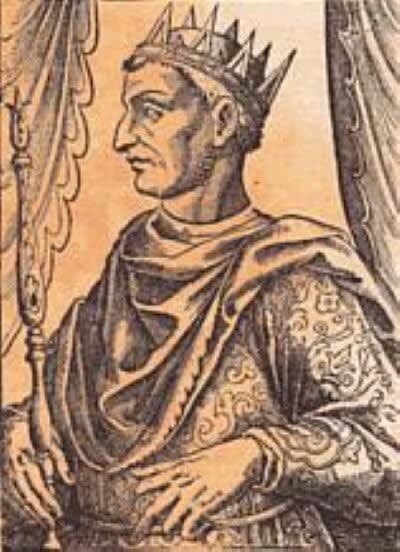

When the great Roger II died in 1154, the fate of the Kingdom of Sicily passed into the hands of his fourth son, William I. Unlike his elder brothers, who had received princely titles and experience in governing provinces from an early age, William had never been prepared to rule. The deaths of his brothers made him the sole heir, but they did not grant him the talents necessary for governing a kingdom.

Contemporaries described his appearance with a mixture of awe and fear: a pale man with an enormous, intimidating black beard. He possessed almost superhuman physical strength — he could bend horseshoes with his bare hands, and on one occasion, he reportedly lifted a heavily loaded horse off the ground entirely by himself.
William found affairs of state tedious. He preferred to spend his days in luxurious country palaces, surrounded by the splendor of his harems, passing the time in philosophical conversations with scholars about art and science.
He entrusted the administration of the kingdom to his ministers. The king's political approach was simple: whenever a problem could be postponed, he postponed it. He watched emerging threats with indifference, hoping they would disappear on their own.
However, when danger came too close and threatened to disturb his peace, William underwent a remarkable transformation. The apathetic philosopher suddenly became a merciless executioner. In dealing with those who disturbed his tranquility, he unleashed such ferocious, almost unimaginable cruelty that he permanently earned his place in history under the nickname "the Bad."
Having withdrawn from active government, William handed absolute authority to the "Emir of Emirs," Maio of Bari. The son of an ordinary merchant and judge, Maio became the de facto ruler of Sicily. As an Italian, he occupied a position traditionally held by Greeks and began deliberately excluding both Norman barons and the Greek elite from the royal court, relying almost exclusively on Italians and Muslims.
The offended Norman barons rallied around the king's cousin, Count Robert of Loritello. Realizing that they could not overthrow Maio on their own, the conspirators appealed for assistance to the Byzantine commander Michael Palaiologos.
For Byzantine Emperor Manuel I Komnenos, this presented an ideal opportunity. Having resolved problems along his borders and lost his western ally, Emperor Conrad III, he decided to restore Byzantine control over Southern Italy.
In August 1155, the Byzantine fleet and army, joining forces with the rebels, launched an offensive against Apulia. The predominantly Greek population of Bari opened the city gates to the emperor's troops, while the hated Sicilian citadel was razed to the ground. Encouraged by this success, the Byzantines quickly captured Trani and Giovinazzo.
The Sicilian army on the mainland, commanded by Asclettin, arrived hopelessly late. Reaching Apulia from Campania only toward the end of September 1155, it immediately found itself trapped in Barletta.
The decisive confrontation unfolded at Andria. Count Richard of Andria defended the city heroically, but Andria eventually fell, and the count himself was killed in battle.
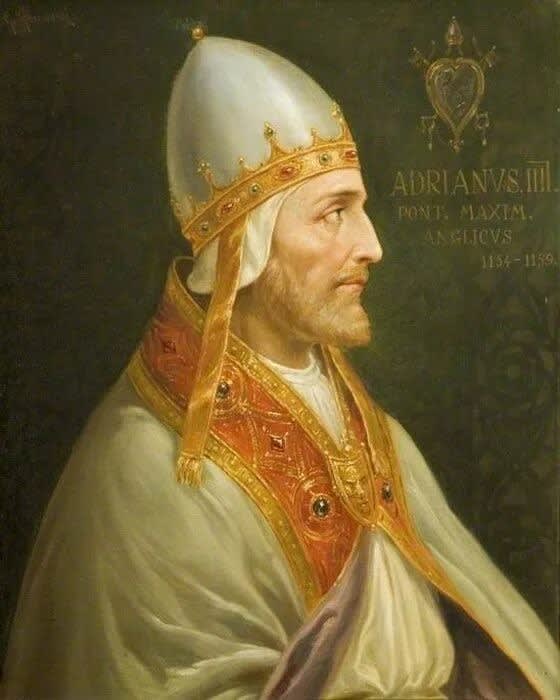
The catastrophe worsened in September, when Pope Adrian IV sided with the Byzantines. Papal troops invaded the kingdom. The exiled Prince Robert II of Capua returned and received Capua from the pontiff. One after another, the barons swore allegiance to the pope.
By the end of 1155, the state forged by Roger II was collapsing: the Byzantines controlled Apulia, the pope dominated Campania, and only Calabria remained loyal to the crown.
Throughout this period, William I watched the collapse of his mainland possessions with apparent indifference from the terraces of his palaces in Palermo.
But eventually, rebellion reached Sicily itself. An uprising broke out in Butera, while unrest spread through Palermo, where crowds demanded that Maio of Bari be handed over to them. This was the final provocation that awakened the king from his inactivity.
William rapidly assembled his troops and descended upon Butera. Its defenders, who had not expected such energetic action from their seemingly lazy monarch, immediately surrendered. The king spared their lives but expelled them from the country.
More importantly, he had finally shaken off his paralysis. William was now prepared to reclaim the mainland.
In April 1156, the royal army and fleet assembled in Messina. The commander Asclettin was summoned there and mercilessly condemned for his inactivity. He was thrown into prison, where he soon died, and his property was confiscated.
In late April, William crossed into Calabria and advanced toward Apulia in a forced march, while his fleet sailed toward Brindisi — the only major city in Apulia still resisting the Byzantines.
By this point, the Byzantine commander John Doukas, who had succeeded the deceased Michael Palaiologos, had managed to capture the city of Brindisi itself, although its inner citadel remained beyond his control.
Meanwhile, the alliance between the Byzantines and the rebels had begun to disintegrate. Robert of Loritello and his barons quarreled with the Byzantines and withdrew, while unpaid mercenaries deserted.
The Sicilian fleet completely sealed off the harbor of Brindisi, while William's army besieged the city from the landward side. The Byzantines found themselves trapped.
On May 28, 1156, the Greek army was completely destroyed in a bloody battle. This confrontation marked the end of Byzantine ambitions in Southern Italy: never again would the armies of the Eastern emperors set foot on the Italian Peninsula.
From Brindisi, the king's punishing hand reached toward Bari. The inhabitants, who had betrayed the crown the previous year, fell to their knees and begged for mercy.
William pointed toward the ruins of the Sicilian citadel and coldly refused. He gave them two days to collect their belongings. On the third day, Bari was razed to the ground. Only the Basilica of Saint Nicholas and a few other churches survived.


William's wrath then descended upon Campania. Robert of Loritello fled to the pope, but many others were less fortunate.
The chronicler Hugo Falcandus described the brutal punishments with horror: captured barons were thrown into pits filled with venomous snakes, while their wives and daughters were sent to harems or forced into prostitution.
The crown's principal enemy, Robert II of Capua, was placed in chains, transported to Palermo, blinded, and imprisoned for the remainder of his life.
Witnessing the fury of the Sicilian king, Pope Adrian IV realized that continuing the war was pointless. On June 18, 1156, the historic Treaty of Benevento was signed.
William agreed to swear formal fealty to the pope, but in return, he extracted enormous concessions from Rome.
For the first time since 1139, the pope formally and unconditionally recognized the monarch as King of Sicily, Duke of Apulia, and Prince of Capua.
The territories of Abruzzo and the Marches, conquered by the sons of Roger II, were legally recognized as parts of the kingdom. A clearly defined border with the Papal States was established, one that would remain unchanged until 1861.
Moreover, William retained the unique rights of the "Sicilian Legation." The pope renounced the right to send legates to the island without permission, while the king himself confirmed bishops and determined which clergymen could travel to Rome.
It was an absolute political victory.
While Sicily was engulfed in internal conflicts in the north, the southern empire established by Roger II in North Africa was collapsing. The powerful Almohad Empire had begun its offensive.
In 1156, Sfax rebelled, followed by Djerba. In 1159, the Sicilian garrison in Tripoli was massacred. The Christians fled in panic to Mahdia — the last Norman stronghold in North Africa.

On June 20, 1159, the Almohad army blockaded Mahdia by both land and sea. The Sicilian fleet attempted to break through the encirclement but suffered a disastrous failure.
After this, the all-powerful minister Maio of Bari simply removed Mahdia from his strategic plans. His attention had turned toward Northern Italy, where the Lombard League was emerging in opposition to Emperor Frederick Barbarossa.
Maio had no intention of sacrificing valuable resources for distant territories across the sea.
Abandoned to their fate by both the king and his minister, the defenders of Mahdia capitulated on January 11, 1160.
The Norman empire in Africa had ceased to exist.
Having dealt with his enemies in 1156, William the Bad once again fell into idleness, returning to his magnificent palaces. The kingdom continued to be governed with an iron fist by Maio of Bari, supported by converted Muslim eunuchs.
The aristocracy's hatred of the powerful minister reached its breaking point.
A conspiracy emerged within Maio's own inner circle. Its leader was Matthew Bonnellus, a man who enjoyed Maio's absolute trust and was even regarded as his future son-in-law.
On November 10, 1160, as Maio was returning almost unguarded from a visit to Hugh, Archbishop of Palermo, Bonnellus and his followers attacked and murdered him.
The assassins fled in panic to the castle of Caccamo.
However, William I, unaware of the true extent of the conspiracy and fearing another civil war, decided not to punish the murderer.
Bonnellus, who enjoyed considerable popular support, returned to court, securing both a high position and royal forgiveness.
But the conspirators were not satisfied. They understood that the king might eventually seek revenge.
Breaking through the king's personal Muslim guard and entering the palace by force was impossible. They therefore resorted to deception.
On March 9, 1161, they bribed the guards of the prison located directly beneath the royal palace and released several noble prisoners who had been involved in the rebellion of 1155. Among them were Simon, the illegitimate son of Roger II, and the king's nephew, Tancred of Lecce.
The freed prisoners opened the palace gates to the conspirators.
A massacre began.
The palace guards and eunuchs were slaughtered. William the Bad, his wife, and their children were taken hostage.
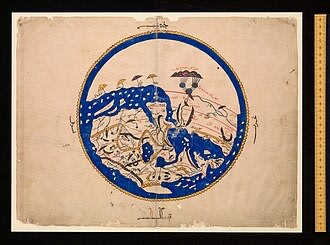
The magnificent palace was plundered, and the priceless silver planisphere created by the geographer al-Idrisi disappeared forever amid the chaos.
Throughout Palermo, a wave of violent massacres swept through the Muslim population.
The conspirators declared William deposed and proclaimed his nine-year-old son Roger the new king.
But then the population intervened.
Senior churchmen — Archbishop Romuald of Salerno and Bishop Richard Palmer of Syracuse — led crowds of citizens into the streets, demanding the release of the legitimate monarch.
On March 11, 1161, the conspirators found themselves besieged inside the palace.
With swords threatening his life, William swore that he would not seek revenge. He stepped onto a balcony and ordered the crowd to disperse.
The rebels fled to Caccamo.
But the price of freedom was terrible.
Amid the confusion on March 11, the young Prince Roger was killed by a stray arrow.
Malicious rumors, repeated by figures including the chronicler Falcandus, claimed that William himself had killed his son in a fit of rage because the boy had been used as the symbol of the coup.
The dynasty's treasures had been stolen, while the Muslim community, one of the principal foundations of Hauteville power, suffered devastating losses.
As soon as loyal troops and the royal fleet arrived from Messina, the king cast aside his appearance of mercy.
The rebels surrendered.
The overconfident Bonnellus, who decided to return to court once again, was immediately arrested.
When his supporters attempted to organize another uprising, William crushed them.
The punishment was horrifying: some rebels were executed, while others were mutilated. Bonnellus himself was blinded and thrown into a dungeon, where he was left to rot.
In Sicily, the rebellious towns of Piazza and Butera were stormed and completely destroyed.
On the mainland, in 1162, the royal army hanged and drowned rebels, imposing enormous financial penalties on entire regions, known as "redemption payments."
Salerno, which had supported the rebellion, was sentenced to destruction. Only the sudden arrival of a terrifying storm — which Bishop Romuald attributed to a miracle of Saint Matthew — forced the king to retreat.
While William was suppressing resistance on the mainland in 1162, he left Sicily under the administration of Martin, a converted eunuch.
Martin unleashed a reign of terror against Christians in retaliation for the Muslims who had been killed.
Even Maio's successor, Henry Aristippus, became a victim. Accused of stealing concubines from the royal harem during the coup, he died in prison.
The religious massacres were brought to an end only in the summer of 1162, when the king personally returned to Palermo.
By imposing enormous fines and confiscating the estates of those who had been executed, William the Bad completely recovered the financial losses caused by the turmoil.
All his enemies were now dead, mutilated, or living in exile.
The final years of his life, from 1163 to 1166, like the subsequent reign of his son, passed in complete peace and prosperity.
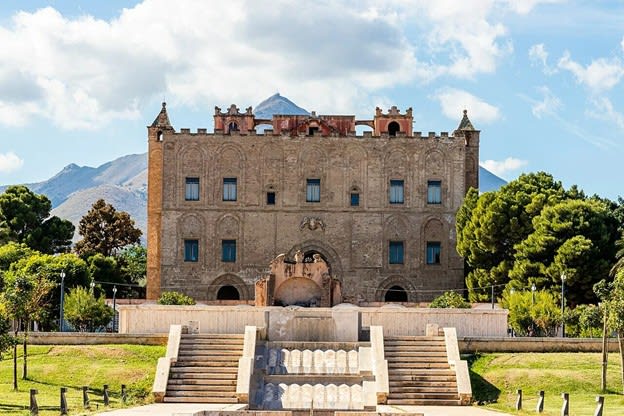
Having completed his bloody work, William I the Bad constructed the magnificent Zisa Palace near Palermo — a masterpiece of secular Norman architecture, where he indulged in Oriental luxuries amid the gentle sound of flowing fountains.
On May 7, 1166, William I died of dysentery in Palermo.
His remains were initially laid to rest in the Palatine Chapel and were later transferred to the magnificent Cathedral of Monreale, where they remain to this day inside an imposing sarcophagus of red porphyry.
There rests the memory of an idle philosopher whose fury both saved and terrorized a great kingdom.


