Wat Tyler’s Rebellion in 1381 was not a sudden event. It was the culmination of deep economic and social upheavals that had been brewing in England for decades. In the early fourteenth century, the country was an agrarian power. Most land was controlled by the lesser nobility (the gentry) and the Church, and peasants both free and unfree (serfs) worked it. Relations between them were regulated by manorial courts, where each lord set his own rules. Serfs were tied to the land and had no right to leave it without permission. Peasant needs were modest; their diet consisted mainly of bread, cheese, and ale, while meat and fish were rare festive treats. They lived in wattle-and-daub huts with thatched roofs.
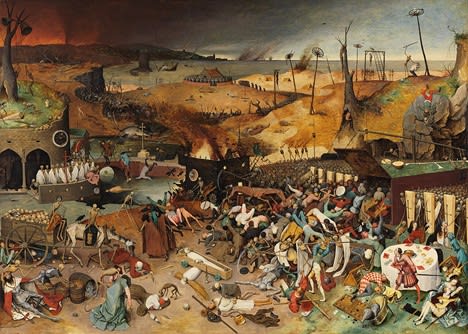
Everything changed in 1348, when the “Black Death” the plague reached England, claiming, by various estimates, between 25% and 60% of the population. This catastrophe triggered a profound economic crisis. The number of laborers and serfs dropped sharply, which increased their leverage. Peasants began to demand higher wages, and pay rose rapidly, while the incomes of landowners fell just as quickly.

The authorities tried to halt this process. In 1349 the Ordinance of Laborers was issued, and in 1351 the Statute of Laborers followed. These laws fixed wages at pre-plague levels, and refusal to work for those rates was deemed a crime punishable by fines. From the 1360s, local justices of the peace drawn from the gentry were tasked with enforcing the laws. The statutes were harsh, and by 1361 violators could be imprisoned or branded.
Nevertheless, in the ensuing decades the country’s economy gradually changed. Some peasants found new earning opportunities; others illegally left in search of better work. By the 1380s, rural workers’ wages had risen by roughly 40%. This rise in the lower orders’ prosperity alarmed the elite, and in 1363 sumptuary laws were enacted to restrict commoners’ access to costly goods and preserve social stratification.
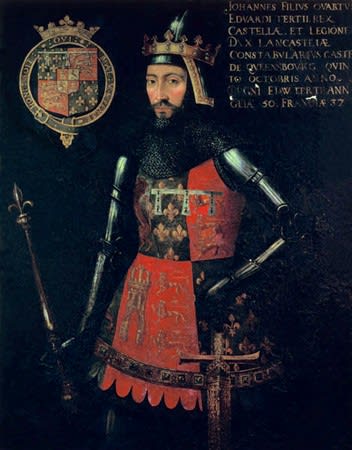
Tensions were aggravated by the ongoing Hundred Years’ War with France, begun in 1337 by King Edward III. After 1369 France went on the offensive, which required colossal English war expenditures. When the ten-year-old Richard II ascended the throne in 1377, his government, led by his powerful uncle John of Gaunt, faced an acute shortage of funds to prosecute the war.
To replenish the treasury, Parliament introduced a new form of taxation the poll tax levied for the first time on the entire population, including those who had previously paid no direct taxes. Between 1377 and 1381 the tax was imposed three times, and collection was often accompanied by violence. The new system proved extremely unpopular. In November 1380 the Parliament at Northampton enacted the third poll tax, levying 12 pence on every person over 15 years of age roughly a fortnight’s wages for an ordinary laborer. This was the last straw. Many inhabitants of southeastern England refused to pay, and in the spring of 1381 the royal collectors sent to ferret out evaders only inflamed tensions further.
In the decade before 1381, the country had already seen several disturbances. Particular resentment was aroused by the actions of manorial courts, which collected taxes and imposed fines. Peasants often refused to attend sessions, trying to disrupt their work. In towns, especially London, people hated John of Gaunt, whom they considered a corrupt man and a heretic. A moral panic grew: the elite feared that commoners might join with the French in the event of an invasion, and the poet John Gower worried England might suffer something like the French Jacquerie. A violent storm in May 1381 was taken by many as an omen of looming upheavals.
The uprising began on 30 May 1381 in Essex, when the royal commissioner John Bampton arrived in Brentwood to collect unpaid poll taxes. Local residents, armed with clubs and old bows, refused to pay. When Bampton tried to arrest their representative, a riot broke out. The collector fled to London, but three of his men were killed.
Within a few days the rebellion had spread across the region, and several thousand Essex peasants marched on London. At the same time, a rising flared in Kent. Its immediate cause was the imprisonment in Rochester Castle of a local man at the demand of the knight Sir Simon de Burley. On 5 June the outraged peasants gathered at Dartford and then stormed the jail at Maidstone. On 6 June they entered Rochester Castle, freed the prisoner, and chose Wat Tyler as their leader. Little is known about him, but the chronicles describe him as a charismatic and experienced archer who had served in France.
Tyler and the men of Kent moved on Canterbury, which they entered on 10 June without resistance. They destroyed the authority of the absent archbishop and executed those linked to the royal council. From there, Tyler led about a thousand rebels toward London.
On 12 June the Kentish rebels reached Blackheath, southeast of the capital. There the famous radical priest John Ball addressed them with his now-famed sermon: “When Adam delved and Eve span, who then was the gentleman?” This sermon formed the basis of the rebellion’s slogan: “For King Richard and for the commons of the realm without serfdom.” The motto underscored their loyalty to the king and their desire to abolish serfdom and create a just society.

Meanwhile, in London the ten-year-old King Richard II took refuge in the Tower with his mother and closest advisers, including Archbishop Sudbury and the Lord Treasurer Robert Hales. The royal government was in a bind: experienced commanders were in France, and local magnates could not suppress the revolt on their own without a royal commission.
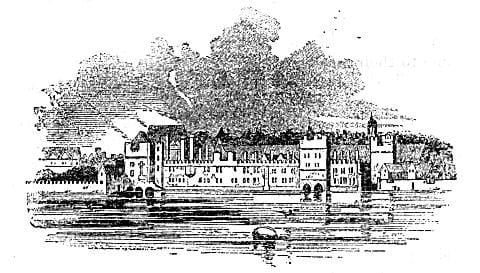
At midday on 13 June the rebels entered London, either aided by townspeople or after forcing the guard at London Bridge. Simultaneously, rebels from Essex approached from the north. The crowd joined by many Londoners began to sack hated targets: prisons, the houses of Flemish immigrants and the wealthy, including the luxurious Savoy Palace belonging to John of Gaunt. Importantly, the rebels did not loot; they systematically destroyed property, styling themselves “fighters for truth and justice.”

On the morning of 14 June, the rioters continued the rampage, hunting Flemings and officials. Shut up in the Tower, Richard II decided to meet the rebels at Mile End. It is unclear who negotiated on the rebels’ behalf, but they demanded the abolition of serfdom and a general amnesty. The king agreed and issued a charter, which quickly spread across the country.
While Richard was negotiating, part of the rebels approached the Tower. The gates stood open, and around four hundred insurgents entered the fortress. Meeting no resistance, they hunted down royal officials. Archbishop Sudbury and Robert Hales were found and beheaded on Tower Hill. Their heads were displayed on London Bridge.
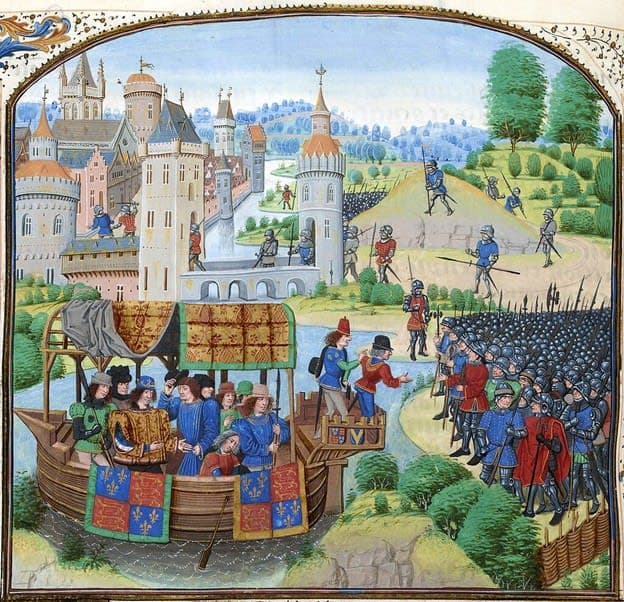
On the evening of 15 June another meeting between the king and the rebels took place at Smithfield. Richard II and his entourage stood on the east side of the square, and thousands of rebels on the west. When Wat Tyler rode up to the king, he behaved familiarly, provoking the anger of the royal attendants. A clash erupted between Tyler and the Lord Mayor of London, William Walworth. Walworth wounded Tyler, and the royal esquire Ralph Standish finished him off.
In the circumstances, the rebels were in grave danger, but Richard, showing courage, went to the crowd and persuaded them to follow him to Clerkenwell. Meanwhile, Walworth gathered reinforcements from the townsmen. Tyler’s head was put on public display, and deprived of their leader, the movement began to fall apart. The king knighted Walworth and his supporters, and the rising in London was suppressed.
While these dramatic events unfolded in London, the rebellion spread to other regions of England. In East Anglia, where rebel numbers may have reached several thousand, the local gentry could offer no resistance because mercenaries recruited from the local population were unreliable.
John Wrawe led the rising in Suffolk. On 12 June he attacked the estate of Sir Richard Lyons, and the next day moved on Bury St Edmunds. Entering into alliance with the townspeople, he stormed the hated local abbey. The abbot was found and beheaded. At the same time another group of rebels tracked down and killed the Chief Justice, Sir John Cavendish. Violence spread throughout the region; rebels looted officials’ homes, destroyed court records, and killed anyone they deemed enemies of the people.
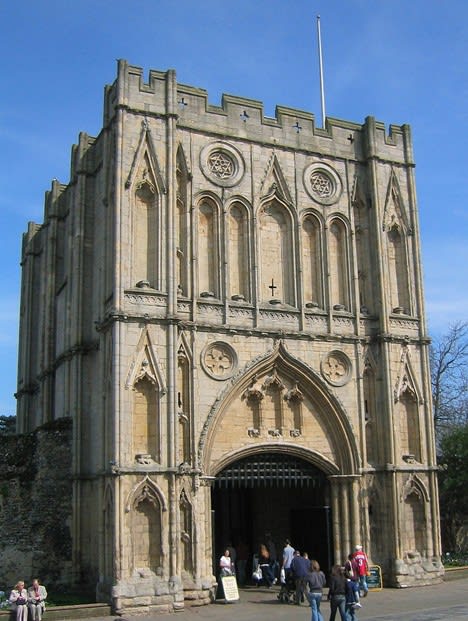
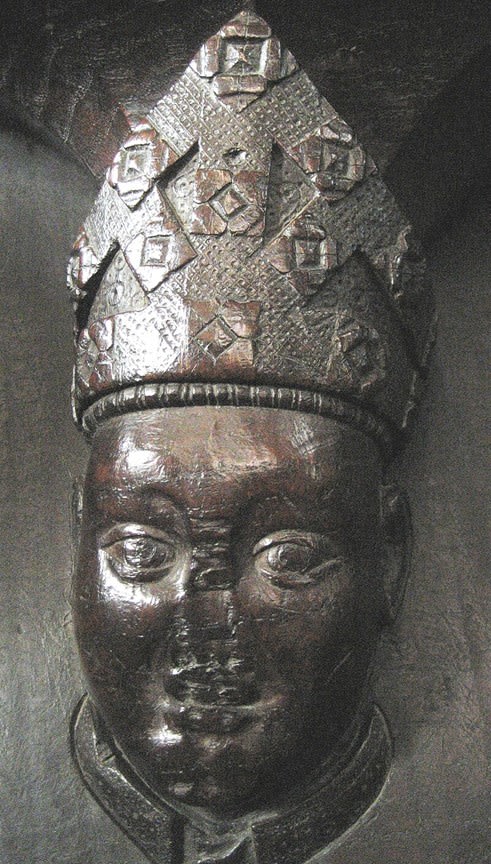
In St Albans (Hertfordshire) the townsfolk had long been in conflict with the local abbey. Seizing the moment, they sent a delegation to the king in London and secured Wat Tyler’s backing. Rebels led by William Grindecobbe destroyed all documents defining the abbey’s rights and forced the abbot to sign a charter abolishing its privileges.
In Cambridgeshire the rising began on 15 June. Its target was the unpopular University of Cambridge. The rebels plundered several colleges and burned the university’s archives and library in the town’s central square. The university authorities were forced to renounce their privileges.
In Norfolk the rebellion was led by the weaver Geoffrey Litster and the gentleman Roger Bacon. On 17 June they mustered forces near Norwich; after killing the commander of the city’s defenses, the rebels entered the town. Looting, killings, and the destruction of documents followed.
Unrest flared in other parts of England as well. In northern towns such as Beverley and York there were mass disturbances and seizures of power by the urban poor. News of the rising traveled slowly, and many events unfolded autonomously. In Leicester and Bridgwater there were also attacks on religious and administrative institutions and on the property of the nobility.
Immediately after Wat Tyler’s death on 15 June, royal authorities began decisive suppression of the rebellion. A force of 4,000 was raised in London, and expeditions were sent to the rebellious regions.
The rising in East Anglia was crushed without royal troops. Its leader, Henry le Despenser, the Bishop of Norwich, himself raised a small force and marched east. On 24 June he retook Norwich, and on 25 or 26 June his men routed the rebels at the Battle of North Walsham. The rebel leader Geoffrey Litster was captured and executed.

Royal detachments under Thomas Holland and Robert Tresilian arrived first in Kent and then in Essex. King Richard II personally visited Essex, where he met a delegation of rebels seeking confirmation of the promises made at Mile End. Richard repudiated his words, declaring: “You were serfs, and serfs you shall remain… You will remain in bondage not as before, but even harsher.” A wave of brutal reprisals soon followed. By November at least 1,500 people had been executed. Rebel leaders such as John Ball and John Wrawe were captured, condemned, and put to death.
Despite its suppression, the rebellion had long-term consequences. The authorities and Parliament were forced to reconsider their policies. In November Parliament blamed royal officials for what had happened and refused to impose further poll taxes. The government was compelled to cut military spending.
Although Richard II’s promises were revoked, the level of peasant unfreedom in England continued to decline owing more to economic than political causes. Rural wages kept rising, and landlords increasingly freed serfs for a payment. By the fifteenth century the institution of serfdom in England had effectively ceased to exist.


