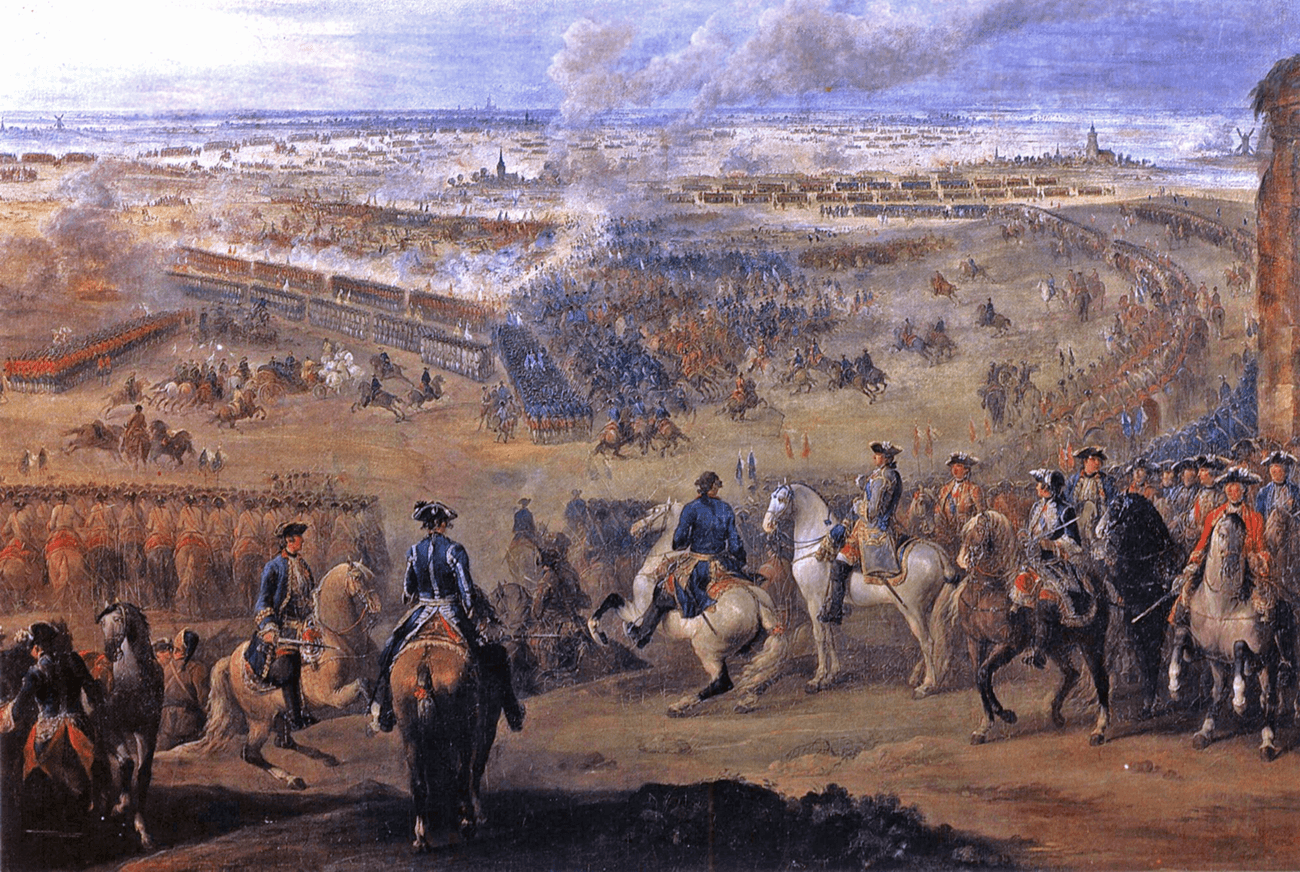

The death of Emperor Charles VI on October 20, 1740, was the signal for the start of a large-scale European conflict known as the War of the Austrian Succession. Despite the fact that even during the lifetime of Charles VI all the leading powers had recognized his daughter, Maria Theresa, as the legitimate heir in accordance with the Pragmatic Sanction, her accession to the throne triggered a wave of claims.

Many European monarchs who had earlier expressed their consent now saw an opportunity to profit at the expense of the weakened Austrian Monarchy. Among the main claimants were:
Charles Albert, Elector of Bavaria, who, referring to his kinship with Emperor Ferdinand I through his daughter Anna, claimed rights to the entire Habsburg inheritance.

Spain, represented by King Philip V, which based its claims on ancient treaties between the Austrian and Spanish branches of the House of Habsburg.
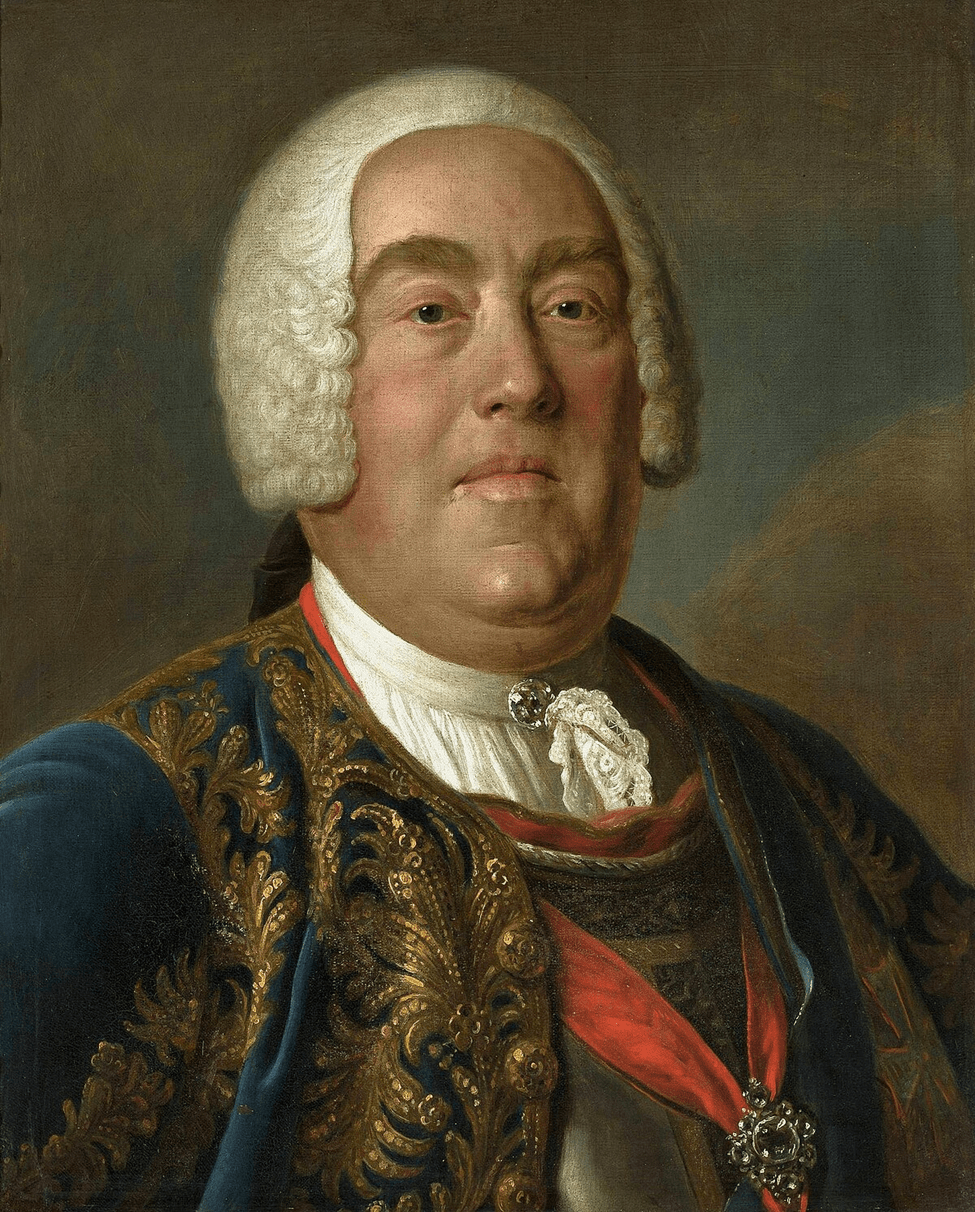
Augustus III, Elector of Saxony and King of Poland, married to the eldest daughter of Emperor Joseph I, also asserted his claims to the Austrian throne.

Charles Emmanuel III, King of Sardinia, also presented his pretensions to the throne.

Against the background of these disputes, France, long desiring to weaken Austria, began secret negotiations with various states. Prussia and Saxony joined its alliance with Bavaria, and then other players such as Naples, Sardinia, and the Electors of the Palatinate and Cologne. Their chief goal was the partition of Austria and the transfer of the imperial crown to the Elector of Bavaria.
The young Prussian king Frederick II, eager to expand his domains, saw in this situation the ideal opportunity. He asserted the ancient rights of his house to the Silesian duchies and, finding no support from England (which, because of its enmity with France, took Austria’s side), decided to act by force. At this critical moment Austria was extremely vulnerable, its army weakened and its treasury empty.

In November 1740 Frederick II mobilized a 25,000-strong army, and already on December 16 Prussian troops invaded Silesia. Thanks to the weakness of the Austrian defense, by the end of January 1741 almost the entire region had been captured, with the exception of several fortresses. The Austrian commander, Field Marshal Lieutenant Browne, retreated into Moravia.
The slowness of the allies and Maria Theresa’s firm unwillingness to cede Silesia forced Frederick to reconsider his tactics. In February 1741 he received reinforcements and himself arrived at the army. Meanwhile, Austrian troops under Field Marshal Neipperg concentrated near Olmütz and on March 28 began an offensive. Frederick, maneuvering skillfully, managed to avoid defeat and on April 9 concentrated his forces at Ohlau.
On April 10 the Battle of Mollwitz took place, in which the Austrians suffered a crushing defeat. This victory was of enormous significance, pushing France and Bavaria to conclude an official alliance with Prussia on June 4, 1741.
At the end of July 1741 a Franco-Bavarian army under Marshal Belle-Isle invaded Upper Austria. Elector Charles Albert seized Linz, where the local inhabitants swore allegiance to him as archduke. Frederick II, taking advantage of the lull, strengthened his army and on August 10 took Breslau.
The initial plan envisaged a joint advance on Vienna, but the Bavarian elector, striving for new territories, directed his main forces into Bohemia, where the Saxons were already present. On November 27 they together took Prague, and on December 19 Charles Albert ordered that an oath be sworn to him as king. Soon, on January 24, 1742, he was crowned in Frankfurt am Main as Emperor of the Holy Roman Empire Charles VII.
While the allies were celebrating successes, Frederick II, unwilling to see Austria completely crushed, concluded a secret armistice with Maria Theresa on October 11 at Klein-Schellendorf, under which all the Silesian fortresses passed to Prussia.
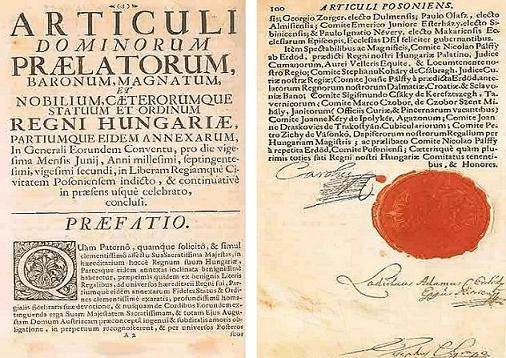
Meanwhile, the war was flaring up on other fronts as well. In November 1741 Spanish troops invaded the Duchy of Milan, opening the Italian theater of operations. At this critical moment Maria Theresa turned for help to the Hungarians, who at the Pressburg Diet on September 11, 1741, agreed to render her support in exchange for significant concessions.


Freed from the threat from Prussia, Austria threw all its forces against France and Bavaria. The Hungarian militia, reinforcing the Austrian troops under General Khevenhüller, on January 24, 1742, forced Ségur’s French to surrender at Linz, then seized Passau and invaded Bavaria.
Frederick II, fearing Austrian successes, in early February 1742 broke the armistice and resumed the offensive. He moved on Vienna, but because of disagreements with the Saxons and the threat of encirclement was forced to retreat. On April 17 the Prussian army arrived at Chrudim, and all Moravia once again fell into Austrian hands.
On May 7 the Austrian army under the Prince of Lorraine caught up with the Prussians, and on May 17 the Battle of Chotusitz took place, in which Frederick won a new victory. After this Maria Theresa, following England’s advice, on June 11, 1742, concluded the Treaty of Breslau with Prussia, ceding to it Upper and Lower Silesia as well as the County of Glatz.
Austria concentrated its efforts on fighting France and Spain. The Franco-Saxon forces were shut up in Prague, and Marshal Belle-Isle with a 22,000-strong corps was forced to break out fighting into Bavaria. Following him, the Austrians occupied most of Bavaria and Munich.
In Italy Maria Theresa’s fortunes also improved. The Kingdom of Sardinia, which had initially concluded an alliance with France, went over to Austria’s side by the Treaty of Turin of 1742, receiving in return Austrian territories in Lombardy. The Austro-Sardinian army drove the Spaniards out of the Duchy of Modena, and an English squadron, by the threat of bombardment, forced King Charles III of Naples to withdraw his troops and declare neutrality. At the beginning of 1743 the Austrians continued to press the Spaniards, and on February 8 Montemar was defeated at Campo Santo.
Great Britain, which from the very beginning had supported Austria with subsidies, in 1743 entered the war more actively. Its 43,000-strong army, known as the “Pragmatic Army,” on June 27 defeated the French at Dettingen, driving them back beyond the Rhine. On September 13, 1743, under the Treaty of Worms, Sardinia officially joined the alliance with Austria, and on December 20 of the same year Saxony did as well.
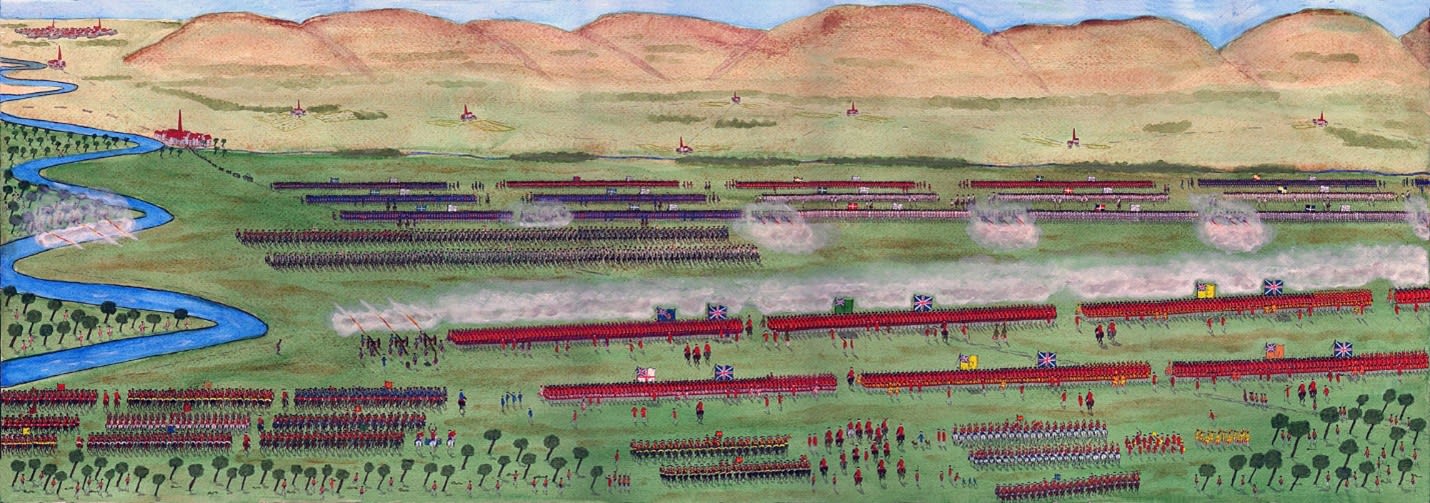
By early 1744 the entire right bank of the Rhine was under Austrian control. Frederick II, fearing to lose Silesia, decided to resume the war. On May 22 he concluded the “Frankfurt Union” with the emperor, Bavaria, and other German principalities, and on June 5 concluded an alliance with France.
The plan was as follows: while the French army distracted the allies in the Netherlands, the Prussians would invade Bohemia. During the summer of 1744 the French won a number of victories in the Netherlands, but the Austrians also acted successfully in Alsace.
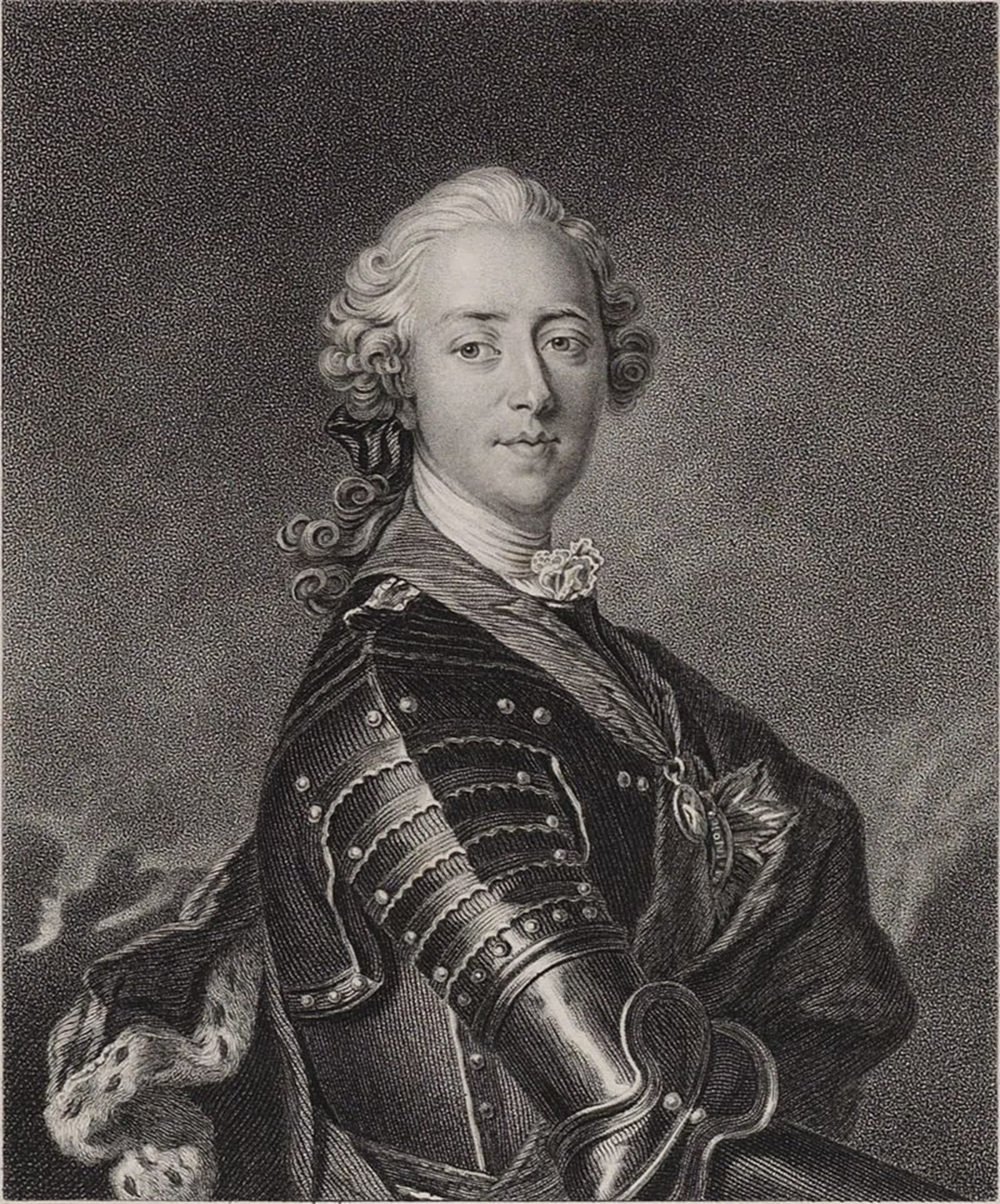
At sea England and France also waged a fierce struggle. After the Battle of Toulon on February 22, 1744, which brought a decisive victory to neither side, France officially declared war on England. A French attempt to land on the British shores the pretender to the throne Charles Stuart was foiled by the English fleet and storms.
In the colonies the English in 1745 captured the French fortress of Louisbourg on Cape Breton. The French squadron sent to help was scattered by storms and disease. In 1746 the English undertook an unsuccessful attempt to capture Lorient. However, in 1747 off Cape Finisterre the English fleet under Admirals Anson and Hawke won a series of victories over the French squadrons bound for the colonies.
On August 23, 1744, 70,000 Prussians without a declaration of war entered Bohemia. On September 16 they besieged and took Prague. Austria was taken by surprise. However, Austrian troops under Traun began successful maneuvers on Frederick’s lines of communication, which, combined with disease and lack of provisions, forced the Prussians to retreat into Silesia. Most of the cities they had captured were reoccupied by the Austrians, and on November 25 Prague surrendered.
Meanwhile, by the end of 1744 all of Bavaria had been freed from the Austrians, but already at the beginning of 1745 the Austrians defeated the Bavarians and the French. The death of Emperor Charles VII on January 20, 1745, changed the course of events. His son, the Elector of Bavaria Maximilian, concluded the Treaty of Füssen with Austria on April 22, renouncing his claims to the throne. On September 13 the imperial crown went to Maria Theresa’s husband, Francis I.
Resuming the offensive, the allied army of Austrians and Saxons, numbering 90,000 men, moved on Silesia. Frederick II, deceiving them with a feigned retreat, on June 4 defeated the enemy at Hohenfriedberg. He pursued them into Bohemia but, unable to consolidate his success, was once again forced to withdraw into Silesia. On October 30 the Prussians won another victory at Soor. In winter, learning of plans to attack Berlin, Frederick moved into Lusatia, where on November 23 he defeated the Saxons at Gross-Hennersdorf, and on December 15 at Kesselsdorf. On December 16 Prussian troops occupied Dresden.


These victories accelerated peace negotiations. On December 25, 1745, the Treaty of Dresden was concluded, under which Silesia finally passed to Prussia, and Frederick recognized Francis I as emperor.
After the Treaty of Dresden, the conflict in Germany was over, but the war continued in Italy and the Austrian Netherlands.
In Flanders the French army under Maurice of Saxony won a series of brilliant victories. In 1745 it took Tournai, Audenarde, and Ostend after the victory at Fontenoy on May 11. In 1746 the French captured Brussels, Antwerp, Mons, and Namur, and on October 11 won a victory at Rocoux. In 1747, after the victory at Lauffeld, the French besieged and took the fortress of Bergen op Zoom. In 1748 they captured the Dutch fortress of Maastricht.

In Italy the fortunes of war passed from hand to hand. In 1745 Franco-Spanish forces, with the help of the Republic of Genoa, seized Milan and most of Lombardy. However, after the Treaty of Dresden, Austria strengthened its forces in Italy, and by the autumn of 1746 the French and Spaniards were completely driven out of the country. Genoa was taken on September 6, but already on December 5 a popular uprising forced the Austrians to leave. In 1747 the Austro-Sardinians unsuccessfully blockaded Genoa but repelled a French offensive in the Battle of Assietta.
Finally, Russia on June 2, 1747, entered the war on Austria’s side, which forced France to seek peace.
In April 1748 a congress was convened in Aachen. On April 30 the preliminary terms were signed, and on October 18 the final peace treaty.
According to the Peace of Aachen, the prewar territorial status was restored, with the exception of several key changes: the Pragmatic Sanction was finally recognized by all powers. Austria ceded Silesia and Glatz to Prussia. The duchies of Parma, Piacenza, and Guastalla went to the Spanish Infante Philip. Sardinia received part of the Duchy of Milan.
The war ended, leaving Holland greatly weakened, and France and Spain having failed to achieve their main aims. England, despite successes at sea, could not completely subdue its opponents, while Austria, although it lost part of its territories, preserved its integrity, which became an important outcome of the eight-year conflict.


