Born in 419, Valentinian was the product of a dynastic union that brought together some of the highest-ranking aristocratic families of the age. His father was Constantius III, co-emperor of Honorius, while his mother was the strong-willed Galla Placidia, Honorius’s own sister.
Such an ancestry might have seemed to guarantee him secure authority, yet by that time the fate of the empire was already hanging by a thread.
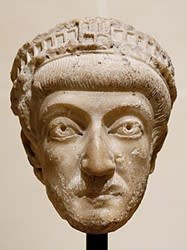
Dark clouds gathered over the young heir very early.
In 423, the court at Ravenna split into rival factions. A bitter struggle broke out between those supporting the reigning emperor and uncle, Honorius, and those supporting Valentinian’s mother.
In this ruthless political struggle, Galla Placidia suffered a temporary defeat. She was stripped of her prestigious title of Augusta and, in order to save both her own life and those of her children, was forced to flee eastward to Constantinople, seeking protection from her powerful nephew, Emperor Theodosius II.
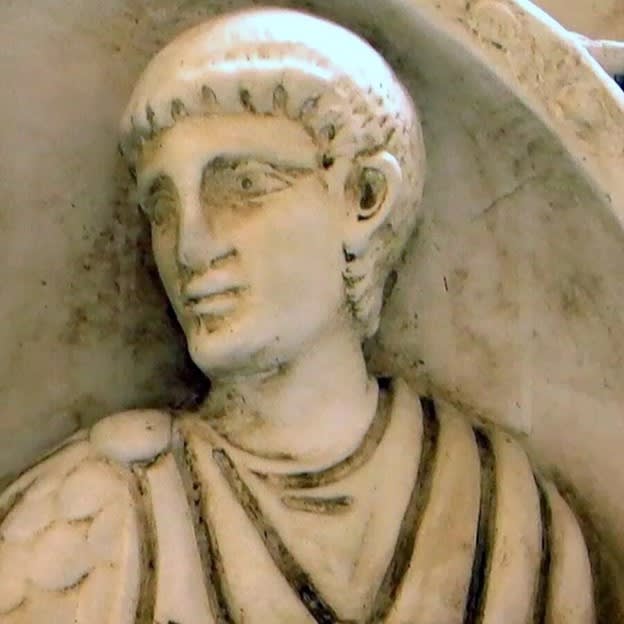
The exile did not last long.
After the death of Honorius, the usurper Joannes attempted to seize power in the West.
In response, in 425, the young Valentinian was solemnly crowned Caesar at Thessalonica.
With massive support from the Eastern Roman army, Joannes was defeated, and Theodosius II officially proclaimed his cousin Valentinian III full emperor of the Western Roman Empire.
Because of the ruler’s young age, real power was concentrated in the hands of regents: his mother, Galla Placidia, and the outstanding but ambitious general Flavius Aetius.
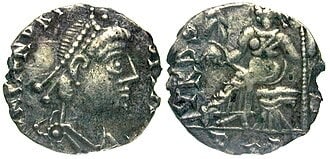
The period of regency was marked by a disastrous internal conflict that inflicted irreparable damage on the integrity of the state.
A bitter struggle for influence erupted between Flavius Aetius and another talented general, Boniface.
When Boniface received the post of commander-in-chief in distant Libya, Aetius, consumed by jealousy and suspicion, devised an intrigue remarkable in its treachery.
Taking advantage of his rival’s absence, Aetius slandered him before the empress, claiming that Boniface was plotting rebellion and intended to separate Libya permanently from the empire.
At the same time, the cunning Aetius secretly contacted Boniface himself, warning him that Galla Placidia supposedly intended to destroy him.
Caught in this trap of double deception, Boniface refused a direct order from the empress to leave Africa.
In desperation, he took an unprecedented step: he entered into negotiations with Genseric, king of the Vandals, and persuaded him to transport his people from Spain to the African continent.
The decision proved fatal.
In 429, the barbarian forces crossed the Strait of Gibraltar, and within only ten years the once immensely wealthy African provinces of Rome had fallen completely under Vandal control.
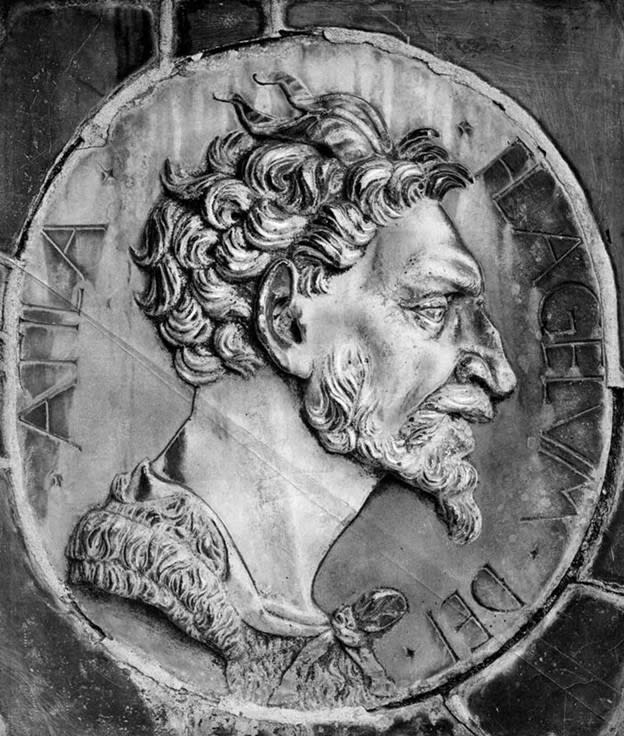
While the empire was losing Africa, a new and even more terrifying threat approached from the east.
After crushing the forces of Theodosius II, the formidable leader of the Huns, Attila, turned his attention toward the West.
The immediate pretext for his invasion came from scandalous disputes within the imperial family itself.
Valentinian’s sister Honoria, seeking to escape a forced marriage arranged by her brother, secretly sent her eunuch to Attila with a plea for help.
The Hunnic leader seized the opportunity.
He sent envoys to Ravenna with the bold demand that pressure on Honoria be stopped, declared her his bride, and demanded nothing less than half of the Western Roman Empire as her dowry.
Valentinian categorically refused.
In 451, Attila led his enormous forces westward.
Once again, Flavius Aetius emerged as Rome’s savior.
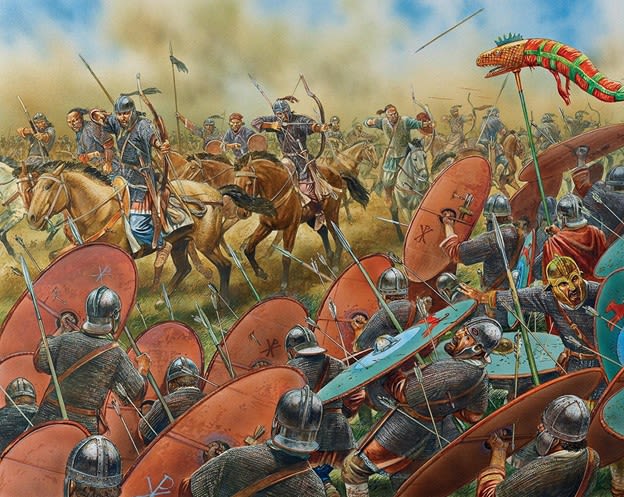
Through extraordinary diplomatic skill, he managed to unite Roman legions with contingents from various barbarian peoples and halted the Huns in the enormous Battle of the Catalaunian Plains.
Yet this was only a temporary reprieve.
The following year, 452, Attila repeated his invasion.
This time, because of a critical lack of unity among the imperial forces, the Huns invaded Italy almost without resistance, leaving devastation behind them.
The flourishing cities of Aquileia and Mediolanum were destroyed.
Only through enormous concessions was peace concluded with Attila, who finally withdrew his armies from the devastated Italian peninsula.
In 453, the tireless Hunnic ruler was preparing for another, even larger campaign, but died suddenly before he could complete his preparations.
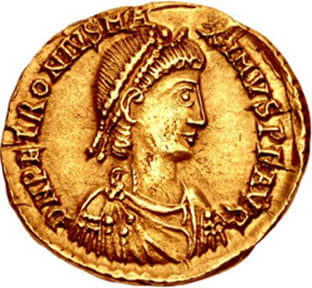
It might have seemed that the death of the empire’s greatest enemy would bring relief, but Valentinian himself survived Attila only briefly.
According to the chronicles of Procopius of Caesarea, the final years of Valentinian’s life were darkened by a disgraceful crime born of decadence and unchecked power.
The emperor became attracted to the wife of the prominent Roman senator Petronius Maximus, a woman renowned for her exceptional beauty and modesty.
Unable to seduce her, Valentinian resorted to an elaborate deception.
He invited Maximus to the palace for a game of chess, agreeing that the loser would pay a penalty in gold.
After winning the game, the emperor took the senator’s signet ring as security.
He then secretly sent the ring to Maximus’s wife with a false message supposedly from her husband ordering her to come immediately to the empress.
Recognizing the ring and suspecting nothing, the woman arrived at the palace in a litter.
She was not taken to the empress’s apartments, however, but to one of the most remote and secluded areas of the palace, where Valentinian brutally violated her.
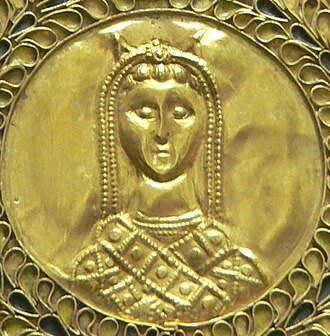
Dishonored and consumed by a desire for revenge, Petronius Maximus began weaving a careful conspiracy.
Relying on bribed eunuchs, he succeeded in convincing the suspicious Valentinian that his savior, Flavius Aetius, was preparing a coup.
The emperor, who had long harbored dark jealousy toward the fame and achievements of his commander-in-chief, yielded to the accusations and ordered his trusted eunuch Heraclius to eliminate Aetius.
This treacherous murder deprived Valentinian of his only reliable shield.
Taking advantage of the situation, Maximus managed to place two former servants of the murdered general among the emperor’s personal guards.
The plan worked perfectly.
While the emperor was enjoying himself on the Campus Martius, the two bodyguards stabbed both Valentinian and his accomplice, the eunuch Heraclius, to death.
Thus ended in disgrace the life of a ruler whose family connections had once seemed to promise stability.
Back in 437, Valentinian had married his relative Eudoxia, daughter of Theodosius II and Eudocia.
She bore him two daughters, Eudocia and Placidia.
The fate of his family proved as tragic as that of the state itself.
With the death of Valentinian III, the disintegration of the Western Roman Empire passed a point of no return.
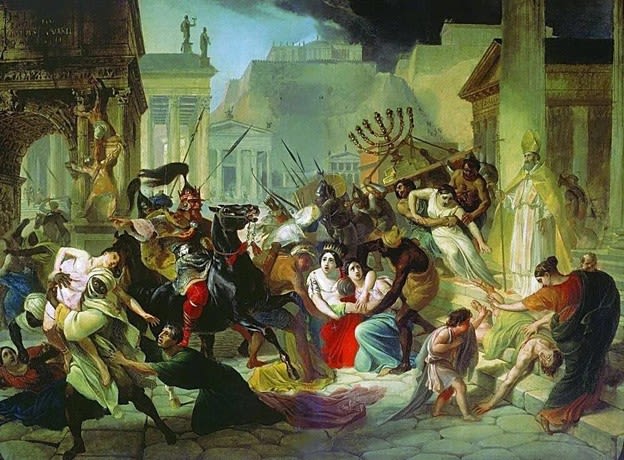
In the very same year in which the emperor was killed by conspirators — 455 — the defenseless city of Rome was captured and subjected to a devastating sack by the Vandals.
Valentinian’s widow and both of his daughters were carried away as valuable captives to Carthage, where they spent seven long years in captivity.
Petronius Maximus, whose desire for revenge had set this final act of tragedy in motion, failed to retain power and was killed after only 78 days of his brief reign.