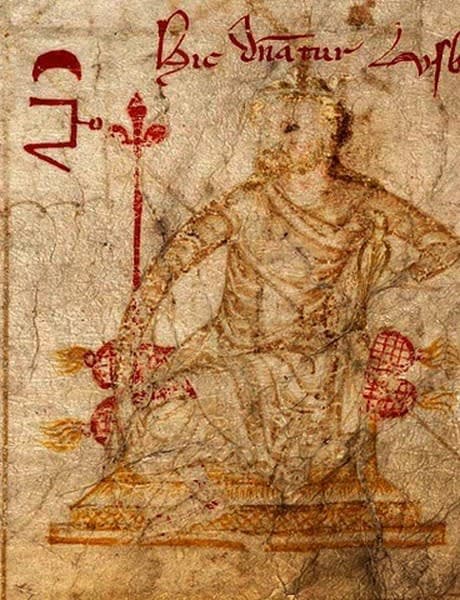
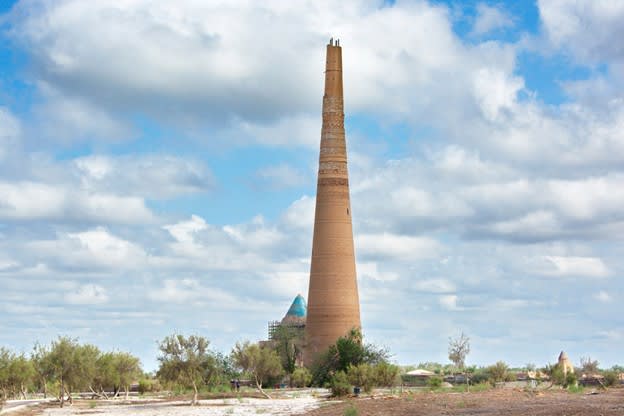
Uzbek was the nephew of Khan Tokhta and the grandson of Khan Mengu-Timur, and his rise to power was the result of court intrigue. In 1313, after Tokhta’s death, Uzbek arrived from Khwarazm and killed Tokhta’s heir, Iksar, along with his vizier Qadak. With the help of the influential beglerbeg Qutlug-Timur and his father’s wife, Bayalun, he seized the throne. That same year, at Qutlug-Timur’s insistence, Uzbek Khan officially embraced Islam and took the Muslim name Muhammad. His attempt to make Islam the state religion met resistance from the Horde aristocracy, which wished to preserve Mongol traditions. Uzbek Khan crushed the revolt, executing about 120 high-born Chinggisids.
The reign of Uzbek Khan is considered the Golden Age of the Golden Horde. He succeeded in eliminating internal strife, strengthening central authority, and achieving economic and cultural growth. Under him, a new capital, Sarai al-Jadid, was built. The khan paid great attention to trade, making caravan routes safe and well maintained. The Horde conducted vigorous commerce with Western Europe, Asia Minor, Egypt, India, and China.


Uzbek Khan also carried out an administrative–territorial reform, dividing the empire into 70 tumens, grouped into ten large regions. He abolished the institution of the basqaqs in Rus’, transferring the right to collect tribute to the Russian princes—an important step in relations with the Rus’ lands.
In dealing with the Russian princes, Uzbek Khan skillfully exploited their internecine conflicts. In 1317 he gave his sister Konchaka in marriage to Yury Danilovich of Moscow, granting him support in the struggle for the grand princely title. However, when Yury accused Mikhail Yaroslavich of Tver of poisoning Konchaka, Uzbek Khan ordered Mikhail’s execution.
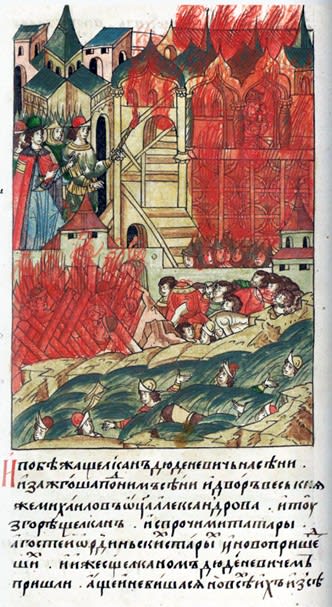
During his reign, Uzbek Khan ordered the execution of nine Rus’ princes, including Mikhail Yaroslavich of Tver and his sons. Yet when, in 1327, an uprising broke out in Tver against the Horde envoy Shchelkan, Uzbek Khan placed his trust in the Moscow prince Ivan Kalita. He granted Kalita a yarlyk (charter to rule) and 50,000 troops, with which Kalita brutally suppressed the rebellion—an outcome that elevated Moscow and weakened Tver.

In foreign affairs, Uzbek Khan maintained active diplomatic relations with neighboring states. He sought to prevent Poland’s takeover of the Galician-Volhynian Principality and also laid claim to Transcaucasian lands, although his campaigns there brought limited success. Uzbek Khan concluded a dynastic marriage with the daughter of the Byzantine emperor Andronikos II and forged close ties with Mamluk Egypt.
Uzbek Khan died in 1341, leaving the Golden Horde at the height of its power. After his death, his son Tini Beg ascended the throne. In the history of the Golden Horde, Uzbek Khan is remembered as the ruler who brought the state to its peak of strength and prosperity.


