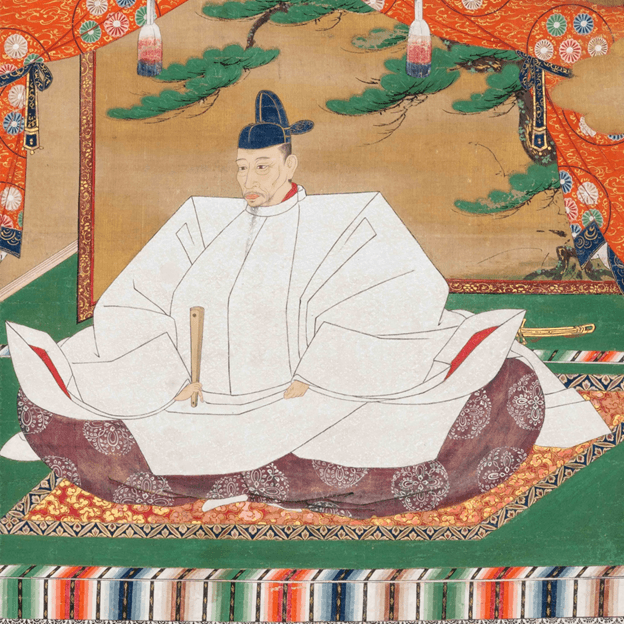
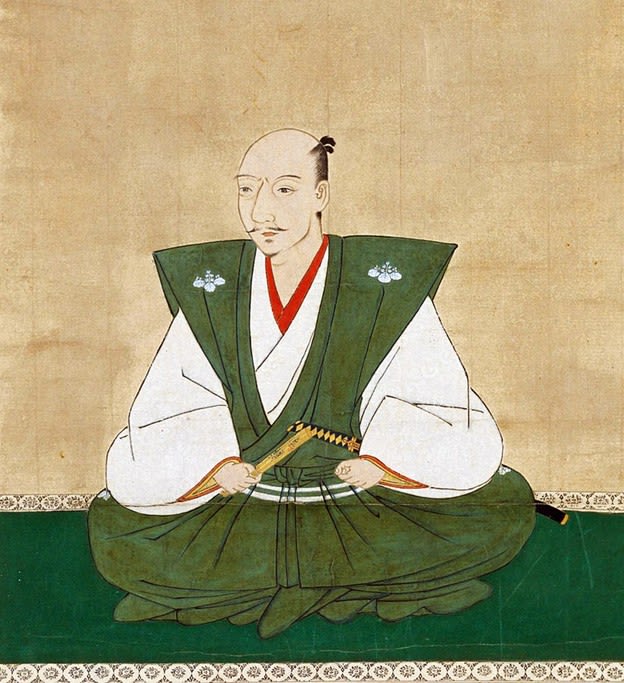
Toyotomi Hideyoshi was a figure whose rise from a poor peasant to ruler of Japan seemed almost impossible. He was born in 1536 into a poor family in Owari Province. After his father’s death and cruel treatment by his stepfather, the young Hideyoshi then known as Kinoshita Tōkichirō ran away from home to become a samurai. He first entered the service of the samurai Matsushita Nagamori, a vassal of the powerful Imagawa clan.
However, in 1554 he left his first master and entered the service of Oda Nobunaga, starting at the very lowest position as a sandal-bearer. Thanks to his intelligence and ambition, Hideyoshi quickly advanced through the ranks. His first major achievement came when he repaired Nobunaga’s collapsed fortifications in just three days. This feat so impressed Nobunaga that he appointed Hideyoshi governor of the castle town of Kiyosu.
In 1564, after attaining higher social status, Hideyoshi married the adopted daughter of one of Nobunaga’s vassals, strengthening his position. In 1566, he demonstrated his military genius by constructing a fort overnight in the marshlands of Sunomata, allowing Nobunaga to capture Mino Province. It was during this campaign that Hideyoshi managed to win over several enemy generals to Nobunaga’s side.
In 1570, during Nobunaga’s campaign against the Asakura clan, Hideyoshi was appointed commander of the rear guard a position often considered a death sentence. Nevertheless, he successfully covered Nobunaga’s retreat and returned unharmed. This act convinced everyone that Hideyoshi was not only a capable administrator but also a gifted military commander. Later, having received his own fief in Ōmi Province, he changed his name to Hashiba Hideyoshi and began assembling his own army, recruiting not only relatives but also rōnin (masterless samurai).
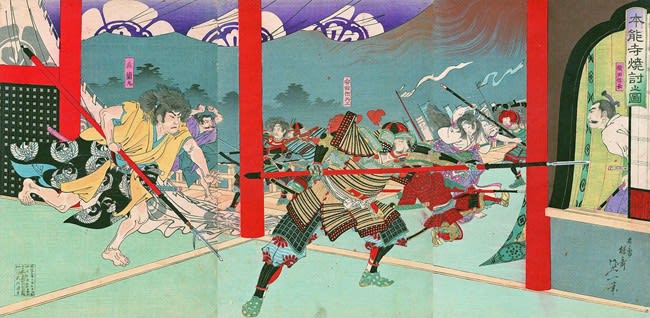
After Oda Nobunaga’s death in 1582 caused by Akechi Mitsuhide’s betrayal it was Hideyoshi who seized the initiative. While besieging Takamatsu Castle, he hastily made peace with the Mōri clan and rushed his forces to the capital. Beating Tokugawa Ieyasu, another of Nobunaga’s allies, to Kyoto, Hideyoshi defeated Mitsuhide’s army at the Battle of Yamazaki. Becoming Nobunaga’s de facto successor, he gained the support of most generals and assumed the role of regent for Nobunaga’s young heir.

In 1583, his authority was challenged by Shibata Katsuie, but Hideyoshi defeated him at the Battle of Shizugatake, after which opposition collapsed. He also managed to bring his most powerful rival, Tokugawa Ieyasu, under his influence. Although Ieyasu won a tactical victory over Hideyoshi’s forces at the Battle of Nagakute, he recognized Hideyoshi’s superior military and economic power and agreed to peace. In 1586, Ieyasu came to Kyoto and swore allegiance to the new ruler.

At the same time, Hideyoshi built a magnificent castle in Osaka, which became a symbol of his authority and the new political center of Japan. He sought to legitimize his rule but could not obtain the title of shogun due to his peasant origins. Instead, in 1585, he was granted the highest court title of kampaku (regent), and in the following year, the position of daijō-daijin (chief minister), which allowed him to rule in the emperor’s name.
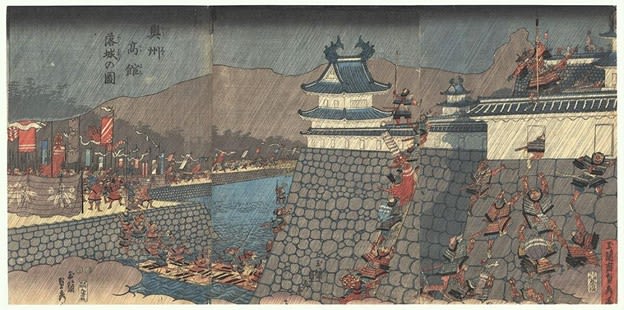
Having consolidated control over the Kinai region, Hideyoshi turned his forces toward conquering the rest of Japan. In 1585, he subjugated the island of Shikoku by defeating its ruler, Chōsokabe Motochika. In 1587, he led a 200,000-strong army to Kyushu and forced the powerful Shimazu clan to surrender. In 1590, he launched his final major campaign against the Go-Hōjō clan in the Kantō region, besieging their main fortress, Odawara Castle. After a three-month siege, the seemingly impregnable stronghold fell, and its leaders committed seppuku. By this time, Toyotomi Hideyoshi had become the sole ruler of Japan, bringing an end to a century of feudal wars.
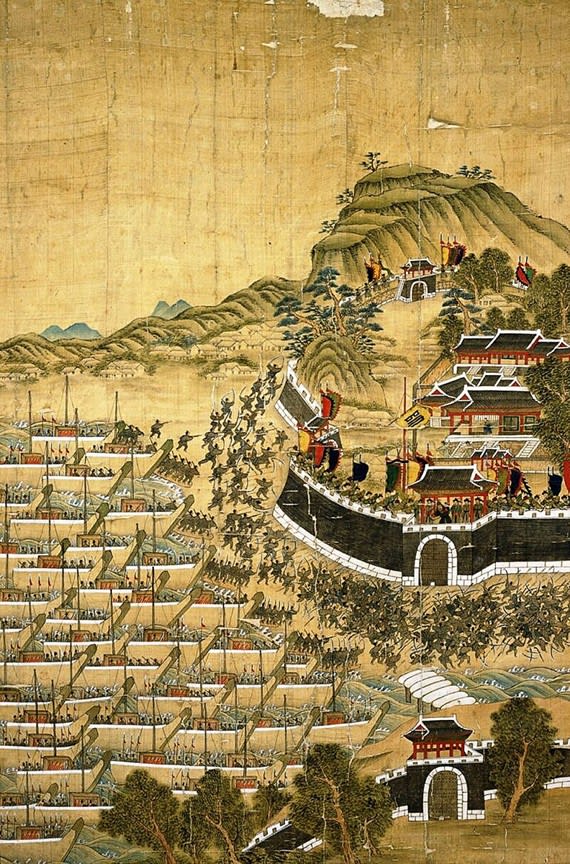
After unifying Japan, Hideyoshi began implementing sweeping reforms. Continuing Nobunaga’s economic policies, he promoted trade and conducted a nationwide land survey. He also issued the “Sword Hunt” edict, confiscating weapons from peasants and clearly dividing society into military and civilian classes. Despite high taxes, the end of warfare led to economic growth.
Hideyoshi was also known for his harsh policy toward Christianity. In 1587, he issued an edict expelling Christian missionaries and persecuted Japanese Christians a move historians link to his efforts to resist European colonial influence.
In 1592, driven by ambitious and perhaps delusional dreams, Hideyoshi launched the Imjin War, sending a 160,000-strong expeditionary army to conquer Korea and China. The Japanese quickly captured key Korean cities, but their advance was halted by fierce Korean resistance and the intervention of Chinese forces. A temporary truce was concluded in 1593.

Meanwhile, in Japan, Hideyoshi’s son Hideyori was born. Seeking to ensure his son’s succession, Hideyoshi forced his nephew and designated heir, Hidetsugu, to commit seppuku. Shortly before his death, he established a Council of Regents to govern Japan on behalf of his son.
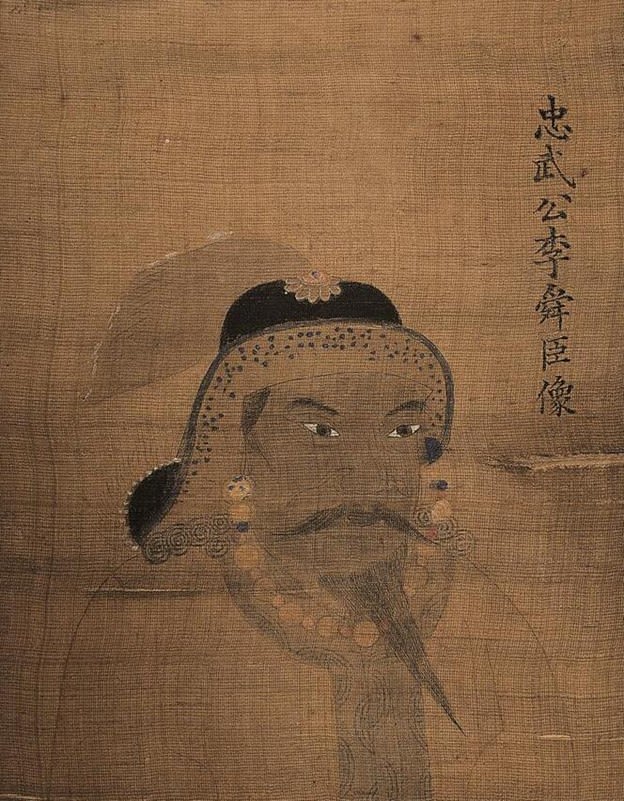
The Imjin War resumed in 1597, but despite temporary successes, the Japanese could not maintain their advance and were forced to retreat to Korea’s southern coast. In November 1598, the brilliant Korean admiral Yi Sun-sin destroyed the Japanese fleet at the Battle of Noryang, cutting off their supply lines and ending their ability to continue the war.
On September 18, 1598, Toyotomi Hideyoshi died. The news of his death, coinciding with the loss of the fleet, led to the final withdrawal of Japanese troops from Korea. Hideyoshi’s death also marked the beginning of Tokugawa Ieyasu’s struggle for power. As a member of the regency council, Ieyasu gradually consolidated his influence, ultimately destroying the Toyotomi clan, becoming shogun, and founding a dynasty that would rule Japan for over 250 years.


