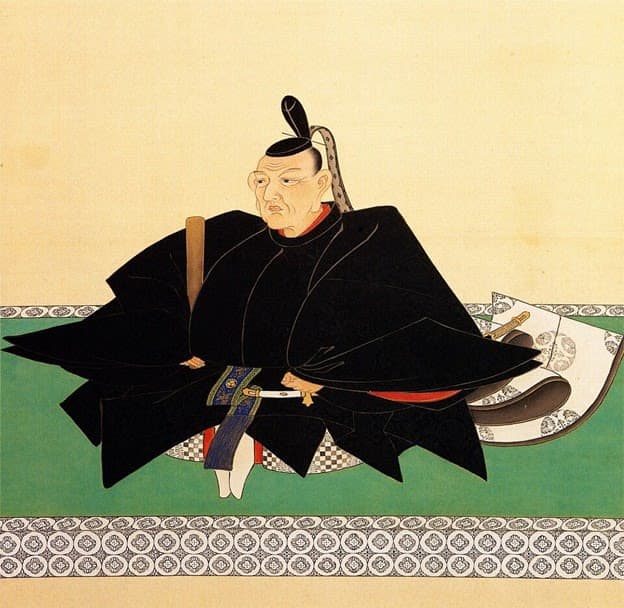

The fate of Tokugawa Yoshimune is a vivid example of how chance and a سلسلة of tragedies can alter the course of history. He was the third son of Tokugawa Mitsusada, head of the feudal house of Kii — one of the three elite branches of the clan (Gosanke) founded by the younger sons of Ieyasu. At first, his chances of reaching the shogunate were negligible. In 1697, he became merely the modest daimyo of the small domain of Sabae. However, 1705 proved fatal for the house of Kii: in May, his elder brother died; in August, his father died; and in September, his middle brother suddenly passed away as well.
Thus, in an instant, Yoshimune became daimyo of Kii Province, with the impressive income of 550,000 koku of rice. In December of that same year, he changed his childhood name Yorikata to Yoshimune. It was here, in Kii, that he began his first experiments in government, later described as “enlightened rule” (meikun). Over the course of eleven years, he imposed strict order on the domain: he reduced the bureaucratic apparatus, cut officials’ salaries, and modernized village irrigation systems, proving that economy and efficiency are the ruler’s best allies.
In June 1716, with the death of the six-year-old shogun Ietsugu, the direct line of succession came to an end. Yoshimune, as an experienced thirty-two-year-old administrator from a collateral branch, took the vacant office. His arrival in Edo marked the end of the age of favorites. His first act was to expel the conservative adviser Arai Hakuseki and abolish the office of personal secretary, so that no one could stand between the shogun and the truth.
In order to keep the country under control, Yoshimune created a unique group of twenty samurai brought from Kii. These men became his “eyes and ears,” gathering secret information about the mood in the provinces. Relying on their reports rather than on official documents, the shogun was able to suppress intrigues and restore the prestige of the fudai daimyo (hereditary vassals), whose position had weakened under his predecessors.
Yoshimune’s central achievement was the Kyōhō Reforms, aimed at repairing the shogunate’s leaking finances. By that time, the samurai class (hatamoto and gokenin) was in a miserable condition; in 1722, the government was able to pay them only one quarter of their stipends.
The key measures of financial recovery were:
Strict economy: The shogun set a personal example, exchanging silk for cotton and linen. War was declared on luxury in clothing, food, and housing for all social classes.
Tax reform: In July 1721, the financial administration was divided into two bodies: kattekata (finance) and kujigata (administrative affairs). Between 1722 and 1731, the daimyo were subjected to an extraordinary tax of 1% of gross rice yield, in exchange for which they received a reduction of their required residence in Edo to half a year.
Price stabilization: Yoshimune earned the nickname “the Rice Shogun” (Kome-shōgun). He opened the Dōjima Rice Exchange in Osaka and strictly regulated the prices of essential goods, creating state reserves and restricting sake production in years of poor harvests.
Yoshimune understood that stability was impossible without fair justice. In 1742, at his order, Ōoka Tadasuke compiled the “Code of One Hundred Articles” — the first consolidated law code of the Tokugawa era. These reforms humanized the justice system: torture was abolished in many cases, and for minor theft, execution was replaced by branding with a tattoo.
In Edo, Kyoto, and Osaka, complaint boxes known as meyasubako were installed. Only the shogun possessed the key, and he personally spent hours reading the letters. Thanks to this “direct line” to the ruler, in 1722 a free clinic for the poor and the lonely was built in Edo — the Koishikawa Sanjōsho.


One of Yoshimune’s boldest steps was his permission for the import of European books on applied sciences (with the exception of Christian literature). Interested in everything Western — from agriculture to painting — he personally conversed with the Dutch and encouraged the study of their language. This marked the beginning of the school of rangaku (“Dutch learning”), which allowed Japan not to fall hopelessly behind the world’s technical progress during the age of isolation.
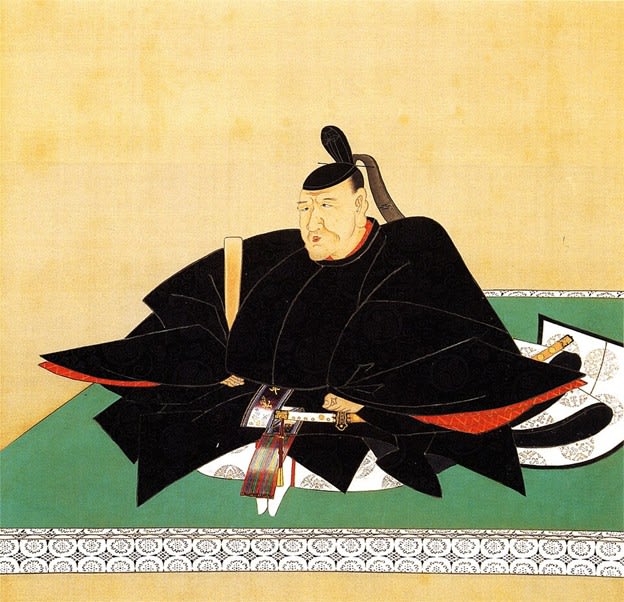
Tokugawa Yoshimune was a unique figure physically as well. His height was 182 cm, making him a true giant among his compatriots of that age. He despised ceremony, loved physical hardening, and delighted in the martial arts. In private life he was ascetic: when, after the death of his wife, he was offered the chance to choose a concubine, he looked not for beauty, but for loyalty and the absence of jealousy.
In 1745, Yoshimune formally retired, transferring the title to his son Ieshige, but in reality he continued to govern the country until the very end. He died on July 12, 1751, at the age of 66. His reign became the model of the Confucian ideal of the ruler: strict with himself, merciful toward the people, and merciless toward inefficiency. It was precisely thanks to Yoshimune that the Tokugawa shogunate was able to survive for another century, before the winds of change finally destroyed it.


