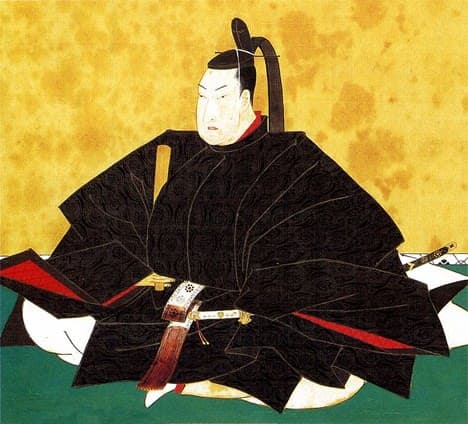

The future ruler was born on February 23, 1646, in Edo Castle. As the third son of the stern shogun Iemitsu, Tsunayoshi displayed remarkable energy and hyperactivity from an early age. Fearing that his strong-willed and restless son might one day challenge the authority of his elder brothers, Iemitsu made a strategic decision: he effectively forbade the boy from pursuing serious study of the martial arts, directing all his vigor instead into the sphere of academic learning. Tsunayoshi became a diligent student, immersing himself in the canons of Confucianism and Buddhist philosophy, which left a lasting imprint on his entire later style of rule.
A particularly strong influence on him was his mother — the daughter of a simple Kyoto grocer from the Honjo family. Her humble origin and deep piety shaped in Tsunayoshi a distinctive worldview, combining aristocratic pride with religious zeal. Later, in her memory, he erected the magnificent Gokoku-ji Temple. From 1661 to 1680, Tsunayoshi ruled as the daimyo of the Tatebayashi Domain, but the sudden death of his elder brother Ietsuna, who left no heirs, summoned him back to Edo. In June 1680, he officially became the fifth shogun of Japan.

Tsunayoshi’s reign coincided with the legendary Genroku period. It was a golden age of Japanese urban culture. While the shogun devoted himself to reflections on morality under the influence of his favorite, Yanagisawa Yoshiyasu, the country experienced an unprecedented flourishing:
Kabuki theater and bunraku puppet theater reached the peak of their popularity.
Literature and the visual arts blossomed in brilliant colors.
The wealthy merchants of Osaka and Kyoto began competing in luxury with the samurai elite.


Yet behind the façade of cultural brilliance lay profound changes. Tsunayoshi, as a strict advocate of Confucian ethics, sought to transform the military government into an ideal civil state in which not violence but virtue stood at the center. Unfortunately, his understanding of virtue soon took forms that horrified his contemporaries.
The most famous and odious act of Tsunayoshi was the edict issued in 1687, “On the Prohibition of Taking the Lives of Living Creatures.” It was for this that he received from the people the ironic nickname “Inu-kubo” — “the Dog Shogun.”
There are different explanations for what pushed the ruler toward such radicalism. According to one version, a Buddhist monk convinced the shogun that his lack of an heir (his only son had died in early childhood) was punishment for sins committed in past lives, in particular for cruelty toward dogs — especially since Tsunayoshi himself had been born in the Year of the Dog. The shogun resolved to atone for this guilt by granting animals unprecedented rights.
The consequences of the edicts, which appeared almost daily, were extraordinary:
Legal status: Dogs, cows, cats, birds, and even snakes came under state protection. The sale of fish in the markets was forbidden.
Etiquette: Street dogs were to be addressed only as “O-inu-sama” (“Honorable Dog”). A rude word or a thrown stone could be punished by beating with sticks.
Shelters: When Edo became filled with packs of stray dogs, Tsunayoshi ordered the construction of a gigantic network of shelters. The largest of them, in the Nakano district, covered 55 hectares and could hold up to 50,000 animals.
The killing of an animal — even accidentally — brought severe punishment, from exile to the death penalty. History preserves reports that an entire village was executed for failing to follow the rules governing the treatment of a pack of dogs that was destroying crops. Peasants were instructed to ask the dogs to leave “with affection and persuasion,” without even raising their voices.
Paradoxically, for all this love of animals, there was not a single dog in the shogun’s own palace — his fanaticism was ideological and metaphysical rather than personal.

Tsunayoshi’s reign is also inseparably linked with the legend of the Forty-Seven Ronin (the Ako Vendetta), which became the standard of samurai loyalty. In 1701, the young lord Asano Naganori, driven to despair by the humiliations inflicted on him by the master of ceremonies Kira Yoshinaka, attacked him directly in the corridors of Edo Castle.
Tsunayoshi’s reign is also inseparably linked with the legend of the Forty-Seven Ronin (the Ako Vendetta), which became the standard of samurai loyalty. In 1701, the young lord Asano Naganori, driven to despair by the humiliations inflicted on him by the master of ceremonies Kira Yoshinaka, attacked him directly in the corridors of Edo Castle.
Asano Naganori
Tsunayoshi, outraged by this violation of court etiquette, sentenced Asano to immediate seppuku, and ordered the confiscation of his castle and clan. Asano’s retainers, now turned into ronin, spent a year preparing their revenge. Disguised as firefighters, they stormed Kira’s mansion, cut off his head, and laid it upon the grave of their lord. The shogun found himself facing a dilemma: on the one hand, the warriors had demonstrated the highest samurai virtue; on the other, they had violated his law. In the end, he allowed them to commit honorable suicide — seppuku. This story stirred all Japan and fixed upon Tsunayoshi’s era the reputation of a time of great passions and harsh principles.


The final years of the “Dog Shogun” were darkened by natural and economic disasters. A financial crisis, caused by the debasement of the gold coinage and the enormous expense of maintaining dog shelters, was accompanied by the wrath of nature: in 1706, Edo was struck by a destructive typhoon, and in 1707, the sacred mountain Fuji erupted catastrophically. Ash covered the capital, and the people took this as a sign that the gods were displeased with the “dog rule.”
Before his death, Tsunayoshi decreed that his laws for the protection of animals should be enforced forever. However, his nephew and successor Tokugawa Ienobu showed political wisdom: only ten days after his uncle’s death, the hated laws were abolished, to the immense joy of the entire population.
Despite his eccentricity, Tsunayoshi left behind a country with a highly developed urban culture and the beginnings of humanitarian legislation. He showed that the power of the shogun could be not only military, but also intellectual — even if that intellectualism at times took forms bordering on madness.


