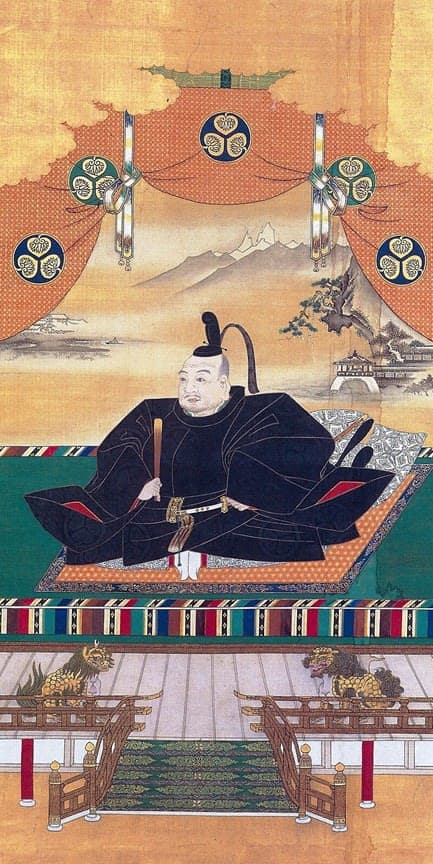
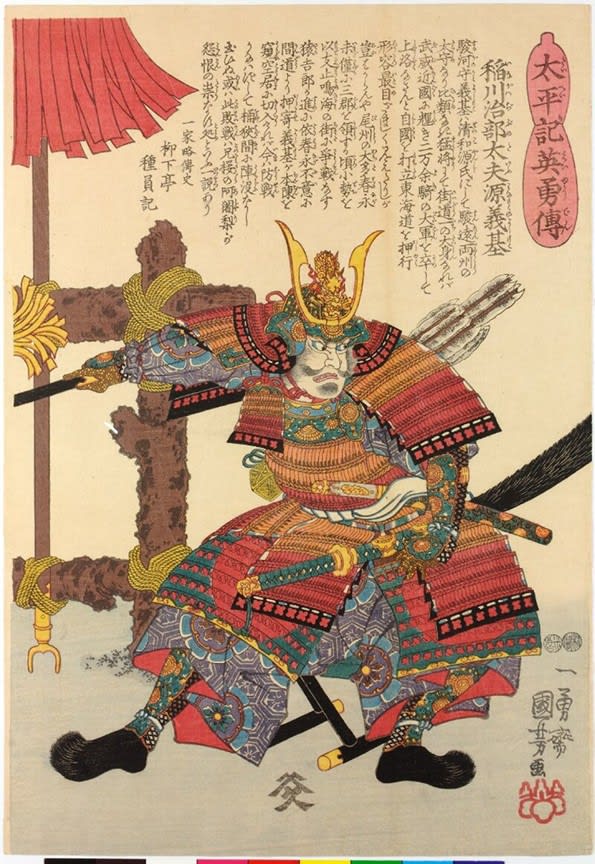
Tokugawa Ieyasu, the founder of Japan’s last shogunate, was born in Okazaki Castle in 1543, into the family of Matsudaira Hirotada, the daimyo of Mikawa Province. From an early age, his life was marked by constant danger. His lands lay between the territories of two powerful and hostile clans — the Oda to the west and the Imagawa to the east. This tense political situation even led to the exile of his mother in 1545, when the Matsudaira clan allied itself with the Imagawa.
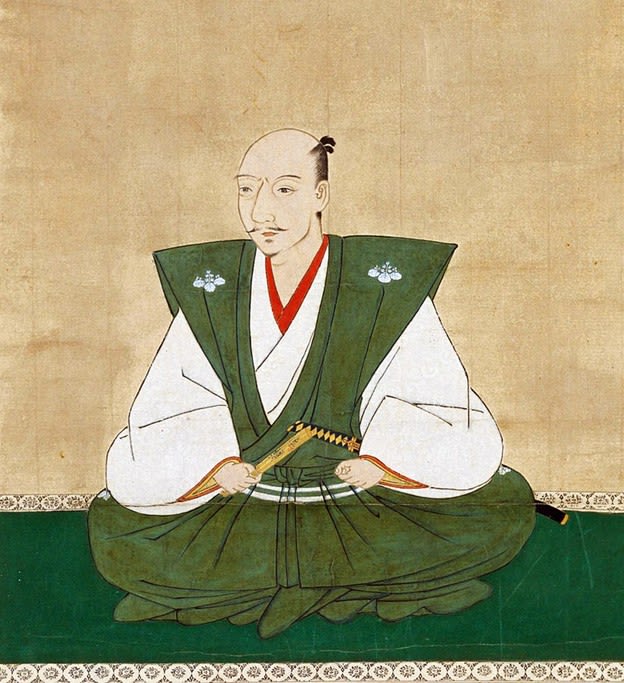
In 1548, six-year-old Ieyasu was sent as a hostage to the Imagawa as a guarantee of the alliance. However, on the way he was captured by Oda retainers and spent three years in captivity, during which he befriended Oda Nobunaga, the son of his captor. After his father’s death in 1549, he was left without a lord, but in 1551 he was returned to the Imagawa. He again became a hostage, but this time he was treated as a member of the family. During this period, he received an excellent education and married the niece of Imagawa Yoshimoto, strengthening his status.
A turning point in his life came in 1560 during the Battle of Okehazama, when Imagawa Yoshimoto was killed by the forces of Oda Nobunaga. Taking advantage of the chaos, Ieyasu declared independence, reclaimed his ancestral Okazaki Castle, and in 1562 formed an alliance with Nobunaga. He changed his family name to Tokugawa, claiming descent from the ancient Minamoto clan, and waged war against the remnants of the Imagawa, ultimately defeating them.
By 1570, Ieyasu had seized most of Totomi Province, formerly controlled by the Imagawa. His next and most dangerous rival was Takeda Shingen, whose clan was renowned for its military prowess. Ieyasu suffered a crushing defeat at Shingen’s hands in the Battle of Mikatagahara in 1573, but he was saved when Takeda suddenly fell ill and died shortly thereafter.
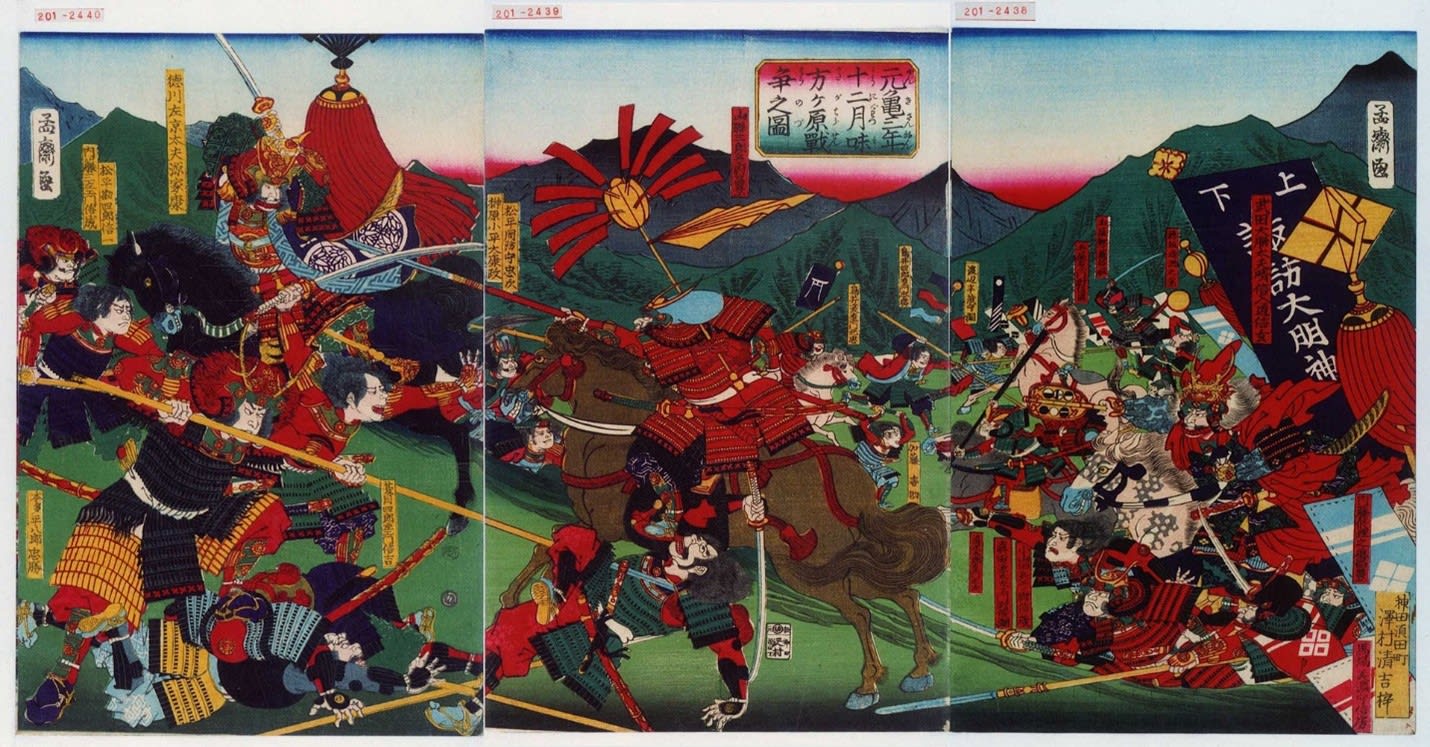

In 1575, now allied with Nobunaga, Ieyasu took part in the Battle of Nagashino, where the allies’ arquebusiers annihilated the famous Takeda cavalry. This battle marked the first decisive victory in Japan achieved through the use of firearms. By 1582, the Takeda clan had been completely destroyed, and Ieyasu took possession of their vast lands, including Suruga Province.

In June 1582, while Ieyasu was in the port city of Sakai, he learned that Oda Nobunaga had been betrayed and killed by his vassal Akechi Mitsuhide at Honnō-ji Temple. Pursued by enemy forces, Ieyasu narrowly escaped with the help of a group of ninjas who guided him through secret mountain paths.
While Ieyasu made his way back to his domain, Toyotomi Hideyoshi, another of Nobunaga’s loyal generals, acted swiftly: he defeated Akechi at the Battle of Yamazaki and became Nobunaga’s de facto successor. Ieyasu, in turn, began preparing for war against him.
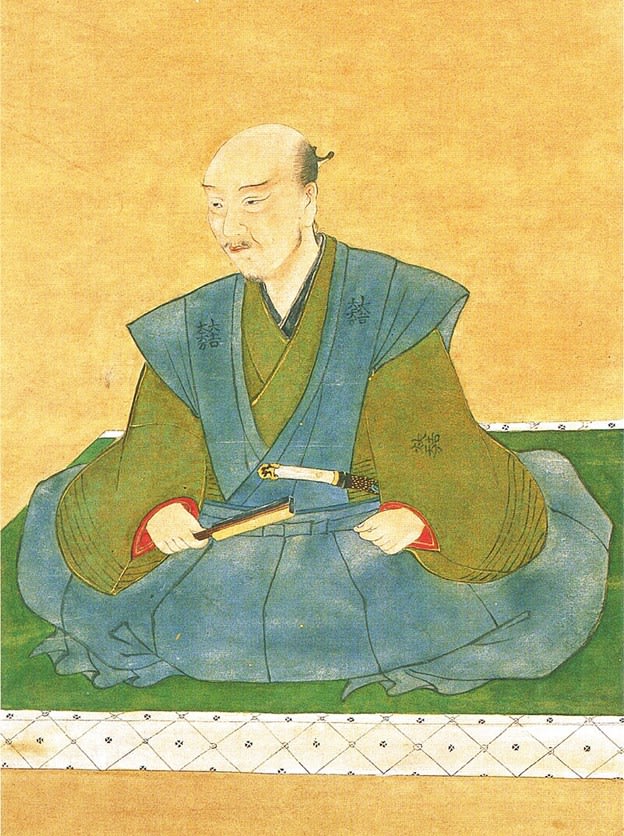
In 1584, their forces clashed in the Battle of Komaki-Nagakute, where Ieyasu, despite being outnumbered, demonstrated his military brilliance and inflicted a tactical defeat on Hideyoshi’s troops. However, recognizing the overwhelming strength of his rival, Ieyasu refrained from continuing the conflict and, in 1586, formally acknowledged Hideyoshi’s suzerainty, swearing allegiance to him.
Hideyoshi rewarded him with vast but undeveloped lands in the Kantō region. There, Ieyasu showcased his exceptional administrative abilities, transforming the area within a decade into a powerful economic and military center the foundation for what would later become the Tokugawa shogunate.
After Hideyoshi’s death in 1598, Ieyasu, as the most influential member of the regency council for Hideyoshi’s young heir, Toyotomi Hideyori, wasted no time consolidating his power. He forged alliances with discontented daimyo opposed to the Toyotomi administration, which led to the emergence of two rival coalitions: the Eastern Army, led by Ieyasu, and the Western Army, commanded by Toyotomi loyalist Ishida Mitsunari.
The decisive confrontation came on October 21, 1600, at the Battle of Sekigahara. Despite being outnumbered, Ieyasu won a total victory, largely due to the betrayal of General Kobayakawa Hideaki, who switched sides in the middle of the battle. The victory at Sekigahara made Ieyasu the undisputed ruler of Japan.


In 1603, at the age of 60, Ieyasu was granted the title of Seii Tai Shogun (“Barbarian-Subduing Generalissimo”) by the emperor, officially founding the Tokugawa shogunate. He established his seat of power in Edo (modern Tokyo). To avoid succession crises like those that had destroyed previous regimes, Ieyasu abdicated in 1605 in favor of his son Tokugawa Hidetada, while retaining real power behind the scenes.

To ensure lasting stability, Ieyasu turned to eliminating his greatest remaining threat the Toyotomi clan. Exploiting minor pretexts, he drained their treasury and, in 1614, accused them of insulting his name on the bell of Hōkō-ji Temple, launching the Osaka Campaign. Through two sieges of Osaka Castle the Winter and Summer Campaigns Ieyasu destroyed the Toyotomi forces. In 1615, Toyotomi Hideyori and his mother committed seppuku, marking the end of the Toyotomi line and the final unification of Japan.

Ieyasu died on June 1, 1616, at the age of 73. He was posthumously deified under the name Toshō Daigongen (“The Great Deity Who Illuminated the East”).
His domestic policy aimed at consolidating the power of the shogunate. He issued a series of laws that bound peasants to the land, disarmed the populace, and strictly regulated the behavior of samurai and the aristocracy. Particularly important were the “Laws for the Military Houses” (Buke Shohatto), which deprived samurai of landownership and placed regional lords (daimyo) under firm shogunal control.

Unlike his predecessor Nobunaga, who was open to contact with Europeans, Ieyasu influenced by his English advisor William Adams began pursuing a policy of isolation. In 1614, he issued an edict banning Christianity and expelling most Europeans from Japan. This marked the beginning of the Sakoku period Japan’s self-imposed isolation from the West, which lasted for more than 250 years.


