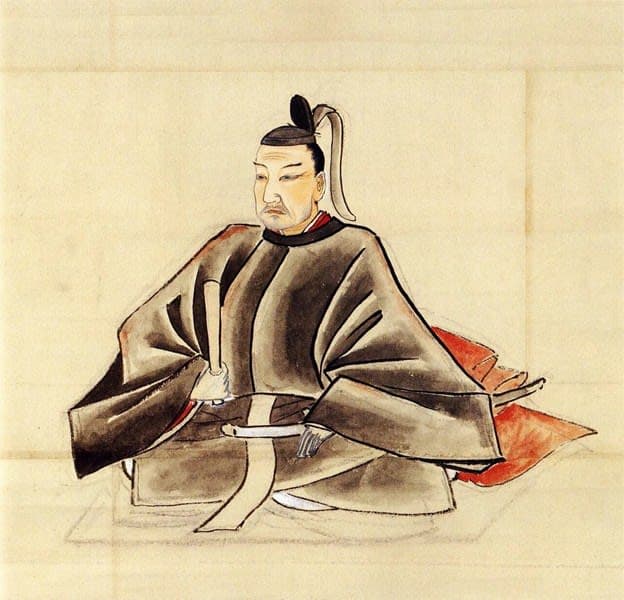
Tokugawa Ieharu was born in the very heart of the Japanese empire — Edo Castle. As the eldest son of the ninth shogun, Ieshige, he was prepared from an early age for the burden of power; however, the future ruler’s personal life was marked by deep sorrow. He was called the “unlucky shogun,” and there were good reasons for this. In early childhood, he lost his mother, and as an adult he endured what was most terrible for a Japanese aristocrat — the deaths of all his children (two sons and a daughter) and of his own brother. These losses not only inflicted severe psychological trauma upon him, but also endangered the very existence of the direct line of succession, which would later lead to a dynastic crisis.


In May 1760, after the voluntary abdication of his ailing father Ieshige, Ieharu officially assumed the position of the tenth shogun. By that time, a qualitative shift had already taken place in Japan’s political system: the figure of the shogun, regardless of his personal talents, had become largely ceremonial and symbolic. All the वास्तविक threads of state administration had passed into the hands of the Council of Elders (rōjū).
The central figure of this period was Tanuma Okitsugu (1719–1788), the daimyō of the Sagara domain. This remarkable and pragmatic politician effectively ruled Japan in Ieharu’s name. In 1772, after becoming head of government, Okitsugu launched a series of reforms that historians today regard as a bold attempt to modernize the country’s economy, which was suffocating under the constraints of the old estate-based system.
The second half of the eighteenth century became a time of profound tectonic shifts for the country. The old bakufu structure, based on rigid class divisions, began to crack.
Impoverishment of the samurai: The military nobility, deprived of war, was turning into a class of poor officials whose rice stipends were steadily losing value.
Commodity economy: In the countryside, market-oriented хозяйство developed actively. Rice ceased to be merely food and became a commodity.
Class stratification: A new class of wealthy landowner-entrepreneurs emerged, while ruined peasants became hired laborers or moved to the cities, swelling the ranks of the marginalized urban poor.
It was as though Ieharu’s reign was pursued by an evil fate. Nature unleashed its full wrath upon Japan, which in the eyes of the superstitious population appeared to be a sign that the shogunate had lost the “Mandate of Heaven.”
In 1770–1771, there was a massive rice crop failure and total drought, followed by a terrible famine.
In February 1772, the Great Fire of Edo broke out, destroying much of the capital.


In 1773–1774, an epidemic occurred, resulting in high mortality among the urban population.
In 1783, an abnormal cold spell destroyed the harvest, famine began, and desperate peasants rose in revolt.
Typhoons, floods, and volcanic eruptions — particularly that of Mount Asama in 1783 — finally undermined the country’s economic foundation. Famine riots among peasants and the looting of urban shops became commonplace, signaling that the existing system of government was in a state of deep paralysis.
In order to save the empty treasury, Tanuma Okitsugu resorted to unpopular but necessary measures. He introduced a policy of mercantilism, seeking to increase state revenues not only through the peasantry, but also through trade.
One of the key instruments of this policy was the kabunakama — merchant guilds that received government-granted monopoly rights to trade in certain goods in exchange for payment of a special tax (myōgakin).
However, this strategy had a darker side:
The system of licenses and monopolies gave rise to unprecedented bribery. Edo officials became mired in gifts and payments from wealthy merchants.
The people, suffocating under taxes and rising prices, poured out their anger in satirical verses mocking the greed of the “economic skinflint” Okitsugu.
“When money stands at the head, honesty hides in the shadows,” people whispered in the teahouses of the time.
Pressure on Tanuma Okitsugu’s government grew from both the poor and opposition-minded daimyō. In 1784, an unheard-of event occurred within Edo Castle itself — Okitsugu’s son was murdered, marking the beginning of the decline of the great political strongman’s influence.
Shogun Tokugawa Ieharu himself died on September 17, 1786, at the age of 49. His death was surrounded by many legends: contemporaries suspected poisoning, although the official chronicles remain silent on the matter. He was buried at Kan’eiji Temple in Ueno, leaving behind a country in a state of chaos. Since all of his children had died before him, the direct line of succession came to an end, and the next shogun came from a collateral branch of the clan.
The era of Ieharu showed that even the most talented advisers and the most patient rulers are powerless in the face of a systemic crisis.


