In the first half of the nineteenth century, Italy was an economically backward and politically fragmented country, burdened with numerous feudal survivals. Its industry emerging only in the northern regions was weak and stifled by customs barriers and political borders between numerous small states. Feudal relations still predominated in agriculture.
Historically, after a brief period of French domination that ended in 1559, Italy fell under Spanish influence and then, as a result of the War of the Spanish Succession, Austrian rule was established on the peninsula. By the mid-eighteenth century, Austria directly controlled only the Milanese. During this period, the Piedmontese state, held by the House of Savoy, occupied a special position. It significantly expanded its territory and, as a result of the Treaty of The Hague in 1720, was compelled to exchange Sicily for Sardinia, becoming the Kingdom of Sardinia. In the Neapolitan Kingdom (the Kingdom of the Two Sicilies) Bourbon rule was restored, but the Bourbons were completely dependent on Austria. The political fate of Italy was definitively sealed by the decisions of the Congress of Vienna in 1815, which placed most of the Apennine Peninsula under Austrian influence.


In the early 1830s, revolutionary sentiments in Italy intensified. In February 1831, uprisings broke out in Parma, Modena, and the Papal States, leading to the proclamation of the United Italian Provinces. However, this movement was quickly crushed by Austrian troops as early as March of that year.
In response to the defeat, the Italian political émigré Giuseppe Mazzini founded the revolutionary organization Young Italy in France in 1831. The organization aimed at unifying the country and attempted to spark uprisings, but all its efforts including the 1834 incursion into Savoy and the 1844 revolts in Calabria ended in failure.
By the late 1840s, the socio-political crisis in Italy had sharpened. The disintegration of feudal structures led to mass impoverishment of the population. Political fragmentation hindered industrialization, and the country was in dire need of reform.
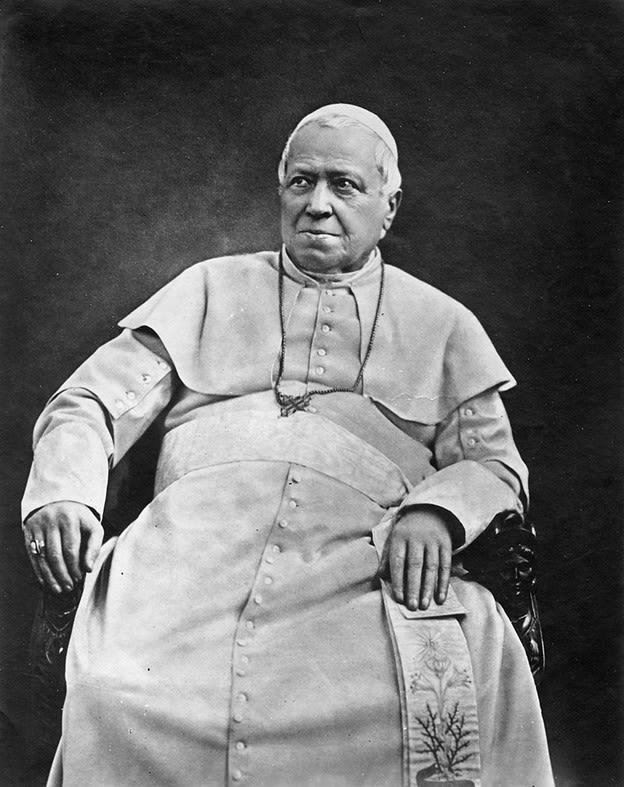
Against this backdrop, a national awakening began. From 1846, the new Pope, Pius IX, undertook liberal reforms, amnestied political prisoners, eased censorship, allowed assemblies, and proposed establishing a customs union for all Italy. These steps alarmed Austria, which occupied Ferrara. In response, Pius IX sent Swiss troops to the border, earning the support of the patriotically inclined populace.
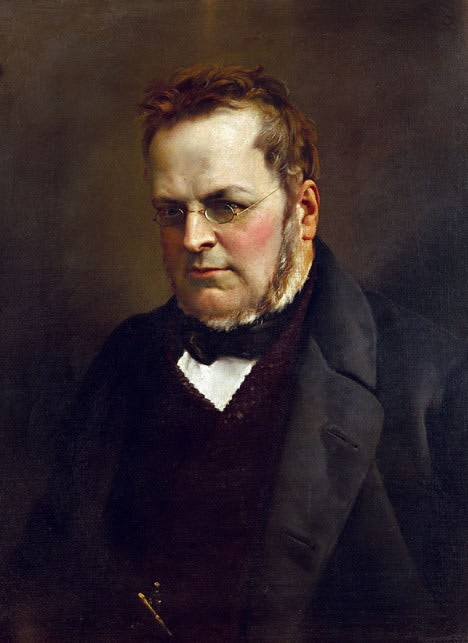
Reforms also began in Piedmont and Tuscany, where the authorities introduced freedom of the press and curtailed police arbitrariness. In Piedmont, where King Charles Albert agreed to reforms, the influential journal Il Risorgimento was founded under the leadership of Camillo Benso di Cavour, becoming the ideological mouthpiece of the unification movement. In the Neapolitan Kingdom, a revolution that began on January 12, 1848, in Sicily forced King Ferdinand II to introduce a constitution and recognize partial autonomy for Sicily. In March–April, constitutions were adopted in Tuscany, Piedmont, and the Papal States; however, the revolution in Vienna and Metternich’s flight became the trigger for larger events in the Lombardy-Venetia region.

In March 1848, the Republic of San Marco was proclaimed in Venice, and an uprising in Milan forced the Austrian troops of General Radetzky to leave the city. King Charles Albert of Piedmont offered assistance to the insurgents, seeking to create a North Italian kingdom. This marked the beginning of the First War of Independence. Regular troops from Piedmont, the Papal States, and the Neapolitan Kingdom, along with patriot detachments from across the peninsula, took part in the struggle against the Austrians.
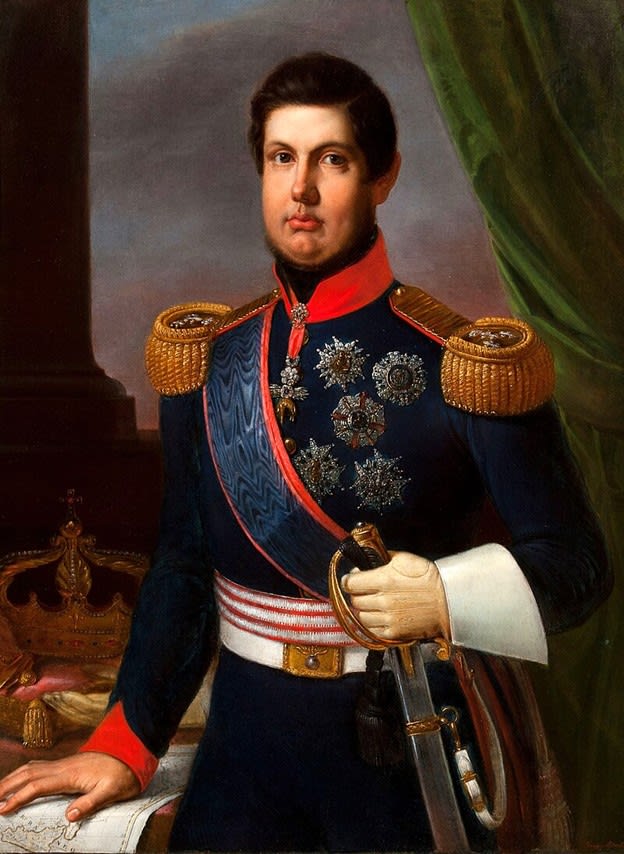
However, political disagreements and the Savoy dynasty’s striving for sole leadership of the movement undermined unity. On April 29, Pope Pius IX declared neutrality and recalled his troops. Soon after, the Neapolitan king Ferdinand II followed suit. These actions led to the collapse of the Neo-Guelph movement, and the favorable moment to defeat the Austrians was lost. In July, the Piedmontese army was defeated at Custoza and surrendered Milan. On August 8, Charles Albert signed an armistice, and Austrian domination was restored.

Revolutionary actions continued. In November 1848, a republic was proclaimed in Rome under the leadership of Giuseppe Mazzini, and in Tuscany another republic arose in February 1849. In these circumstances, Charles Albert launched a new stage of war with Austria, which lasted only a few days. On March 23, in the Battle of Novara, the Piedmontese forces suffered a crushing defeat. Fearing the republican movement, Charles Albert abdicated the throne in favor of his son, Victor Emmanuel II, who retained the constitution and parliament. Soon Austrian troops suppressed the revolutionary forces in Tuscany, and the Pope supported by French troops under General Oudinot overthrew the Roman Republic, which had been defended by Giuseppe Garibaldi’s forces. On August 22, Venice fell.
Despite the defeat, the revolution of 1848–1849 became an important stage of the Risorgimento. It showed that only Piedmont was capable of leading the national movement and that without radical change the country’s unity was impossible.
After the revolution was suppressed, a period of harsh reaction set in throughout Italy except in the Kingdom of Sardinia. Absolutist orders were restored, constitutions were abolished, and brutal repressions rained down upon opponents of Austrian rule. Particularly savage was the Neapolitan king Ferdinand II, nicknamed “King Bomba” for his cruelty. Pope Pius IX, once considered a “spiritual leader,” now opposed the national movement. The economic policies of these regimes led to stagnation.
Against this grim background, the Kingdom of Sardinia (Piedmont) became the sole beacon of hope. Here, constitutional government survived and was strengthened thanks to Count Camillo Benso di Cavour, who headed the government in 1850. Cavour, an aristocrat by birth, supported a liberal-bourgeois order and the rapid growth of a capitalist economy. He actively carried out reforms aimed at developing trade, transport, and the financial system. Owing to his policies, Piedmont grew much faster than the other Italian states.


By the late 1850s, the length of railways in Piedmont exceeded 900 kilometers almost half of all railways in Italy. Thus, Piedmont became not only the political but also the economic leader of the national-liberation movement.
Although Cavour considered the unification of Italy a matter for the distant future, he saw as his chief goal the expulsion of the Austrians from Lombardy and Venetia. Realizing that Piedmont could not defeat Austria alone, he sought a powerful ally in France and Britain. To this end, in 1855 Piedmont even entered the Crimean War against Russia. This measure allowed Cavour to raise the “Italian question” at the Paris Peace Congress of 1856, which made a great impression on Italian public opinion and turned Piedmont into the official defender of national interests.
The revolution’s defeat caused a split in the republican camp. Some democrats such as the utopian socialist Carlo Pisacane believed that the reason for the defeat was the republicans’ lack of a program of deep social reforms, particularly land redistribution to the peasantry. They argued that the national movement had to be combined with social transformation.
Mazzini, however, rejected this criticism, remaining convinced that the revolution must be directed exclusively toward national liberation. He continued to organize conspiracies and uprisings, but his attempts including the failed uprising in Milan in February 1853 ended in disaster. This failure led to a deep crisis and a split among republicans.
Under these conditions, some democrats, including Daniele Manin, concluded that the only force capable of bringing Italy to independence and unity was monarchical Piedmont. Manin urged abandoning republican ideas and supporting the Savoy dynasty. With Cavour’s consent, the Italian National Society was established in 1857, its goal being the unification of Italy under the House of Savoy. The popular folk hero Giuseppe Garibaldi became the Society’s vice-chairman, though he retained his republican convictions.
Despite resistance from radical democrats such as Pisacane who died in 1857 attempting to spark an uprising the initiative finally passed to the moderate liberals. By the late 1850s, Piedmont, thanks to Cavour’s policies and the backing of the National Society, had become the leading force in the movement for Italy’s liberation and unification.
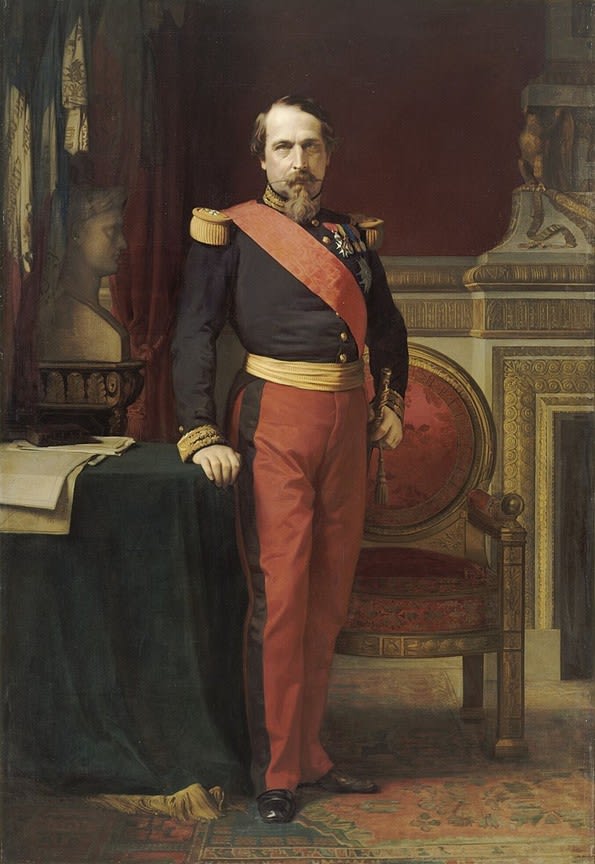
Napoleon III, Emperor of France, sought to drive Austria out of Italy and establish his own influence there. An assassination attempt on his life by the Italian patriot Orsini in 1858 gave him a pretext to pose as the “protector” of the Italian national movement simultaneously neutralizing revolutionaries and strengthening French hegemony.
In the summer of 1858, a secret meeting took place at the French spa town of Plombières between Napoleon III and Cavour, leading to the signing in January 1859 of a secret treaty of military-political alliance. This treaty provided for the liberation of Lombardy and Venetia from Austrian domination and their annexation to Piedmont, which was to result in the creation of a Kingdom of Upper Italy. Piedmont promised to field 100,000 soldiers, and France 200,000. In return, Napoleon III demanded the cession to France of Savoy and Nice. Moreover, he planned to create puppet states in Central Italy dependent on France to preserve the peninsula’s fragmentation. Cavour knew of these plans but hoped they would not be realized.
After the treaty, the allies began preparations for war. Napoleon III secured Russia’s benevolent neutrality, and 20,000 volunteers gathered in Piedmont, among them Giuseppe Garibaldi, who agreed to lead a 3,000-strong volunteer corps. On April 26, 1859, the Austro-Italian-French War began.
Military operations developed favorably for the allies. After the victory at Magenta, the French and Piedmontese made a triumphant entry into Milan. Garibaldi’s corps, acting swiftly, liberated town after town. In late June, the allied forces won decisive victories at Solferino and San Martino, forcing the Austrians to abandon all of Lombardy.

The war spurred a surge in the national movement in Central Italy. In May–June 1859, uprisings took place in Tuscany, Parma, and Modena, as well as in Romagna, which belonged to the Papal States. The rulers of these duchies were overthrown, and provisional governments took power, appealing to Victor Emmanuel II for annexation to Piedmont.
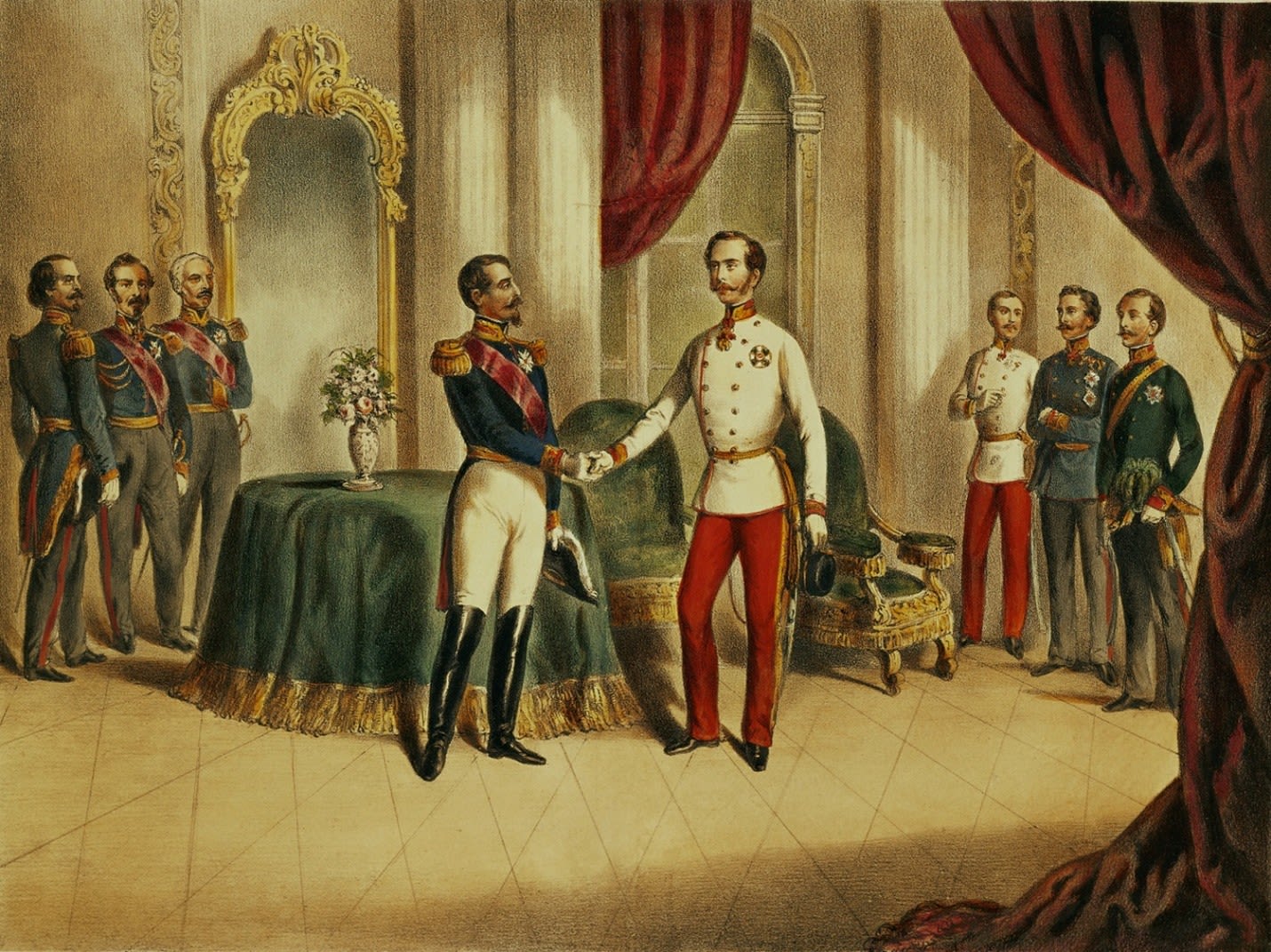
The popular upsurge threatened to derail Napoleon III’s plans to create puppet kingdoms, and there also loomed the danger that Prussia might enter the war on Austria’s side. In these circumstances, Napoleon III without informing Cavour concluded an armistice with the Austrian emperor on July 11 at Villafranca. Under its terms, Austria ceded Lombardy to France, which was to transfer it to Piedmont. However, the former rulers were to return to Tuscany, Modena, and the Papal States, while Venetia remained under Austrian control.

The Villafranca armistice provoked outrage throughout Italy. Cavour resigned in protest. However, patriots did not allow the restoration of the deposed monarchs, and in early 1860 Cavour having once again become head of government proceeded to hold plebiscites. An overwhelming majority in Tuscany, Parma, Modena, and Romagna voted for union with the Kingdom of Sardinia. In March 1860, these territories were officially annexed to Piedmont, while Savoy and Nice were transferred to France in accordance with the secret treaty.
Meanwhile, in April 1860, a revolt broke out in Sicily, prepared by the democrats. The Sicilian revolutionaries appealed to Garibaldi for help. He agreed to lead an expedition, but under the banner of unifying Italy under the rule of Victor Emmanuel II.
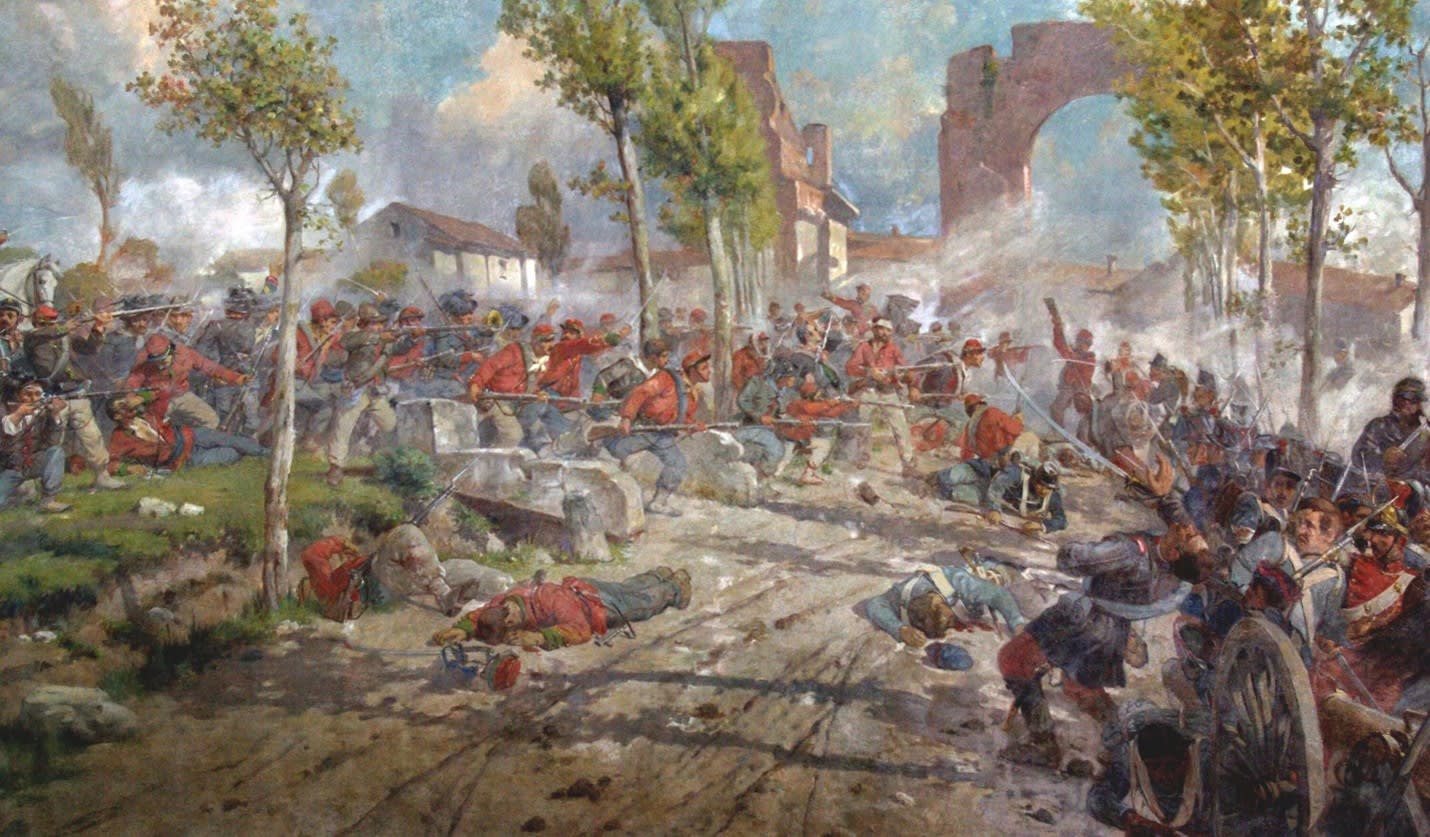
On the morning of May 6, more than a thousand volunteers in red shirts sailed from Genoa on two ships, despite Cavour’s opposition he feared the democrats’ initiative could slip out of control. On May 11, Garibaldi’s detachment landed in Sicily. With only 1,100 fighters against a 25,000-strong royal army, Garibaldi won his first victory at Calatafimi. He then executed a skillful maneuver and burst into Palermo, where thousands of armed peasants joined him. After three days of fighting, the Bourbon troops capitulated.
Garibaldi’s campaign coincided with a broad peasant movement. The peasants, hoping for a solution to the land question, rose up, facilitating the advance of the Garibaldian forces. However, when the peasant movement began to take on a social character, threatening landowners’ property, Garibaldi’s government defended private property and harshly suppressed the uprisings. As a result, the peasants withdrew from his army, which was replenished by townspeople and volunteers from the north.
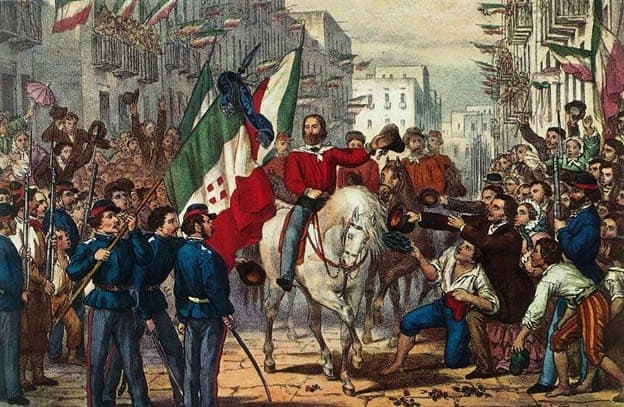
Relying on this new support, Garibaldi liberated Sicily and on August 19 landed on the mainland in Calabria. The Kingdom of Naples was in deep crisis, and the king’s troops surrendered by the thousands. On September 7, 1860, Garibaldi riding ahead of his army made a triumphant entry into Naples.
Garibaldi planned to continue his march on Rome and then liberate Venetia. However, liberal monarchists led by Cavour feared that further successes by the revolutionary commander would strengthen the republicans and jeopardize the monarchy. Cavour persuaded Napoleon III of the need for swift action, and Piedmontese troops invaded the Papal States, blocking Garibaldi’s Road to Rome.
The confrontation between liberals and democrats reached its peak. The propertied classes of the South, alarmed by the burgeoning peasant movement, demanded immediate union with Piedmont, seeing the Savoy monarchy as the guarantor of their property. In October 1860, after Garibaldi’s victory over the Bourbon forces on the Volturno, the Piedmontese army entered Neapolitan territory. Garibaldi’s dictatorship was abolished, and his army disbanded. Refusing all rewards, Garibaldi retired to his island of Caprera.

To prevent the convocation of an all-Italian Constituent Assembly and to keep control over the unification process, the Piedmontese authorities held a plebiscite. On October 21, the population of the South voted for annexation to the Kingdom of Sardinia. In November, Umbria and the Marche also joined it.
By the end of 1860, Italy was effectively unified, with the exception of Rome and Venetia. On March 17, 1861, in Turin, the all-Italian parliament proclaimed the creation of the Kingdom of Italy headed by King Victor Emmanuel II. Piedmont’s constitutional order was extended to the new state.
Unification led to the standardization of legislation and of monetary and customs systems, opening the way to economic integration of the regions. However, the young state faced enormous problems. One was the widespread uprising of Neapolitan peasants, whose hopes for land had been dashed. The new government, having refused reform, brutally suppressed this movement, which continued until 1865.
No less acute was the “Roman Question.” Pope Pius IX, who did not recognize the new state, was protected by the French troops of Napoleon III. In 1862, Garibaldi attempted a march on Rome but was wounded and arrested by Italian troops. In 1866, Italy allied with Prussia and entered the “Third War of Independence” against Austria. Despite defeats of the regular Italian army, Venetia was transferred to Italy thanks to Prussia’s victory over Austria albeit through French mediation. In 1867, Garibaldi made another unsuccessful attempt to liberate Rome.
Final unification occurred in 1870, when, due to the Franco-Prussian War, French troops were withdrawn from Rome. On September 20, Italian forces entered the city, which from the summer of 1871 became Italy’s capital. The Pope declared himself the “eternal prisoner” in the Vatican.
The process of Italy’s unification was completed, leading to the formation of a single nation and the creation of an independent subject of international politics recognized as the “sixth great power.” However, the young state inherited numerous problems, including the development gap between North and South, as well as the “Roman Question,” which continued to fuel tensions well into the twentieth century.


