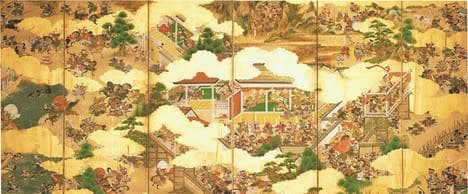

At the beginning of the twelfth century, the era of de facto rule by the aristocratic Fujiwara house, which for two centuries had used marriages with the imperial family to retain power came to an end in Japan. A new political phenomenon arose: retired emperors who became monks. Abdicating the throne and taking monastic vows, they nevertheless retained enormous influence in secular affairs. Their social base consisted of provincial military leaders as well as lower- and mid-ranking court nobles dissatisfied with Fujiwara dominance.
At this time, the power of two influential clans Taira and Minamoto grew rapidly. In the eleventh century the Minamoto house, and in particular its head Minamoto no Yorinobu, had already demonstrated its strength by suppressing the revolt of the governor Taira no Tadatsune, with whom even imperial forces had failed to cope. This allowed the Minamoto to entrench themselves in the eastern provinces. Later, Yorinobu’s son, Yori yoshi, provoked an Ainu uprising in order to enlist the support of provincial warriors and turn them into his vassals, which strengthened his position.
However, in the early twelfth century the situation changed. The retired emperor-monk Toba, abandoning the struggle with the Fujiwara, began actively recognizing new private estates (shōen). This allowed him to become the largest landowner in the country, but at the same time fostered the decentralization of power and the strengthening of feudal houses with their own economic bases. It was in this period that the Taira house, having established close ties with the retired emperors, succeeded in accumulating landed holdings, whereas Minamoto influence steadily declined.
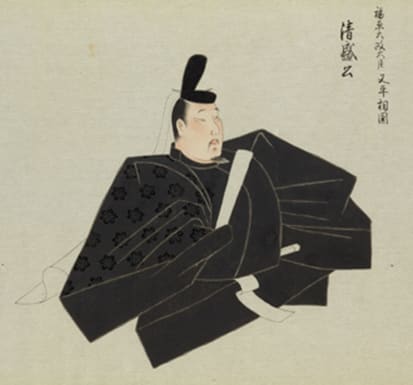
Toba’s death in 1156 triggered an internecine struggle for power known as the Hōgen Disturbance, followed in 1159 by the Heiji Disturbance. In these conflicts, the Taira under the leadership of the ambitious Taira no Kiyomori played the decisive role. As a result, the Fujiwara were pushed into the background, and the Taira effectively monopolized all key state posts, arousing the resentment of the court aristocracy. By 1180 Taira no Kiyomori had become the de facto ruler of Japan, and the retired emperor Go-Shirakawa was completely dependent on his will.

The accumulated tension erupted into open conflict. In 1180 the three-year-old Antoku Kiyomori’s grandson was placed on the throne, further consolidating Taira power. Prince Mochihito, the second son of Go-Shirakawa, who had twice been passed over as heir, could not accept this. At the same time, the venerable elder Minamoto no Yorimasa, the only adult member of the Minamoto clan to have survived the Heiji Disturbance, offered the prince his support.
Seizing the moment when Emperor Antoku was to travel to the Taira’s favorite Itsukushima Shrine, Prince Mochihito issued a secret proclamation calling upon the Minamoto and Fujiwara to rise in revolt. A copy of the proclamation reached Minamoto no Yoritomo, the eldest son of Minamoto no Yoshitomo, who had been killed in the Heiji Disturbance. A careless word of Yoritomo’s was reported to Taira spies, and the plot was exposed.
Prince Mochihito, fleeing pursuit, took refuge in the Mii-dera monastery. Unaware of the conspiracy’s depth, Kiyomori ordered Yorimasa to arrest the prince, but Yorimasa, burning his bridges, set his house on fire and, with fifty loyal men, joined Mochihito. The rebels hoped to hold out until a general uprising in the east and sent messengers for aid to the monasteries of Enryaku-ji and Kōfuku-ji in Nara. But Kiyomori had already bribed the monks of Enryaku-ji.
The fugitives decided to move toward Kōfuku-ji, but on the way, at the Uji River, they were overtaken by Taira samurai. Minamoto no Yorimasa ordered part of the bridge to be dismantled. At dawn a bloody battle began amid the bridge’s wreckage, in which the Minamoto forces were routed and the monks from Nara never arrived. The detachment of Ashikaga Tadatsuna showed ingenuity by fording the river elsewhere, allowing the entire Taira army to cross the Uji. Seeing total defeat, Minamoto no Yorimasa committed seppuku. Prince Mochihito was overtaken and died under a hail of arrows. This premature uprising ended in complete failure, but it became the spark that fanned the flames of war.

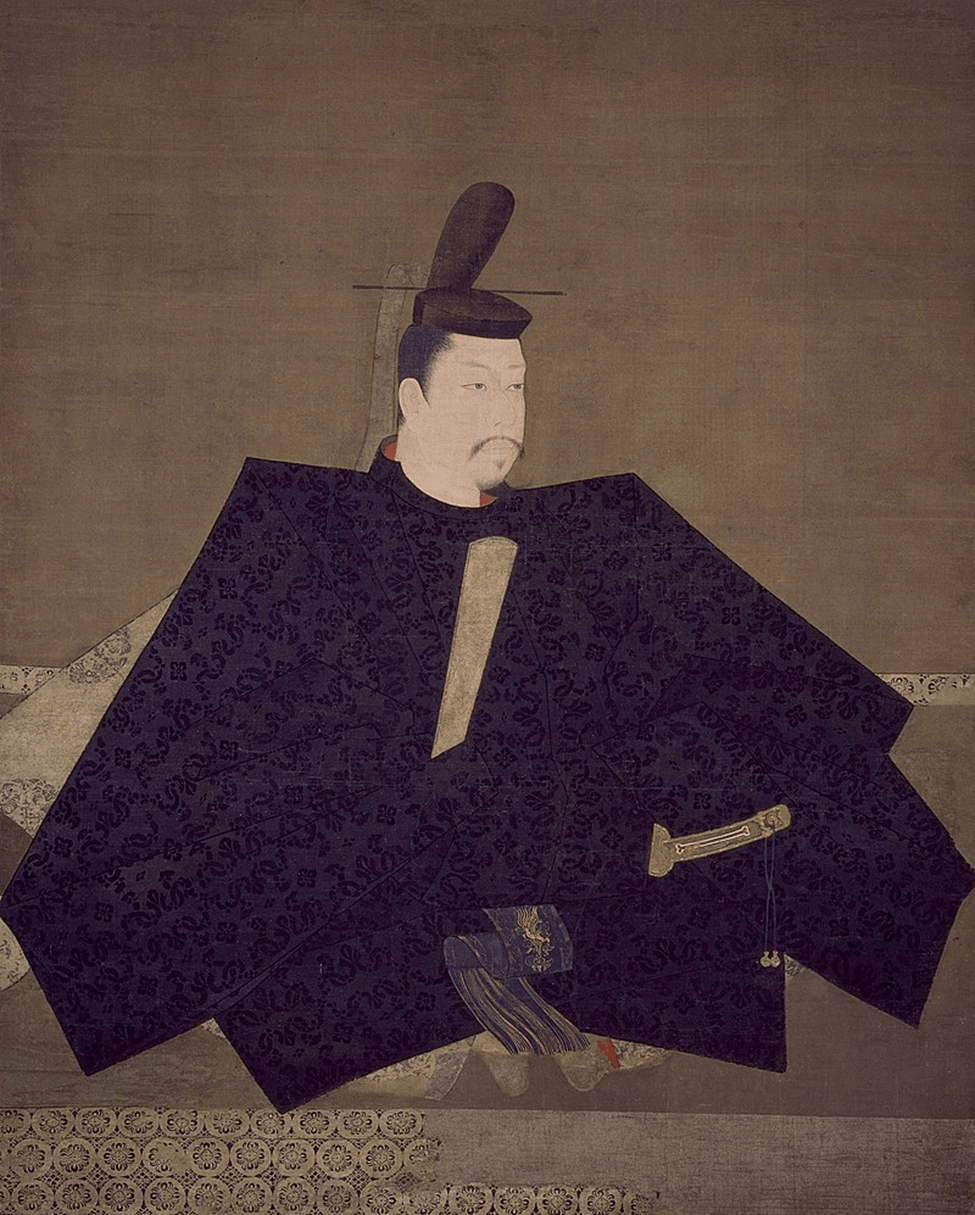
After the defeat at Uji, Minamoto no Yoritomo entered the war. Exiled to the Izu Peninsula at the age of fourteen and learning of Kiyomori’s order to have him killed, he decided to act first. After a brief skirmish with a Taira detachment, Yoritomo managed to escape from Izu, and his army began to grow rapidly. However, in the narrow valley of Ishibashiyama his small force was virtually destroyed by the superior troops of Ōba Kagetoki. Yoritomo miraculously escaped by hiding in the Hakone forests and eventually crossed by sea to Awa Province, where many allies joined him.

In just a month, Yoritomo’s small detachment turned into a huge army. He established himself in the small fishing village of Kamakura, making it his headquarters. In November 1180 the Taira marched east, but their poorly organized and inexperienced army retreated from the Fuji River even before battle was joined. Yoritomo took this as a sign from above and, without pursuing the enemy, focused on consolidating his position in the eastern provinces.
For the next two years the war seesawed. In 1181 the Taira burned the monasteries of Kōfuku-ji and Tōdai-ji in Nara, killing thousands of monks. That same year Taira no Kiyomori died, having on his deathbed enjoined his followers to avenge themselves on Yoritomo. At the same time the country was struck by terrible droughts and floods that led to widespread famine and plague, which greatly weakened the Taira, whereas Kamakura was largely spared these natural disasters. Many saw this as divine punishment for the burning of the monasteries.
In 1182 Kiso Yoshinaka, Yoritomo’s cousin, entered the war in earnest and by late summer approached Kyoto from the north. Alarmed by his growing influence, Yoritomo even sent an army to attack Yoshinaka, but prudence prevailed.
The decisive turning point came in 1183. The Taira raised a huge army up to one hundred thousand men to crush Yoshinaka. But poor supply and mass desertion undermined morale. On the night of June 1, the Taira army halted in the Kurikara Gorge. Yoshinaka exploited the tactical advantage by driving a herd of oxen with flaming torches toward the enemy, causing panic and chaos. In the ensuing confusion, in the Kurikara Gorge, most of the Taira army was destroyed. This was the first and decisive Taira defeat, marking the beginning of their final downfall.


The victory at Kurikara opened Yoshinaka’s road to Kyoto. On August 11, 1183, the monks of Enryaku-ji previously bribed by the Taira opened the monastery gates to the Minamoto army. Three days later Taira no Munemori, the new head of the clan, fled the capital together with the child emperor Antoku and the imperial regalia. The retired emperor Go-Shirakawa returned to Kyoto accompanied by Yoshinaka.
However, the samurai of Yoshinaka and of Yukiie (another Minamoto leader) behaved in the capital as if it were a conquered city, provoking discontent. Yoritomo, fearing his cousin’s growing influence, began to threaten him openly from Kamakura. In February 1184 Yoritomo sent a large force toward Kyoto under the command of his brothers Minamoto no Yoshitsune and Minamoto no Noriyori. Yoshinaka was defeated; attempting to flee and commit seppuku, he was wounded by an arrow and beheaded by enemy samurai.
After withdrawing from the capital, the Taira fortified themselves along the shores of the Inland Sea. Their key bases were Ichi-no-Tani (near modern Kobe), Yashima (on the island of Shikoku), and Hikoshima. Strong at sea, the Taira felt secure.
In March 1184 Minamoto no Yoshitsune, displaying brilliant tactical ingenuity, attacked the fortress of Ichi-no-Tani. He led a small detachment along sheer cliffs to strike from the rear while the main army assaulted from the front. The sudden blow from the mountains resulted in a complete Taira rout, though the child emperor managed to escape to Yashima.
The decisive battle took place on April 15, 1185, at sea off the coast of Dan-no-ura. By that time, thanks to the defection to the Minamoto of a number of seafaring samurai, Yoshitsune’s fleet far outmatched the Taira navy. In the heat of battle the Taira commander Taguchi Shigeyoshi suddenly went over to the Minamoto side and pointed out to Yoshitsune the emperor’s location. Yoshitsune ordered his archers to concentrate fire on the oarsmen, immobilizing the Taira ships.
Seeing inevitable defeat, many Taira warriors took their own lives. The battle ended in the clan’s total destruction. Taira no Munemori was captured, and Taira no Tomomori killed himself by leaping into the sea in double armor. The child emperor Antoku also perished in the waves. The Battle of Dan-no-ura marked the definitive end of the Taira house.


The Minamoto victory ended centuries-long aristocratic dominance and heralded a new era of military rule in Japan. Minamoto no Yoritomo, refusing to move to Kyoto and fit himself into the old system, established his own center of power in Kamakura. In 1192 he accepted the title of seii taishōgun (“Barbarian-Subduing Great General”), thereby founding Japan’s first shogunate.
Yet Yoritomo’s paranoia and suspicion led to a tragic outcome. He outlawed his brother Yoshitsune, whose genius had won him the war. Hunted throughout Japan, Yoshitsune committed seppuku in 1189. In the following years Yoritomo eliminated his other brothers as well Yukiie in 1186 and Noriyori in 1193. Having consolidated his absolute power, he died in 1199 after falling from his horse. According to legend, the horse shied at the ghost of Yoshitsune.


