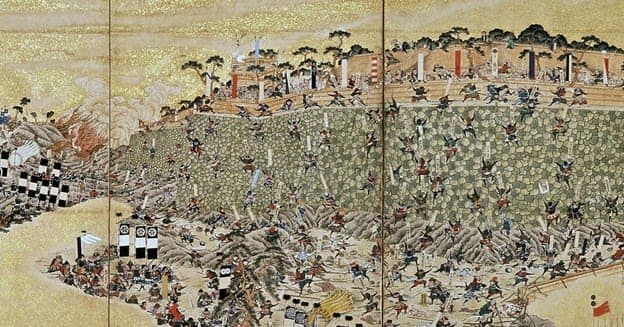

The Shimabara Rebellion, which broke out in 1637, became one of the most significant events in Japan’s 17th-century history. Its roots went back to the mid-16th century, when the Shimabara Peninsula and the nearby Amakusa Islands emerged as major centers of Catholic Christianity in Japan. Thanks to the patronage of local daimyo such as Arima Harunobu and Konishi Yukinaga, Jesuit missions flourished in the region, and the Christian community grew to tens of thousands of believers.

However, with the rise of the Tokugawa shogunate, and especially under Shogun Tokugawa Iemitsu in the 1630s, the policy toward Christians became brutally repressive. Mass persecutions, tortures, and executions carried out by the local rulers Matsukura Shigemasa and Terazawa Katataka, both appointed by the central government forced most of the population to formally renounce their faith.
At the same time, the anti-Christian repression coincided with a series of natural disasters. Between 1633 and 1637, the region suffered devastating typhoons and prolonged droughts, leading to widespread famine. Despite this, local officials not only refused to lower taxes but even increased them, forcing peasants to sell all their property and, in some cases, their children. Additional burdens came when the daimyo were ordered to contribute to costly repairs of the shogun’s residence in Edo, expenses that were ultimately imposed on the already destitute peasants.
Thus, the Shimabara Rebellion was the result of three combined factors: Religious oppression aimed at eradicating Christianity. Economic pressure through unbearable taxation and food confiscation. Social tension between impoverished peasants and cruel local authorities.
The uprising began on December 17, 1637, on the island of Kyushu. It was led by a 16-year-old youth named Amakusa Shirō, who was regarded by his followers as a messianic figure. Under his command, around 23,000 peasants and rōnin (masterless samurai) gathered, using Christian symbols as their banners of revolt.
The rebels quickly achieved their first victory by defeating a force of 3,000 samurai sent against them by the ruler of Nagasaki. This success alarmed the authorities, who immediately called for reinforcements. The rebels soon captured the ruins of Hara Castle, hastily restoring it and turning it into their main stronghold. Over its walls they raised Christian flags and erected large wooden crosses.
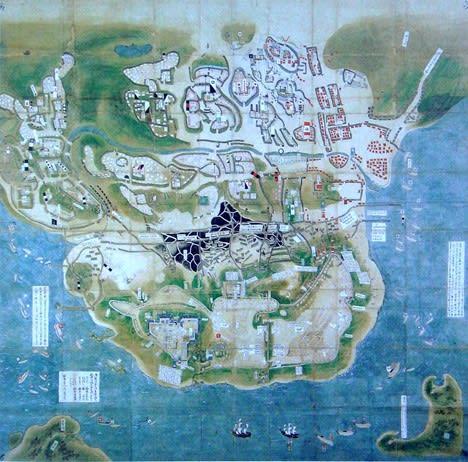

To suppress the uprising, the shogunate mobilized a massive army and even deployed artillery. Japanese and Chinese ships bombarded the castle from the sea. Soon, Dutch trading ships also joined the bombardment at the shogunate’s request, though after losing several sailors, the Dutch decided to withdraw, unwilling to remain involved.
Despite being vastly outnumbered, the defenders of Hara Castle fought heroically. In one engagement, they managed to inflict severe losses on troops from Hizen Province, killing about 2,000 soldiers, including their daimyo. Yet the rebels’ situation was hopeless their supplies of food and ammunition were running out.
On April 12, 1638, the shogunate’s army launched its final assault. Despite desperate resistance, during which the rebels reportedly killed another 10,000 shogunate soldiers, the fortress was eventually overrun.
The suppression of the Shimabara Rebellion was merciless. Over 37,000 rebels and sympathizers were beheaded, and Amakusa Shirō’s head was sent to Nagasaki for public display. Hara Castle was completely destroyed.
Blaming the uprising on “barbarian Christians,” the shogunate tightened its policy of isolationism:
Christianity was absolutely banned, and brutal persecutions were carried out against all who practiced it.
Foreigners were forbidden to enter Japan. Diplomatic and trade relations with Portugal and soon even with the Netherlands — were severed.
Japanese citizens were prohibited from leaving the country, and anyone who returned from abroad faced execution.
The only remaining link to the outside world was the Dutch trading post on the tiny island of Dejima in Nagasaki Bay, which operated under strict shogunal supervision.

Japan thus became a completely closed country, entering a long period known as Sakoku (“locked country”). The rebellion also had profound domestic consequences: after the Shimabara Rebellion, Japan experienced more than 200 years without any major armed conflicts, lasting until the 1860s. Ten generations of samurai lived through the Edo period without fighting real battles, which fostered the growth of internal culture, bureaucracy, and the arts, but also led to stagnation in military technology and scientific progress compared with the rest of the world.


