The peace treaty of 241 BC, which ended the First Punic War, was humiliating and ruinous for Carthage. The loss of revenues from Sicily and its trade monopoly weakened the state, while Rome’s treacherous seizure of Sardinia and Corsica during the Mercenary War finally convinced the Carthaginians that another confrontation was inevitable.
In this atmosphere of desire for revenge, the great strategist Hamilcar Barca turned his attention to the Iberian Peninsula. Spain, rich in silver and inhabited by warlike tribes, was to become Carthage’s new base of power.
For nine years, Hamilcar expanded Carthaginian possessions until he was killed during the siege of Helike, sacrificing himself to save his sons. His work was continued by his son-in-law, Hasdrubal the Fair, who founded New Carthage — a magnificent administrative and commercial center that became the capital of Punic Spain.
The successes of the Barcids alarmed Rome. A treaty was concluded under which the lands south of the Iber River, the Ebro, were recognized as belonging to Carthage’s sphere of influence.
However, Rome also entered into an alliance with the city of Saguntum, which was located within the Punic sphere.
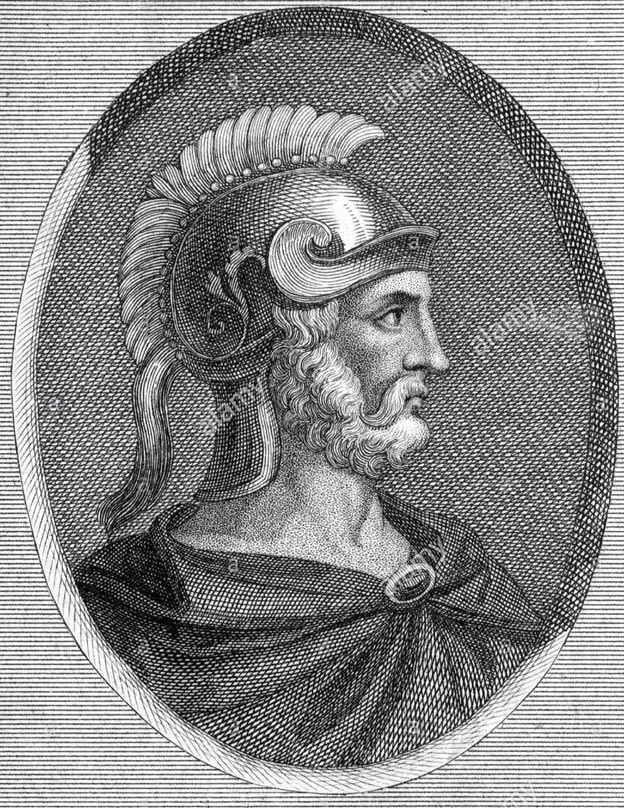
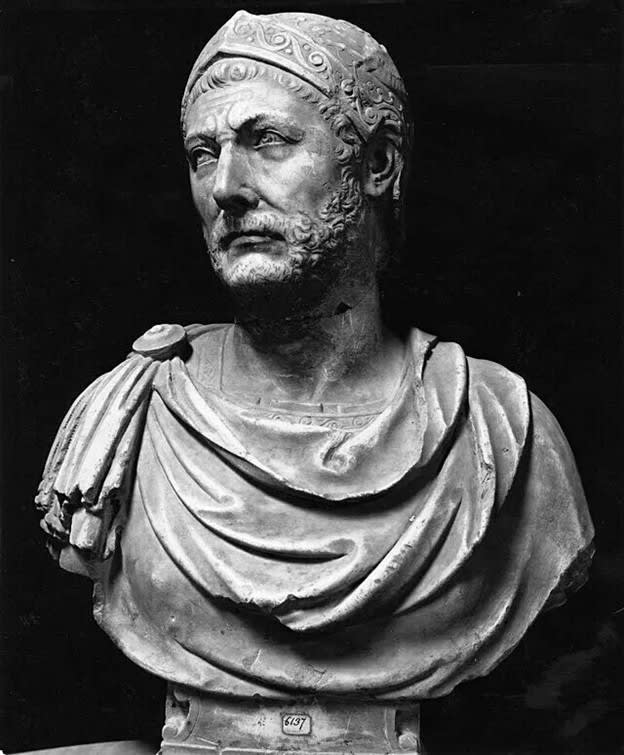
After Hasdrubal’s death in 221 BC, the army unanimously proclaimed the 25-year-old Hannibal, Hamilcar’s eldest son, commander-in-chief.
Raised in a military camp, Hannibal combined the toughness of a warrior with an excellent Hellenistic education. His father had ensured that his son learned the Greek language and culture, not only for personal development but also to facilitate Carthage’s diplomatic integration into the ancient Mediterranean world.
A central episode in Hannibal’s biography remains his famous oath. As a child, standing before an altar, he swore that he would forever remain an enemy of Rome.
After coming to power, he acted immediately. Having provoked a conflict between Saguntum and neighboring tribes, Hannibal laid siege to the city.
Despite heroic resistance, Saguntum fell after seven months.
Rome, which at the time was occupied with wars against the Gauls, did not provide military assistance to its ally, but it sent an embassy to Carthage that formally declared war.
Hannibal carefully prepared for the invasion.
Leaving considerable forces to defend Africa and Spain under the command of his brother Hasdrubal, he set out on campaign in the spring of 218 BC.
His invasion army consisted of approximately 50,000 infantrymen, 9,000 cavalrymen, and 37 war elephants.
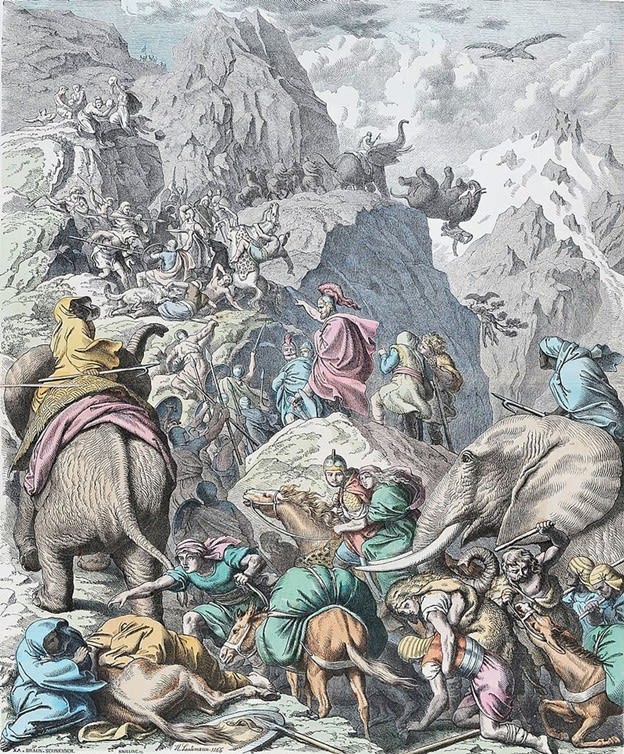
The most extraordinary stage of the campaign was the crossing of the Alps.
It was an ordeal that seemed to exceed the limits of human endurance. Avalanches, snowstorms, and constant ambushes by the Gallic Allobroges exhausted the army.
The descent proved even more dangerous than the ascent.
When Hannibal finally reached the plains of northern Italy, only around 20,000 infantrymen and 6,000 cavalrymen remained from his enormous army.
Nearly half of his soldiers and most of the elephants had perished in the mountains.
Yet the commander’s determination remained unbroken. He allowed his exhausted troops to rest and soon reinforced his ranks with Gallic tribes that hated Rome.
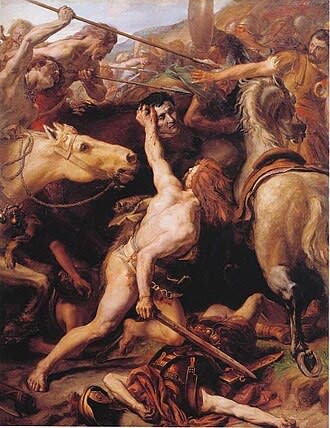
The Romans, who had not expected the enemy to appear in Italy, were forced to change their plans urgently.
The first clash took place near the Ticinus River.
Consul Publius Cornelius Scipio underestimated Hannibal’s Numidian cavalry. In a rapid cavalry engagement, the Romans were defeated, while the consul himself barely survived, reportedly being rescued by his young son, the future Scipio Africanus.
The Romans retreated toward the Trebia River, where they were joined by the army of the second consul, Tiberius Sempronius Longus.
The latter, an ambitious and hot-tempered man, was eager for a decisive battle.
Hannibal, skillfully exploiting his opponent’s weaknesses, lured the Romans into a trap.
On the day of the winter solstice, under freezing rain, Numidian cavalry drew the hungry and lightly clothed Roman legionaries across the river.
While the Romans struggled through the icy waters of the Trebia, the Carthaginians warmed themselves by fires and rubbed their bodies with oil.
When the battle began, a detachment commanded by Hannibal’s brother Mago, which had been concealed in an ambush, attacked the Romans from the rear.
The Roman army was surrounded.
Only around 10,000 legionaries managed to break through the enemy lines and escape to Placentia. The rest were killed or drowned.
The victory was complete, although Hannibal lost almost all of his elephants because of the severe weather.
In 217 BC, Rome raised new armies under the consuls Gnaeus Servilius and Gaius Flaminius.
Hannibal made an extremely difficult crossing of the Apennines, during which he lost an eye because of an infection, and entered Etruria.
At Lake Trasimene, he prepared one of the largest ambushes in the history of ancient warfare.
Using the morning fog and hilly terrain, Hannibal concealed his army on the heights above the road along which Flaminius was advancing.
When the Roman columns entered the narrow passage between the mountains and the shore of the lake, the Carthaginians attacked from all sides.
The Romans did not even have time to form a proper battle line.
Approximately 15,000 Romans were killed in the massacre, including Consul Flaminius himself. Thousands more were captured.
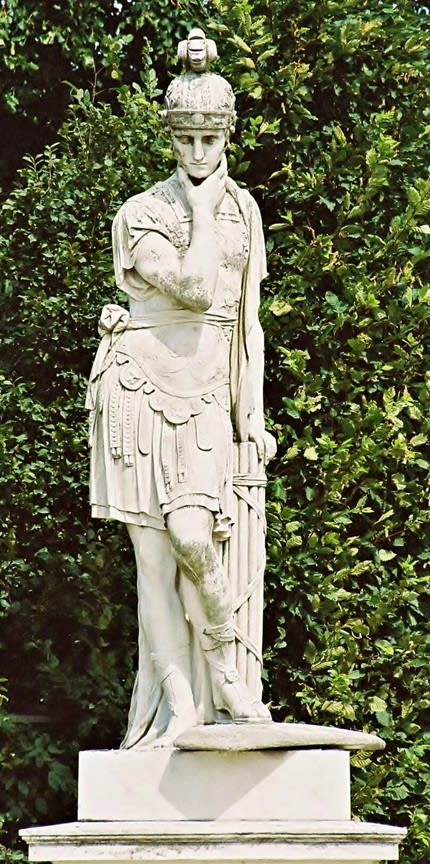
The road to Rome was now open, and terror spread through the “Eternal City.”
The Republic stood on the edge of disaster, and at this moment the Senate resorted to emergency measures.
Following the catastrophic defeat at Lake Trasimene, Rome was in shock.
Traditional methods of warfare had failed against Hannibal’s military genius.
In this critical situation, the aristocrat Quintus Fabius Maximus was appointed dictator.
He was the first to recognize the bitter reality: Hannibal could not be defeated in an open-field battle.
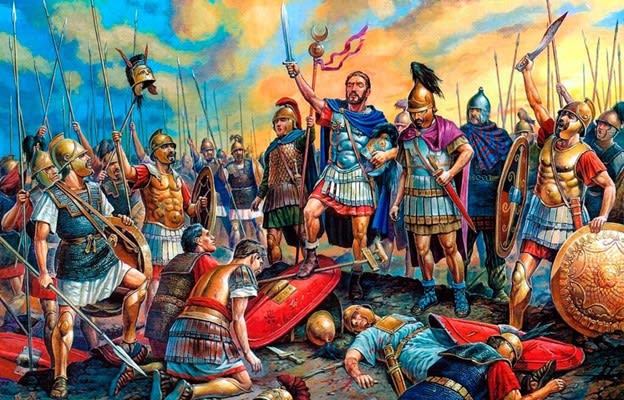
Fabius adopted a strategy of attrition, later known as the Fabian strategy.
The Roman army followed the Carthaginians closely, occupying high ground and avoiding a decisive battle while preventing the enemy from freely plundering the countryside or besieging cities.
This strategy caused outrage in Rome.
Fabius was nicknamed Cunctator, meaning “the Delayer,” while his Master of the Horse, Marcus Minucius, openly accused him of cowardice.
However, when Minucius was granted powers equal to those of the dictator and attempted to engage Hannibal in battle, he nearly destroyed his army.
Only Fabius’s timely intervention saved the legions from another disastrous defeat.
Meanwhile, on the “second front” in Spain, Gnaeus Cornelius Scipio acted far more aggressively.
He managed to inflict several defeats on Hasdrubal Barca, destroy the Punic fleet, and capture thousands of prisoners.
Spain gradually transformed from Hannibal’s main source of resources into an area of prolonged crisis for Carthage.
In 216 BC, Rome decided to destroy the enemy with a single overwhelming blow.
The consuls Gaius Terentius Varro and Lucius Aemilius Paullus assembled a massive army of approximately 90,000 men.
Hannibal had only around 50,000 soldiers, but it was here, near the town of Cannae, that he permanently entered the textbooks of military history.
The Romans arranged their legions in a deep and densely packed formation, expecting to break through the enemy center with the sheer weight of their infantry.
Hannibal, however, arranged his forces in the shape of a huge crescent projecting toward the Roman lines.
The less reliable Gauls and Iberians occupied the center, while elite Libyan infantry and powerful cavalry under Hasdrubal and Maharbal were positioned on the flanks.
When the massive Roman formation attacked the center, the “crescent” gradually bent inward, drawing the legions into a pocket.
Meanwhile, the Carthaginian cavalry defeated the Roman horsemen and moved behind the legionaries.
The Libyan infantry attacked from both flanks.
The Romans found themselves trapped inside a tightly enclosed ring, where many could not even swing their swords.
A massacre followed.
In a single day, approximately 48,000 Romans were killed, including Consul Aemilius Paullus.
Hannibal lost only around 8,000 men.
After Cannae, many cities in southern Italy abandoned Rome, including the wealthy city of Capua, while Syracuse and Macedonia hurried to form alliances with Carthage.
Despite the panic, Rome refused to surrender.
The city prepared for defense, and even slaves were called to serve under the Roman standards.
Contrary to the expectations of his companions, Hannibal did not march directly on Rome, instead concentrating on strengthening his position in southern Italy.
However, his army began to “decline” during its luxurious winter quarters in Capua. After feasting and inactivity, the offensive spirit of the Carthaginian forces noticeably weakened.
Meanwhile, a massive siege of Syracuse unfolded in Sicily between 214 and 212 BC.
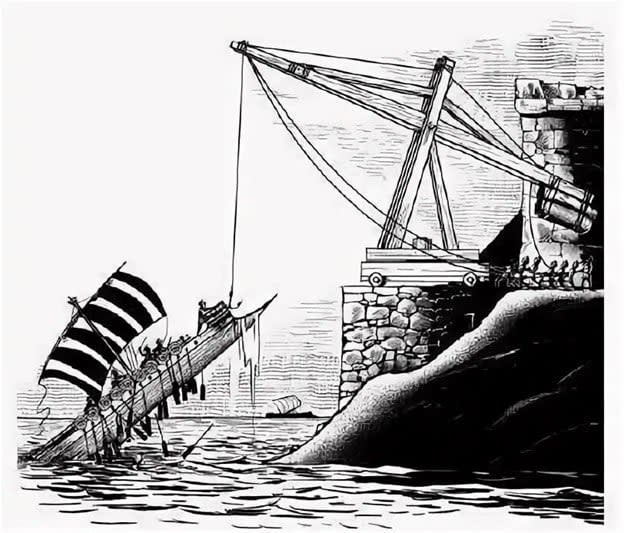
The Roman commander Marcellus confronted the genius of Archimedes, whose defensive machines — powerful projectile weapons and “claws” capable of lifting ships from the water — made the city nearly impossible to capture for a long time.
Nevertheless, Syracuse fell in 212 BC, and Sicily once again came under Roman control.
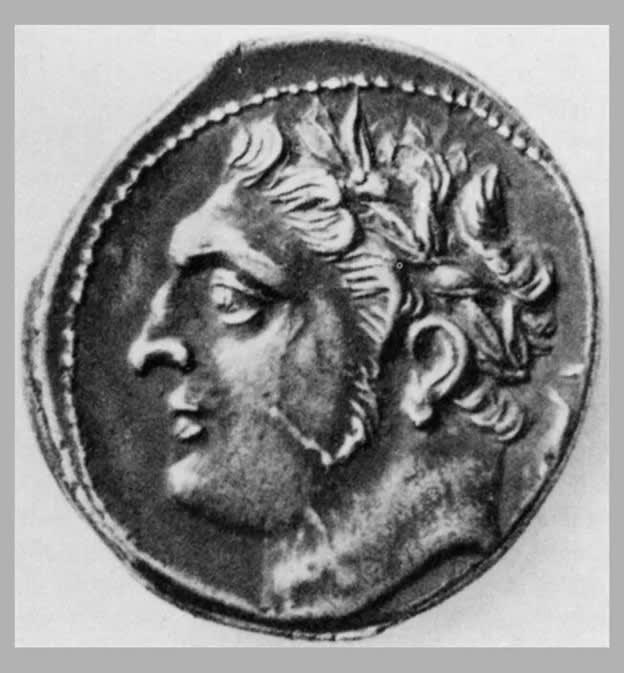
In Spain, the situation repeatedly shifted between the two sides.
In 211 BC, the Scipio brothers were killed in battle, and the Roman cause on the peninsula appeared to be lost.
At this critical moment, however, command was assumed by the young Publius Cornelius Scipio, the future Scipio Africanus.
In 209 BC, he accomplished what seemed impossible: through a sudden attack, he captured New Carthage, the principal Barcid base in Spain.
Hannibal’s last great hope was his brother Hasdrubal.
In 207 BC, Hasdrubal repeated Hannibal’s crossing of the Alps and invaded northern Italy with a large army.
However, the Romans intercepted his messengers.
Consul Gaius Claudius Nero carried out a forced march, joined the army of his fellow consul, and completely destroyed Hasdrubal’s forces at the Battle of the Metaurus.
The Romans threw Hasdrubal’s severed head into Hannibal’s camp, a horrifying sign to Hannibal that the end was approaching.
By 204 BC, Scipio had transferred the war to Africa.
After forming an alliance with the Numidian king Masinissa, he began threatening Carthage itself.
The Carthaginian government, now in panic, recalled Hannibal from Italy.
After sixteen years, the great commander returned home to defend his native city.
The decisive battle took place near Zama in 202 BC.
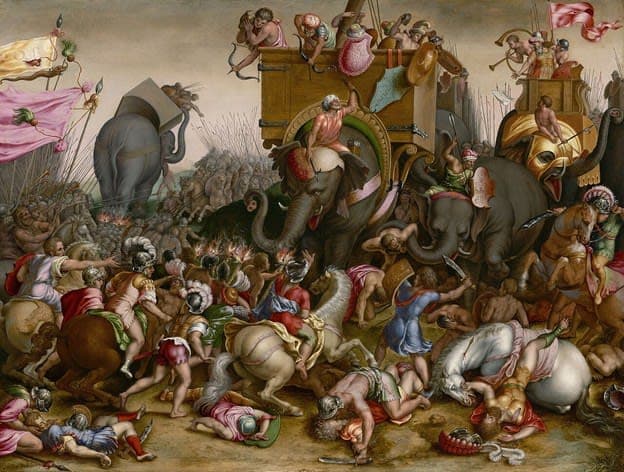
Hannibal deployed 80 war elephants, hoping to crush the Roman formations.
Scipio, however, having studied his enemy’s tactics, arranged the legions not as one continuous front but in separate maniples with corridors between them.
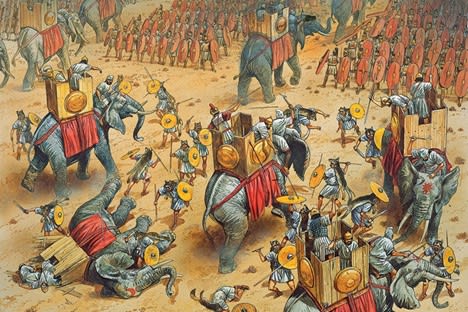
When the elephants charged, the Romans sounded their horns, frightening the animals.
Most of them panicked and turned back, trampling their own cavalry.
Those that continued forward simply passed through the corridors between the Roman formations without causing serious damage to the legionaries.
Meanwhile, the cavalry of Masinissa and Laelius defeated the Punic horsemen and, at the decisive moment, attacked Hannibal’s infantry from the rear.
The Carthaginian formation collapsed.
More than 20,000 Carthaginians were killed.
Hannibal escaped and acknowledged defeat.
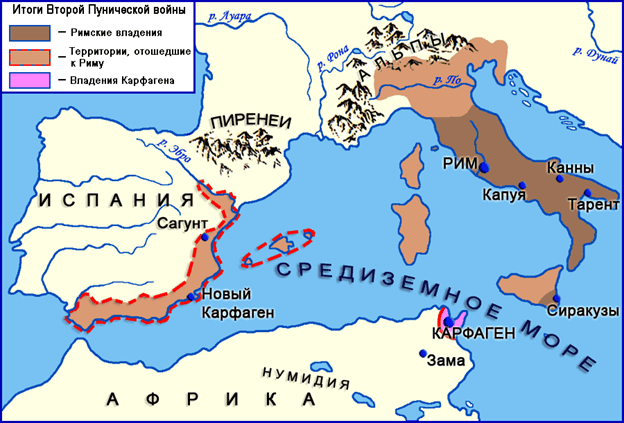
The peace treaty of 201 BC effectively reduced Carthage to a shadow of its former greatness.
Indemnity: 10,000 talents, to be paid over 50 years.
Fleet: Reduced to only 10 ships.
Territories: Carthage lost all possessions outside Africa.
Sovereignty: Carthage was forbidden to wage any war without Rome’s permission.
Rome became the undisputed master of the western Mediterranean.
However, victory had come at a tremendous cost.
Vast areas of Italy had been devastated, the population had declined, and many formerly prosperous regions had been reduced to wasteland.
The Second Punic War changed not only political borders but also the psychology of the Romans.
From that point onward, Rome was no longer merely defending itself — it sought domination over the wider world and would no longer tolerate serious rivals.


