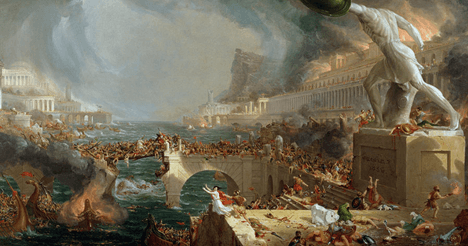
The fall of Rome, as a symbol of ancient civilization, became one of the most tragic and symbolic events in European history. Among the most significant episodes in the history of the Roman Empire were the sacks of Rome by barbarian tribes — the Goths in 410 and the Vandals in 455.
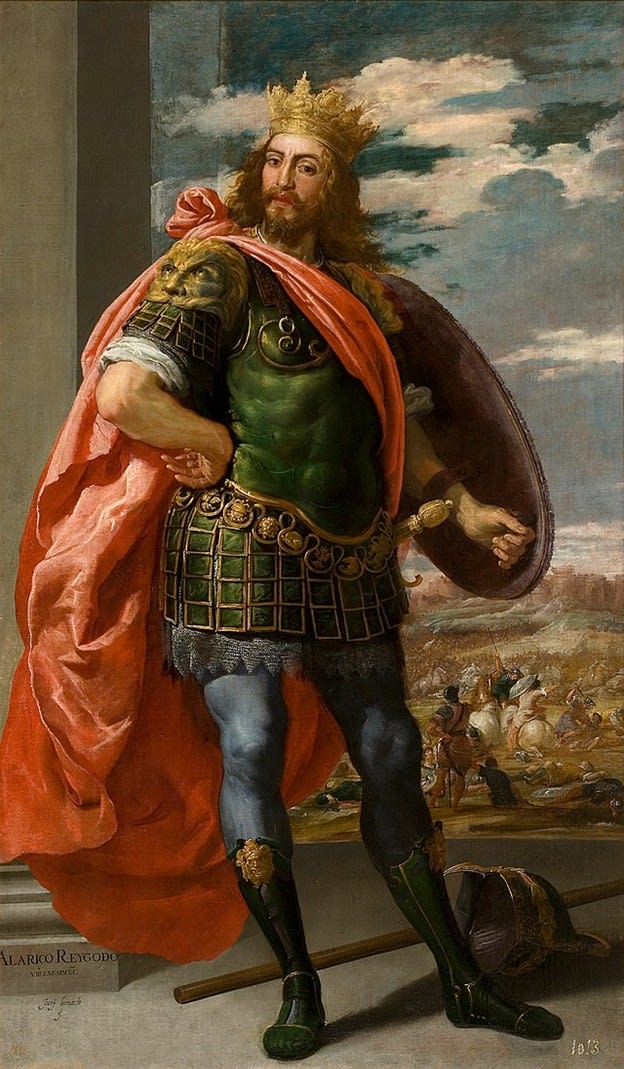
Alaric, who in 395 became the leader of the Gothic tribes, was at first recognized by the Roman authorities as an ally. Over time, however, relations between Rome and the Goths deteriorated. After a series of failed negotiations and attempts to reach a compromise, Alaric decided to take Rome by storm. In August 410, after several months of siege, the Goths entered the city. The sack of Rome lasted for three days. Although Alaric, himself a Christian, did not permit his troops to completely destroy the city — particularly its Christian churches — he allowed the Goths to loot temples, palaces, and the wealth of the Roman elite. The events of 410 became one of the most tragic moments in Rome’s history. It was the first time in nearly 800 years that
Rome had been captured by barbarians, and it demonstrated that barbarian kingdoms were capable of fighting Rome on equal terms, showing that the empire no longer possessed its former power.
Rome had barely begun to recover when, just 45 years later, in 455, it suffered another sack — this time at the hands of the Vandals, led by King Genseric.
The Vandals, a Germanic tribe that had settled in North Africa since the late 4th century, had conducted several raids on Roman territories in the Mediterranean. In 455, they entered Italy. At that time, the Western Roman Empire was in a state of deep decline: Emperor Valentinian III had been assassinated in a palace coup, and power passed from hand to hand.
The Vandals who raided Rome ruthlessly plundered the city. Unlike the Goths, who did not physically destroy the city, the Vandals engaged in widespread destruction and looting. During the sack, which lasted several weeks, enormous wealth was stolen, along with works of art and valuable relics. The Vandals carried off from Rome many treasures, including the famous Golden Shrine, as well as symbols of Roman authority and religious artifacts. One of the most famous items stolen by the Vandals was the “Golden Cross” of Saint Peter, which was taken to Carthage.

The Vandal sack of Rome was the final blow to the empire, and after it, the city was never able to recover. Just 21 years later, the Western Roman Empire ceased to exist when Odoacer, a barbarian by origin, deposed Emperor Romulus Augustulus and sent the imperial regalia to Constantinople.
The importance of this event lies in the fact that it symbolized the ultimate destruction of the western part of the Roman Empire. Moreover, the very term “vandalism” in historical scholarship and culture has come to denote the destructive, inhumane devastation of cultural treasures.


