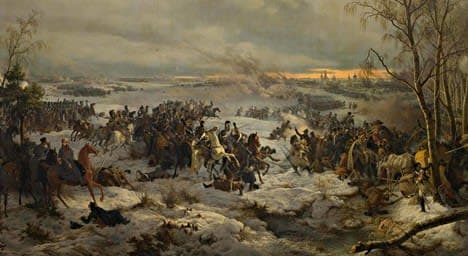
The history of the Patriotic War of 1812 is inseparable from events that had swept across Europe since the late 18th century. The monumental French Revolution of 1789–1799 did more than topple the French monarchy: it triggered a chain reaction that redrew the political map of the continent. The expansion of revolutionary France provoked a succession of anti-French coalitions formed by the great monarchies, including the Russian Empire and Great Britain. Their initial aim was to restore the Bourbon dynasty to the French throne, but over time the focus shifted to resisting the aggressive spread of French influence.


This expansion was led by the brilliant commander and statesman Napoleon Bonaparte, who rose to power in the wake of the Revolution. His lightning victories on Europe’s battlefields threatened the sovereignty of entire states. The confrontation with Russia culminated in the Russian defeat at the Battle of Friedland on 14 June 1807, effectively ending the War of the Fourth Coalition.

After Friedland, Emperor Alexander I was compelled to accept the humiliating Treaty of Tilsit with Napoleon. Under its terms Russia had to join the Continental Blockade of Great Britain trade sanctions designed to cripple the economy of Napoleon’s chief enemy. This ran counter to Russia’s interests, as Britain was its key trading partner.

The Russian nobility and officer corps regarded Tilsit as a national disgrace. Yet despite the apparent setback, the period became one of quiet preparation for a future conflict. As Napoleon, with his hands freed, continued subjugating Europe and annexing territories, Russian diplomats and generals were husbanding resources and working in secret. Indeed, Tilsit and the subsequent Congress of Erfurt (1808) enabled Russia to take Finland from Sweden and make other territorial gains, partly compensating for the moral cost of alliance with France.
After 1807 Napoleon’s principal foe remained Great Britain, mistress of the seas, seizing French colonies and obstructing trade. His only effective weapon against her was the Continental System, whose success depended on rigorous compliance by all European states. Napoleon continually pressed Alexander I to enforce the blockade more strictly, but Russia was unwilling to sever ties with its main commercial partner.
In 1810 the Russian government openly challenged France by allowing free trade with neutral states permitting indirect trade with Britain and by adopting a new tariff that raised duties on French goods. Paris was incensed.
A dynastic issue further widened the rift. Not a hereditary monarch, Napoleon sought to legitimize his power by marrying into one of Europe’s ancient royal houses. In 1808 and again in 1810 his proposals to wed Alexander I’s sisters, Grand Duchesses Ekaterina and Anna, were declined. He ultimately married Austrian Archduchess Marie-Louise, which shored up his rear for a potential war with Russia, but also underscored the deep crisis in Russo-French relations.


Another irritant was Russia’s troop build-up near the Duchy of Warsaw in early 1811, which Napoleon took as a direct threat. His counter-preparations were no secret. That year he told his envoy: “In five years I shall be master of the world. Only Russia remains I will crush her…”
The traditional explanation for war from Russia’s perspective centers on the Continental Blockade. It damaged Russia’s economy: foreign trade nearly halved and the budget deficit increased thirteenfold. Landowners and merchants suffered grievous losses from the loss of the British market.
Some scholars dispute this, arguing that the main tax-paying estates were less affected; that curtailed imports actually stimulated Russian industry; and those reduced customs receipts were not fatal to the budget. In their view, the blockade served as a convenient pretext for Alexander I to break with France.
No less important was the Polish question. Created by Napoleon in 1806 from ethnically Polish Prussian lands, the Duchy of Warsaw posed a major strategic threat. Napoleon openly encouraged Polish dreams of restoring the Commonwealth in borders that included Russian territories. He also humiliated Alexander by seizing the possessions of the Duke of Oldenburg Alexander’s close relative in 1810. Alexander demanded either to give the Duchy to Oldenburg or abolish it altogether, and insisted that French troops withdraw from Prussia contrary to Tilsit. By late 1811 relations hovered on the brink of rupture.

Both sides prepared feverishly. Diplomatic and intelligence operations aimed to secure strategic advantages.
On 14 March 1812 Napoleon concluded a Paris alliance with Austria, securing a 30,000-strong corps to act under his orders in exchange for territorial gains. On 24 February a similar pact with Prussia obligated it to provide 20,000 troops and grant passage. French intelligence active since 1810 used agents masquerading as actors, merchants, tutors and priests, and successfully penetrated Russian society; Polish spies under General Stanisław Fischer were especially effective. The French even obtained engraved plates of the Russian “hundred-sheet” map later used by their high command.

Russia was not idle. Diplomacy pried Austria loose Vienna signaled it would fight half-heartedly and keep its corps near the Austro-Russian border. A breakthrough came with Sweden: Napoleon offered to help it recover Finland; Alexander promised Crown Prince Bernadotte (Napoleon’s former marshal) support in acquiring Norway. Weighing the risks, Bernadotte sided with Russia, aided by Napoleon’s own blunder in occupying Swedish Pomerania. On 24 March 1812 a Russo-Swedish alliance was signed.

Another success was the Treaty of Bucharest ending war with the Ottoman Empire (22 May 1812). Commander M. I. Kutuzov made peace, freeing Admiral Chichagov’s Danube Army for transfer to the western frontier. Napoleon later admitted he should have abandoned his Russian venture once he learned neither Turkey nor Sweden would fight for him.
Russian intelligence excelled as well: through an agent in the French general staff, Colonel A. I. Chernyshev obtained copies of official “Reports on the State” of the French army tables Napoleon himself read providing detailed insight into its strength, composition, and deployment before the invasion.
By 1812 Europe was effectively split in two: the vast French Empire with its satellites (71 million inhabitants), and the Russian Empire (over 40 million). The scale of armies, their composition, armament, and plans reflected this titanic confrontation.
On the eve of the campaign Napoleon assembled the colossus known as the Grande Armée. Estimates range from 400,000 to 450,000 men; yet contemporary testimony and Russian intelligence suggest the truly battle-ready first line was nearer 235,000, as commanders concealed shortfalls.
The army’s hallmark was its kaleidoscopic composition: only half were French; the rest 16 nationalities represented nearly all conquered Europe. After the French, Germans and Poles were most numerous. Austria and Prussia provided 30,000 and 20,000 troops respectively. After the invasion, about 20,000 recruits were raised in the former Grand Duchy of Lithuania. Including reserves and reinforcements, Napoleon ultimately employed an astounding 650,000–685,000 men. He retained additional reserves in Central Europe and a 100,000-strong National Guard (legally barred from leaving France).


French logistics were formidable: massive depots lined the Vistula; Danzig held supplies for 400,000 men and 50,000 horses for 50 days. Napoleon planned to invade with three main groupings:
Left (218,000) under his personal command;
Center (82,000) under his stepson, Viceroy of Italy Eugène de Beauharnais;
Right (78,000) under his brother, King Jérôme of Westphalia.
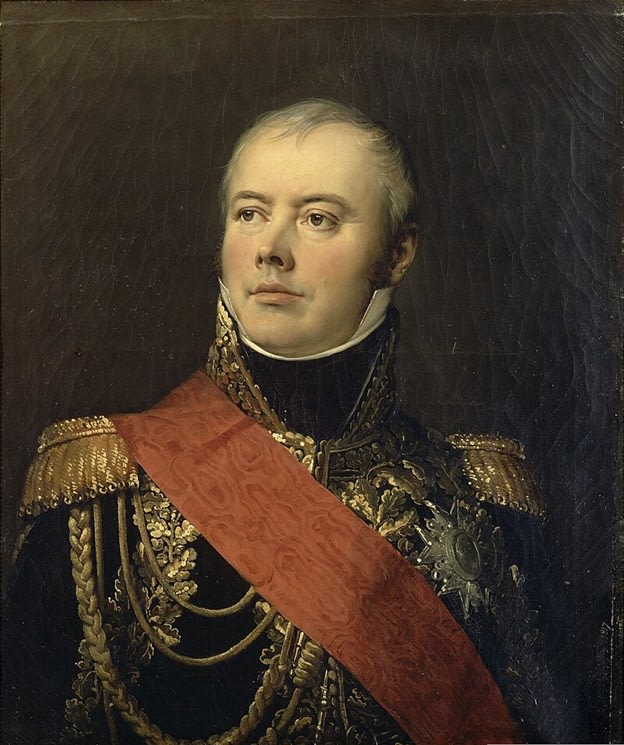
Additionally, General Jacques Macdonald’s 32,500-strong corps operated on the far left against Wittgenstein, and Prince Karl Schwarzenberg’s 34,000 Austrians on the south. Strengths: sheer numbers, excellent materiel, hard-won experience, and faith in their leader. Weakness: heterogeneity and low cohesion across national contingents.
Russia’s forces were smaller and scattered. On the western frontier stood two armies:
1st Western Army (Barclay de Tolly)
2nd Western Army (Bagration)
Together they had only 153,000 men with 758 guns. South on Volhynia, General Tormasov’s 3rd Army (up to 45,000) covered the Austrian direction. Elsewhere: Chichagov’s 55,000 Danube Army faced the Ottomans; Steingell’s 19,000 watched Sweden in Finland; Essen’s 18,000 guarded Riga.
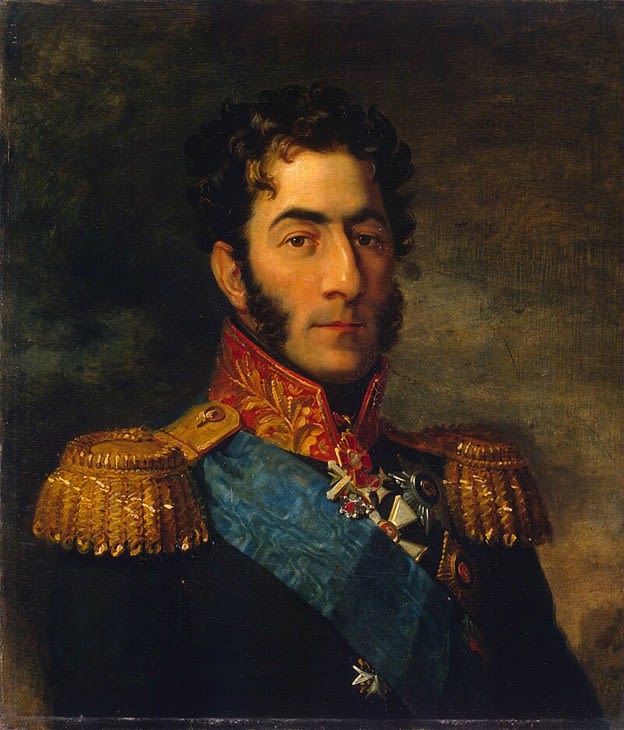
Russia, however, held the reserve advantage. Four levies during the war could provide over 400,000 recruits—though Kutuzov later avoided hasty use of raw infantry. The army depended heavily on Cossacks: 117,000 on paper, though only 20–25,000 served at the front as light cavalry.
Armament was solid. Domestic factories, though less productive than France’s, made weapons equal in quality; shortages meant some units carried British or Austrian muskets. Russian infantry mostly used smoothbore muskets; riflemen had rifled carbines; artillery fielded powerful 6- and 12-pounders and unicorn howitzers. Stocks of arms and ammunition had been laid up. Chronic problems were corruption and peculation — “half-sanctioned,” as contemporaries quipped.
Crucial diplomatic moves preceded the invasion. On 18 July 1812 Russia signed the Treaty of Örebro with Britain, ending their nominal war and restoring trade securing Russia’s northern flank. Spain also aligned with Russia; its guerrilla war on the Peninsula tied down 200,000–300,000 French troops, a decisive indirect help.
Napoleon’s goals: tighten the Continental System by forcing Russia’s full compliance; resurrect a Polish state including Lithuania, Belarus, and Ukraine a buffer and perpetual threat to Russia; and, if possible, forge a military alliance with Russia for a joint expedition to India to break British power.
Confident of a short war, he planned to smash the Russians in one or two border battles near Vilna or Warsaw, where populations were anti-Russian. He believed Alexander would sue for peace. “I shall begin by crossing the Niemen,” he told Metternich. “I shall finish at Smolensk and Minsk. There I will halt.” He did not plan to alter Russia’s political order e.g., by abolishing serfdom which might ignite uprisings. He banked on a lightning campaign; thus, the Russian strategic retreat into the interior shocked him, pinning him in Vilna for an unprecedented 18 days.
Russian planning lacked a single, settled strategy; both offensive and defensive options were debated. General Bagration urged an offensive on Warsaw, but Napoleon had already concentrated at the frontier.
Still, the idea of strategic withdrawal had been considered. In 1810 Ludwig von Wolzogen drafted a plan of fortified nodes and diverging army retreats. Alexander I himself endorsed the concept. In May 1811 he told the French envoy: “If Emperor Napoleon begins a war against me… I will sooner retreat to Kamchatka than surrender my provinces… Space will be on our side, and we shall preserve a well-organized army. Our climate and our winter will fight for us.”
The approved plan came from Prussian theorist Karl von Phull: the 1st Army would withdraw, drawing the enemy into the interior and defend in the fortified Drissa camp, while the 2nd Army harried the enemy’s flanks and rear. Too intricate, it was discarded in wartime; but the broader strategy avoid the decisive battle and exhaust the invader proved decisive, just as Alexander foresaw.
Napoleon’s preparations were also propagandistic. On the eve of invasion, French and Polish presses fanned anti-Russian sentiment with “Cossack menace” tropes and promises to “free Russian serfs,” spreading forgeries like the “Testament of Peter the Great.” He courted the Poles, raising new levies in the Duchy of Warsaw and recalling Polish units from Spain. Though he did not form a single Polish army, he created the 5th Corps under Józef Poniatowski.
In May 1812 Napoleon staged a grand court at Dresden, meeting European monarchs to exhibit continental unity. He then rode to the Niemen the border between Prussia and Russia. On 22 June he addressed his troops, accusing Russia of violating Tilsit and dubbing the coming campaign “the Second Polish War.” That same day, France’s ambassador in St. Petersburg delivered a formal declaration of war.
On the night of 11/12 June French engineers began bridging the Niemen. At 6 a.m. on 12 June 1812 the vanguard entered Kovno. Crossing 220,000 men took four days. Simultaneously, south of there, Eugène de Beauharnais’s 67,000 and Jérôme Bonaparte’s 79,000 crossed; to the north advanced Macdonald; to the south, Schwarzenberg.

Alexander learned of the invasion while at a ball in Vilna. After rejecting peace on 18 June, Napoleon lingered in Vilna for 18 days running occupied Lithuania his first strategic misstep.
He sent Marshal Macdonald’s 32,000 (including 20,000 Prussians) toward St. Petersburg to take Riga and link with Marshal Oudinot. Lacking siege artillery, Macdonald stalled before Riga; the Prussians were reluctant to fight and avoided action.

Oudinot took Polotsk and tried to outflank General Wittgenstein the force Barclay left to shield the capital. On 18 July Wittgenstein struck unexpectedly and drove Oudinot back to Polotsk. Later, even reinforced by Napoleon, the French repelled a Russian counterattack but remained bogged down; the northern thrust failed.
The main forces moved on Moscow, chasing Barclay’s 1st Army and Bagration’s 2nd. Scattered Russian corps tempted Napoleon to defeat them in detail. Barclay, perceiving the danger, began an orderly retreat first to Vilna, then to the Drissa fortified camp per Phull’s plan. Generals persuaded Alexander of the plan’s futility; on 5 July the army continued to Vitebsk. Around then Alexander, at his entourage’s urging, left the army to avoid interfering with command.

Meanwhile Bagration, 150 km away near Grodno, sought to unite with Barclay but was blocked. Napoleon hurled Marshal Davout and Jérôme to cut him off. Through forced marches and tough rearguard actions, Bagration slipped the trap, skirted Minsk from the south, and raced for the Dnieper.
To break through to Smolensk, he sent Raevsky’s corps, which fought Davout at Saltanovka (23 July). The action delayed the French, enabling Bagration to cross the Dnieper and head for Smolensk. Jérôme, hopelessly behind, was removed by Napoleon.
Barclay, learning that Bagration could not reach Vitebsk, retreated to Smolensk; on 3 August the two armies finally united—a first major strategic success for Russia. Napoleon, weary of the chase, paused at Vitebsk to rest his troops, but after hesitation decided to push on Smolensk.
On the southern flank, Saxon VII Corps under Reynier covered Napoleon’s right from Tormasov’s 3rd Russian Army. Exploiting scattered Saxon positions, Tormasov surrounded and destroyed their garrison at Kobrin (27 July), then liberated Brest and Pinsk.
Napoleon countered by leaving Schwarzenberg’s Austrian corps on the south troops he had meant to use on the main axis. Schwarzenberg and Reynier combined and attacked Tormasov at Gorodechno (12 August), forcing him back; but like the Prussians, the Austrians avoided decisive engagements, content with maneuvers and artillery duels. Desultory fighting in the marshes continued into late September while the central theater dominated events.
After the junction near Smolensk, demands for a decisive battle grew within the Russian high command. Though Barclay was nominal commander, his caution angered many—especially the fiery Bagration. Seizing on the French dispersion, Barclay attempted to strike them piecemeal toward Rudnya.
Napoleon, noting Russia’s slow movement, massed a fist and tried to outflank Barclay’s left by forcing the Dnieper. Standing in his way at Krasnyi was General Neverovsky’s 27th Division; its stubborn stand bought precious time to reinforce Smolensk, where Napoleon hoped to catch the Russians off guard.
By 4 August Napoleon, with 180,000 men, approached Smolensk. Bagration entrusted the defense to Raevsky’s corps. Though loath to fight a general battle, Barclay could not resist amidst the de facto dual command. Napoleon attacked from the march; the bloody struggle for Smolensk raged until morning on 6 August. To avoid encirclement and destruction, Barclay withdrew from the burning city saving the army but inflaming discontent.


During the retreat, the Russian rearguard had to beat off relentless pursuit. On 7 August at Valutina Gora the Russians delayed the enemy, inflicting heavy losses. Napoleon’s attempt to envelop with General Junot failed. The army withdrew in order toward Dorogobuzh.

Smolensk proved a turning point. The city’s destruction and the scorched-earth tactics burning settlements and evacuating civilians transformed the war into a people’s struggle. After the battle, Napoleon, sensing gravity, discreetly offered peace to Alexander I no reply came.
With Alexander absent and no single commander named, the tense relations between Barclay and Bagration threatened disaster. A Special Committee appointed General of Infantry Mikhail Illarionovich Kutuzov commander-in-chief on 5 August; he assumed command on 17 August, promising a general battle.
While adhering to the strategy of retreat, Kutuzov knew surrendering Moscow without a fight would be ruinous for morale. When the army reached the village of Borodino, he resolved to stand. To buy time for entrenchment, he ordered Prince Gorchakov to delay the French at the Shevardino redoubt; the day-long fight on 5 September allowed Russia to fortify its main line.
On 26 August (7 September) near Borodino 125 km from Moscow unfolded the campaign’s largest battle. Numbers were roughly equal: Napoleon 130–135,000; Kutuzov 110–130,000. Some 31,000 militia from Moscow and Smolensk, largely unarmed, served in supporting roles.
The battle was essentially a massive French assault on Russian fieldworks. Artillery was decisive: in the eighth attack on the Bagration fleches Napoleon hurled 45,000 men and 400 guns against 18,000 Russians and 300 guns on a front scarcely 1.5 km wide. “Borodino,” historians note, “marked the advent of the artillery age.”
After 12 hours of carnage, the French at the cost of 30,000–34,000 dead and wounded broke the Russian left and edged the center, but could not exploit. The Russians suffered 40,000–45,000 casualties. On 8 September, realizing the army was bleeding out, Kutuzov withdrew toward Mozhaisk to preserve a fighting force.


On 1 (13) September the army approached Moscow and bivouacked at Fili—an unsuitable defensive position. That day, in a peasant’s hut, Kutuzov convened the famous Council of War. The question: fight for Moscow or abandon it?
Most generals, including Bennigsen, urged battle. Barclay argued to withdraw: “Saving Moscow will not save Russia from war… but by saving the army, the nation’s hopes endure.”
Kutuzov ended the council and delivered his verdict: “So long as the army exists and can resist, we shall preserve hope of bringing the war to a successful close; but if the army is destroyed, Moscow and Russia are lost. I order a retreat.”
On 2 (14) September Napoleon entered a deserted Moscow without a fight. That night the city erupted in conflagration. The fires raged until 6 September, destroying most of Moscow and leaving only about 5,000 houses out of 30,000. Thousands of wounded Russians perished in the flames.
The fire struck Napoleon a heavy blow, dashing hopes of winter quarters and provisions.


Occupying Moscow, Napoleon thought he had gained decisive political leverage to force peace. His marshals, surveying a ruined city, a weakened army, and the oncoming winter, disagreed. They rejected a march on St. Petersburg; Napoleon, lacking support, relented and tried three times for peace.
18 September: via General Tutolmin (head of the Foundling Home), he offered peace—promising amicable relations but still demanding Lithuania and renewed compliance with the Continental System.
20 September: he sent a personal letter to Alexander I through I. A. Yakovlev.
4 October: grasping at straws, he dispatched General Lauriston to Kutuzov at Tarutino to request passage to the emperor, pleading: “I need peace absolutely save only my honor.” Kutuzov forwarded a report but gave no firm answer.
All three attempts failed; Alexander did not reply, determined to fight on.
At first, Napoleon’s invasion was met ambiguously. Rumors spread among serfs that he brought “freedom” and land; in some areas peasants even attacked Russian troops or delivered landlords to the French.
But the deeper the French advanced and the harsher their conduct, the faster sentiment shifted. Growing violence, looting, and the army’s moral decay sparked mass resistance. A genuine partisan war began, with both army detachments and peasant bands.
Peasant fighters organized self-defense, often led by veterans or local notables. Such groups under leaders like Yermolai Chetvertakov and Vasilisa Kozhina inflicted serious losses: in Moscow alone the French lost over 25,000 men. The swelling resistance disrupted supply critical to Napoleon’s dependence on foraging.
Partisans formed the first ring around Moscow; militias formed the second. In July Alexander I had urged nobles to raise levies from serfs; over 400,000 were mustered. Though no substitute for regulars, they, together with partisans, created a tight cordon around the city.
Kutuzov positioned the army on the Old Kaluga Road, shielding the grain-rich south, the Tula armories, and key cities like Kaluga and Bryansk, while threatening Napoleon’s stretched communications to Smolensk. Until 14 September Napoleon did not know where the Russian army had vanished.
In Tarutino the Russian army rebuilt, gained reinforcements and supplies, while the French in ruined Moscow starved amid constant partisan raids. Wintering there was impossible. Napoleon realized he was trapped.
On 6 October Russian forces struck Marshal Murat’s screening corps. At the Battle of Tarutino the French lost up to 4,000 men and 38 guns signaling the shift of initiative to Russia. The next day Napoleon began preparing to retreat.


As he set out, Napoleon had no clear plan only vague notions of wintering between Smolensk, Mogilev, and Vitebsk, perhaps renewing operations toward St. Petersburg or Kiev.
Kutuzov, by contrast, read events shrewdly. From prisoner interrogations he inferred Napoleon would try to retreat south or along the Smolensk Road. He fortified the southern approaches and, thanks to the Tarutino maneuver, already sat astride the path Napoleon chose. Kutuzov later wrote Alexander that Napoleon intended to pass via Kaluga to winter in rich provinces. His foresight laid a trap.
On 19 October Napoleon, with 110,000 men and a vast baggage train, began leaving Moscow, aiming for Smolensk via the unravaged southern provinces through Kaluga for provisions. But Kutuzov’s army barred the Old Kaluga Road. Unwilling to storm fortified positions, Napoleon swung onto the New Kaluga Road to outflank the Russians.
Anticipating this, Kutuzov shifted to Maloyaroslavets and again blocked him. On 24 October a fierce battle ensued. The town changed hands eight times. Although the French took it, Kutuzov occupied a strong position beyond; Napoleon dared not attack.

Around this time Napoleon narrowly escaped capture by Cossacks; his troops lost a clash near Medyn. Realizing time had turned against him, that evening he made the fatal decision to retreat along the devastated Old Smolensk Road the very path by which he had come.
From Maloyaroslavets to Smolensk the French were harried by Miloradovich’s vanguard, Cossacks, and partisans; the main Russian army marched south of them on a parallel course, constantly threatening flank and rear.
On 3 November the Russian vanguard crushed French corps near Vyazma. On 8 November Napoleon reached Smolensk only to find chaos. Of 40–45,000 effectives and a similar number of stragglers, few found food; whatever stores existed were plundered. Napoleon executed commissaries who failed to organize supply amid universal resistance.

Strategically the vise tightened. From the south advanced Chichagov’s Danube Army, which liberated Minsk Napoleon’s key base on 16 November. From the north Wittgenstein pushed forward, retaking Vitebsk on 7 November.
On 15–18 November the bloody battles of Krasnyi saw Russians exploit the French column’s elongation to inflict heavy losses. Napoleon broke through but lost much of his artillery and men.
On 21 November Chichagov’s vanguard seized Borisov, where Napoleon planned to cross the Berezina. Cornered between three Russian armies, Napoleon displayed his formidable generalship. On 25 November he deceived Chichagov with feints to the south, while his engineers threw two bridges north of Borisov. As the French main body approached the Berezina, their flanks guarding stretched communications were also under massive pressure.
On 26–27 November the army crossed, but not all escaped. On the morning of 29 November Napoleon had the bridges burned before the huge mass of laggards wounded, frostbitten, unarmed could cross. The Berezina crossing became a symbol of catastrophe. Napoleon avoided total destruction but lost 21,000 men.
After Berezina Napoleon pushed on to Vilna with scarcely 9,000 soldiers. On 5 December at Smorgon he finally abandoned the army, slipping to Paris incognito as the “Duke of Vicenza” to raise a new force. On 16 December the 29th and last bulletin of the Grande Armée appeared, blaming “unprecedented cold” and shocking France with the scale of losses.
Extreme cold did intensify after Berezina, finishing off the emaciated invaders. Russians, despite the frost, kept up the pursuit. On 14 December the pitiful remnants about 1,600 men recrossed the Niemen.
The Patriotic War ended with complete liberation of Russian territory and the annihilation of the invading army. Though the French often won tactically and the Russians did not capture Napoleon, the outcome was unequivocal. As Carl von Clausewitz wrote, “the French army ceased to exist, and the whole campaign ended in complete success for the Russians.”
By military historians’ estimates, over 610,000 men invaded Russia; only a fraction returned. Prussian officials reported that by December 1812 just 30,000 exhausted soldiers passed through East Prussia; another 6,000 came from Reynier’s and Macdonald’s flanks. The rest about 580,000 were killed, wounded, captured, or deserted. Of Napoleon’s 47,000 Guards who entered Russia, only a few hundred remained six months later; over 1,200 guns were lost.
Russian losses were also immense: total army and militia attrition of 150,000–200,000 dead and about 150,000 wounded. Yet the army remained a fighting force.
France’s ruin in Russia marked the beginning of the end for Napoleon’s empire. In January 1813 the Russian army launched the Campaign Abroad, carrying the war into Germany and France. Its climax was the Battle of Leipzig, where Napoleon suffered a crushing defeat. In April 1814 he abdicated.

Russia’s victory had sweeping consequences for Europe and at home.
Internationally, Russia’s prestige soared; it played a decisive role at the Congress of Vienna and shaped European politics for decades.
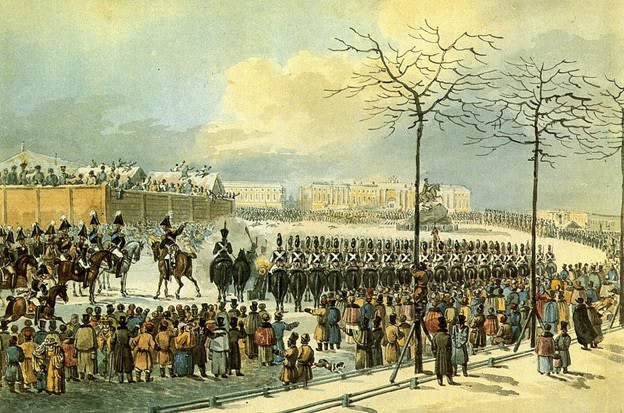
Domestically, victory created a surge of national spirit. Officers who had marched across Europe saw serfdom abolished everywhere else and expected reforms at home; none came. Disillusionment fueled peasant unrest and opposition among progressive nobles, culminating in the Decembrist uprising of 1825.

The triumph over Napoleon powerfully stimulated Russian national identity and culture. Historian P. I. Bartenev wrote: “Read but the tale of the Patriotic War, and whoever did not love Russia will love her.” A. I. Herzen believed that 1812 “opens the true history of Russia.”
Many former prisoners of the Grande Armée—French, Germans, Poles stayed in Russia, took citizenship, and assimilated as Cossacks, teachers, even Russian generals becoming part of the Russian people.


