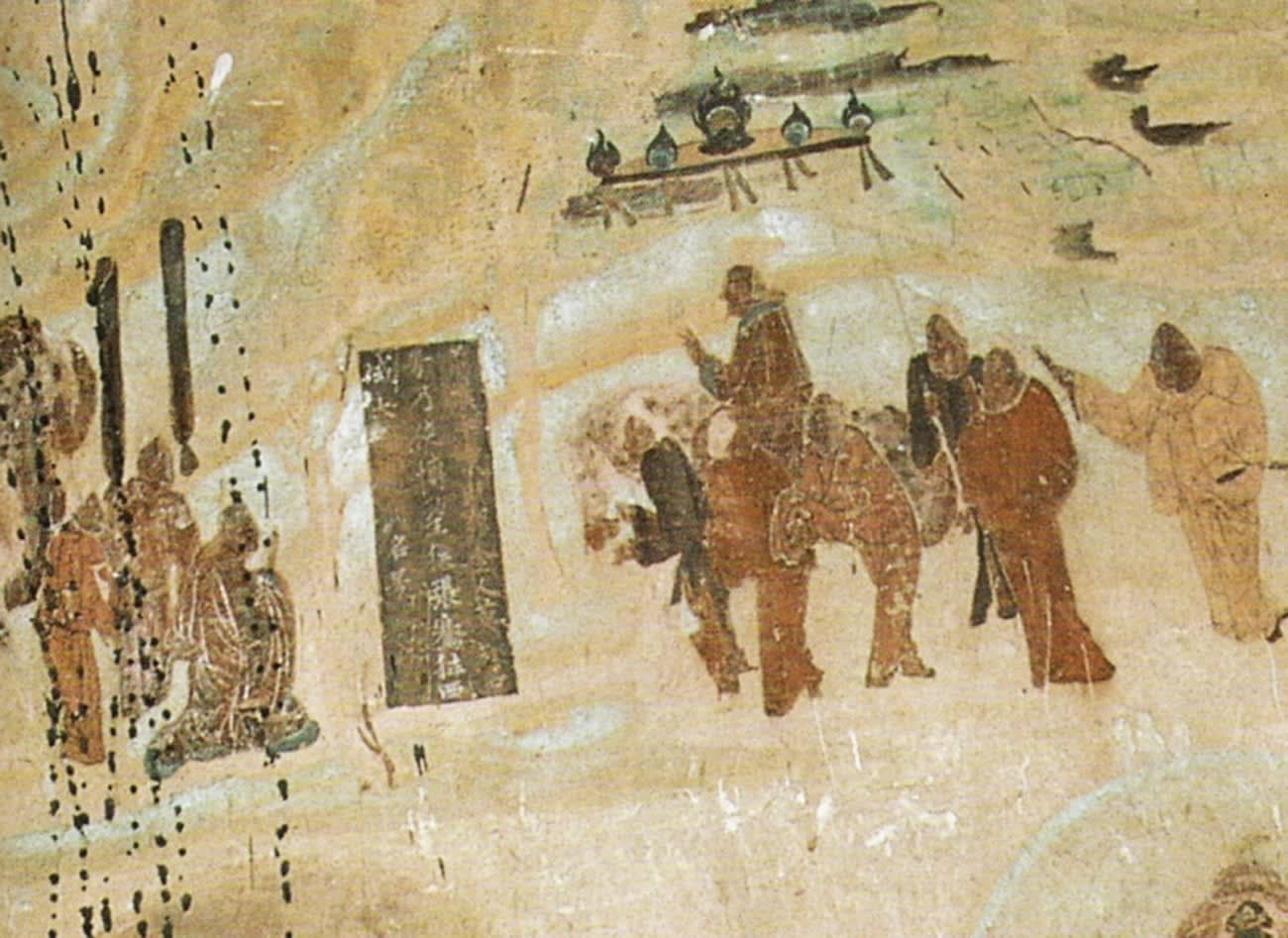
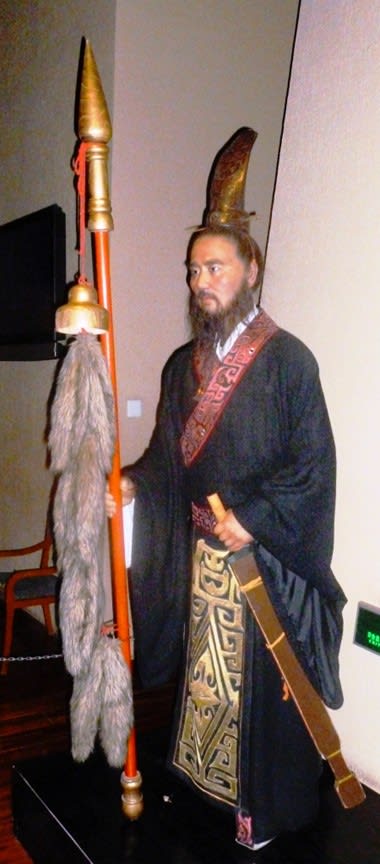
The journeys of Zhang Qian are of immense historical importance because they opened the western world to ancient China, which had been in a state of self-isolation. It was his diplomatic mission that initiated China’s contacts and trade routes with Central Asia.

In 138 BCE, the official Zhang Qian, a native of Chenggu, was sent west on a diplomatic mission by the Han emperor Wu Di. The goal was to forge an alliance with the Yuezhi against their common enemies, the steppe Xiongnu. The embassy numbered over a hundred people, including Tangyi Ganfu, a former Xiongnu slave and skilled archer. While passing through Xiongnu lands, however, the mission was seized and taken to the chanyu (Xiongnu ruler) Junchen. Zhang Qian spent ten years in Xiongnu captivity; during that time he married a Xiongnu woman and had a son. Throughout, he managed to keep his envoy’s credential tally, demonstrating his unwavering commitment to the mission.
In 126 BCE, Zhang Qian, his wife, and Tangyi Ganfu managed to escape. They reached Lake Issyk-Kul and then the Fergana Valley, where the state of Dayuan was located. The king of Dayuan, having heard of Han might, welcomed Zhang Qian and helped him reach the state of Kangju. From there the embassy proceeded to the Great Yuezhi, who by then had invaded Bactria. Zhang Qian found that the Yuezhi, now living in rich and secure lands, had no desire to wage war on the Xiongnu, and his attempt to conclude an alliance failed.
A year later Zhang Qian decided to return to China by a southern route, but he was again intercepted by the Xiongnu. He was only able to return home after the death of the chanyu Junchen. The embassy brought back to China information about numerous countries in Central Asia. Particularly important was Zhang Qian’s discovery that in Bactria he had seen bamboo staffs from Sichuan that had arrived there via India. This indicated the possibility of establishing a new southern trade route that would bypass the hostile Xiongnu and Qiang. Emperor Wu recognized the potential of this discovery for expanding the empire.
After his return, Zhang Qian was promoted, and in 123 BCE he took part in a campaign against the Xiongnu under General Wei Qing, receiving the title Marquis of Bowang. In 122 BCE, however, having arrived late and not taking part in a battle, he lost his title, though he was pardoned by the emperor.
In 117 BCE, Wu Di sent Zhang Qian on a second mission, this time to the Wusun people inhabiting the Ili River basin. The aim was to persuade them to join an alliance against the Xiongnu. This embassy was far larger: 300 people, 600 horses, and a huge quantity of gifts. The Wusun ruler, the kunmo, received Zhang Qian but refused to relocate, though he agreed to send his own mission to Han. Upon his return, Zhang Qian was appointed a grand minister—one of the Nine Ministers. He died in 113 BCE, having spent a little over a year back in his homeland.
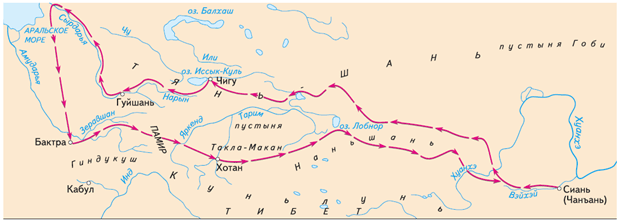
Zhang Qian’s journeys had a profound impact on the history of China and the wider world. He not only gathered invaluable information about Parthia, Central Asia, and India, but also established the first diplomatic contacts between China and the Hellenistic states of Asia. Thanks to his missions, grapes and alfalfa were introduced to China, and—most importantly—his discoveries laid the groundwork for the formation and development of the Silk Road, which for many centuries became the most important trade artery between East and West.


