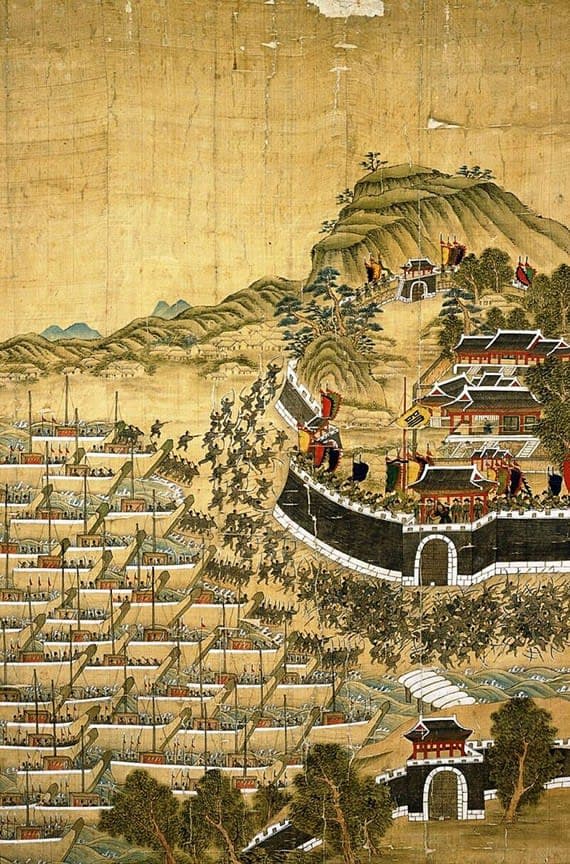

By the end of the 16th century, the political situation in East Asia was characterized by three key factors: the weakening of power in Korea and China, internal conflicts, and, on the contrary, the consolidation of Japan under the rule of a new leader.
In 1392, the Korean general Yi Seong-gye overthrew the Goryeo dynasty and founded the new Joseon dynasty, which was recognized in China and joined the China-centered vassal system. Both the Joseon dynasty in Korea and the Ming dynasty in China had much in common. They arose in the 14th century after the fall of the Mongol conquerors and adhered to Confucian principles. They were also united by the struggle against common external threats, such as the Jurchens and Japanese pirates wokou. However, both countries were plagued by conflicts between various political factions, which greatly weakened them.
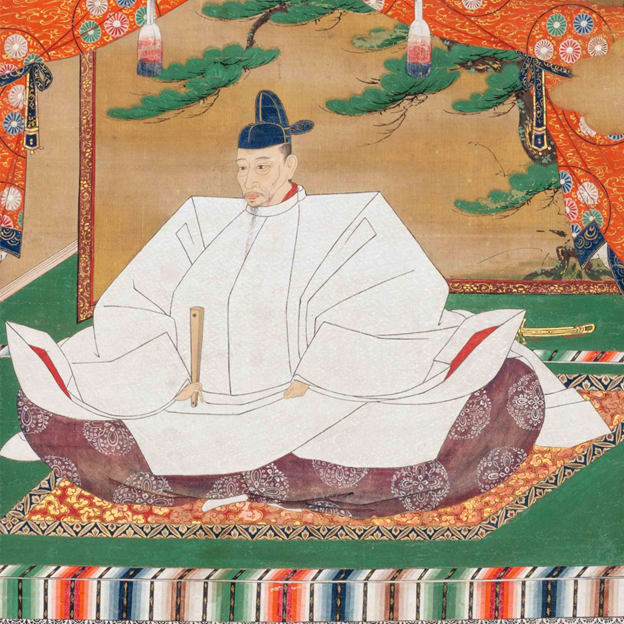
By the end of the 16th century, Japan, after a long period of civil wars, was united under the rule of Toyotomi Hideyoshi. Being of peasant origin, he could not become shogun and received the lower title of kampaku. To legitimize his rule and prevent internal uprisings, Hideyoshi conceived a large-scale invasion of China. Some historians believe that this was part of his plan to eliminate potentially dangerous samurai left idle after the unification of the country. Others point to Hideyoshi’s growing madness, who, after his successes, began to lose touch with reality.

At the beginning of 1591, Hideyoshi ordered the construction of a huge castle in Nagoya, which was to become the center for gathering troops before the campaign. He also sent letters to the Philippines, demanding tribute and diplomatic support. To assess the combat readiness of the Koreans, in 1587 he sent a reconnaissance expedition to their shores, which concluded that the Korean army was not ready for war. Nevertheless, he maintained the appearance of friendly relations with China.
By the end of the 16th century, the Japanese samurai army numbered about half a million men. Half of this army of experienced warriors took part in the Korean campaign. The main weapons of the samurai were spears, swords, and bows. A special place was occupied by firearms the Japanese had a large number of arquebuses, and the trained ashigaru infantry, like their European counterparts, used the tactic of firing in ranks for volley fire.


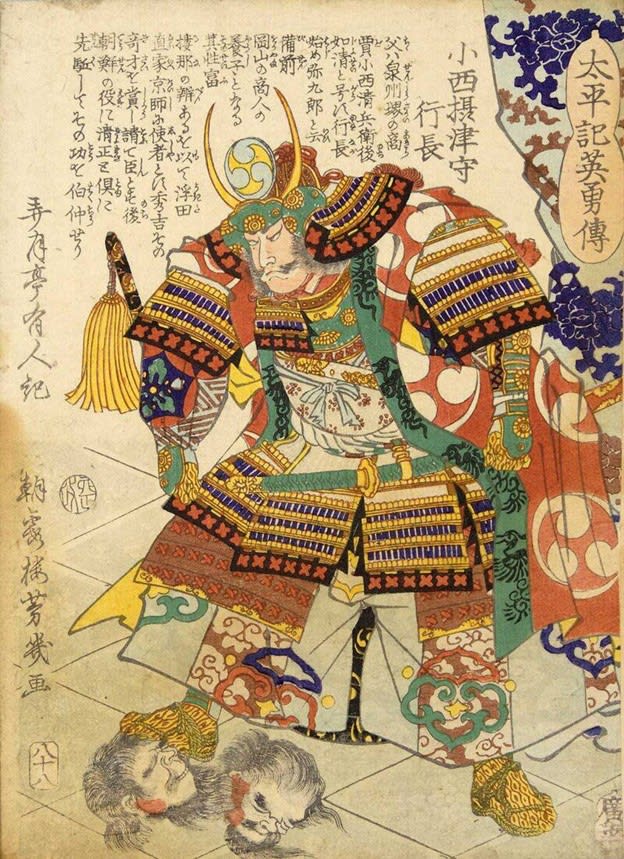
The samurai used various types of cold weapons, including yari spears, odachi long swords, and naginata halberds, but the most popular was the katana. In battle, they wore armor made of hard leather or steel, as well as psychological masks depicting “sinister grins.”
The weak point of the Japanese army was the navy. The “Napoleon of the East,” Toyotomi Hideyoshi, who sought to conquer Korea and China, had extremely limited naval forces. Unlike the strong army, the Japanese fleet was small, and its ships were insufficiently powerful. Hideyoshi even asked the Portuguese for help but was refused. Therefore, the Japanese had to build ships according to old models and hire inexperienced sailors.

The Korean army, whose numbers did not exceed 50 thousand men, was less combat-ready than the Japanese one. It suffered from internal intrigues, and defeat in the war with the Jurchens in 1582 did not lead to the necessary reforms. Korean officers, unlike Japanese ones, were appointed exclusively from the aristocracy, which valued scholarship above all else, not military affairs. The infantry wore light armor, and its main advantage was the archers, whose bows surpassed the Japanese ones in range.
The Chinese army, numbering 845 thousand men, was the largest in Asia. Its core was infantry armed with guns, swords, and spears, as well as powerful cavalry and artillery, which, according to historian Stephen Turnbull, was the best in the region. However, by 1592, the Chinese troops were exhausted by wars with the Mongols and internal uprisings.
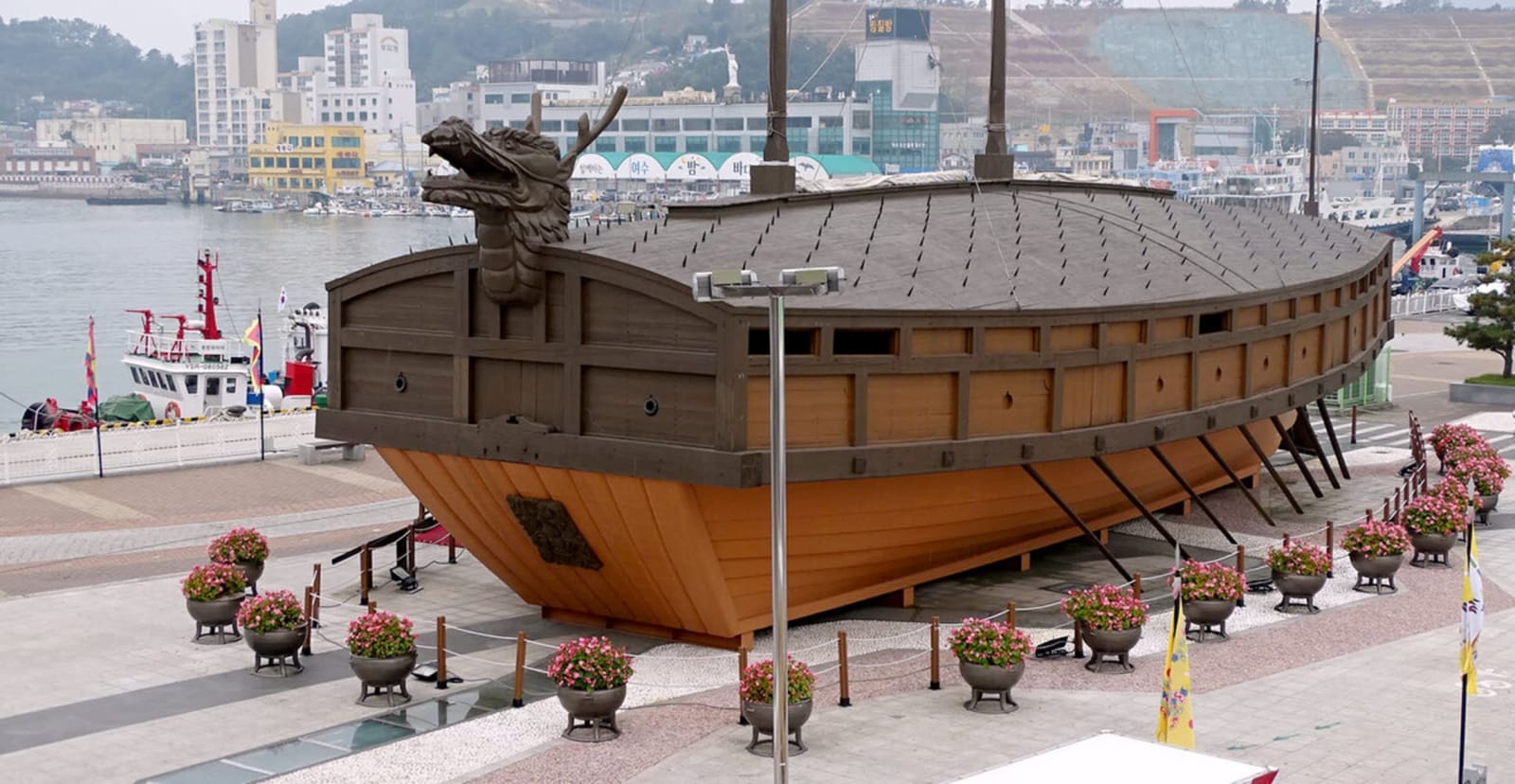
Unlike the army, the Korean navy was much stronger. It was hardened in battles with pirates and was led by talented admirals such as Yi Sun-sin. The fleet was armed with armored “turtle ships” (geobukseon), which could inflict great damage on Japanese ships.
In the spring of 1592, Hideyoshi prepared an army of 220,000 men and a fleet of several hundred ships. On May 25, 1592, the first group of Japanese troops of 18,000 men landed in Korea and captured the fortresses Busan and Dongnae. The Japanese took no prisoners, killing everyone, including civilians, in an attempt to intimidate the Koreans. But instead, they only caused a wave of fierce resistance.
The Japanese quickly advanced through the country thanks to the low combat readiness of the Korean army. The second and third groups of Japanese troops landed on the southern coast and also began their advance. Since the Koreans did not defend the Choryeong Pass, Japanese commander Konishi Yukinaga was able to move his troops through it and on June 8, 1592, at the Battle of Chungju, defeated the Korean cavalry of commander Shin Rip. Having suffered defeat, Shin Rip committed suicide.

Only 20 days after the start of the war, the Japanese captured Seoul. The Korean court fled north to the city of Uiju, from where King Seonjo sent an appeal to the Ming emperor for help. The Chinese did not immediately believe in such a rapid Korean defeat and decided to provide assistance only after long deliberations.

At the beginning of the Imjin War, the Korean troops were not ready to face the powerful and experienced Japanese army. Upon learning of the invasion, the Joseon government appointed General Yi Il as commander of the mobile border troops. However, his army was small and poorly trained. On June 4, at the Battle of Sangju, General Yi’s detachment, numbering less than 1,000 men, was easily defeated by the superior Japanese forces, losing 700 soldiers. The Koreans, armed with bows, could not withstand the long-range Japanese muskets.
The Japanese offensive continued. The second group of the Japanese army was delayed for two weeks at the Imjin River. The Korean troops, mistakenly taking the Japanese maneuver for retreat, crossed the river but were attacked by the enemy’s main forces. Suffering heavy losses, they retreated to Kaesong. After that, the Japanese, having studied the ford across the river, began to cross. The Koreans, seeing this, abandoned the city of Pyongyang, and on July 20, 1592, the Japanese troops captured it without a fight, seizing huge supplies of food and military equipment.
At the same time, the second group of Japanese troops under Katō Kiyomasa moved north to Hamgyong Province, where they faced resistance. At the Battle of Songjin, the Korean cavalry drove the Japanese into a granary, but the Japanese, fortifying themselves with rice sacks, successfully repelled the attack with musket fire. At night, Katō Kiyomasa arranged an ambush, and the Koreans were defeated. The further advance of the Japanese northward was met with fierce resistance from the Jurchens. The Japanese were blocked and, suffering heavy losses, were forced to retreat.

Despite defeats on land, the Koreans did not surrender. The Japanese invasion caused a wave of popular protest that grew into a large-scale partisan war.
The main role in the resistance was played by the Korean navy under the command of Admiral Yi Sun-sin, who conducted a series of brilliant naval battles. On August 13, 1592, at the Battle of Hansando, the Korean fleet clashed with 82 Japanese ships. Yi Sun-sin, using the “crane wing” formation, lured the Japanese ships into the open sea, surrounded them, and began shelling them with heavy cannons. The Koreans also used armored “turtle ships” and fire bombs, which caused enormous damage to the Japanese ships. The battle ended with a complete victory for the Koreans; the Japanese lost 59 ships without inflicting any damage on the Korean fleet. Learning of this defeat, Toyotomi Hideyoshi ordered the Japanese fleet to cease all further operations.
On land, a number of important victories were also achieved. The strategically important fortress Jinju, which defended Jeolla Province, became the target of the first Japanese siege. The Japanese army under Hosokawa Tadaoki, confident of an easy victory, faced stubborn resistance from 3,000 Korean soldiers under General Kim Si-min. The Koreans, equipped with new arquebuses, repelled the Japanese attacks with fire and stones. After three days of unsuccessful assaults and growing losses, the Japanese were forced to retreat. This victory went down in history as one of Korea’s greatest victories and prevented further Japanese advance.

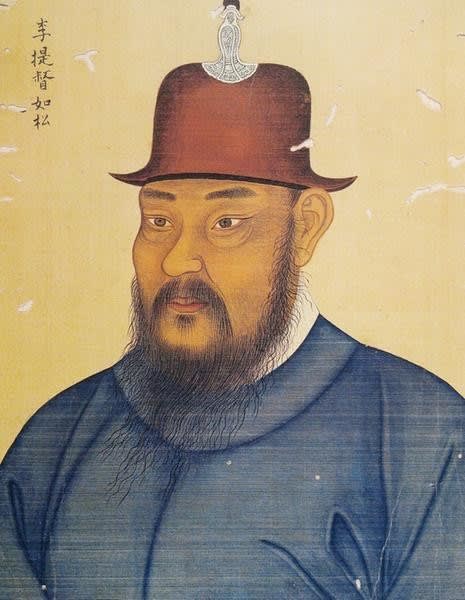
By the end of 1592, China, realizing the seriousness of the situation, sent a large army to aid Korea. The first Chinese detachment, which arrived in Korea, attempted an unsuccessful assault on Pyongyang and was defeated by the Japanese. However, the Chinese government decided on full-scale mobilization, and in February 1593, a large army under General Li Rusong arrived in Korea. He defeated the Japanese forces at the Battle of Pyongyang and began advancing toward Seoul. But at the end of February, in the Battle of Byeokjegwan, the Chinese suffered a serious defeat, which forced them to retreat and allowed the Japanese to consolidate in the southeastern Gyeongsang Province.

By this time, the Japanese troops, cut off from support at sea, were suffering huge losses from hunger, disease, and constant partisan attacks. The Japanese command agreed to a ceasefire and the start of peace negotiations.
The negotiation process, which lasted from 1593 to 1596, was full of deceit and fraud. Japanese and Chinese generals, unwilling to continue the war, fabricated false reports for their rulers, claiming the enemy had surrendered. As a result, Toyotomi Hideyoshi received a fake document of China’s capitulation, while the Chinese emperor received a fake assurance of Hideyoshi’s submission.
In October 1596, Chinese envoys arrived at Hideyoshi’s residence to present him the title of “King of Japan.” Learning that the Chinese considered him their vassal, Hideyoshi became furious and ordered the envoys to be expelled. Enraged, he decided to take revenge on the Chinese and ordered preparations for a new invasion.
In 1597, Hideyoshi sent a second army to Korea, numbering about 141,100 men. The Japanese found that the Korean army had become much better armed and prepared. However, political intrigues again began in Korea. The national hero, Admiral Yi Sun-sin, was accused of disobeying orders, demoted, and thrown into prison.
A new commander of the fleet, Admiral Won Gyun, was appointed, promoted by the victorious court faction. His incompetence quickly led to a sharp decline in the fleet’s combat readiness. At the Battle of Chilcheollyang, the Japanese attacked unprepared Korean ships and achieved a complete victory. The entire Korean fleet was destroyed, and Won Gyun himself was killed.
Facing catastrophe, the Korean king was forced to release Yi Sun-sin from prison and appoint him to command what was left of the fleet.
After the catastrophic defeat of the Korean navy at the Battle of Chilcheonryang, the defensive lines of the allies in the south collapsed. The Japanese troops broke into Jeolla Province, and their next key target became the fortress of Namwon. The allied forces, numbering about 6,000 men (including 3,000 Chinese soldiers), prepared for defense. The Japanese besieged the fortress, using ladders and siege towers. In fierce fighting, the Japanese managed to break through the walls and looted the fortress. According to Japanese sources, the Korean and Chinese forces lost 3,726 men, and the Japanese took no prisoners, killing everyone, including civilians.
One of the Japanese monk-chronists, Keinen, described the scene of horror: “The full moon illuminated the ruins... the walls of Namwon were red with blood... the samurai gave no mercy, killing everyone.” The Japanese collected the heads of the dead, and by order of Toyotomi Hideyoshi, the severed noses were pickled and sent to Japan as proof of victory. These “trophies” were buried in the “Mound of Ears” in Kyoto.
It seemed that all was lost for Korea, but at this moment, Admiral Yi Sun-sin returned to the scene. He gathered what was left of the fleet only 13 ships. With these forces, he performed the “Miracle of Myeongnyang”, defeating a huge Japanese fleet numbering up to 333 ships. Yi Sun-sin skillfully used the sea currents and tides in the narrow Myeongnyang Strait. He lured the Japanese ships into a trap, where the strong current smashed them against the coastal rocks. The Koreans only had to finish off the disoriented Japanese fleet.


Upon learning of the defeat at Myeongnyang, the Japanese troops retreating from Jeolla Province looted the ancient capital Gyeongju. The Korean and Chinese forces continued the pursuit and besieged the important Japanese fortress Ulsan. This siege became the first major offensive of the allies in the second phase of the war.
About 36,000 allied soldiers, using hwacha and singijeon (multi-rocket launchers), attacked Ulsan. During the first attack, the allies caught the Japanese by surprise, as their fortifications were not yet completed. However, Japanese reinforcements under Mōri Hidemoto arrived, and the Chinese commander Ma Gui, fearing encirclement, ordered a retreat. The withdrawal quickly turned into a chaotic flight, which the Japanese exploited to attack the retreating forces. The allies lost about 20,000 men.

Soon, the Chinese launched a new offensive toward Sachon, which they considered key to regaining positions. Although they were initially successful, a sudden counterattack by the Japanese from behind and from the fortress led to their rout. The Chinese troops retreated with losses of 30,000 men.
At the end of 1598, it became clear that continuing the war was pointless due to the death of Toyotomi Hideyoshi. The Japanese expeditionary army began evacuation. The Japanese fleet of 500 ships under Shimazu Yoshihiro was assembled to join the blockaded fleet of Konishi Yukinaga.
The Korean fleet under Yi Sun-sin, having united with the Chinese fleet, discovered Shimazu’s fleet in the narrow Noryang Strait. Under the cover of darkness on December 16, 1598, the allies launched a surprise attack using cannons and fire arrows. By dawn, the Japanese fleet was destroyed. However, during the pursuit, Yi Sun-sin was mortally wounded by a stray bullet. Dying, he asked his nephew to hide his death so as not to demoralize the troops. Despite heavy losses, the allies achieved a tactical victory, destroying more than half of the Japanese fleet.
However, strategically, the Japanese achieved their goal, as Konishi’s retreating forces managed to slip past the battlefield. On December 24, the last Japanese ships left Korea, ending the war.


After the war, the normalization of relations fell on the shoulders of Tokugawa Ieyasu, Hideyoshi’s de facto successor. He entrusted negotiations to the Sō clan, who skillfully played on the Korean perception of the Japanese as “barbarians.” The Koreans, considering themselves victors, agreed to resume trade and to missions of Korean artists to Japan, which, in their opinion, affirmed the cultural superiority of Korea. However, the Japanese used these missions to strengthen their authority.
Despite the formal victory, Korea suffered the greatest damage. Its population was reduced by half, the economy was destroyed, and many historical monuments were destroyed. The war reinforced in the minds of Koreans the negative image of the Japanese as aggressors. At the same time, it strengthened the pro-Chinese political group, which considered China the “liberator.”
For Japan, the invasion brought nothing but huge losses. The failure undermined the influence of the Toyotomi clan, and power in the country was seized by Tokugawa Ieyasu, who founded a shogunate that ruled Japan for more than 250 years. However, during the war, the Japanese took from Korea many masters of porcelain and printing, who contributed to the development of Japanese culture.
For Ming China, the war became the last successful external operation of the empire. The war exhausted the treasury and weakened the army, which led to the decline of the Ming dynasty. The Manchus took advantage of this, and in 1644 destroyed the Ming and founded the new Qing dynasty.
Thus, although the Imjin War did not change borders, it profoundly influenced the political landscape and cultural self-awareness of all participants in the conflict.


