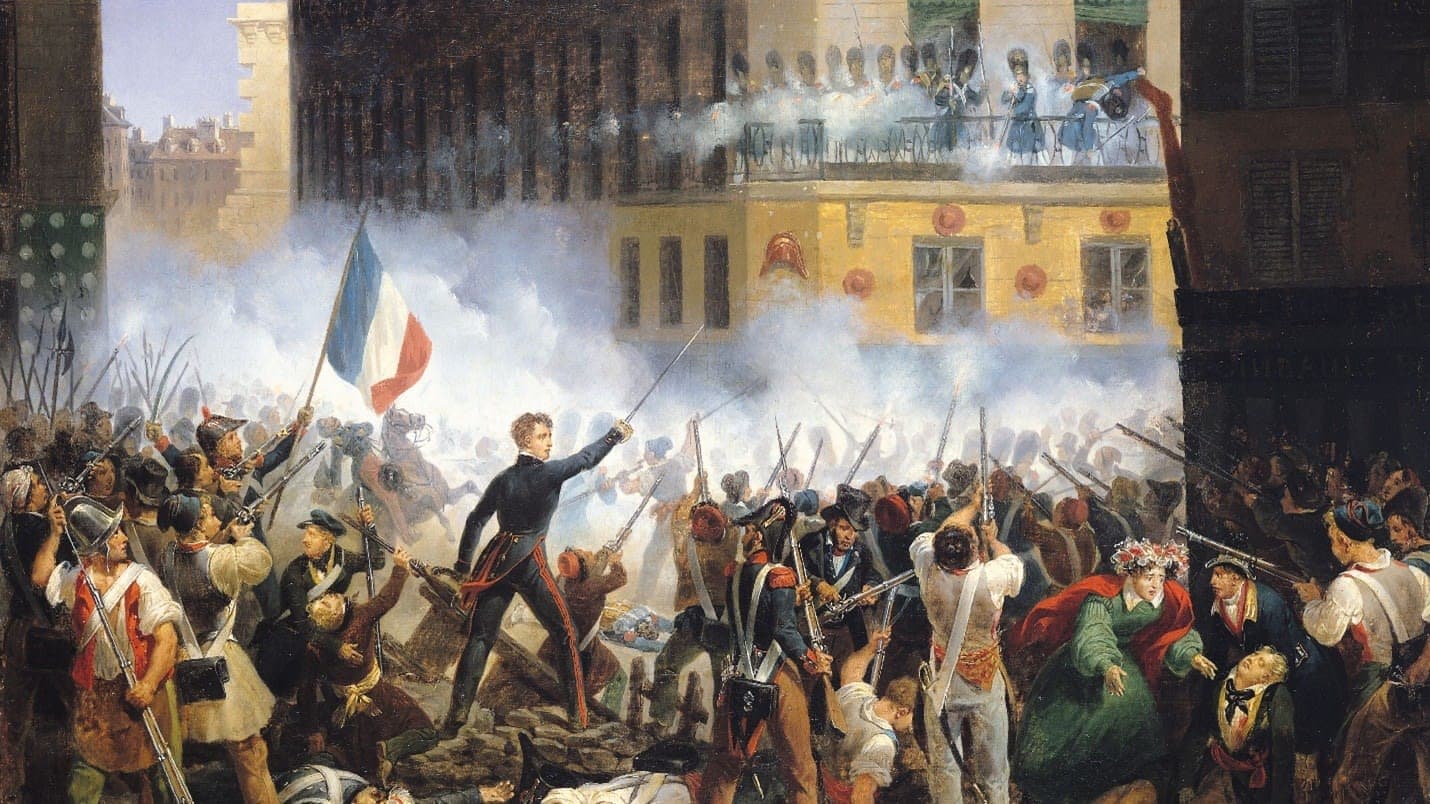
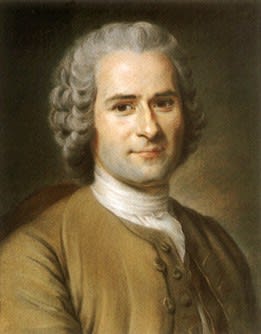
The French Revolution of 1789 was not a sudden event. It was the logical outcome of deep, long-term contradictions that had accumulated in French society over centuries. Its chief causes were the absolute monarchy’s inability to solve pressing problems, a rigid estate system, and the spread of new, revolutionary Enlightenment ideas.
Eighteenth-century France was an absolute monarchy grounded in bureaucracy and the army. This “old order” rested on a series of compromises: the crown upheld noble and clerical privileges in exchange for loyalty; the peasantry was spared many cash taxes; and the bourgeoisie received certain privileges for small-scale enterprise. These compromises, however, hindered development. France increasingly lagged behind neighbors especially Britain. The privileged estates, a small minority, owned a large share of land and paid no taxes, while the main burden fell on peasants and the bourgeoisie.
Among the educated, Enlightenment ideas especially those of Montesquieu and Rousseau fueled the conviction that obsolete governance, chaotic law, and corruption required reform. Royal absolutism was losing legitimacy in the eyes of nobles and bourgeois alike, who saw it as an usurpation of their rights.

The immediate trigger was a prerevolutionary crisis in the 1780s. France’s intervention in the American War of Independence, though politically advantageous, pushed the state to financial collapse. Finance minister Jacques Necker funded the war with loans, worsening the deficit. By 1788 expenditures far outstripped revenues, and further tax hikes on the Third Estate were impossible.
Natural calamities compounded matters: a failed silk-cocoon crop in 1787, devastating hail that ruined grain in 1788, and the harsh winter of 1788–89. Prices for food soared, bringing hunger and unrest. The 1786 commercial treaty with Britain, which opened the French market to cheaper British goods, ruined thousands of French workshops and swelled unemployment.
To overcome the crisis, the new finance minister, Charles Alexandre de Calonne, proposed radical reforms, including a new land tax payable by all estates, nobles and clergy included. Anticipating resistance from the parlements, he urged the king to convene an Assembly of Notables leading aristocrats and high clergy.
The Assembly of Notables met in February 1787 and refused to approve the tax, declaring that only the Estates-General dormant since 1614 could decide such matters. In effect, the aristocracy sought to reclaim political influence and limit royal absolutism a phase often called the “aristocratic revolution.”


Under mounting pressure, the king reinstated Jacques Necker in August 1788. Necker insisted on summoning the Estates-General and, by the royal ordinance of 24 January 1789, elections were called with suffrage for all French males over twenty-five. Crucially, the Third Estate received “double representation,” numerically matching nobles and clergy combined. But the key issue voting by estate (one vote per order) versus headcount remained unresolved; the former guaranteed privilege, the latter favored the Third Estate.
During elections, each community drafted cahiers de doléances lists of grievances. Peasants demanded the end of feudal dues; the bourgeoisie, free trade; all estates, an end to judicial arbitrariness and jury trials. The era’s most famous pamphlet, “What Is the Third Estate?” by Abbé Sieyès, declared: “What is the Third Estate? Everything. What has it been hitherto in the political order? Nothing. What does it ask to become? Something.”
On 5 May 1789 the Estates-General opened at Versailles. From the outset conflict was inevitable: Louis XVI saw it merely as a tool to fix finances, while the nation expected sweeping reforms. The first session exposed the main sticking point how to vote. Clergy and nobles insisted on voting by order; the Third Estate, mindful of its numbers, demanded voting by head.

After fruitless wrangling, on 17 June 1789, at Sieyès’s urging, the deputies of the Third Estate declared themselves the National Assembly, the sole representative of the nation. Some clergy and nobles gradually joined them.
The court tried to block them. On 20 June the Third Estate found its hall locked, so they gathered in a nearby indoor tennis court and swore not to disperse until France had a constitution the famous Tennis Court Oath.

The next day the king staged a royal session, annulled the Assembly’s acts, and ordered the deputies to disperse. They refused. Mirabeau famously retorted: “Go tell your master that we are here by the will of the people and will leave only at the point of bayonets!” As more clergy and nobles defected to the Assembly, the king yielded. On 9 July it proclaimed itself the National Constituent Assembly to draft a constitution.
The victory was fragile. The king massed troops around Paris and dismissed the popular Necker, replacing him with the hard-line Baron de Breteuil. This was the last straw.
On 12 July 1789, upon hearing of Necker’s dismissal, Parisians took to the streets. The young lawyer Camille Desmoulins called the people to arms. Crowds, fearing an “aristocratic plot,” thronged the Palais-Royal. The French Guards joined the popular side; after clashes, the city commander ordered royal troops to withdraw.
A Permanent Committee and a citizens’ militia soon the National Guard were formed. People scoured the city for arms. On 14 July the crowd seized 32,000 muskets from the Hôtel des Invalides and then marched on the Bastille.
The medieval fortress-prison symbolized royal despotism. Its garrison numbered about a hundred, and only seven prisoners were inside. After several hours of siege, Governor de Launay surrendered. The garrison lost one man; the insurgents, 98 killed and 73 wounded. The mob tore de Launay and several soldiers to pieces. The fall of the Bastille became the emblem of popular victory over absolutism and marked the revolution’s beginning.


Shaken, Louis XVI recognized the Constituent Assembly, recalled Necker, and on 17 July entered Paris to accept the tricolor cockade the symbol of union between king and people.
Meanwhile, a “municipal revolution” swept the country: royal officials were ousted; communes and National Guards took power; the government lost control.
In the countryside, hunger and rumors of an “aristocratic plot” sparked the “Great Fear.” Peasants armed themselves, burned seigneurial châteaux, and destroyed feudal records.
To stem the violence, the Assembly, in the famed “Night of Miracles” of 4 August 1789, abolished personal feudal dues and privileges, equalizing citizens in taxation and office-holding though real land-based dues persisted.

On 26 August 1789 the Assembly adopted the Declaration of the Rights of Man and of the Citizen, a landmark of democracy that proclaimed equality before the law, inalienable rights, popular sovereignty, and freedom.
Despite the Declaration, the king refused to sanction it. Hunger deepened in Paris, and rumors of an aristocratic conspiracy fanned tensions.
On 5 October 1789 a crowd largely, women marched from Paris to Versailles demanding bread and the king’s return to the capital. The National Guard under Lafayette followed. Louis accepted the Declaration, but that night the crowd burst into the palace; only Lafayette’s intervention averted a massacre.


On the morning of 6 October, the royal family, under popular pressure, set out for Paris, escorted by jubilant crowds singing, “We’re bringing back the baker, the baker’s wife, and the baker’s boy!” The Assembly soon moved to Paris as well.

The Constituent Assembly set about remaking France into a constitutional monarchy. In October 1789 the royal title was changed to “King of the French,” signaling that sovereignty now flowed from the people, not God. The king remained head of the executive but within the law: he could appoint ministers, but the right to declare war and make peace passed to the Assembly.
Sweeping reforms followed. On 19 June 1790 hereditary nobility and titles were abolished. France’s old administrative map provinces, sénéchaussées, bailliages was replaced by a rational grid of 83 departments, subdivided into districts and cantons, empowering local self-government.
The judiciary was rebuilt from scratch: old courts abolished; judges made elective; new courts established from justices of the peace up to a Court of Cassation and a National High Court.
Economic privileges guilds, monopolies, internal tariffs were eliminated; three new taxes payable by all estates were introduced. To tackle towering debt, Talleyrand proposed using church property; the clergy’s lands were nationalized.
The most contentious measure was the Civil Constitution of the Clergy, turning the Church into a state institution. Clergy swore an oath to the state; bishops and priests were elected. About half refused, splitting society and becoming a mainstay of counterrevolution.
A split also opened within the revolutionary camp. Moderate constitutionalists Mirabeau, Barnave, Lameth believed the revolution’s goals had been achieved and should be stabilized. Their hopes were dashed by the king’s flight.
On the night of 20 June 1791, Louis XVI and his family attempted to flee Paris but were recognized at Varennes and brought back to a silent, grim capital. For many, the escape proved the king’s treachery.
Varennes radicalized the revolution. Open calls for a republic were heard for the first time. Moderates tried to save the monarchy by claiming the king had been abducted. Yet on 17 July 1791, when the Cordeliers club organized a petition for abdication on the Champ de Mars, the National Guard under Lafayette fired on demonstrators the first bloodshed within the revolutionary camp.


On 3 September 1791 the Assembly adopted a constitution creating a Legislative Assembly; suffrage went only to “active” citizens meeting a high property threshold. Trust in the king was shattered, and Europe’s monarchs contemplated intervention.
On 27 August 1791 the Austrian emperor and Prussian king issued the Declaration of Pillnitz, threatening war. In response, on 20 April 1792, under Girondin influence, the Legislative Assembly declared war on the king of Hungary and Bohemia.

The war began badly: many noble officers had emigrated or defected; the king, hoping for revolutionary defeat, vetoed defense decrees. On 20 June 1792 crowds invaded the Tuileries; Louis refused to back down.
In early August the Prussians issued the Brunswick Manifesto, threatening to raze Paris if the royal family were harmed only inflaming revolutionary resolve.
On 10 August 1792 the insurrectionary Paris Commune led the storming of the Tuileries. The king sought refuge in the Assembly, which suspended him. On 13 August the royal family was imprisoned in the Temple. The Assembly called elections by universal (male) suffrage to a National Convention to decide the nation’s fate.

After Prussian forces took Verdun on 2 September, panic in Paris sparked the September Massacres: fearing prison uprisings, mobs slaughtered over a thousand aristocrats and priests.
On 21 September 1792 the National Convention convened; the next day it abolished the monarchy and proclaimed the Republic. Of 749 deputies, roughly 200 were Montagnards (radical Jacobins), 160 Girondins (moderates), and about 389 the “Plain,” without a firm stance.
The military tide soon turned. After the French victory at Valmy (20 September 1792), the Prussians withdrew. In November General Dumouriez won at Jemappes and occupied the Austrian Netherlands. Buoyed by success, the Girondins trumpeted “Peace to the cottages, war on the palaces!” a slogan of revolutionary propaganda and a harbinger of wider war.
In November 1792 a hidden iron chest in the Tuileries revealed documents proving Louis XVI’s dealings with the revolution’s enemies, making his trial inevitable. Debate raged: Montagnards demanded execution; Girondins sought delay.

On 15 January 1793 the Convention unanimously found Louis guilty of treason; on the next day, 387 of 721 deputies voted for death. On the morning of 21 January 1793, Louis XVI was guillotined on the Place de la Révolution.
Economic hardship worsened. In major cities, unrest grew; sans-culottes demanded a “maximum” price ceiling for staples. The anti-intervention, anti-control Girondins lost support.
In May 1793 the Paris Commune, under Jacobin influence, demanded the arrest of 22 leading Girondins. On 2 June some 80,000-armed sans-culottes surrounded the Convention, forcing the arrests. The fall of the Gironde sparked “federalist” revolts in the provinces; by summer, nearly 60 departments had risen against Paris.


The Republic faced enemies on all sides: royalist revolt in the Vendée and defeats on every front—Austrians, Prussians, Spaniards, and British pressing in. In July a Girondin sympathizer, Charlotte Corday, assassinated the sans-culottes’ idol, Jean-Paul Marat, deepening the crisis.
Under external and internal threat, the Jacobins created a Revolutionary Government. On 10 October 1793 the Convention declared: “The provisional government of France shall be revolutionary until peace.”
Power was centralized in new bodies. The Committee of Public Safety with Robespierre among its members became the executive arm, wielding sweeping authority over war, supply, and order.

Pressed by sans-culottes, the Convention adopted radical measures. On 5 September “terror” was put on the agenda; on 17 September the Law of Suspects enabled mass arrests of anyone deemed disloyal; on 29 September a General Maximum fixed prices and wages.
A levée en masse on 23 August mobilized the nation: all adults were placed under permanent requisition; enterprises were subordinated to the nation; a state-managed economy took shape. Scientists like Monge and Berthollet improved armaments.
By July 1794 France had 650,000 troops in arms. Army reforms elevated talented generals Hoche, Jourdan, and the young Bonaparte able and devoted to revolutionary ideals.
These measures turned the war’s tide. By spring 1794 enemies were driven from the frontiers and internal risings crushed grim vindication of revolutionary rule.
The Terror escalated. Though the Law of Suspects dated to September, mass executions began in October: Marie-Antoinette was executed on 16 October; twenty-one leading Girondins on 31 October.
At the apex stood the Committee of Public Safety, directing local revolutionary committees and the Revolutionary Tribunal. Terror was directed at all opponents; its intensity peaked in Lyon, where Convention envoys Collot d’Herbois and Joseph Fouché ordered mass fusillades when the guillotine proved “too slow.”
Two factions emerged among revolutionaries: the Hébertists (“ultras”), calling for harsher policies and dechristianization, and the Dantonists (“moderates”), seeking to end terror and normalize life.
Robespierre’s Committee sought a middle path to preserve unity and effectiveness. In March 1794, amid food shortages, Hébertists called for new uprisings; the Committee struck first, executed Hébert and his allies on 24 March. Then it moved against the Dantonists—accusing them of corruption and leniency and executed Danton, Desmoulins, and their circle on 5 April.
Having destroyed both wings, the Committee stood isolated. Hébert’s fall alienated sans-culottes; Danton’s, many deputies fearful for their own lives. Military victories—notably Fleurus—undermined the case for continued terror.
Intrigue and fear split the Committee itself. On 8 Thermidor (26 July 1794) Robespierre denounced unnamed enemies in the Convention a fatal mistake. On 9 Thermidor (27 July) deputies drowned him out and decreed his arrest along with key allies.
The Paris Commune tried to rally a rescue, but most sections, cowed and weary, stood aside. In the night the insurgents were arrested; by evening 10 Thermidor Robespierre, Saint-Just, Couthon, and 19 others were guillotined without trial. The next day 71 more allies were executed the largest mass execution of the Revolution.


Thermidor ended Jacobin dictatorship. The Convention curtailed the Committee of Public Safety, closed the Jacobin Club and the Paris Commune, and recalled surviving Girondins. Price controls (the Maximum) were lifted, triggering soaring prices, inflation, and popular impoverishment.
While the people suffered, nouveaux riches flourished on speculation. In 1795 starving Parisians rose twice; both uprisings were crushed by the army.
Abroad, France won victories. In 1795 it made peace with Prussia and Spain, breaking the First Coalition, annexed Belgium, and proclaimed the left bank of the Rhine a “natural frontier.”
On 22 August 1795 the Convention adopted a new constitution: executive power to a five-man Directory; the legislature split between the Council of Five Hundred and the Council of Ancients.
When royalists rose in Paris against the constitution, the young General Napoleon Bonaparte once a Jacobin dispersed them with artillery in the “13 Vendémiaire” uprising, his first real step to power. On 26 October 1795 the Convention dissolved itself; the Directory took over what many historians regard as the Revolution’s endpoint.
The Directory sought a moderate order, avoiding both anarchy and monarchy, but inherited a ruinous economy. Inflation ran wild; paper money evaporated in value. In 1796 the Directory scrapped assignats, worsening chaos; banditry and hunger spread; Paris teetered on the brink.
Radicalism revived. In 1796 ex-Jacobins led by Gracchus Babeuf plotted the “Conspiracy of the Equals” for total equality and the Directory’s overthrow; it was uncovered and its leaders executed.
War continued. To defeat Austria, the Directory sent Bonaparte to Italy. In a brilliant 1796–97 campaign he forced Austria to make peace, and Europe marveled at his genius.

In March 1797 elections brought royalist gains promising a monarchical restoration. Fearing for their power, Directors backed by Generals Bonaparte and Hoche launched a coup. On 18 Fructidor (4 September 1797) they declared martial law in Paris, annulled results in 49 departments, and arrested 177 deputies ending the liberal experiment and revealing the Directory’s reliance on the army.
Afterward the Directory expanded aggressively, creating “sister republics” in Switzerland, Italy, and the Netherlands provoking the Second Coalition (1799): Russia, Britain, Austria, Turkey, and Naples.
War went badly; allies scored victories; invasion loomed. Revolutionary sentiment rose again; “true” republicans entered government, imposing measures reminiscent of Jacobinism forced loans and a law of hostages among ex-nobles rekindling fear of terror.
At that moment Napoleon returned from Egypt. Conspirators seeking to end the Directory needed a “sword”; the popular “savior of the fatherland” fit perfectly.
On 18 Brumaire Year VIII (9 November 1799) they moved the councils to Saint-Cloud under pretexts of a Jacobin plot and appointed Bonaparte to command their protection. Two Directors resigned; a third was forced out. The next day Napoleon tried to browbeat the councils into yielding power; in the Council of Five Hundred, cries of “Outlaw!” rang out. His brother Lucien rallied troops to clear the chamber.
The councils were dispersed; the Directory dissolved, power passed to a provisional Consulate of three Sieyès, Roger Ducos, and Bonaparte. The coup of 18 Brumaire ended the French Revolution.


