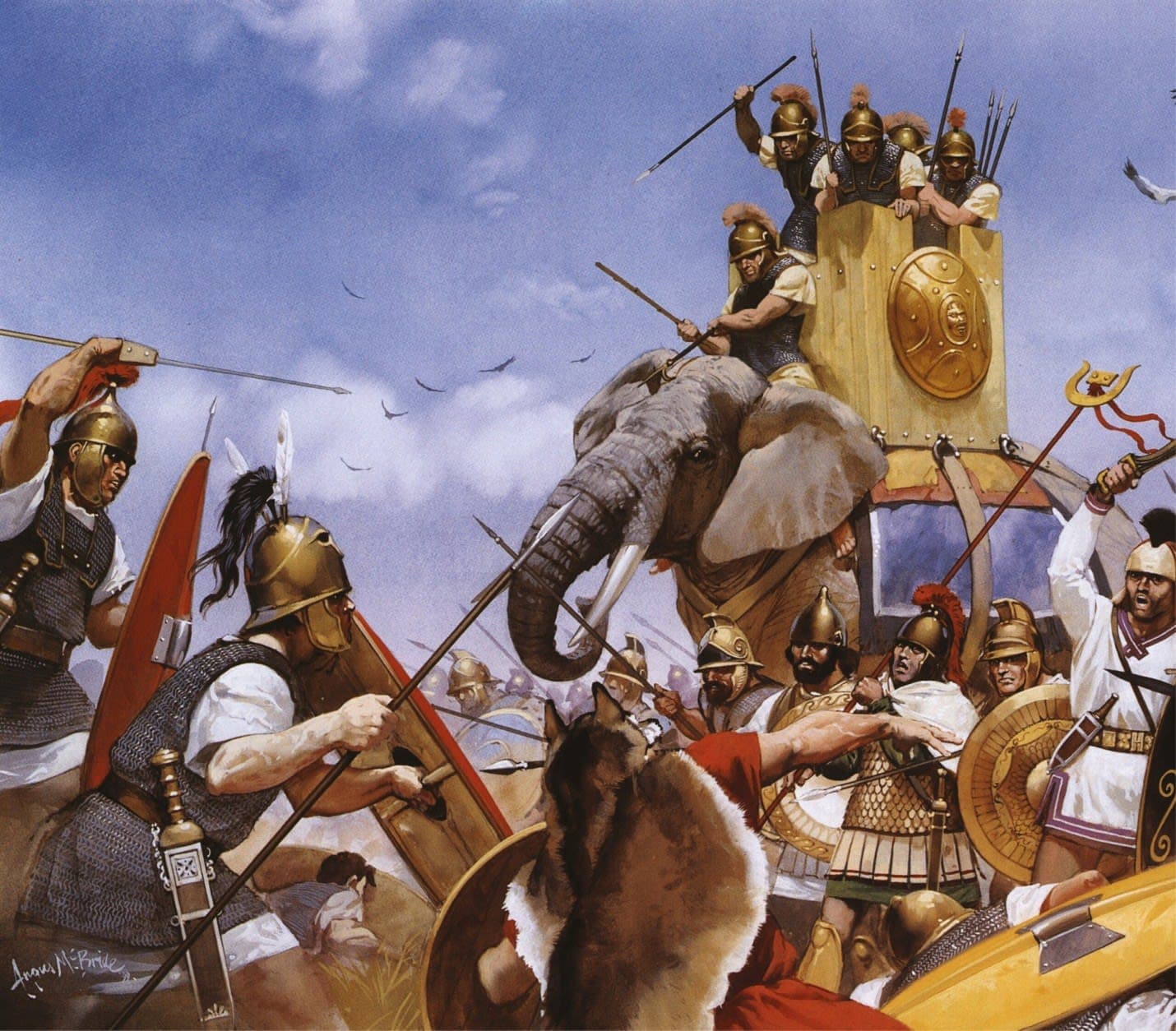
Rome and Carthage coexisted in relative peace for a long time. Carthage, founded around 814 BC, and Rome, founded in 753 BC, developed in parallel. While Rome aggressively expanded its territories across the Apennine Peninsula, completing the conquest of Italy by 270 BC, Carthage built a maritime empire, establishing a network of colonies stretching from Panormus to Soluntum.
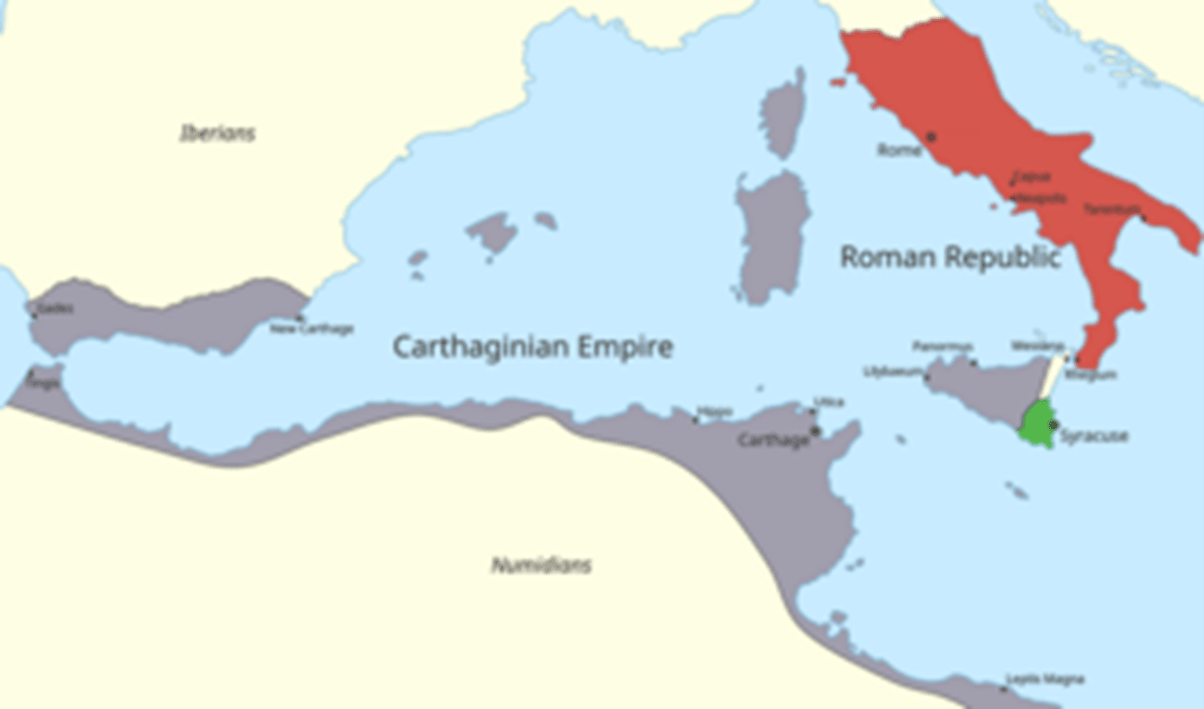
Diplomatic relations between the two powers had begun as early as 509 BC. A series of treaties strictly divided their spheres of influence: the Romans were forbidden to trade in Africa and Sardinia outside Carthaginian control, while the Carthaginians, in turn, recognized Rome’s interests in Italy.
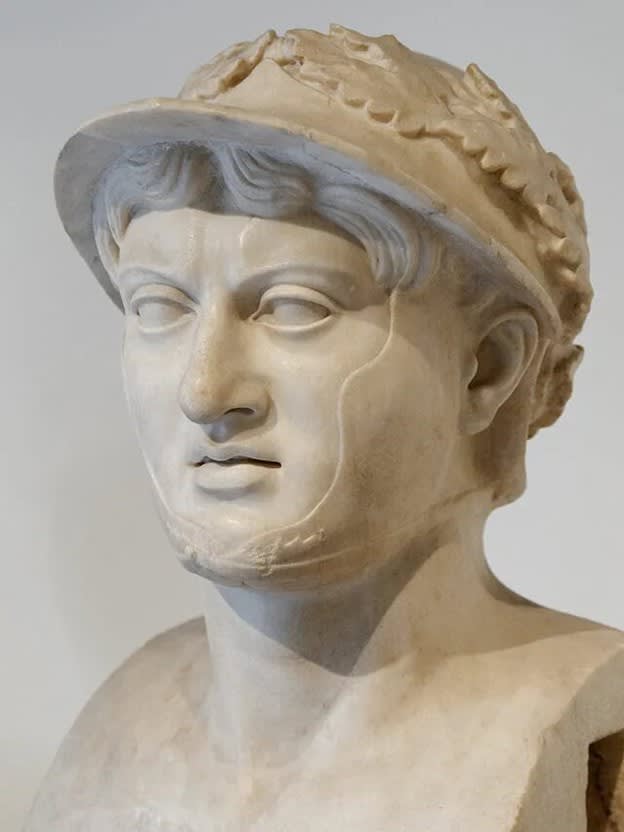
The situation changed during Rome’s war with King Pyrrhus. Although Rome and Carthage formally entered into an alliance against the Epirote commander, the agreement was permeated by mutual distrust.
As Pyrrhus was leaving Italy, he reportedly uttered the prophetic words: “What a battlefield we are leaving behind for the Romans and Carthaginians to contest!” These words foreshadowed the inevitable struggle for control of Sicily.
The immediate cause of the war was the incident involving the Mamertines (“Men of Mars”), mercenaries from Campania who had seized the city of Messana by deception and massacred its inhabitants.
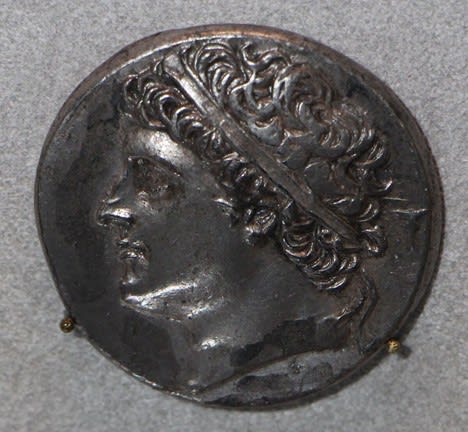
Having established themselves at this strategically important point on the strait, they raided neighboring territories until they encountered the forces of Hiero II, tyrant of Syracuse.
After finding themselves on the verge of destruction following the Battle of the Longanus, the Mamertines became divided. One faction appealed to Carthage for assistance, while another turned to Rome.
The Carthaginians reacted more quickly, placing a garrison in Messana and effectively turning the city into a Carthaginian protectorate.
For Rome, this became a moment of truth. On the one hand, assisting the Mamertine raiders was morally questionable, especially since Rome itself had recently executed similar rebels in Rhegium with great brutality.
On the other hand, allowing Carthage to establish itself in Messana meant surrendering control of the strait and potentially allowing the Carthaginians to “trap Italy in a pincer.”
Fierce debates erupted in the Roman Senate. Conservative senators hesitated, but the popular assembly, the Tribal Assembly, encouraged by promises of booty and the prospect of military glory, voted in favor of intervention.
The decisive actions of the consul Appius Claudius Caudex, who nevertheless transported Roman legions across the strait, transformed a local conflict into a full-scale confrontation.
The Romans took the risk knowing that a war against the greatest maritime power of the era would be long and exhausting, but the potential rewards outweighed their fear of the unknown.
Thus began the First Punic War — a conflict destined to last 23 years and permanently transform the map of the Mediterranean.
The fighting began with a daring and brutal operation.
A Roman squadron under the command of Consul Appius Claudius was sent to Messana. By the time he arrived, the city was already under the control of a Carthaginian garrison.
The Romans’ first attempt to break through resulted in a skirmish in which several of their ships were captured by the Carthaginians.
However, Claudius resorted to a trick that could hardly be considered worthy of traditional “Roman valor,” but which proved effective. He invited Hanno of Messana, commander of the Carthaginian garrison, to a general assembly of the city’s inhabitants, where Hanno was treacherously seized.
After being subjected to severe torture, Hanno was forced to order his troops to withdraw from the city.
The Carthaginians, maintaining their harsh standards of military discipline, later executed their admiral for cowardice and formally declared war on Rome.
Soon, a genuine siege unfolded outside the walls of Messana.
A Carthaginian army landed on the island and formed an alliance with Hiero II. Rome responded by sending a full army under Appius Claudius Caudex, transported aboard vessels provided by the Greek cities of Italy.
In bloody fighting around the city, the Carthaginian-Syracusan coalition lost approximately 6,000 men, compared with 1,340 Roman casualties.
The Carthaginians withdrew, and the Romans began devastating the lands of their allies. Although an attempt to storm Syracuse itself failed, the strategic balance gradually began to shift in Rome’s favor.
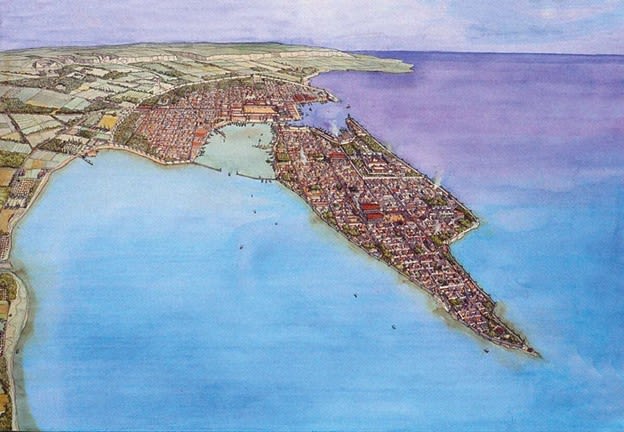
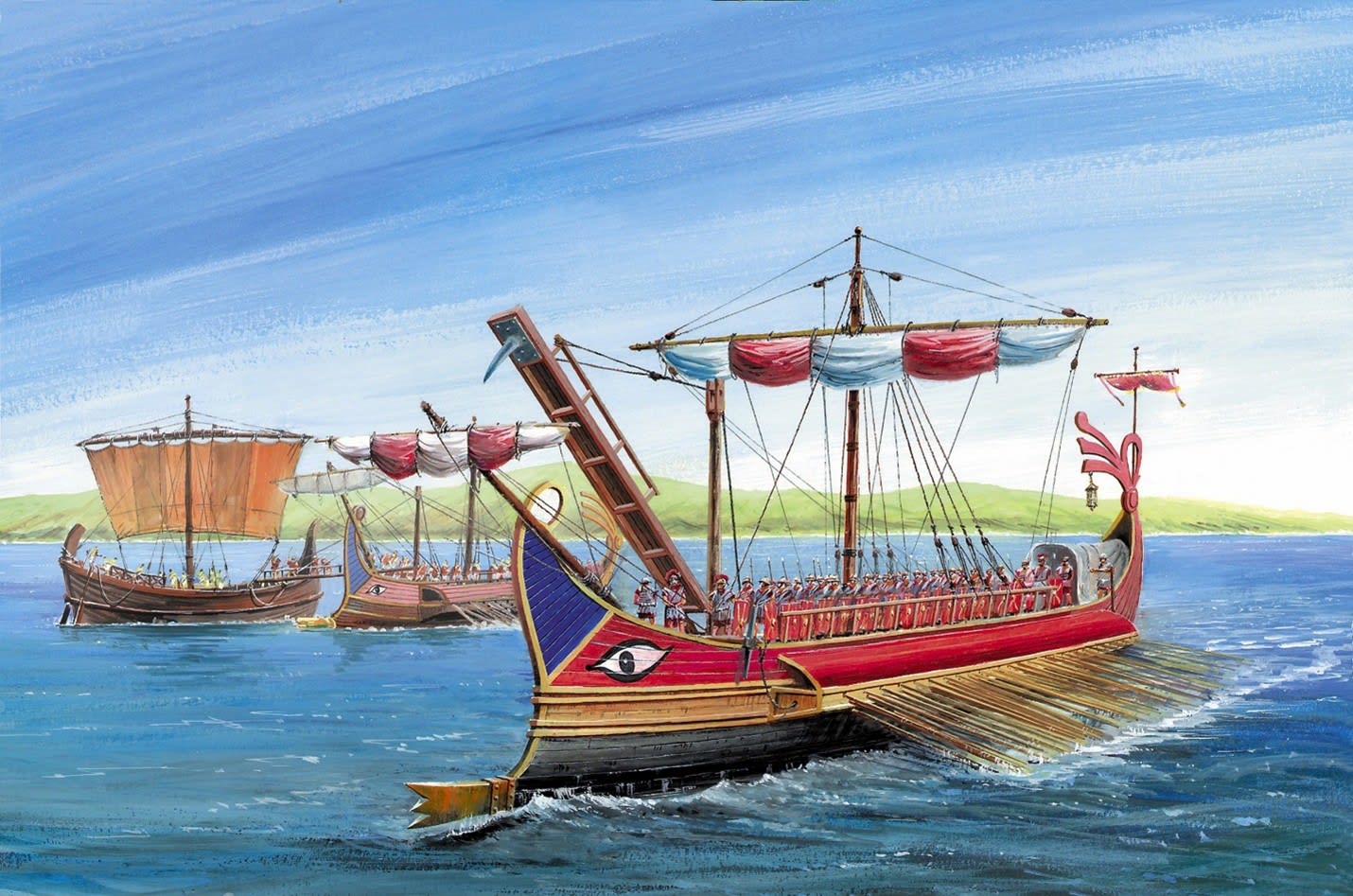
In 263 BC, Rome increased its military presence in Sicily to four legions under the consuls Manius Valerius Maximus and Manius Otacilius Crassus.
The success was overwhelming. More than 50 cities submitted to the Republic, while Hiero II, realizing that further resistance was futile, became an ally of Rome. He agreed to provide food supplies and pay an indemnity of 100 talents.
However, the Roman attempt to invade the western part of Sicily, the traditional heartland of Carthaginian power on the island, was unsuccessful that year.
A decisive moment came in 262 BC, when Carthage assembled a huge army of mercenaries, including Gauls, Ligurians, and Celtiberians, using the city of Acragas, modern Agrigento, as its base.
The Romans besieged the city with the combined strength of all four legions.
After seven exhausting months, Acragas fell. A massive Punic army, consisting of 50,000 infantrymen and 60 elephants, was defeated.
The fall of the city shocked Sicily. Inland communities began defecting to Rome in large numbers, while coastal cities moved closer to Carthage, fearing its powerful navy, which had already begun raiding the coasts of southern Italy.
Traditionally, Rome had been a land power that relied on the discipline of its legions. But warfare on an island required control of the sea.
In 260 BC, the Romans accomplished what had seemed impossible. Using a captured Carthaginian quinquereme as a model, they built a fleet of 100 quinqueremes and 20 triremes in only a few months.
Their first attempt to operate at sea ended in humiliation: 16 ships were captured.
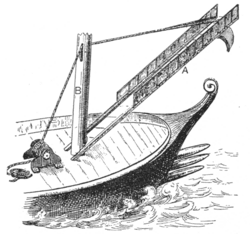
But the Romans adapted quickly, introducing a revolutionary invention — the corvus, or boarding bridge.
It was a movable bridge equipped with a sharp hook that locked two ships together, transforming a naval engagement into the kind of close-quarters infantry combat in which Roman legionaries excelled.
At the Battle of Mylae, the Roman fleet under Gaius Duilius defeated the Carthaginians.
The Romans captured or sank almost half of the enemy squadron, and Gaius Duilius was awarded a triumph.
Encouraged by their successes, the Romans decided to strike directly at the heart of their enemy — Africa.
In 256 BC, the consuls Marcus Atilius Regulus and Lucius Manlius Vulso commanded an enormous fleet of 330 ships.
Near Cape Ecnomus, they encountered 350 Carthaginian vessels.
It became one of the largest naval battles in human history.
Thanks to a sophisticated formation involving four squadrons arranged in three lines, the Romans managed to withstand the Carthaginian flanking maneuver and, using their corvi, defeated the Punic fleet, sinking or capturing approximately 100 ships.
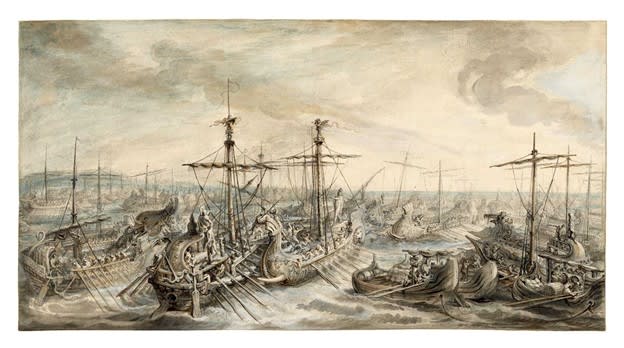

The Romans landed near Clupea.
In Africa, revolts broke out among the Libyans, and victory appeared to be only a matter of time.
Vulso returned to Rome, leaving Regulus with an army of 15,000 men.
Regulus initially operated successfully, inflicting defeats on the Carthaginians that reportedly cost the enemy as many as 18,000 men.
However, his overconfidence proved fatal.
When Carthage requested peace, Regulus demanded such humiliating terms that the Carthaginians decided to continue fighting to the bitter end.
In 255 BC, the Spartan mercenary Xanthippus arrived to assist Carthage.
He reorganized the army and emphasized fighting on open terrain, where Carthaginian elephants and powerful cavalry could exploit their advantages.
At the Battle of Tunis, the Romans were literally crushed.
The elephants broke through the infantry formation, while the cavalry completed the destruction by attacking from the flanks.
Only 2,000 men from the entire Roman army escaped, while Regulus himself was captured.
The final act of the African tragedy came from nature itself.
A Roman fleet rushing to evacuate the survivors encountered a devastating storm off the coast of Sicily.
Of 350 ships, only a few dozen survived.
Around 100,000 people were killed — an irreparable loss that Roman historiography sometimes attempted to describe as an “unsuccessful battle” in order to conceal the scale of the natural disaster.
The war returned to Sicily.
The Romans rebuilt their fleet and in 251 BC achieved a brilliant victory at Panormus, modern Palermo.
Consul Caecilius Metellus cleverly lured the Carthaginian elephants into range of missile fire from the walls and defensive trenches.
The frightened animals turned back and trampled their own formations.
The Romans captured 120 elephants, which were later displayed during a triumph in Rome.
However, the attempt to capture the fortress of Lilybaeum dragged on for years.
In 249 BC, Consul Claudius Pulcher suffered a devastating defeat in the naval Battle of Drepana.
Admiral Adherbal outmaneuvered the Romans, forcing their ships against the coast and systematically destroying them with ramming attacks.
Rome lost almost its entire fleet — more than 90 ships — while Claudius became the target of ridicule and accusations of sacrilege.
Between 248 and 242 BC, both sides approached the limits of their financial and human resources.
At this moment, the greatest commander of the war entered the stage — Hamilcar Barca, whose nickname meant “Lightning.”
He adopted a strategy of guerrilla warfare and rapid raids, harassing Roman forces in Sicily and southern Italy.
His successes restored Carthaginian hopes of victory.
In 242 BC, Rome resorted to extreme measures.
The state treasury was empty, so a new fleet of 200 quinqueremes was financed privately by wealthy Roman citizens.
These ships were lighter and more maneuverable than their predecessors, while their crews trained every day, mastering ramming tactics instead of relying on boarding actions.
The decisive battle took place in 241 BC near the Aegadian Islands.
The Carthaginian fleet under Hanno consisted largely of heavily loaded transports carrying provisions for Hamilcar’s army.
Inexperienced rowers and the heavy weight of the vessels made the Punic ships easy targets.
After losing 120 ships, Carthage admitted defeat.
The state no longer had enough money to pay its mercenaries, while Hamilcar’s army was completely blockaded.
Consequences of the War
The consequences were severe.
Carthage completely abandoned Sicily, which became Rome’s first province.
Carthage was required to pay an enormous indemnity of 3,200 talents over ten years.
Later, taking advantage of its weakened enemy, Rome seized Sardinia and Corsica and imposed an additional fine of 1,200 talents.
The First Punic War became a triumph of Roman resources and determination.
The Romans demonstrated that they were willing to endure enormous sacrifices — losing 700 ships compared with Carthage’s 500 — in order to achieve their objective.
The Carthaginian system, which relied heavily on mercenaries, began to fracture. A lack of unity and military command failures, with the notable exception of Hamilcar, contributed to its collapse.
Yet the peace settlement was merely a temporary pause.
Hamilcar Barca left Sicily undefeated, carrying in his heart a hatred of Rome that he would pass on to his son — Hannibal.


