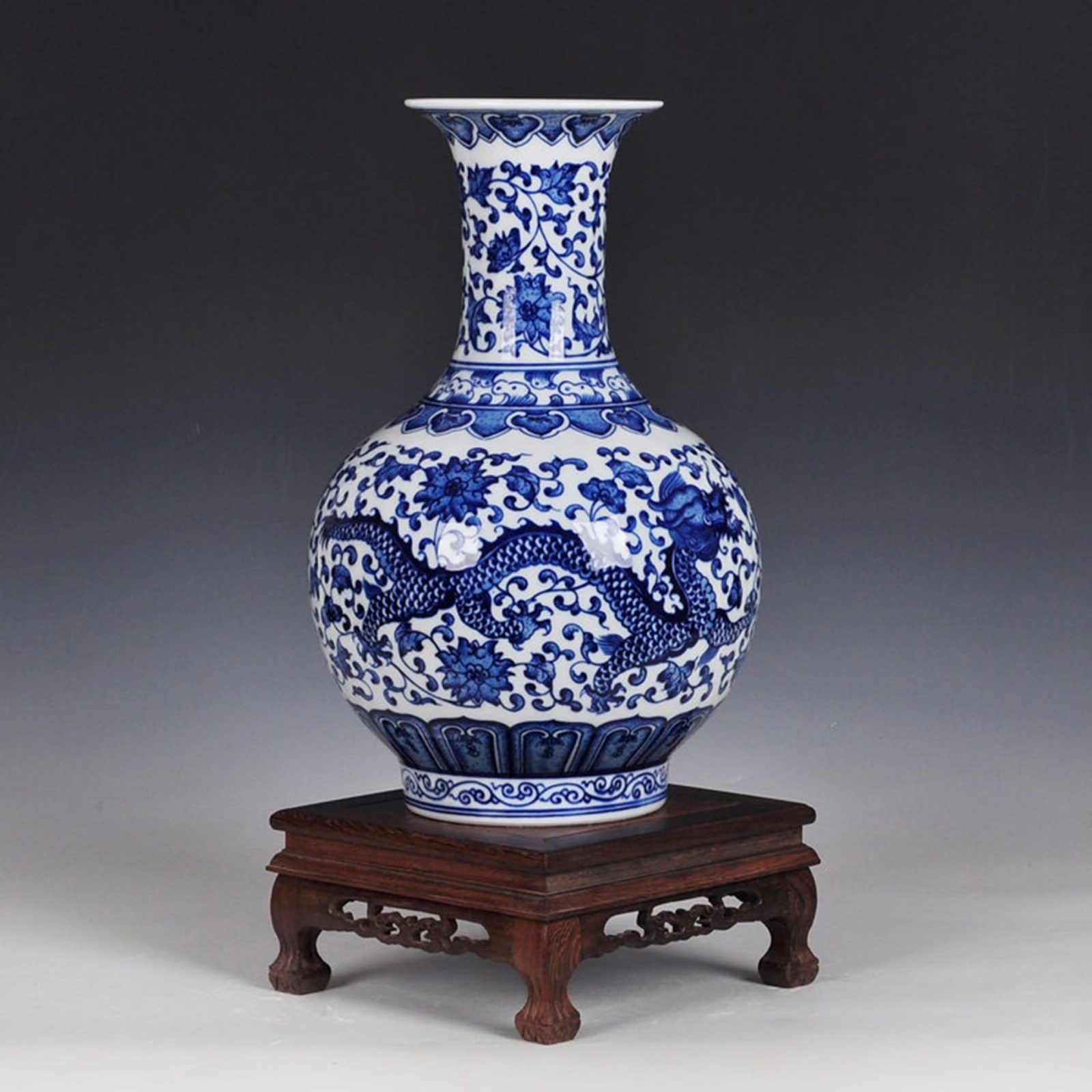
From the very beginning of trade relations between Great Britain and China, there was a significant imbalance. Chinese goods such as porcelain and silk were in enormous demand in Europe, while Chinese consumers showed little interest in European products. As a result, Britain was forced to pay for imports with precious metals, which caused serious concern in the British government.
The policy of isolation pursued by the Qing dynasty limited foreign trade to a single port Guangzhou (Canton). British trade missions sent to establish more open relations consistently failed. The situation changed in the 19th century, when a commodity was found that could attract the Chinese market opium.
Despite the imperial ban on opium trading, the British East India Company began an illegal but highly profitable import of the drug. By 1833, opium sales had grown so much that for the first time, the trade balance with China turned positive for Britain. The abolition of the East India Company’s monopoly in 1834 further increased smuggling, leading to a mass spread of addiction across China and moral decay among officials and soldiers alike.


This situation heightened tensions, and British commercial circles began to pressure the government in London, urging a military solution to the “China question” and the seizure of coastal islands to secure “free trade.”
The immediate trigger for war was the action of the Chinese imperial commissioner Lin Zexu. In March 1839, he demanded that British and American merchants surrender all opium stocks, and when they refused, he blockaded foreign factories. British superintendent of trade Charles Elliot was forced to surrender over 19,000 chests of opium, which were publicly destroyed on Lin’s orders.

Elliot, seeking to provoke conflict, organized several attacks by British ships on Chinese war junks. Ultimately, Emperor Daoguang, convinced of his own success, declared in January 1840 that China was closed to all British and Indian merchants. In London, Foreign Secretary Lord Henry Palmerston deemed this sufficient cause for war. In April 1840, a British expeditionary force of 40 ships and 4,000 soldiers sailed from India to China.
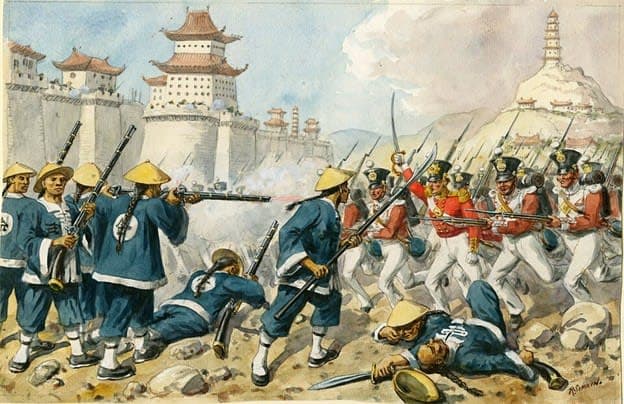
Although the British forces were smaller in number, they possessed overwhelming technological superiority. Their tactics relied on naval maneuvers, bombardment of fortifications, and rapid amphibious assaults. The Chinese forces, using outdated methods such as fortress defense and fire ships, were unable to resist effectively.
The war began with the bombardment of Chinese vessels at the mouth of the Xijiang River, but full-scale hostilities broke out in July 1840, when the British fleet seized the Zhoushan Archipelago and blockaded Chinese ports. In August, the British squadron reached the Baihe River estuary, threatening Beijing. Terrified, the emperor sought negotiations, and the British admiral temporarily withdrew the fleet south to Guangzhou.
Negotiations failed when the emperor refused to compensate for the destroyed opium or cede territory. In January 1841, the British stormed the Chuanbi and Humen forts. The emperor declared war, but his nephew, commanding the Chinese forces, quickly sought a truce and signed the “Ransom of Guangzhou Agreement,” paying indemnities to the British.
Britain, however, refused to ratify the agreement and continued the war. Its new strategy was to cut off the Grand Canal, thereby isolating Beijing. In August 1841, British troops captured Gulangyu Island, and soon after, they occupied Zhenhai and Ningbo without resistance. In May 1842, they invaded Jiangsu Province, seizing Wusong, Baoshan, and Shanghai, and in mid-July, they captured Zhenjiang, cutting off the Grand Canal. By August, British forces had advanced to Nanjing, threatening to storm the city.


On August 29, 1842, aboard the British warship HMS Cornwallis, the Treaty of Nanking was signed. This treaty symbolized Britain’s victory and China’s defeat. Under its terms, China was to pay an indemnity of $21 million, cede Hong Kong to Britain, and open five ports Guangzhou, Xiamen, Fuzhou, Ningbo, and Shanghai for British trade.
The First Opium War marked the beginning of a long period of decline for the Qing Empire. It opened China’s domestic market to European powers and legalized the import of opium, leading to a devastating spread of addiction and the erosion of the empire’s social and moral foundations.


