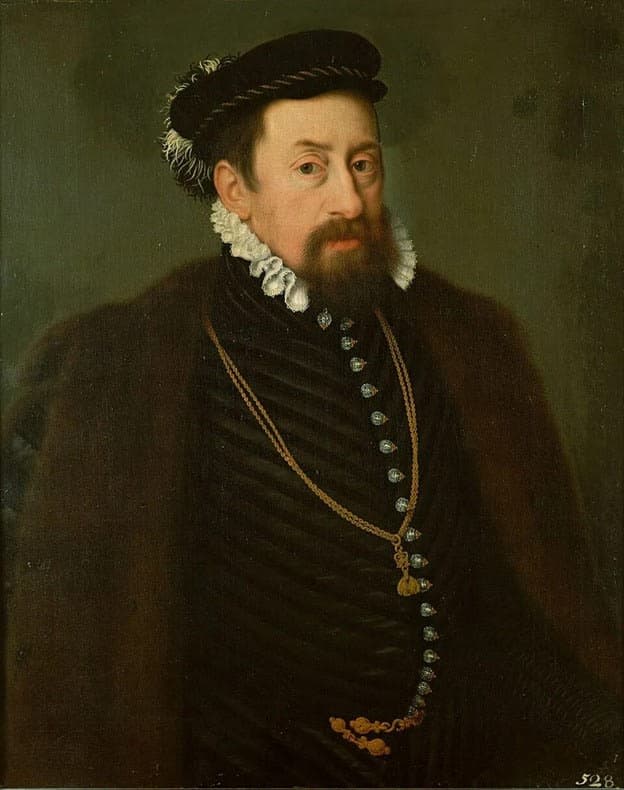

Maximilian II entered the history of the Holy Roman Empire as a ruler of remarkable destiny, a man in whom loyalty to a Catholic dynasty coexisted, paradoxically, with a deep sympathy for Protestant ideas.
He was born in Vienna into a family whose influence extended across half of Europe. As the second child and eldest son of the Habsburg king Ferdinand I and Princess Anna of Bohemia and Hungary, a member of the Jagiellonian dynasty who lived from 1503 to 1547, the boy was drawn into the whirlwind of high politics from the moment of his birth.
He was named after his illustrious great-grandfather, Emperor Maximilian I.
By the time the heir was born, his father Ferdinand had already significantly expanded the possessions of the Habsburg monarchy. Following the death of his brother-in-law, King Louis II of Hungary, he had inherited the thrones of Bohemia and Hungary.
The shadow of Maximilian’s powerful uncle, Emperor Charles V, ruler of a vast empire, remained an invisible presence throughout the young prince’s life.
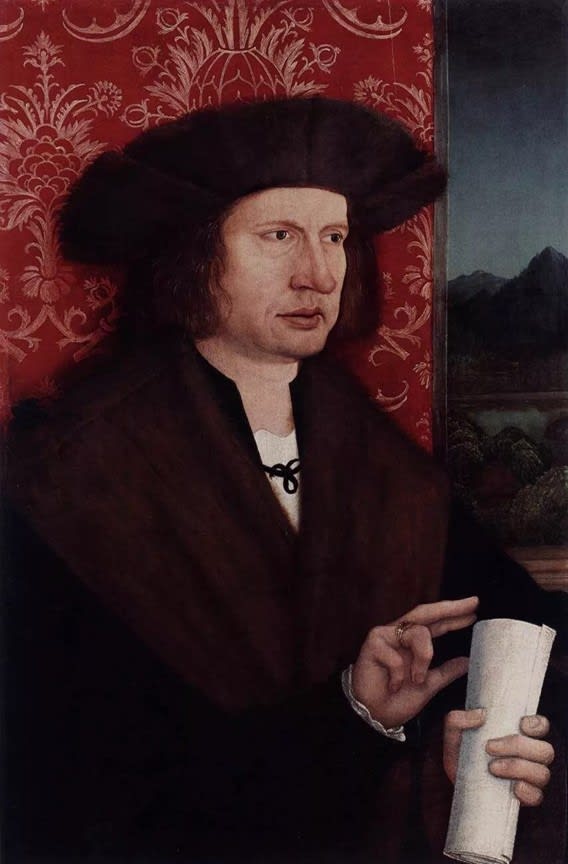
Maximilian spent his childhood in Innsbruck, Tyrol, at his father’s court.
His education differed dramatically from the traditionally harsh upbringing of monarchs. The young prince was shaped by the powerful influence of the Italian humanist tradition.
His intellect was cultivated by prominent humanist scholars of the age, including Caspar Ursinus Velius and Georg Tannstetter.
This atmosphere of intellectual freedom led Maximilian to encounter Lutheran teachings at an early age.
While still young, he began corresponding with the Protestant prince Augustus of Saxony, laying the foundations for the religious tolerance that would later characterize his reign.
The heir’s life, however, was not confined to libraries.
From the age of seventeen, he began learning the harsh realities of warfare.
In 1544, Maximilian participated in the military campaign of his uncle Charles V against King Francis I of France during the Italian War of 1542–1546.
Soon afterward, he also took part in the Schmalkaldic War.
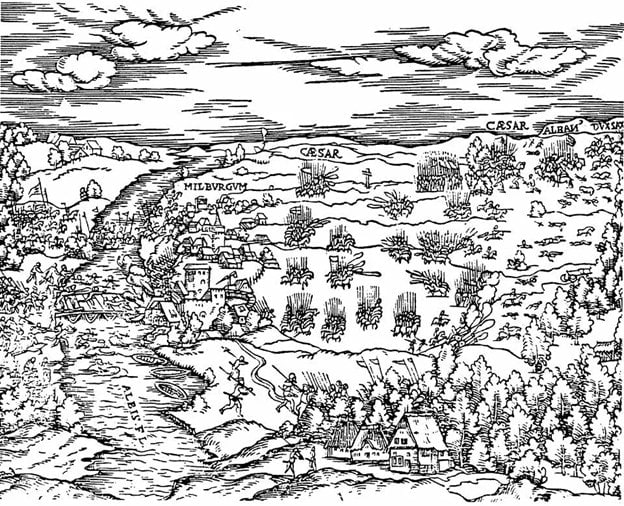
Remarkably, after Charles V’s triumphant victory at the Battle of Mühlberg in 1547, Maximilian displayed considerable political magnanimity.
He openly defended the defeated leaders of the Schmalkaldic League — Elector John Frederick I of Saxony and Landgrave Philip I of Hesse.
Shortly after these events, the young archduke began taking an active role in the political affairs of the Holy Roman Empire.
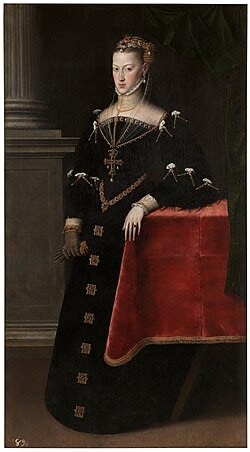
Seeking to strengthen the unity of the enormous Habsburg realm, Maximilian married Maria of Spain, daughter of his uncle Charles V, on September 13, 1548, in Valladolid, Castile.
Through this marriage, Charles hoped not only to bind the Austrian and Spanish branches of the House of Habsburg more closely together, but also to reinforce the Catholic faith of his independently minded nephew.

For a time, Maximilian served as the emperor’s representative in Spain.
His ambitions, however, were frustrated.
He never obtained the coveted position of governor of the Habsburg Netherlands.
To his considerable displeasure, his father Ferdinand appointed Maximilian’s younger brother, Ferdinand II of Tyrol, to govern the Kingdom of Bohemia.
Only in 1549 were Maximilian’s rights to inherit the Bohemian crown officially recognized.
In December 1550, he returned to Germany to participate in the extraordinarily complex negotiations surrounding the imperial succession.
During this period, Maximilian’s relationship with his uncle Charles V deteriorated rapidly.
The emperor, confronted by a rebellion of Protestant princes led by Maurice of Saxony, desperately wanted to transfer the imperial succession to his son Philip II of Spain.
Charles’s brother Ferdinand, who had already been elected his successor, and Maximilian himself firmly opposed this plan.
Maximilian began assembling his own political coalition and secured the support of several influential German princes, including Albert V of Bavaria, the Protestant Elector Maurice of Saxony, and Duke Christoph of Württemberg.
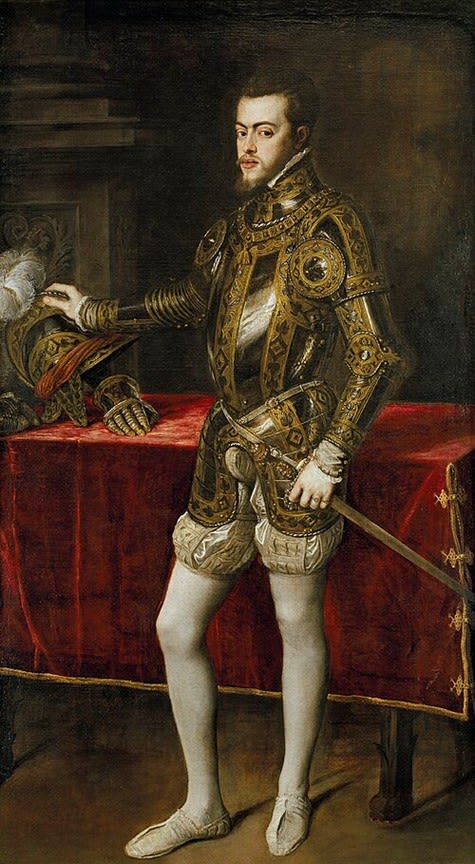
In an attempt to prevent a dynastic split, a compromise was proposed.
Under the plan, Philip II would become emperor after Ferdinand, while the actual government of the German territories would remain in Maximilian’s hands in his capacity as King of the Romans.
The proposal never moved beyond paper.
Nevertheless, Charles V’s persistence inflicted lasting damage upon relations between the Spanish and Austrian branches of the Habsburg dynasty.
When Maximilian became seriously ill in 1552, dark rumors spread across Europe that he had been poisoned by supporters of his cousin and brother-in-law Philip II.
The conflict between Maximilian and Philip II was not merely political but also deeply personal.
Philip, raised as a thoroughly Spanish prince, rarely left his homeland during his lifetime.
He was reserved, shy, and restrained, fiercely committed to Catholicism, and had little enthusiasm for military affairs, personally commanding an army only once.
Maximilian, by contrast, saw himself primarily as a German prince.
Sociable, open, and remarkably charismatic, he openly disliked the Spaniards, whom he regarded as arrogant and intolerant.
His humanist ideals and religious tolerance stood in direct opposition to Philip’s rigid religious principles, while contemporaries viewed the Austrian archduke as a promising military commander.
Yet despite their radically different personalities, both cousins understood the overriding objective: preserving the unity of the Habsburg dynasty.
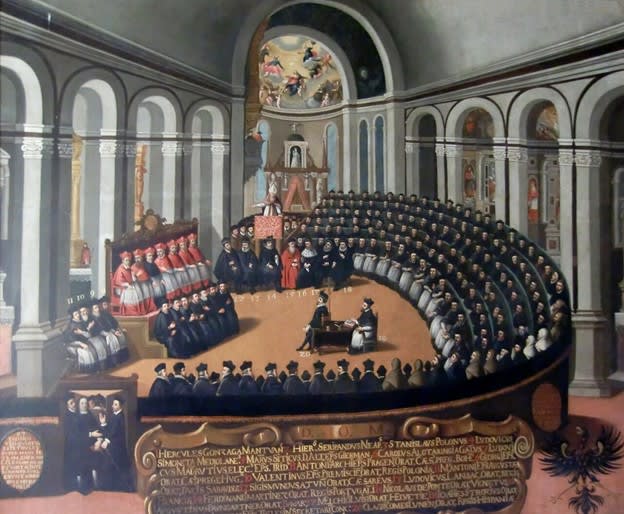
In 1551, Maximilian attended the historic Council of Trent.
By 1552, he had solemnly established himself in Vienna’s Hofburg Palace.
His ceremonial entry into the capital astonished contemporaries: a real elephant named Suleiman marched majestically in the lavish procession.

While his father Ferdinand concentrated on major diplomatic affairs, concluding the Treaty of Passau in 1552 and the Peace of Augsburg in 1555, Maximilian assumed responsibility for governing the hereditary Austrian lands and defending them against regular Ottoman raids.
Under his influence, Vienna flourished.
During the 1550s, the city’s population exceeded 50,000, making it the largest metropolis in Central Europe. By comparison, Prague and Nuremberg each had populations of only around 40,000 at the time.
Maximilian actively reconstructed the Hofburg.
He built the Renaissance Stallburg wing, which would later house the famous Spanish Riding School, and began construction of the magnificent Neugebäude Palace in the Simmering district.
The future monarch’s spiritual life remained a mystery to the court.
His friendship with Protestant princes might have been interpreted merely as political calculation, but in Vienna he developed a genuine friendship with the court preacher Sebastian Pfauser.
Pfauser had been influenced by the Swiss reformer Heinrich Bullinger and openly sympathized with Lutheranism.
Such religious inclinations horrified Ferdinand.
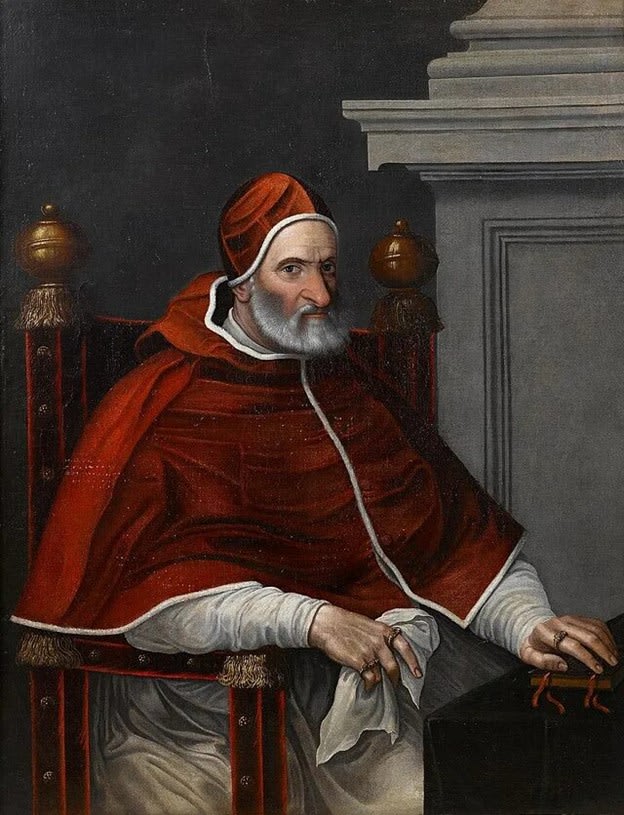
Fearing that his son might abandon the Catholic Church, the emperor was even prepared in 1558 to promise Pope Paul IV that Maximilian would be disinherited if he converted to Protestantism.
Under enormous pressure, Maximilian formally remained within the Catholic Church.
In 1560, after prolonged disputes, he finally dismissed Pfauser from court and resumed regular attendance at Catholic Mass.
Nevertheless, Lutheran ideas continued to influence him until the end of his life.
In November 1562, the College of Electors gathered in Frankfurt and elected Maximilian King of the Romans, or German King.
A few days later, he was crowned, becoming the first King of the Romans in history whose coronation did not take place in the ancient city of Aachen.
To secure the crown, Maximilian was forced to demonstrate exceptional diplomatic flexibility.
He swore loyalty to the Church before the Catholics while secretly promising the Protestants that he would accept the Augsburg Confession once he became emperor.
The Papacy nevertheless recognized his election.
In September 1563, Miklós Oláh, Archbishop of Esztergom, placed the Crown of Hungary upon his head.
In July 1564, following the death of Ferdinand I, Maximilian inherited everything: the imperial throne of the Holy Roman Empire and the kingdoms of Hungary, Croatia, and Bohemia.
Once he became the full ruler, Maximilian attempted to introduce reforms.
He sincerely believed that the Catholic Church required change.
Pope Pius IV, however, categorically rejected his proposal to permit clerical marriage, a position strongly reinforced by the opposition of the Spanish Habsburgs.
Moreover, in 1568 the right of the laity to receive Communion in both kinds — bread and wine — was revoked.
In response, the emperor demonstrated unprecedented determination.
He granted freedom of worship to the Lutheran Austrian nobility and knightly estate and refused to publish the decrees of the Council of Trent in his own territories.
The Protestants, however, wanted more.
At his first Diet of Augsburg in March 1566, Maximilian refused to satisfy all Lutheran demands.
He did not suppress Protestant sects, but neither did he grant imperial fiefs to Lutheran administrators of bishoprics.
The principal outcome of the Diet was the allocation of money for another war against the Ottoman Empire.
Nevertheless, Maximilian’s policy gave Europe a period of respite, while Protestantism in Austria and Bohemia reached its historical peak.
Having assembled a powerful army, the emperor personally marched against the Ottomans.
In 1566, the enemy besieged Szigetvár.
Although the fortress eventually fell, Sultan Suleiman the Magnificent died during the siege.
Neither army was able to convert the campaign into a decisive strategic victory.
Soon afterward, Maximilian’s envoys Antun Vrančić and Christoph Teuffenbach met Grand Vizier Sokollu Mehmed Pasha at Adrianople, modern Edirne.
The Peace of Adrianople was concluded in 1568.
Under the agreement, Maximilian was forced to recognize Ottoman supremacy over Transylvania, Wallachia, and Moldavia.

Because of limited resources, Maximilian’s actual possibilities remained restricted.
He was unable to join the anti-Ottoman coalition organized by Pope Pius V and therefore did not participate in the great Battle of Lepanto.
The Empire’s position in Northern and Eastern Europe also gradually weakened.
In 1576, part of the magnate elite of the Polish-Lithuanian Commonwealth elected Maximilian King of Poland in opposition to Stephen Báthory.
Because he lacked broad political support, however, Maximilian was forced to abandon the claim.
Meanwhile, relations with Spain unexpectedly improved.
The death of Don Carlos, the only son of Philip II, made Maximilian and his sons potential heirs to the Spanish Crown.
In 1570, Maximilian’s daughter Anna of Austria became Philip II’s fourth wife.
Even this marriage, however, did not enable the emperor to persuade his son-in-law to moderate the bloody repression in the Netherlands.
Maximilian’s efforts to centralize authority in Germany likewise encountered resistance from the nobility.
At the Diet of Speyer in 1570, he requested funds for frontier defense and demanded a prohibition on recruiting mercenaries for foreign wars without imperial authorization.
The Protestants, who wished to assist their co-religionists in France and the Netherlands, blocked the project and granted only modest funds for the defense of Austria.
Religious bloodshed caused the emperor profound personal distress.
When he learned of the St. Bartholomew’s Day Massacre of 1572 — the mass killing of Huguenots in France, where his son-in-law King Charles IX, husband of Maximilian’s daughter Elisabeth, reigned — the horrified emperor, himself a member of the Order of the Golden Fleece, angrily condemned the events as a “shameful bloodbath.”

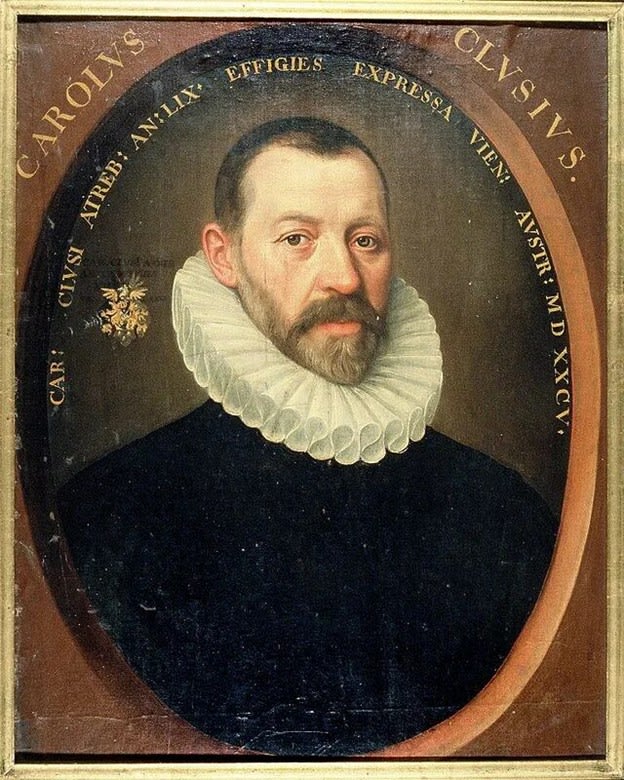
Despite political turbulence, Maximilian II entered history as a major patron of science and the arts.
Under him, as under his father, the imperial court became a brilliant center of humanism.
Although warfare weakened the University of Vienna, which had flourished under Maximilian I, the imperial court more than compensated for this decline.
Catholic and Protestant intellectuals worked side by side there without religious hostility.
Some of the finest minds from Italy, Spain, and the Netherlands gathered in Vienna.
Among them were the celebrated botanist Carolus Clusius and the distinguished diplomat and scholar Ogier Ghiselin de Busbecq.
The Imperial Library, under the direction of Hugo Blotius, laid the foundations of what would become the Austrian National Library.
Maximilian loved music and actively introduced the traditions of the Roman School into the imperial court chapel.
He dreamed of appointing Giovanni Pierluigi da Palestrina himself as Kapellmeister, but the ambitious plan was prevented only by the emptiness of the imperial treasury.
The emperor’s life came to an end on October 12, 1576, in Regensburg, while he was planning an invasion of Poland to defend his claim to its crown.
Remaining faithful until the final moment to his complicated and independent religious convictions, he refused the last Catholic sacraments on his deathbed.
Maximilian II was laid to rest in the magnificent St. Vitus Cathedral in Prague.
Leaving behind a substantial legacy, Maximilian II was remembered as a monarch whose sincere commitment to dialogue and religious moderation helped grant a deeply divided Europe precious years of relative peace during the turbulent age of the Reformation.



