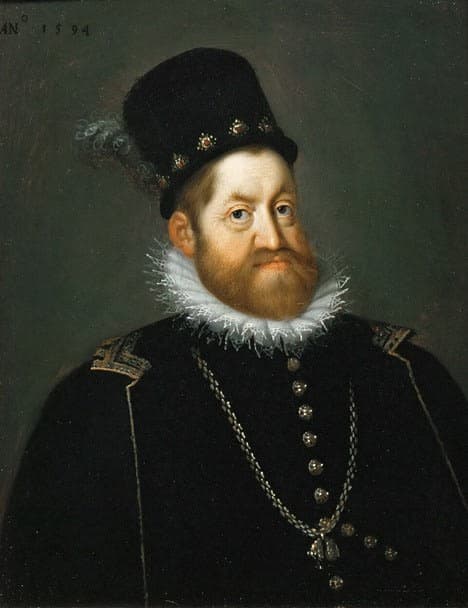
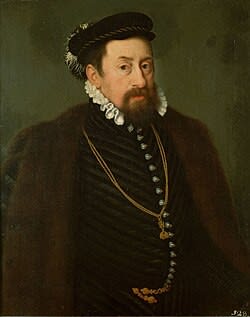
The life of Rudolf II began in the heart of Europe — he was born in Vienna on July 18, 1552.
As the eldest son and legitimate heir of Maximilian II, Holy Roman Emperor and King of Bohemia, Hungary, and Croatia, and the Spanish princess Maria, daughter of the powerful Charles V and Isabella of Portugal, the boy was destined from birth to bear the burden of some of the greatest crowns in Europe.
Among his brothers were Matthias, who would later succeed him on the thrones of Bohemia and the Empire, and his younger brother Ernest, the future governor of the Netherlands.
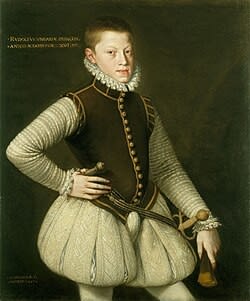
The most formative years of Rudolf’s life — from the age of eleven to nineteen, between 1563 and 1571 — were spent far from his homeland.
Together with his brother Ernest, he was educated in Spain at the conservative court of his maternal uncle, King Philip II.
It was there, in 1567, that the famous Spanish painter Alonso Sánchez Coello created the first important portrait of the fifteen-year-old prince, which is preserved today in the Lobkowicz Palace.
When the sons returned to Vienna, however, Maximilian II was unpleasantly surprised.
Rudolf had acquired extremely reserved, unnaturally formal, and rigid manners.
His father blamed the influence of the severe Spanish court, which differed sharply from the much freer atmosphere of Austria.
His Spanish mother, by contrast, saw nothing in her eldest son’s behavior except refinement and impeccable court etiquette.

Even during Maximilian II’s lifetime, Rudolf began assuming the burden of royal authority.
In 1572, he was crowned King of Hungary.
In 1575, he received two additional crowns — those of King of Bohemia and King of the Romans.
On October 12, 1576, following his father’s death, Rudolf formally inherited the imperial throne.
Yet by temperament, the young emperor was far removed from the conventional image of a ruler.
Secretive, restrained, and increasingly inclined toward isolation, he strongly disliked travel and gradually withdrew from the everyday routine of government.
His mind was captivated by entirely different fields lying at the intersection of Renaissance science, natural philosophy, and mysticism — particularly astrology and alchemy, both of which were taken extremely seriously at the time.
Seeking mystical solitude and wishing to distance himself from the political intrigues of Vienna, Rudolf made a fateful decision in 1583: he transferred the imperial court to Prague.
As he grew older, the emperor’s personality became increasingly complex.
He periodically suffered from episodes of profound “melancholy,” which modern researchers have often interpreted as severe depressive states.
During these dark periods, Rudolf completely isolated himself from the outside world and from affairs of state.
Instead, he immersed himself in private interests: horse breeding, the collection of curiosities, the study of clockwork mechanisms, and the patronage of art.
His personal life was no less complicated.
Like his contemporary Queen Elizabeth I of England, born nineteen years earlier, Rudolf skillfully used the possibility of his own marriage as a diplomatic instrument but never officially married.
Nevertheless, his life was not devoid of romantic or intimate relationships.
He is known to have had relationships with several women, some of whom claimed to have become pregnant by him.
The deepest mark was left by his long-term mistress Katharina Strada, who bore him several illegitimate children.
Their eldest son, Don Julius Caesar of Austria, was probably born sometime between 1584 and 1586.
Rudolf took care of the boy’s future, providing him with an excellent education and social status.
Another known daughter of the emperor was Carolina of Austria, who lived from 1591 to 1662 and became Princess of Cantecroix.
She would later become the mother-in-law of Béatrice de Cusance, who became Duchess of Lorraine through her second marriage to Charles IV.
The emperor’s isolation also gave rise to darker rumors.
During periods of voluntary seclusion, when only a select few were allowed access to him, courtiers whispered about alleged intimate relationships between Rudolf and men.
Those mentioned included his Obersthofmeister Wolfgang Sigmund Rumpf von Wullroß and several chamber servants.
One of his most powerful favorites was the Jewish courtier Philipp Lang von Langenfels, who lived from 1560 to 1609.
For several years, Lang exercised enormous influence over the emperor, earning the bitter hatred of many other courtiers.
During the final years of Rudolf’s reign, as his political authority weakened, he became the target of an aggressive campaign of rumors organized by political enemies and elements within the Catholic establishment.
Many of the sexual accusations, as well as the emphasis placed on the unusually erotic character of some paintings commissioned by him, may have formed part of this deliberate campaign of vilification.
The most devastating blow to Rudolf as a father, however, was the tragedy involving his eldest son.
In 1607, the emperor sent Don Julius to live at Český Krumlov Castle, which had recently been purchased from Petr Vok of Rožmberk, the last representative of the famous family, whose finances had collapsed under the burden of debt.
In 1608, while living at the castle, Julius committed a horrific crime.
He brutally abused, murdered, and mutilated the daughter of a local barber who had been living with him.
Deeply horrified, Rudolf condemned his son’s actions and sentenced him to lifelong imprisonment.
Julius died in confinement as early as 1609.
Before his death, he descended into severe mental disorder, refusing to wash and living in appalling unsanitary conditions.
The immediate physical cause of his death was a ruptured ulcer.


If politics brought Rudolf disappointment, in the sphere of culture he became one of the greatest monarchs of the Renaissance.
He spared no expense in acquiring masterpieces.
His collections included works by Albrecht Dürer and Pieter Bruegel the Elder.
The emperor could reportedly sit motionless for hours before a newly acquired painting, falling into something resembling aesthetic ecstasy.
He became the principal patron of the masters of Northern Mannerism.
Artists who worked for him included Bartholomeus Spranger, Hans von Aachen, Giambologna, Aegidius Sadeler, who produced his famous engraving in 1594, Roelandt Savery, Adriaen de Vries, and Joris Hoefnagel, who depicted Prague Castle in 1595.
Commissions were even sent to Italy, including to Paolo Veronese himself.
A particularly famous place in art history belongs to Giuseppe Arcimboldo’s portrait Vertumnus of 1591, in which Rudolf is depicted as the ancient Roman god of vegetation.
A more conventional portrait by Joseph Heintz the Elder, painted in 1594, has also survived.
Rudolf’s passion for knowledge took physical form in his legendary Kunstkammer, or “cabinet of curiosities.”
It was intended symbolically to unite the three kingdoms of nature with the creations of human hands, reflecting the harmony of divine order and the relationship between the macrocosm and the microcosm.
To house the collection, an entire northern wing of Prague Castle was constructed between 1587 and 1605.
By 1597, the collections already occupied three rooms.
After 1605, they were moved into specially designed spaces.
The scale was astonishing.
The Naturalia section, containing minerals and precious stones, occupied thirty-seven cabinets.
Before them stretched three enormous vaulted chambers, each approximately sixty meters long, 5.5 meters wide, and three meters high, leading into a principal hall thirty-three meters in length.
Large uncut stones were stored in reinforced chests.
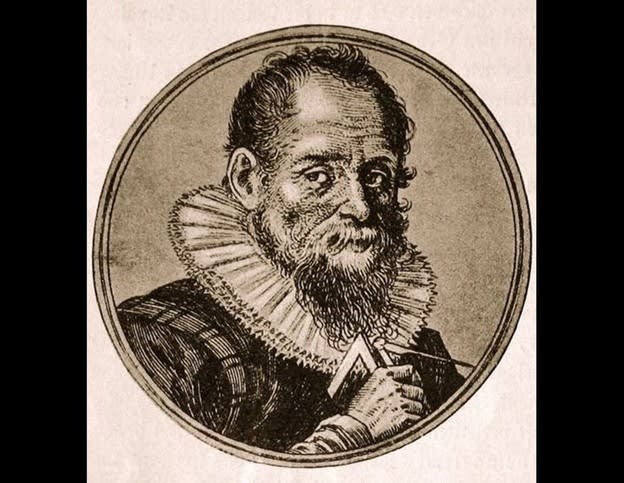
To organize this extraordinary collection, Rudolf employed the physician and gemologist Anselmus de Boodt, who lived from 1550 to 1632.
Together with the Czech naturalist Tadeáš Hájek, de Boodt traveled through mines in Germany, Bohemia, and Silesia.
Between 1607 and 1611, he catalogued the emperor’s collection, producing the important work Gemmarum et Lapidum.

The collection contained decorative objects, astrolabes, compasses, telescopes, ceremonial swords, and hydraulic mechanisms.
Some of Europe’s finest instrument makers worked at Rudolf’s court, including Jost Bürgi, Erasmus Habermel, and Hans Christoph Schissler.
One masterpiece of their craft was a celestial globe equipped with clockwork, created in 1579.
The emperor also maintained extensive botanical gardens and a menagerie of exotic animals.
A tame lion and tiger were even allowed to wander through parts of the palace.
Account books have survived recording, with remarkable precision, compensation paid to people injured by the animals’ claws and to the relatives of those accidentally killed.
The imperial treasury also concealed remarkable mysteries.
Among its treasures was the enormous Codex Gigas, or “Giant Codex.”
There is also an unconfirmed hypothesis that Rudolf possessed the mysterious undeciphered Voynich Manuscript.
In a letter written in 1665, Johannes Marcus Marci claimed that the emperor had allegedly purchased it for 600 gold ducats.

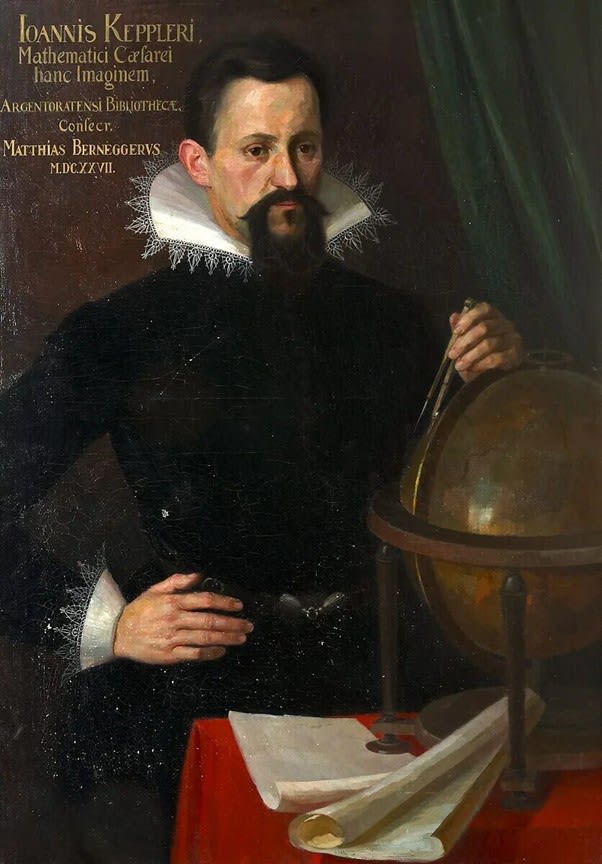
Rudolf’s patronage of science permanently inscribed his name in the history of astronomy.
He financed the work of Tycho Brahe and Johannes Kepler.
Brahe carried out stellar observations of unprecedented precision.
Kepler, while analyzing the motion of Mars using Brahe’s data, revolutionized astronomy.
He demonstrated that planetary orbits are elliptical rather than circular, with the Sun occupying one of the foci, and that the radius vector connecting a planet to the Sun sweeps out equal areas in equal intervals of time.
These revolutionary conclusions became known as Kepler’s laws.
In gratitude to his patron, Kepler named his astronomical calculations the Rudolphine Tables, or Tabulae Rudolphinae.
Cultural activity flourished in many other fields as well.
The poet Elizabeth Jane Weston composed odes to Rudolf in Renaissance Latin while also petitioning him for the restoration of her stepfather’s confiscated property.

Rudolf’s Prague became the mystical capital of Europe.
Throughout his life, the emperor searched for the philosopher’s stone.
Experiments were conducted both in his private laboratory and at court by legendary alchemists including John Dee, Edward Kelley, and, in the 1590s, Michał Sędziwój.
Even while Rudolf was still a prince, the famous Nostradamus prepared a horoscope for him, addressing him as “prince and king.”
Rudolf’s fascination with the occult, together with his relative tolerance toward the Jewish population, which contributed to a flourishing of Jewish culture in Prague, helped give rise to the enduring legend of the Prague Golem.

Traditional historiography judged Rudolf harshly, accusing him of allowing art and occultism to distract him from the task of preserving his state.
Modern scholars, however, have often interpreted him not simply as an inactive melancholic but as a ruler unsuccessfully attempting to preserve the unity of a Christian empire during an age of extreme political and religious fragmentation.
Although raised under the influence of the devoutly Catholic Philip II, Rudolf nevertheless displayed a remarkable degree of tolerance toward Protestantism and Judaism by the standards of his age.
Over time, he ceased participating regularly in Catholic religious practices and reportedly refused the final sacraments before his death.
He did not necessarily possess warm feelings toward Protestantism and sometimes used Protestant forces as a counterweight to papal influence.
Instead, he placed greater trust in moderate factions: humanists, irenicists who advocated religious reconciliation, and conciliarists who defended the authority of Church councils.
By attempting to avoid taking a clear side and restrain the Counter-Reformation, however, the emperor ultimately achieved the opposite result.
His indecision increasingly pushed his lands toward civil conflict.
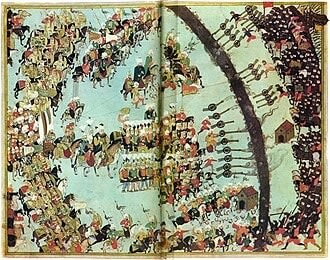
Foreign policy became a disaster.
Rudolf passionately dreamed of launching a new universal crusade and firmly refused to compromise with the Ottoman Empire.
In 1593, this contributed to the outbreak of the Long Turkish War, also known as the Fifteen Years’ War.
The conflict continued until 1606.
It exhausted Hungary and contributed to the powerful uprising led by Stephen Bocskai in 1604.
The crisis forced the Habsburg family to intervene.
In 1605, Rudolf’s relatives compelled him to transfer control of Hungary to his energetic brother, Archduke Matthias.
Matthias acted rapidly.
In 1606, he concluded the Peace of Vienna with the rebels and the Peace of Zsitvatorok with the Ottomans.
Rudolf was furious.
He regarded the concessions as shameful and believed that Matthias was motivated primarily by his own hunger for power.
The emperor began preparing for renewed war.
Matthias, however, relied on dissatisfied Hungarian elites and eventually forced his elder brother to surrender the crowns and government of Austria, Moravia, and Hungary.
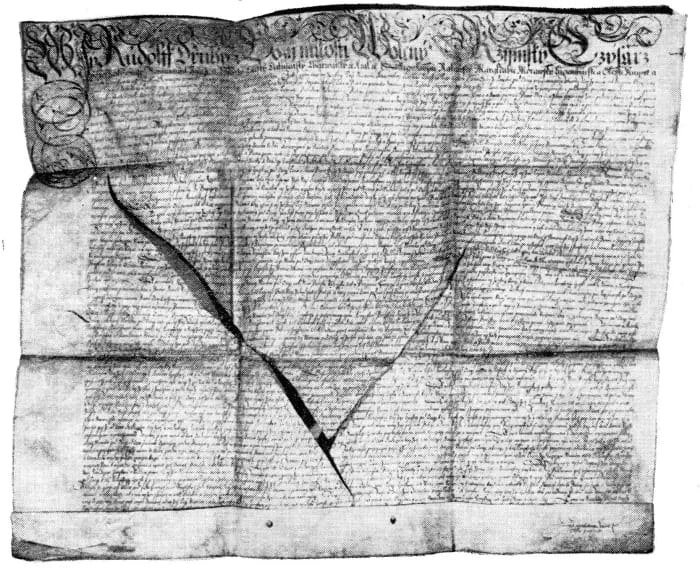
Attempting to retain at least Bohemia, Rudolf was forced in 1609 to sign the famous Letter of Majesty.
The document granted unprecedented religious freedoms to the Protestant estates of Bohemia.
Yet the estates demanded still more.
When Rudolf, in desperation, attempted to use an army against them, the Bohemians immediately appealed to Matthias for assistance.
The younger brother’s troops entered Prague, effectively turning the emperor into a prisoner in his own castle.
In 1611, the broken Rudolf lost the Bohemian crown as well.

Rudolf II died in January 1612, nine months after being deprived of virtually all effective political authority and retaining only the empty formal title of Holy Roman Emperor.
In June 1612, Matthias formally succeeded him on the imperial throne.
The policy of appeasement, however, failed to save Europe.
Only six years later, in May 1618, Bohemian Protestants, defending the rights granted to them under Rudolf’s own Letter of Majesty, threw Matthias’s officials from the windows of Prague Castle.
This Defenestration of Prague became the spark from which the devastating Thirty Years’ War of 1618–1648 erupted.

The legacy of the great collector met a tragic fate.
His heirs did not properly appreciate the Kunstkammer.
Half a century later, part of its treasures were hastily packed into crates and transported to Vienna, where many paintings remain among the treasures of the Kunsthistorisches Museum and the Imperial Treasury.
What remained in Prague became war booty when Swedish forces captured Prague Castle on July 26, 1648, during the final phase of the Thirty Years’ War.
Many of the finest objects entered the collection of Queen Christina of Sweden and later passed into the famous Orléans Collection.
The remaining fragments of Rudolf’s former splendor were auctioned off under Emperor Joseph II in 1782.
Today, pieces of the Prague collections are scattered across the world.
One example is the “beautiful chair” taken by the Swedes, which is now preserved at Longford Castle, the British residence of the Earl of Radnor.
The most enduring symbols of the authority of this strange, melancholic, yet brilliant patron remain his imperial regalia.
The personal crown created for Rudolf, together with his sceptre and orb, later became official symbols of the Austrian Empire.
They permanently preserved the memory of a ruler who trusted the stars and canvases more readily than ministers and generals.


