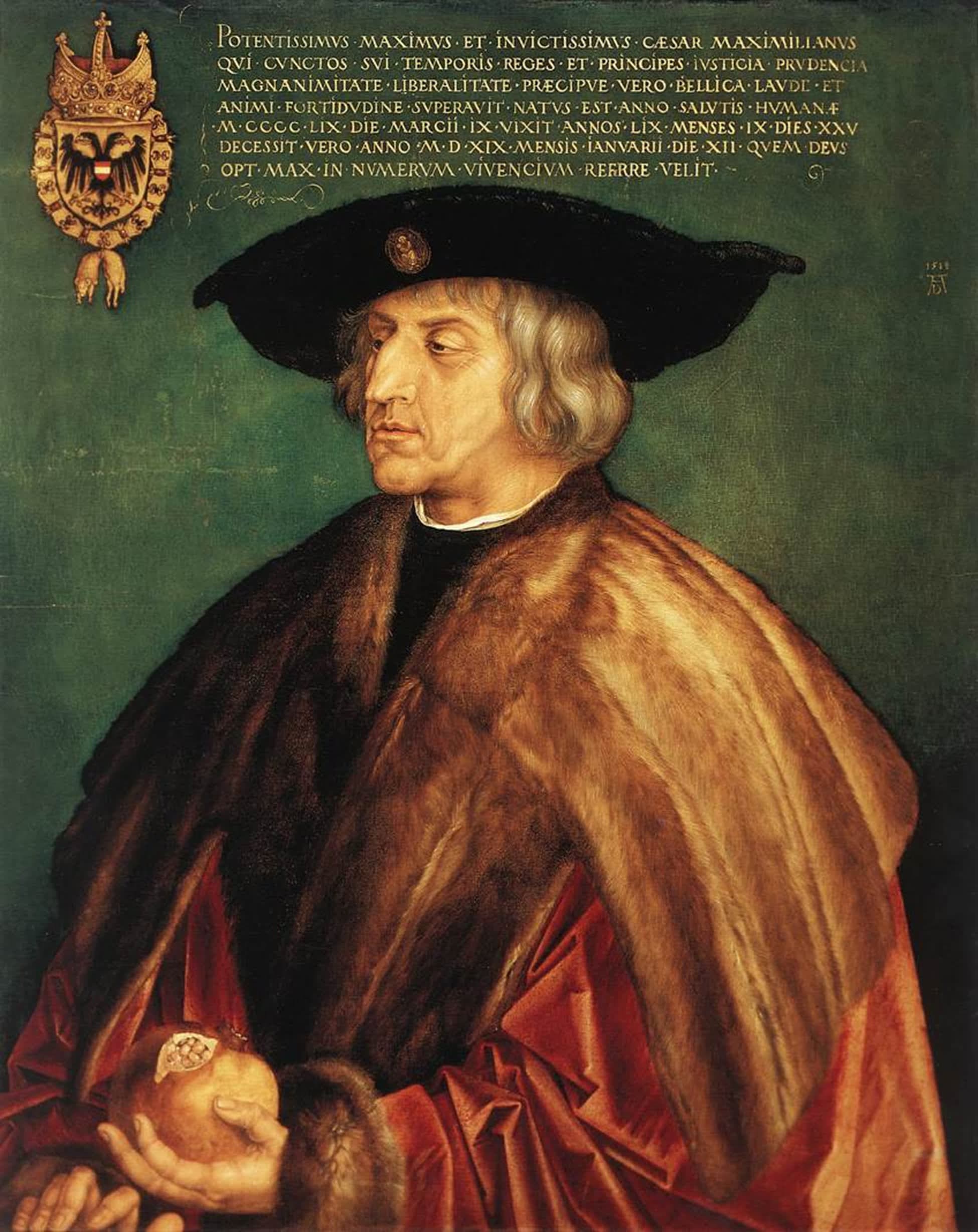

The story of Maximilian I, who was destined to become one of the most iconic figures ever to occupy the throne of the Holy Roman Empire, began on March 22, 1459, in the Austrian city of Wiener Neustadt.
His father, Emperor Frederick III, named his son after Saint Maximilian of Tebessa. The choice of this unusual name was not accidental: the emperor firmly believed that the saint had once appeared to him in a dream to warn him of an approaching mortal danger.

The harsh realities of the age descended upon Maximilian while he was still an infant. Soon after his birth, the imperial family found itself trapped in Vienna, which was being besieged by the forces of the rebellious Albert of Austria.
Sources preserve a heartbreaking detail from those terrible days: the little prince wandered through the inner courtyards of the castle garrison, innocently begging exhausted soldiers and servants for even a piece of bread.
The boy grew up as the favorite of his mother, Eleanor of Portugal, whose temperament differed dramatically from the cold and calculating nature of Frederick III.
According to family tradition, she once bitterly told her son:
“If I had known, my son, that you would become like your father, I would have regretted giving birth to you for the throne.”
However, his mother’s early death permanently changed the young prince’s life. He became completely immersed in a harsh world in which he was raised primarily as a warrior and knight, and only secondarily as a subtle politician.

Peter Engelbrecht was appointed the heir’s principal tutor. Maximilian openly disliked his strict teacher, showing almost complete indifference to academic subjects and remaining a highly rebellious pupil.
He preferred the clash of weapons and exhausting physical exercise to dusty folios.
His relationship with his father generally remained warm, yet Frederick was deeply alarmed by the lifestyle of his only surviving son.
The young prince was recklessly fascinated by knightly tournaments, spent money freely, and had a weakness for wine, lavish feasts, and the company of young women. These aspects of his character became particularly visible during their joint journeys in 1473 and 1474.
Thanks to his exceptional physical abilities and attractive appearance, Maximilian constantly found himself at the center of attention.
Fearing for his heir’s life, Frederick III even issued a special decree forbidding the princes of the Empire from crossing lances with his son in tournaments.
The passionate Maximilian, however, effectively annulled this prohibition at the first opportunity by granting himself permission to participate in tournament combat.
Nevertheless, in 1474 his father categorically prohibited him from taking part in the war against Burgundy and prudently placed him under the strict supervision of the Bishop of Augsburg.
At that time, Frederick III’s principal and most dangerous political opponent in the west was the powerful Charles the Bold, Duke of Burgundy.
His vast possessions included numerous fiefs within the Holy Roman Empire, while the aggressive expansionist policy of the Burgundian branch of the House of Valois threatened to destroy the fragile balance of power.
To avoid a bloody war, Frederick decided to pursue diplomacy. He proposed that Charles marry his only heiress, Mary of Burgundy, to Maximilian.
Lengthy negotiations finally succeeded only after the difficult Siege of Neuss in 1474–1475, when a final agreement concerning the marriage was reached.
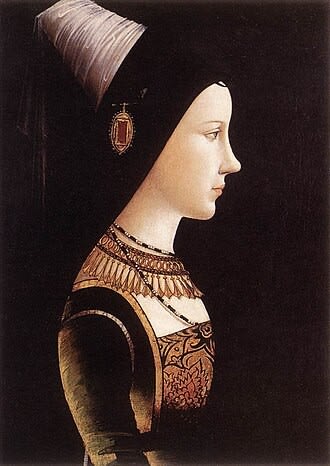
The wedding, however, was delayed.
Meanwhile, Maximilian began learning the art of real warfare. In 1476, at the age of seventeen, he led a military campaign against Hungary.
Although command was most likely shared with more experienced military leaders, the campaign became his genuine baptism of fire and excellent preparation for the major events that would soon unfold in Flanders.
Finally, on August 19, 1477, the historic marriage of Maximilian and Mary of Burgundy took place.
By the time of the wedding, the situation in Burgundy was catastrophic.
Only a few months earlier, on January 5, 1477, Charles the Bold had fallen at the Battle of Nancy.
Mary immediately asserted her rights to all of her father’s possessions — both those within the Empire and those belonging to the Kingdom of France.
French King Louis XI, however, decided to exploit the situation. Invoking the Salic Law, which prohibited inheritance through the female line, he invaded the Valois territories and occupied the Duchy of Burgundy itself.
Marriage to Maximilian became Mary’s only effective means of defending what remained of her inheritance.

Taking upon himself the burden of defending his young wife’s possessions, Maximilian confronted an empty treasury — the legacy of Charles the Bold’s ambitions — and a complete lack of support from the Empire.
Despite this, in 1478–1479 he launched a counteroffensive against the French.
The campaign proved successful. He managed to recapture Le Quesnoy, Condé-sur-l’Escaut, and Antoing.
The defining moment of his military career came on August 7, 1479, when, at the Battle of Guinegate near modern Enguinegatte, he decisively defeated the French army.
The battle became an important turning point in the history of warfare. Maximilian’s Burgundian pikemen helped lay the foundations for the development of the formidable infantry of the future — the famous Landsknechts.
The French defeat was serious enough to force France to begin urgent military reforms.

Maximilian was unable to fully exploit the victory.
He was forced to lift the siege of Thérouanne and disband his army.
The reasons were both a straightforward shortage of money and the unwillingness of the inhabitants of the Netherlands to tolerate the excessive strengthening of their new regent.
Maximilian’s legal position was fragile.
Under the marriage contract, he was not originally entitled to inherit Mary’s territories if the couple had children, since their children were supposed to inherit everything.
Aware of her husband’s political vulnerability, Mary attempted to circumvent this provision by transferring the territories to him as a gift, but she did not have enough time.
On March 27, 1482, tragedy struck. During a horseback ride near Wijnendale Castle, Mary fell from her horse and died.
From that moment onward, Maximilian’s only legitimate objective in the region was to preserve the Burgundian inheritance for their underage son, Philip the Handsome.

Left alone to confront the independent-minded estates of the Netherlands, the politically inexperienced Maximilian began making serious mistakes.
Intoxicated by the glory of his victory at Guinegate, he attempted to centralize authority by force, disregarding the traditional liberties of the provinces and failing to consult local political institutions.
Belgian historian Eugène Duchesne described these years as one of the darkest and most turbulent periods in the country’s history.
In Duchesne’s view, despite Maximilian’s brilliant later career, he never fully corrected the mistakes he had made during his early regency.
The policy of the “strong hand” led to disaster: the provinces openly rebelled.
On the external front, Maximilian was also forced to make concessions.
In 1482, he signed the harsh Treaty of Arras with Louis XI.
The Duchy of Burgundy definitively passed to France, while the County of Artois and the Free County of Burgundy, or Franche-Comté, became part of the dowry of Maximilian’s daughter Margaret, who was betrothed to the French prince.

Peace with France did not bring peace to the Netherlands.
Between 1482 and 1492, the region experienced two major uprisings.
Flemish rebels, demanding the restoration of the autonomy they had enjoyed under Mary, went so far as to take first the young Philip and later Maximilian himself hostage.
The proud Habsburg regained his freedom only through the direct military intervention of his father, Frederick III.
In 1489, exhausted by Flemish intrigues and increasingly focused on his hereditary Austrian lands, Maximilian transferred control of the Netherlands to Albert III of Saxony.
The decision proved highly effective.
Albert, who lacked Maximilian’s emotional connection to the Netherlands, proved to be not only a capable commander but also a flexible diplomat.
After Maximilian’s departure, the new government began consulting local representative institutions more actively and reduced the severity of repression.
Members of the nobility who had previously joined the rebels began returning to municipal administrations.
The States General developed into a permanent platform for dialogue between the crown and the provinces.
By 1492, the fires of rebellion had finally been extinguished.
Maximilian decisively revoked the so-called Great Privilege, establishing a strong ducal monarchy and restricting provincial separatism, although he wisely refrained from restoring the most radical decrees of Charles the Bold.
Historian Helmut Koenigsberger paradoxically argued that the Burgundian monarchy survived not because of Maximilian’s leadership — for although he was brave, he poorly understood the mentality of the Netherlands — but rather because of the estates’ own instinct for self-preservation.
Jean Bérenger and C. A. Simpson, however, argued differently: in their interpretation, it was precisely Maximilian’s military talent that saved the Netherlands from absorption by France, even though his personal ambitions nearly drove the region into collapse.
Peter Spufford regarded the outcome as the result of joint efforts by the monarch and the estates, while emphasizing that continuous warfare, court luxury, and the predatory interest rates charged by German bankers severely exhausted the economy.
Historian Jelle Haemers adds another important nuance: after the victory at Guinegate, the conflict ceased to be purely defensive, turning Maximilian into an insatiable “impresario of war,” which alienated the local elite.
Maximilian’s military development in Flanders was remarkable.
He experimented with every available model: urban militias, feudal cavalry levies, and permanent companies modeled on the French system.
Realizing that the latter were too inflexible and expensive, he ultimately placed his trust in German mercenaries.
Their overwhelming effectiveness, financed by cities loyal to the crown — Antwerp, Amsterdam, Mechelen, and Brussels — as well as by a small group of devoted aristocrats, ultimately decided the conflict.
Analyzing this period, and drawing on Amable Sablon du Corail’s work on finance, historian Marc Boone views the brutal suppression of the revolts as evidence of the Habsburgs’ insatiable appetite for expansion and their inability to respect local traditions.
After suppressing the rebellions, Maximilian executed surprisingly few aristocrats, preferring instead to confiscate their lands.
Contrary to the stereotype that he remained committed to the old nobility, an analysis of the court ordinance of 1482 suggests that he rapidly began constructing a new elite whose careers depended entirely upon the Habsburg dynasty.
Figures of supraregional importance emerged, including John III and Frederick of Egmont, Engelbert II of Nassau, Henry of Witthem, and the powerful brothers of the Glymes-Bergen family.

Foreign affairs also began to improve.
In 1486, Maximilian recaptured Mortagne, L’Écluse, Honnecourt, and Thérouanne, although once again he was forced to halt because of a lack of funds.
Fortune favored him in 1492, when King Charles VIII of France abruptly broke his engagement to Maximilian’s daughter Margaret.
Using this as a justification, Maximilian forcibly reclaimed her dowry.
The result was the Treaty of Senlis of 1493: Artois and Franche-Comté officially returned to the Habsburgs, while France retained Picardy and the Duchy of Burgundy itself.
This settlement established the territorial core that would later become known as the Seventeen Provinces.
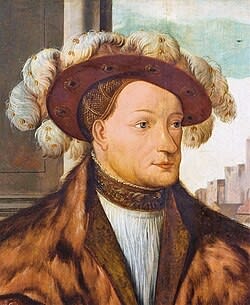
During the same period, the foundations of the region’s maritime power were laid.
On January 8, 1488, Maximilian and Philip issued the historic “Ordinance on the Admiralty,” based on a French law of 1373.
The document radically centralized naval authority, reversing the decentralizing policy pursued by Philip the Good since 1458.
Despite initial resistance, the reform began to produce results after Philip of Burgundy-Beveren was appointed head of the fleet in 1491.
The process would eventually culminate in the creation of a permanent fleet by 1555 under Mary of Hungary.
In 1493, following the death of Frederick III, Maximilian effectively became the head of the Holy Roman Empire.
He left behind the difficult and ungrateful Netherlands, a region that had left deep emotional scars upon him, transferring authority to his fifteen-year-old son Philip the Handsome and almost never returning there.
Even when Philip died suddenly in 1506 and the estates pleaded with Maximilian to return as regent, he remained silent for months, directing events from afar.
Philip’s rule became an era of political compromise.
Unlike his warlike father, the young ruler prioritized peace and economic prosperity, pursuing an independent “Burgundian policy.”
This led to serious conflicts with Maximilian, who was forced to finance an exhausting war against Charles of Egmont, Duke of Guelders.
At moments when relations between father and son were particularly strained, Philip even allowed French troops to pass through his territories on their way to assist his father’s enemies.
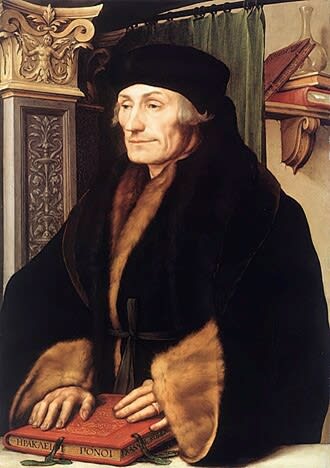
Only near the very end of his life did Philip recognize the full scale of the Guelders threat and join forces with his father.
With support from the Duke of Cleves and the Bishop of Utrecht, and using advanced field artillery on Maximilian’s advice, Philip subdued Guelders and Zutphen.
Charles of Egmont surrendered, but Maximilian, suspecting deception, demanded a permanent solution.
His suspicions proved correct.
Charles escaped, while Philip, preparing for his fatal journey to Spain in 1506, left the unresolved conflict to his sister Margaret.
Philip’s death in Burgos, Spain, was a devastating blow to Maximilian. Courtiers were reportedly afraid to tell him the truth for more than ten days.
Despite their disagreements, Philip had become the emperor’s most important international ally.
His death caused numerous ambitious plans to collapse, including the projected Italian campaign of 1508.
The conflict with Charles of Egmont, which developed into the Guelders Wars, fell upon the shoulders of the regent Margaret.
In 1511, she formed an alliance with England and besieged Venlo, but Charles’s daring invasion of Holland forced her to withdraw.
A powerful intellectual elite also opposed Maximilian.
Humanists such as Erasmus of Rotterdam and Adrianus Barlandus openly despised the emperor, viewing him as a greedy militarist who provoked conflicts — such as the Saxon Feud and the wars in Friesland in 1517 — primarily for financial gain.

Exhausted by the constant resistance of the elites, Maximilian eventually declared that the estates of the Netherlands should defend themselves.
In 1513, Margaret was forced to conclude an agreement with Charles. Guelders would not fully submit to the Habsburgs until the reign of Charles V.
That same year, following Margaret’s strategy of using foreign armies to defend Habsburg borders, Maximilian personally led the troops of King Henry VIII of England and dramatically defeated the French in the famous Battle of the Spurs.
The operation not only defended the region but, according to Margaret, brought the Netherlands approximately one million in gold through the provisioning of allied forces.
To secure the territories of his grandson Charles, the emperor ordered the walls of the supposedly impregnable Thérouanne — a perennial base for French invasions — to be completely demolished.
Maximilian’s path toward imperial greatness had begun during his father’s lifetime.
On February 16, 1486, at Frankfurt am Main, he was elected King of the Romans, and on April 9 he was solemnly crowned at Aachen.
At that moment, however, he was effectively a king without a kingdom.
As a result of the difficult Austro-Hungarian War of 1477–1488, much of the Austrian territories, including Vienna itself, remained under the control of the powerful Hungarian king Matthias Corvinus.
Corvinus toyed with the Habsburgs like a cat with a mouse, offering to return Vienna only in exchange for being formally recognized as Frederick III’s heir to the imperial throne.
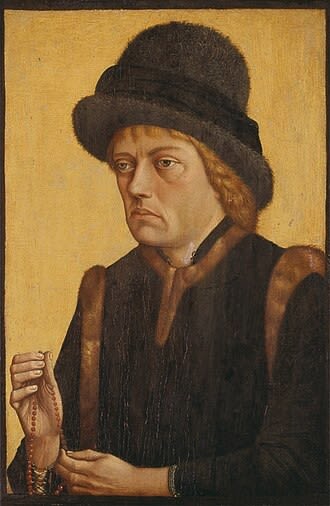
Deliverance came unexpectedly in 1490, when Corvinus died.
Hungary immediately descended into the chaos of a succession struggle between John Corvinus and Vladislaus II Jagiellon.
Maximilian acted with extraordinary speed.
In July 1490, he launched a rapid campaign, recapturing city after city, and by August he entered Vienna triumphantly.
During the assault on the Vienna citadel, desperately defended by a Hungarian garrison of 400 men, the fearless Maximilian was wounded, but only a few days later the fortress fell.
At the same time, the Tyrolean crisis required urgent resolution.
The childless Archduke Sigismund of Tyrol, deeply in debt, was secretly negotiating the sale of this strategically vital region to the Bavarian Wittelsbachs.
In 1490, Maximilian intervened as an arbitrator and skillfully restored Tyrol to full Habsburg control.
He immediately purged the thoroughly corrupt Innsbruck court and imposed strict financial reforms.
Tyrol became a priceless jewel in the Habsburg crown, strategically linking the Austrian territories with the borders of the Swiss Confederacy.
In the southeast, the Empire was bleeding.
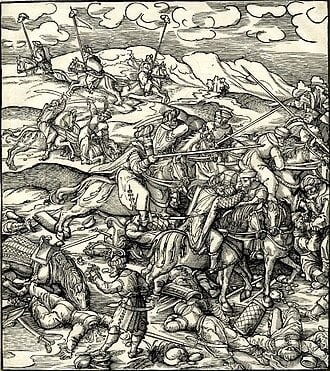
Styria, Carinthia, Carniola, and allied Croatia suffered continuously from Ottoman raids.
The tragedy reached its peak in 1493 at the Battle of Krbava Field, where much of the Croatian knightly elite was slaughtered by the Turks.
Maximilian chronically lacked the funds required for a major crusade, but the persistent Ottoman threat shaped his hard defensive policy.
These tragic frontier struggles would later be immortalized in the reliefs of his monumental cenotaph in Innsbruck.
Seeking to expand his possessions, in 1497–1498 Maximilian concluded an important agreement with Leonard of Gorizia, the last representative of the Meinhardiner dynasty.
With the assistance of governor Virgil von Graben and following clashes with Venice, the County of Gorizia ultimately came under Habsburg rule.
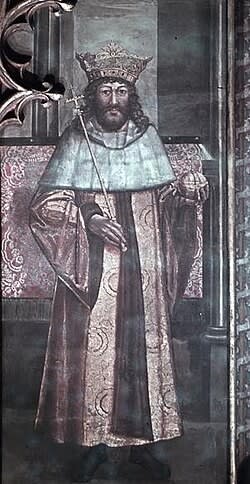
The Hungarian campaign of 1490 became one of the most dramatic episodes of Maximilian’s life.
Corvinus’s widow, Beatrice of Naples, offered Maximilian both her hand in marriage and the Hungarian crown, but he rejected the proposal.
The Hungarian magnates, fearing a powerful monarch, preferred to place the comparatively weak Vladislaus II Jagiellon on the throne, and he subsequently married Beatrice.
Maximilian, however, did not give up.
With the support of Hungarian chancellor Tamás Bakócz and the Styrian fortresses transferred to him by the defector Jakob Székely, he assembled an army of 17,000 cavalrymen and Landsknechts.
In October 1490, generously financed by the Tyrolean estates, he crossed the Rába River.
Hungarian resistance collapsed, and many aristocrats swore allegiance to the Habsburg ruler.
But fortune abandoned him just as suddenly.
After one city was captured by artillery, a brutal sack began.
When the officers attempted to restore order, the mercenaries, exhausted and facing the approaching harsh winter, mutinied and demanded double pay.
There was no money.
The campaign collapsed.
Angered by his son’s adventures, Frederick III cut off financial support, which led to the Peace of Pressburg in 1491.
Maximilian recognized Vladislaus as King of Hungary in exchange for an indemnity of 100,000 gold florins and, most importantly, the right of succession to the throne should the male line of the Jagiellons become extinct.
That clause would later play a critical role in the history of the Habsburg monarchy.
Maximilian wisely abandoned further warfare in Croatia, where he enjoyed considerable support, to avoid fighting on two fronts.
Italy, however, became Maximilian’s greatest disappointment.
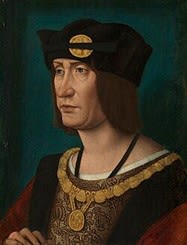
After the Peace of Senlis, the French king Louis XII turned his attention toward the Italian Peninsula, capturing Milan in 1499–1500 and expelling Ludovico il Moro.
For Maximilian, who had married the Milanese princess Bianca Maria Sforza on March 16, 1494, this represented a direct challenge.
He joined the Holy League, but every campaign was undermined by his chronic lack of money.
Mocking Italians nicknamed the great emperor Massimiliano di pochi denari — “Maximilian of Little Money.”
The campaign of 1508 against Venice ended in disaster.
The forces of Sixt Trautson were defeated by the Venetian commander Bartolomeo d’Alviano, while Maximilian’s own advance was halted by Niccolò di Pitigliano and the Frenchman Alessandro Trivulzio.
The Venetians even captured Gorizia and Trieste, forcing the emperor to accept a humiliating truce.
Only the creation of the powerful League of Cambrai — together with Pope Julius II, France, and Spain — allowed Maximilian to recover his possessions and even acquire parts of the Slovenian territories.
The war exhausted Austria.
When Cardinal Matthäus Schiner cynically proposed a system of total requisition based on the principle that “war must feed war,” Maximilian categorically refused to plunder the population.
Eventually, in 1515, he recognized French control over Milan.
The Swiss inflicted an equally painful defeat.
On July 22, 1499, they crushed the imperial army at the Battle of Dornach.
The Peace of Basel, signed on September 22, 1499, effectively confirmed the independence of the Swiss Confederacy.


Maximilian’s policy toward ethnic and religious minorities was characterized by cynical pragmatism, financial interests, and the intellectual contradictions of the Renaissance.
His attitude toward Jews changed considerably over the course of his reign.
From childhood, he reportedly possessed a strong dislike of them.
In 1496, he expelled the Jewish population from Styria and Wiener Neustadt.
Between 1494 and 1510, the emperor sanctioned thirteen additional expulsions of Jewish communities, receiving substantial financial compensation from municipal authorities in return.
After 1510, however, the direction of his policy changed sharply.
For example, the emperor personally intervened to stop anti-Jewish violence in Regensburg.
The reason was largely practical: Maximilian realized that regular imperial taxation imposed upon stable Jewish communities generated more revenue for the treasury than one-time payments received in exchange for their expulsion.
An intellectual shift in the Jewish question developed during a major theological controversy.
In 1509, influenced by his deeply religious sister Kunigunde and the Dominican order in Cologne, Maximilian authorized the preacher Johannes Pfefferkorn to confiscate Jewish books — with the exception of the Bible — in Frankfurt, Bingen, and Mainz.
This caused widespread outrage.
The Archbishop of Mainz and numerous princes defended the Jewish communities.
The emperor initially retreated, but on May 23, 1510, amid a blood-libel case in Brandenburg, he again yielded to Kunigunde and established an investigative commission, requesting opinions from universities.

It was at this moment that the great humanist Johannes Reuchlin entered the controversy, mounting a brilliant defense of the Talmud.
His arguments impressed Maximilian so deeply that the emperor himself developed an interest in Jewish philosophy.
He instructed the Hebraist Pietro Colonna Galatino to support Reuchlin, leading to the creation of De Arcanis Catholicae Veritatis, a work intended to build a bridge between Christian and Jewish thought.
In 1514, Maximilian appointed the baptized Jew Paolo Riccio as his personal physician, although medicine was not the emperor’s principal interest.
He demanded that Riccio translate the Talmud into Latin.
In 1515, Maximilian even reprimanded his treasurer Jakob Villinger for failing to supervise the translator’s work properly.
Riccio managed to translate only two of the sixty-three tractates of the Mishnah, but he presented the monarch with a Latin edition of the Kabbalistic work Gates of Light by Joseph ben Abraham Gikatilla.
Thus, paradoxically, under a strict ruler, Jewish thought received a significant stimulus within the broader culture of Renaissance humanism.
The fate of the Roma was entirely different.
In 1500, Maximilian issued a ruthless edict ordering all Roma to leave the German lands by the following Easter, after which they would be declared outlaws.
To survive, they were forced into an exhausting nomadic existence, seeking refuge in the territories of sympathetic aristocrats.
Even the Reformation beginning in 1517 brought little relief.
No longer regarded simply as foreigners, they instead suffered severe discrimination as part of the local impoverished population.
This repressive policy was largely justified through geopolitics: amid the advance of the Ottoman Empire into the Balkans, Roma were suspected of acting as Turkish spies.
Innsbruck — with its Court Treasury Chamber and Court Chancellery — became one of Maximilian’s principal residences and the administrative nerve center of his sweeping reforms.
By the end of the fifteenth century, a broad consensus had emerged within the Holy Roman Empire: the political system required major reform or risked disintegration.
Whereas Frederick III had avoided reform for most of his life, regarding it as a threat to his personal authority and agreeing to initial measures only near the end of his reign in order to secure his son’s election, Maximilian represented a new type of ruler, more willing to embrace ambitious institutional change.
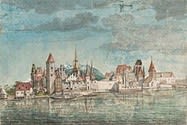
Beginning in 1488, he skillfully acted as an arbiter between competing reform projects promoted by the imperial princes.
The decisive turning point came at the historic Diet of Worms in 1495.
There the Reichskammergericht, or Imperial Chamber Court, was established as an institution largely independent of the emperor himself.
To finance the common needs of the enormous Empire, the famous Gemeiner Pfennig, or “Common Penny,” was introduced.
First collected between 1495 and 1499, it generated approximately 136,000 florins.
The tax was later imposed another five times before 1551, when it was replaced by a system of contributions assessed through the Imperial Circles.
Maximilian, however, had no intention of surrendering judicial authority entirely.
As a counterweight to the Reichskammergericht, he established the Reichshofrat, or Aulic Council, in Vienna.
Unlike the Chamber Court, Maximilian’s council dealt with criminal cases and provided the emperor with powerful instruments of influence over resistant princes.
Although the Reichshofrat was initially unpopular, historian Barbara Stollberg-Rilinger has pointed out an important paradox: during the early modern era, this imperial institution often operated more rapidly and efficiently than independent courts weakened by confessional disputes.


Maximilian’s drive for reform did not diminish.
In 1497–1498, he reorganized the Privy Council, or Geheimer Rat, while preserving his own status as the final authority for subjects involved in difficult legal disputes.
In 1500, desperately needing funds for war, the emperor reluctantly agreed to establish the Reichsregiment, or Imperial Government — a central body consisting of twenty members, including prince-electors and representatives of the cities.
Meetings began in Nuremberg in 1501.
Maximilian despised the institution because it restricted his authority, while the estates themselves failed to provide it with adequate financial support.
As a result, the experiment effectively collapsed, and by 1502 authority had quietly returned to the monarch.
One of Maximilian’s most important achievements was the prohibition of private warfare through the “Perpetual Public Peace.”
Although robber knights such as Götz von Berlichingen and Konrad Schott von Schottenstein continued their raids — Maximilian personally had to intervene in Nuremberg’s conflict with the latter — the state gradually monopolized the legitimate use of violence.
In 1499, Maximilian issued the Maximilianische Halsgerichtsordnung in Tyrol, the first codified criminal law in the German-speaking world.
It strictly regulated the use of torture.
Torture was permitted only in the presence of three councillors and a clerk, in order to reduce the danger of false confessions produced by pain.
The code became an important foundation for the later Constitutio Criminalis Carolina of Charles V.
At the same time, Maximilian’s judicial reforms dealt a decisive blow to the mysterious Vehmic courts, or Vehmgerichte, of Westphalia.

Equally revolutionary was Maximilian’s military code of 1508, consisting of twenty-three articles and developing principles already established under his father.
The document laid foundations for elements of European humanitarian law.
It protected churches under Article 13 and, under penalty of death, categorically prohibited violence against certain civilians — including pregnant women, orphans, and priests — under Article 14.
In 1518, the Innsbrucker Libell established an organized defensive system for the Austrian lands, combining noble cavalry with proportional conscription among the peasantry.
In ecclesiastical affairs, however, Maximilian was far more cynical.
He was not a religious reformer and favored a form of Caesaropapism.
During his historic encounter with Martin Luther at the Diet of Augsburg in 1518, the emperor agreed with much of the criticism directed at the Church but had no intention of abolishing the sale of indulgences because he desperately needed money to secure the election of his grandson.
After issuing Luther a safe-conduct, Maximilian’s inability to impose reform “from above” helped create conditions in which reform increasingly emerged “from below.”

Finances were the Achilles’ heel of the brilliant emperor.
Approximately seventy percent of his budget was consumed by warfare.
By the 1510s, Maximilian was fighting along multiple frontiers and had driven Habsburg debt to approximately 6–6.5 million guilders.
During his reign, he spent an estimated twenty-five million.
Maximilian remained perpetually dependent on the bankers of Upper Germany — the Fuggers, Welsers, Gossembrots, and Jörg Baumgarten.
Francis I contemptuously called him “the mayor of Augsburg,” to which Louis XII supposedly responded prophetically:
“Yes, but every time that alderman rings the alarm bell, all France trembles.”
In the search for immediate revenue, the emperor sometimes employed highly controversial methods.
While serving as regent in the Netherlands, he conducted extensive currency debasement, provoking the fury of merchants.
In Austria, by contrast, mining experienced a spectacular boom.
Silver production at Schwaz rose from approximately 2,800 kilograms in 1470 to 14,000 kilograms in 1516.
Maximilian supported metallurgy and arms production, although, as researcher Saffley notes, he allowed oligarchic families such as the Hochstetters to monopolize markets.
Augsburg became the principal beneficiary.
The combination of the imperial postal network and the branch offices of the Fugger banking house transformed the city into a capital of early European capitalism.
Leipzig, meanwhile, became a center of trans-European trade fairs thanks to privileges granted in 1497.
Paula Fichtner concluded that Maximilian’s ambitions were extraordinarily expensive, but fear of the Ottomans encouraged the Austrian population to continue paying.
Maximilian’s foreign policy developed along two main axes: westward, in the struggle against France over Burgundy, and eastward, in the expansion of Habsburg influence in Eastern Europe.
Where earlier Luxembourgs and Albert II had achieved many of their goals through force, Maximilian increasingly relied on dynastic marriages.
Such a strategy required greater consolidation of the Empire in order to defend newly acquired territories.
His marriage diplomacy was filled with drama.
In 1482, his young daughter Margaret was betrothed to the French dauphin Charles VIII and effectively became a political hostage in Paris.
Maximilian himself married Anne of Brittany, heiress to independent Brittany, by proxy in 1490.
But in 1491, Charles VIII broke his engagement to Margaret, invaded Brittany, and forced Anne to marry him instead.
Only in 1493, under the Treaty of Senlis, was the humiliated Maximilian able to bring his daughter home.
In response, in 1494 he married Bianca Maria Sforza, receiving a wealthy dowry and establishing a political foothold in Milan.

His greatest dynastic triumph, however, awaited him in the east.
At the First Congress of Vienna in 1515, Maximilian reached an agreement with the kings of Hungary and Poland — Vladislaus II and Sigismund I — concerning a double marriage.
Maximilian’s granddaughter Mary was promised to Louis II of Hungary, while his grandson Ferdinand was betrothed to Anna Jagiellon.
At the engagement ceremony, the aging emperor personally acted as representative for his grandson.
It was precisely this arrangement that, in 1526, would bring the crowns of Bohemia and Hungary to the Habsburg dynasty.
This political masterpiece gave rise to the famous phrase attributed to Matthias Corvinus:
“Let others wage wars; you, happy Austria, marry; for the kingdoms that Mars gives to others, Venus gives to you.”

From 1501 onward, Maximilian suffered from a serious leg injury caused by a fall from a horse, which probably contributed to a profound period of depression.
From 1514, he traveled with a coffin wherever he went.
His final obsession became securing the imperial crown for his grandson Charles following the death of his son Philip in 1506.
At the Diet of Augsburg in 1518, the gravely ill emperor fought to advance his grandson’s candidacy but encountered opposition from Pope Leo X, who feared the possibility of Habsburg power surrounding Rome.
Realizing that the end was near, Maximilian attempted to return to his beloved Innsbruck.
There, however, a humiliating incident occurred: local innkeepers refused to extend credit to his enormous entourage.
A violent outburst of anger reportedly triggered a stroke.
On December 15, 1518, he became bedridden but continued working with official documents.
Maximilian I died on January 12, 1519, in Wels from a complex combination of illnesses, ranging from cancer to the aftereffects of the stroke.
His will reflected a strikingly dark spirit of penitence.
He demanded that his teeth be knocked out, his hair shaved, his body whipped, covered with lime, and publicly displayed as a symbol of the vanity of earthly glory.
His friend Gregor Reisch refused to carry out such extreme instructions and merely placed a rosary in the dead emperor’s hands.
There was no money left in the treasury.
Even Maximilian’s funeral in Wiener Neustadt had to be financed on credit.
In 1946, his sarcophagus would narrowly survive wartime bombing.



