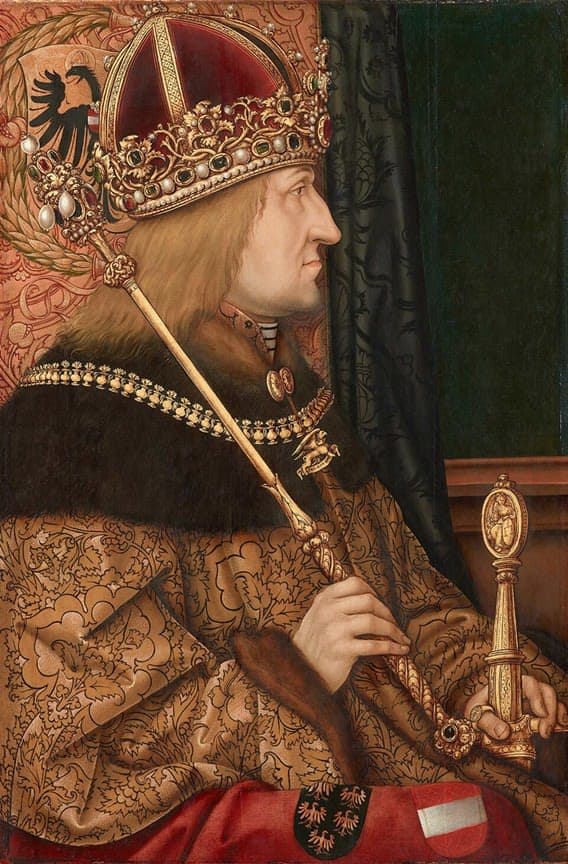
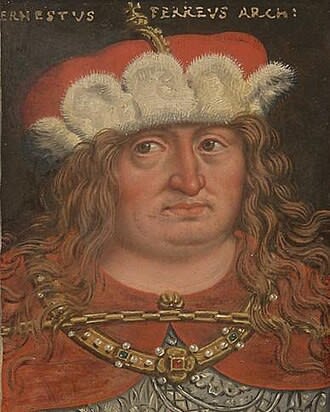
The life of Frederick, the man destined to become the last Holy Roman Emperor to be crowned in Rome, began in 1415 beneath the vaults of the Tyrolean residence in Innsbruck. He was born to Ernest the Iron, Duke of Inner Austria, and his second wife, Cymburgis of Masovia.
As the eldest son, Frederick belonged to the Leopoldian line of the House of Habsburg, which, under the historic Treaty of Neuberg of 1379, had been entrusted with the rule of the duchies of Styria, Carinthia, and Carniola — territories collectively known as Inner Austria.

Frederick’s childhood was overshadowed by the harsh realities of his age: of his eight brothers and sisters, only three survived into adulthood. Growing up beside him were his younger brother Albert, the future Archduke Albert VI, and two sisters — Margaret, who would become Electress of Saxony, and Catherine.
In 1424, when Frederick was only nine years old, his father died. The young heir formally became Duke of Inner Austria under the name Frederick V, but real authority passed into the hands of his regent and uncle, Frederick IV of Austria.
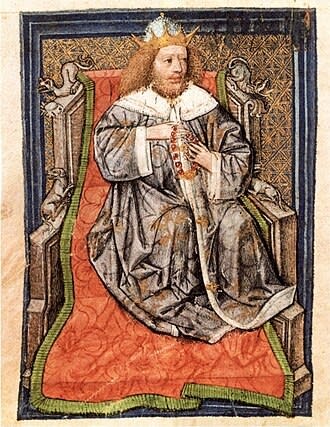
The desire for independence awakened in Frederick at an early age. Beginning in 1431, he persistently sought recognition of his legal majority so that he could take control of his lands himself.
His relatives rejected his demands repeatedly, and only in 1435 did Duke Albert V of Austria — the future German king Albert II — transfer control of Frederick’s rightful hereditary possessions to him.
Yet obtaining power did not bring peace. Almost immediately, his younger brother Albert began insistently demanding the right to participate in the government. This laid the foundations for a long and exhausting rivalry between the brothers that would continue for decades.
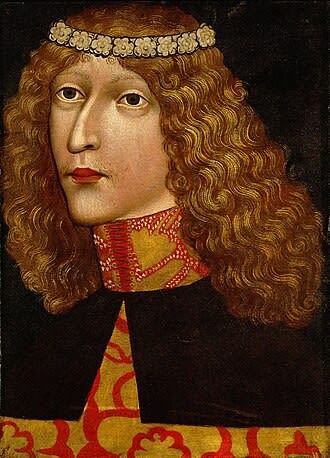
In 1436, seeking to strengthen his spiritual and political prestige, Frederick undertook an extensive pilgrimage to the Holy Land.
He was accompanied by a large entourage of nobles, many of whom received the honor of being knighted into the Order of the Holy Sepulchre.
This journey significantly increased the young duke’s prestige on the European political stage.
Soon, the political landscape began to change in his favor.
In 1439, his uncle and former regent Frederick IV died. As a result, Frederick himself became regent of Tyrol and Further Austria for the late duke’s underage heir, Sigismund of Austria.
Once again, he was forced to resist the aggressive claims of his brother Albert VI, but with the support of the loyal Tyrolean aristocracy, Frederick retained control.
His influence soon expanded even further. He became regent of the Duchy of Austria for his nephew Ladislaus the Posthumous, son of the prematurely deceased King Albert II and Elizabeth of Luxembourg.
Although Ladislaus was not destined to survive to full adulthood, it was during this period that Frederick established himself as the undisputed head of the House of Habsburg, even though his regency over the lands of the Albertinian line was regarded with open suspicion by the local nobility.

The death of King Albert II opened the road to supreme power for Frederick, who was his cousin.
On February 2, 1440, the prince-electors gathered in Frankfurt and unanimously elected him King of the Romans under the name Frederick IV.
The title, however, did not immediately bring great power. The real foundation of his authority remained his native Inner Austria — Styria, Carinthia, and Carniola.
Seeking to expand his influence, in 1442 Frederick entered into an alliance with Rudolf Stüssi, mayor of Zürich. Together they fought against the Old Swiss Confederacy during the Old Zürich War, but this military venture ended in defeat for Frederick.
His diplomacy proved considerably more successful.
In 1448, he signed the Concordat of Vienna with the Holy See, a historic agreement that regulated relations between the Habsburgs and the Papacy until the dissolution of the Holy Roman Empire in 1806.
The culmination of Frederick’s ambitions came in 1452.
At the age of thirty-seven, he embarked on a grand journey to Italy. He had two objectives: to meet his bride and to receive the imperial crown.
His chosen bride was the seventeen-year-old Infanta Eleanor, daughter of King Edward I of Portugal. After an exhausting 104-day sea voyage, she landed at Livorno, bringing with her an enormous dowry intended to rescue Frederick from debt and strengthen his political position.
The couple met on February 24 in Siena, from where they traveled together to the Eternal City.
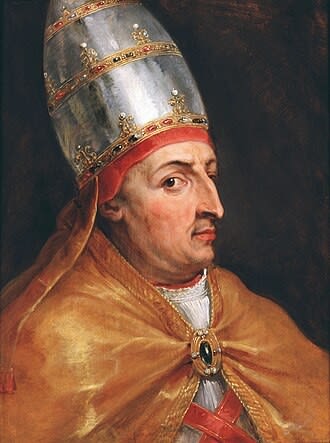
According to ancient tradition, they spent the night before their coronation outside the walls of Rome, and on March 9 they solemnly entered the city, exchanging friendly greetings with Pope Nicholas V.
The visit was not without diplomatic tensions.
Because of Frederick’s bitter conflict with the Milanese ruler Francesco I Sforza, he was unable to obtain the Iron Crown of Lombardy from Monza Cathedral or to be crowned King of Italy by the Archbishop of Milan.
Frederick found an elegant solution. He persuaded the pope to crown him King of Italy using the German crown, which had been brought along specifically for the occasion.
The ceremony took place on the morning of March 16, 1452, despite the angry protests of Milanese ambassadors.
That same afternoon, the pope performed the marriage ceremony of Frederick and Eleanor.
Finally, on March 19, in the magnificent Basilica of St. Peter, Cardinal Francesco Condulmer, Vice-Chancellor of the Holy Roman Church, anointed the couple, and the pope placed the imperial crown upon Frederick III’s head.
Frederick entered history as the last Holy Roman Emperor to be crowned in Rome itself. His great-grandson Charles V would become the last emperor to undergo a papal coronation, but that ceremony would take place in Bologna.
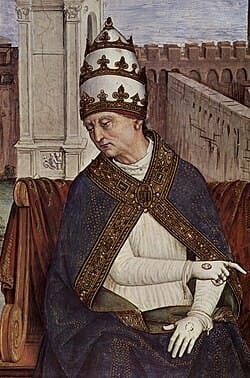
After becoming emperor, Frederick demonstrated a unique and highly distinctive style of government.
He was characterized by extreme caution, deliberate slowness, and a tendency to postpone decisions endlessly.
The Italian humanist Enea Silvio Piccolomini, the future Pope Pius II, who served at his court, ironically remarked that the emperor wished to conquer the entire world while “remaining seated in one place.”
Whereas earlier historians interpreted this behavior as a sign of weakness, modern scholars have often viewed his tactics as an extraordinarily effective strategy for political survival.
Ruling vast but territorially fragmented possessions, Frederick possessed a remarkable ability to wait patiently until difficult circumstances changed in his favor.
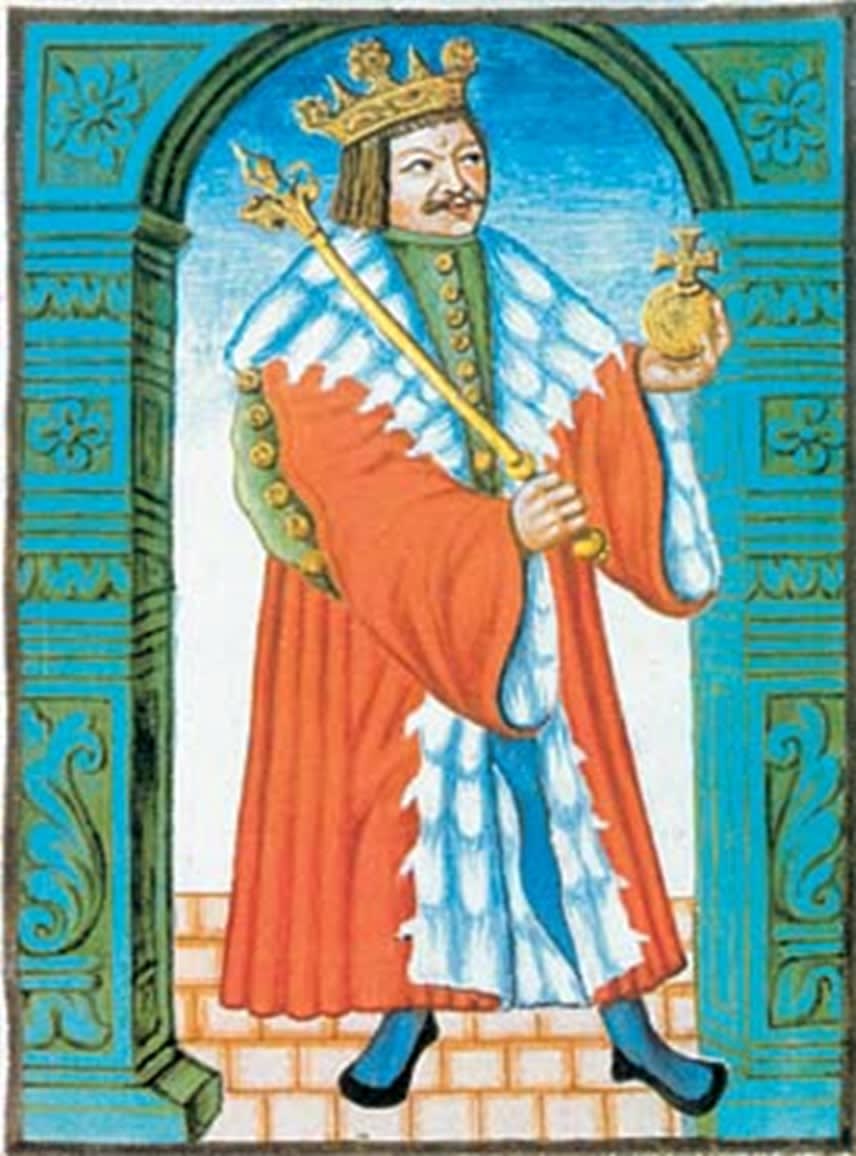
In his private life, the emperor remained reserved.
Contemporaries noted that he found it physically difficult to establish emotional intimacy even with his wife Eleanor and his own children.
Unlike his hot-tempered brother Albert or his future son Maximilian, Frederick led a restrained, almost ascetic lifestyle.
He attended tournaments and celebrations only when duty required him to do so and genuinely disliked extravagant feasts.
Later, he would become seriously concerned when the young Maximilian began displaying an obvious interest in wine, noisy banquets, and women.
Because of Frederick’s emotional distance, Eleanor assumed most of the responsibility for raising and educating their children, playing a fundamental role in the future rise of the Habsburg dynasty.
Their difficult marriage produced five children: Christoph, who lived only from November 1455 to March 1456; Maximilian, born on March 22, 1459, who would later become a great emperor; Helena, who lived from November 1460 to February 1462; Kunigunde, born on March 16, 1465; and Johann, who lived from August 1466 to February 1467.
Although their marriage could hardly be described as happy, Eleanor’s death was a severe blow to Frederick, and he remained a widower for the rest of his life.
The emperor’s political initiatives rarely appeared bold, yet paradoxically they often produced successful results.
His accession to power was accompanied by responsibility for the guardianship of Albert V’s heir.
When Ladislaus the Posthumous was born, Frederick took him into his custody, effectively turning his nephew — the legitimate ruler of Austria, Bohemia, and Hungary — into a prisoner.
This allowed Frederick to maintain control over Lower Austria.
In a similar manner, relying upon the advice of his loyal associate Friedrich II von Graben, he restrained the ambitions of his Tyrolean cousin Sigismund.
Rebellions against Frederick erupted repeatedly.
In 1452, the estates of Lower Austria forcibly liberated Ladislaus.
Frederick’s principal internal enemy, however, remained his own brother Albert VI.
Frederick was unable to defeat him in open battle and instead preferred intricate political maneuvering.
In 1462, Albert launched a rebellion in Vienna and besieged the emperor inside his own residence.
Frederick was rescued by the Bohemian king George of Poděbrady.
Ultimately, the emperor’s strategy of “outliving everyone” worked remarkably well.
In 1457, Ladislaus died, allowing Frederick legally to obtain Lower Austria.
Then the rebellious Albert VI died, leaving Upper Austria to his brother.
Because of constant conflicts, the imperial court led a semi-nomadic existence, moving between Graz, Linz, and Wiener Neustadt.
The latter city owed to Frederick the construction of a magnificent castle and the famous “New Monastery.”
Frederick also sought to strengthen the spiritual foundations of his authority.
In 1469, he established the Order of St. George, which still exists today. The first investiture took place in the Lateran Basilica in Rome in the presence of Pope Paul II.
He also accomplished something previous rulers had been unable to achieve: the establishment of bishoprics in Vienna and Wiener Neustadt.
Yet a terrifying threat was emerging from the east.
In 1463, the Ottoman Empire conquered Bosnia, bringing its borders directly to the lands of the Habsburgs.
In 1469, the Turks invaded Carniola, and from 1471 onward they began launching annual attacks on Styria.
Between 1473 and 1483, Ottoman cavalry carried out five devastating raids into Carinthia, spreading death and destruction.
The nobility’s inability to defend the population contributed to the Carinthian Peasant Revolt of 1478, when local inhabitants attempted to create their own defensive league.
The Ottoman threat forced Frederick to construct large numbers of Tabor defenses — fortified churches and castles.
Relief came only in 1491, when the Ottomans suffered a crushing defeat at the Battle of Vrpile.
On the eastern diplomatic front, Frederick suffered one of his greatest failures.
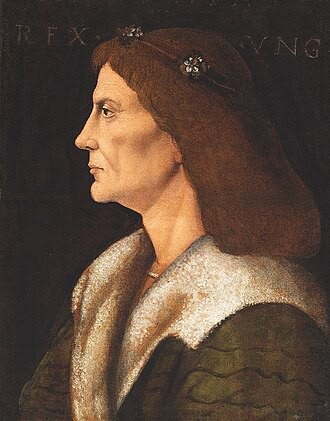
On February 27, 1459, he confidently proclaimed himself King of Hungary in an attempt to challenge the powerful Matthias Corvinus.
The emperor possessed little military talent, and the campaign collapsed.
His former secretary, now Pope Pius II, pleaded with Frederick from Mantua to end the conflict, describing Hungary as “the shield of all Christendom” and warning of an invasion by foreign enemies.
The failure to heed these warnings contributed to the Bohemian-Hungarian War of 1468–1478 and the disastrous Austro-Hungarian War of 1477–1488.
In 1483, Frederick fled from the Hofburg in Vienna to Wiener Neustadt, but Corvinus’s troops besieged him there as well.
After an eighteen-month siege, the fortress fell in 1487.
Matthias had already captured Vienna itself in 1485 and retained control of the city until his death.
Having received no assistance from the prince-electors, the emperor was forced to wander from place to place, first to Graz and later to Linz.
Yet where Frederick lost wars, he won dynastic contests brilliantly.
The greatest triumph of his life came in 1477.
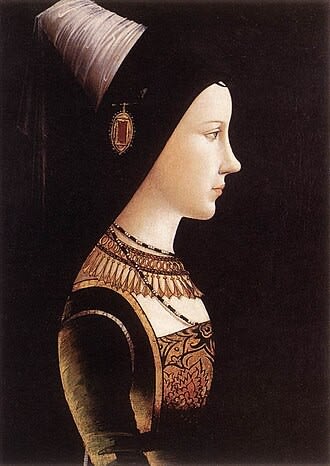
Following the death of Charles the Bold, his daughter Mary of Burgundy, heiress to enormous wealth, chose Frederick’s son Maximilian of Austria as her husband.
This marriage transformed the Habsburgs into one of the dominant powers of Europe and forever associated the dynasty with the famous motto:
“Let others wage wars; you, happy Austria, marry.”
Securing the succession became the aging monarch’s principal objective.
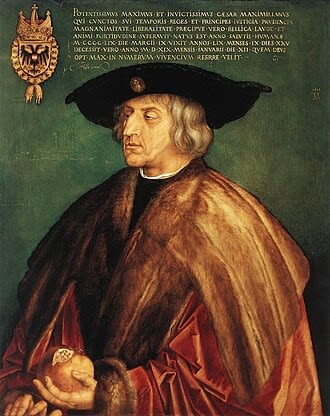
On February 16, 1486, at the Imperial Diet in Frankfurt, six prince-electors — without Bohemia, whose vote might have been controlled by Corvinus — unanimously elected Maximilian King of the Romans.
On April 9, Frederick proudly attended his son’s coronation in Aachen.
Despite their very different personalities, the father recognized his son’s diplomatic talent, and Maximilian became his principal co-ruler.
Together they proclaimed a ten-year Landfriede, or Public Peace, and in 1488 Frederick initiated the creation of the powerful Swabian League to contain Wittelsbach expansion.
Dynastic politics occasionally produced dramatic family conflicts.
In 1487, Duke Albert IV of Bavaria illegally seized imperial lands and boldly requested the hand of Frederick’s daughter Kunigunde, offering those same territories as a wedding gift.
Frederick initially agreed, but when Albert also captured Regensburg, the emperor furiously broke off the engagement.
The news, however, failed to reach Innsbruck in time, and on January 2, 1487, Kunigunde married the Bavarian duke.
Only Maximilian’s diplomatic skill prevented a bloody war between his father and his new brother-in-law.
During the final years of his reign, Frederick, who withdrew to Linz in 1488, devoted himself to passive resistance against the Imperial Reform promoted by the princes under the leadership of Berthold von Henneberg, Archbishop of Mainz.
Frederick regarded the proposed reforms as a threat to his authority, whereas Maximilian, acting as mediator, was more receptive to them.
Culturally, Frederick left behind a considerable legacy.
He patronized music and attracted talented musicians from throughout Western Europe.
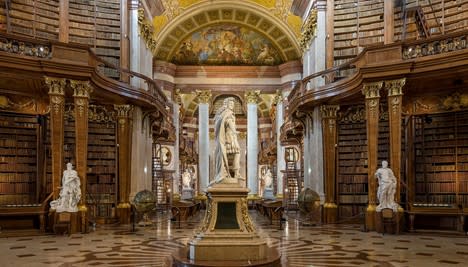
His modest library of 110 volumes became the seed from which the great Bibliotheca Regia, now the Austrian National Library, eventually grew.
In 1471, he commissioned the Nuremberg genius Erhard Etzlaub to construct sophisticated astronomical instruments, including a portable astrolabe.
Frederick also entered history as a notable protector of Jews, for which his enemies mockingly accused him of being “more of a Jew than a Holy Roman Emperor.”
Like his wife, he openly patronized Jewish scholars such as Jacob ben Jehiel Loans, who would later become the teacher of the Christian Hebraist Johannes Reuchlin.
Researcher Ursula Schattner-Rieser has noted that this policy was associated with the ideas of early humanism.
Although the young Maximilian initially displayed open antisemitism, much to the distress of both his parents, his views later became more moderate.
The final stage of the emperor’s life unfolded in the Danube region.
In 1492, he received the honor of becoming a Knight of the Order of the Golden Fleece, but by February 1493 his health began to deteriorate rapidly.
During Lent, physicians diagnosed a serious disease affecting his left leg — what contemporaries called “the burning of old age” and what modern medicine identifies as a severe form of atherosclerosis.
On June 8, 1493, at Linz Castle, the surgeon Hans Seyff performed an unprecedented and exceptionally well-documented medieval operation to amputate the affected limb.
At first, the seventy-seven-year-old Frederick endured the procedure surprisingly well.
However, on August 19, 1493, Frederick died in Linz.
Contemporaries disagreed about the cause of his death. Some blamed the consequences of the amputation and his advanced age, while others whispered that he had suffered severe diarrhea after eating an excessive amount of melon.
On August 24, his internal organs were buried in the parish church of Linz.
Because of the Ottoman threat, which delayed Maximilian’s return, the main funeral ceremonies did not take place until December 6–7, 1493, in St. Stephen’s Cathedral in Vienna.
The emperor was laid to rest together with his amputated leg in a magnificent tomb created by the sculptor Nikolaus Gerhaert — a true masterpiece of the Late Middle Ages.
The tomb was not fully completed until twenty years later, in 1513.


