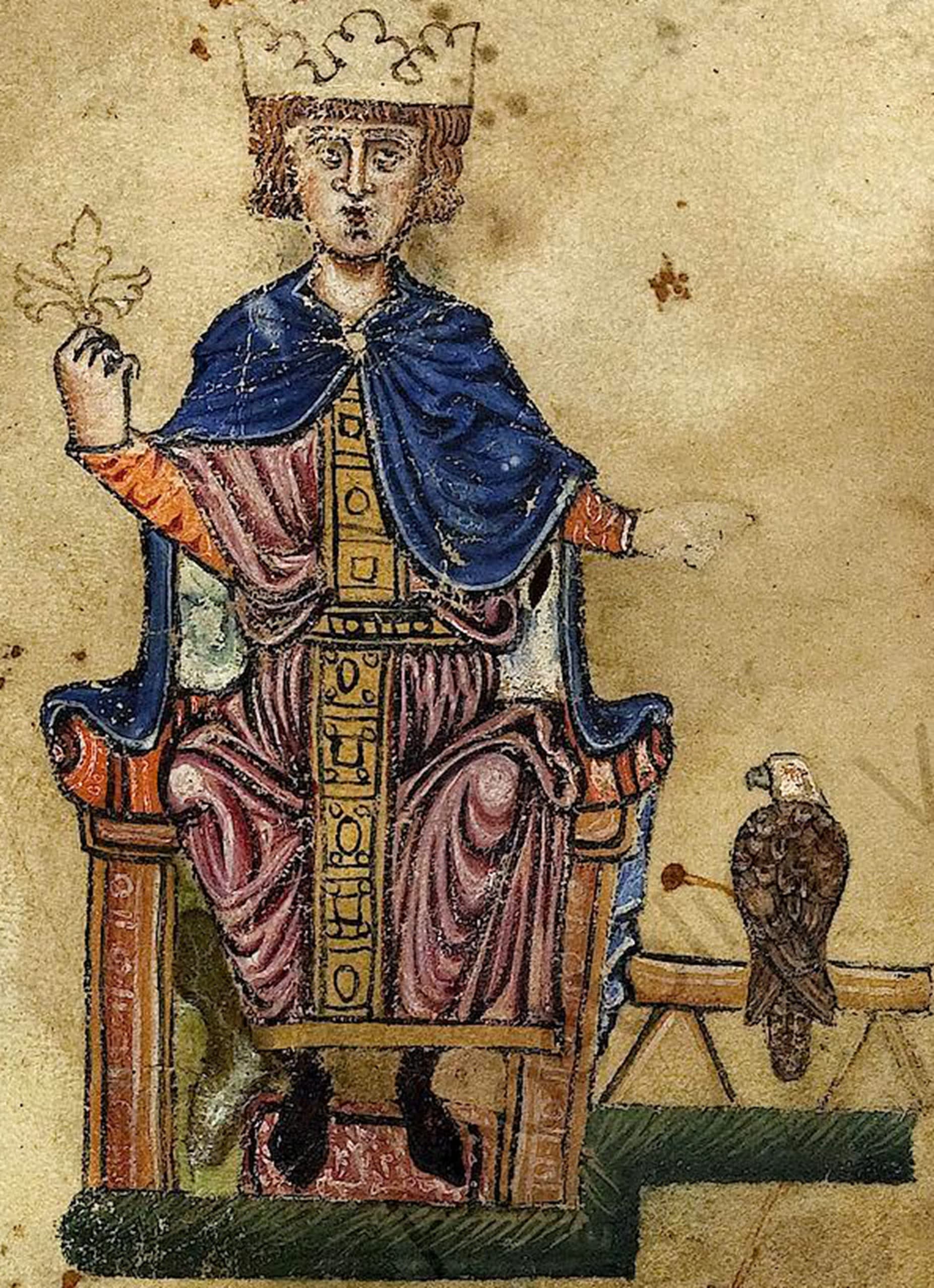
Frederick II of Hohenstaufen was a figure whose extraordinary scale and versatility earned him, even during his lifetime, the nickname “Wonder of the World” — Stupor Mundi.
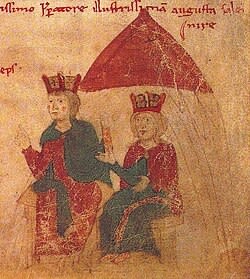
Frederick’s father was Henry VI, the stern emperor who, after the death of Frederick Barbarossa in 1190, managed to crush the Welfs and consolidate the German lands under his authority. His mother was Constance, daughter of the great Sicilian king Roger II.
Their union, concluded in 1185, was a marriage of political calculation. Constance, eleven years older than her husband, brought with her a claim to the immensely wealthy Kingdom of Sicily. After the death of William II the Good in 1189, she became the only legitimate heiress to the southern kingdom, but the usurper Tancred blocked her path to power.
Only in 1194, after a prolonged war, did Henry VI triumphantly crown himself in Palermo on 25 December, uniting the Empire with the southern kingdom.
The birth of an heir to this enormous realm became an event in itself.
On 26 December 1194, while Constance was travelling south to join her husband, she went into labor in the town of Jesi.
Aware that her age—around forty—and a decade of childless marriage would inevitably provoke rumors that the infant had been substituted, the queen displayed remarkable determination.
She ordered an imperial tent to be erected directly in the town square and allowed any woman of the town to witness the birth.
Moreover, she publicly breastfed the newborn child in an attempt to silence rumors of fraud.
Nevertheless, enemies of the Hohenstaufen dynasty continued for years to whisper that Frederick was actually the son of an ordinary butcher.
The boy was baptized Frederick Roger, in honor of his two great grandfathers. He spent the first three years of his life in the household of the Duke of Spoleto, far from the intrigues of the royal court.
However, his peaceful childhood was soon replaced by years of hardship and a struggle for survival.
In 1196, Henry VI persuaded the princes to recognize his two-year-old son as King of Germany, but the emperor’s sudden death in Messina on 8 November 1197 destroyed these plans.
After the death of his mother on 27 November 1198, the young Frederick became an orphan and a hostage in the struggle between rival political factions.
Before her death, Constance made a calculated decision: she placed her son and the kingdom under the guardianship of Pope Innocent III.
Yet while the pope remained in Rome, Sicily was torn apart by conflicts among German nobles—Markward von Annweiler, Diepold von Schweinspeunt, and Chancellor Walter of Pagliara.
In 1201, Markward succeeded in capturing Palermo and the young king himself.
Historians preserved an extraordinary account of Frederick’s character as a child. When his enemies attempted to seize him, the boy reportedly flew into a violent rage, resisting with all his strength and tearing the clothes from his own body in helpless fury.
Markward’s death in 1202 merely replaced one group of jailer-guardians with another, and only in 1207 did Frederick once again come under the protection of Walter of Pagliara.
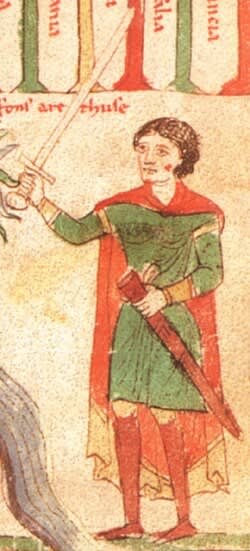
Frederick’s coming of age in 1208 marked the beginning of a new era.
The state treasury was empty and much of the royal land had been seized by powerful barons, but the young king possessed an iron will.
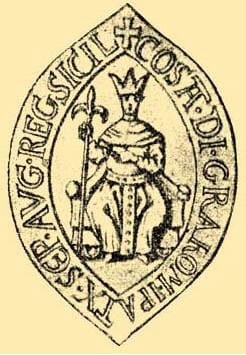
On the advice of the pope, he married Constance of Aragon, who was fifteen years older than he was.
The marriage brought Frederick the support of five hundred knights, with whose assistance he began restoring royal authority.
In 1209, he decisively suppressed a revolt by the nobility and ordered a review of all privileges that had been seized or unlawfully claimed.
Although an epidemic took the life of Constance’s brother and many of Frederick’s soldiers, the young king had already established firm control over the island.
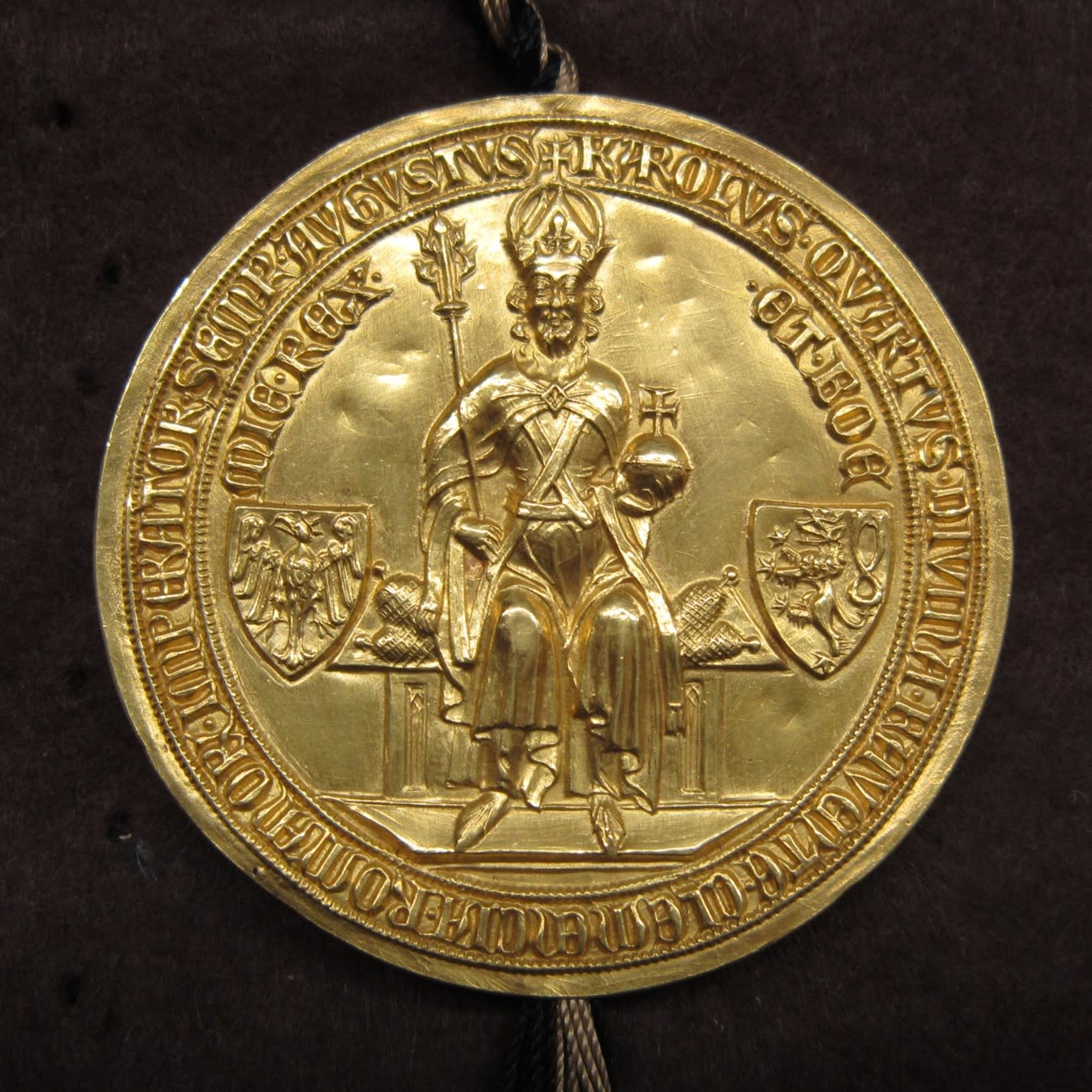
Meanwhile, in Germany, a struggle for the imperial crown was unfolding between Philip of Swabia and Otto IV of the House of Welf.
After Philip’s murder in 1208, Otto became the sole ruler, but he quickly fell into conflict with the pope after failing to honor his promises.
Innocent III, realizing that his earlier political calculation had failed, turned his attention toward his former ward.
In September 1211, German princes proclaimed Frederick their ruler.
The journey north was extraordinarily dangerous. Pisan fleets and Milanese forces attempted to intercept him.
In 1212, during a dramatic escape from his pursuers, Frederick was forced to cross the River Lambro on horseback. Milanese chronicles mockingly recorded that he had to “redeem his trousers” from the waters.
Nevertheless, in September 1212, he reached Lake Constance and entered the city of Constance only three hours before Otto arrived.
Once on German soil, Frederick acted like a true sovereign.
On 26 September 1212, he issued the Golden Bull of Sicily, rewarding his Bohemian allies.
His generosity and personal charm attracted numerous barons to his cause.
On 9 December 1212, he was crowned in Mainz, and in 1213 he confirmed the rights of the Church in the Golden Bull of Eger.
His final triumph came after Otto’s defeat at the Battle of Bouvines in 1214.
On 24 July 1215, Frederick entered Aachen, where he solemnly ascended the throne of Charlemagne and personally hammered nails into the new sarcophagus of the legendary emperor, symbolically emphasizing the continuity of imperial authority.
It was at this time that he first took a vow to participate in a crusade, an issue that became a central theme of the Fourth Lateran Council.
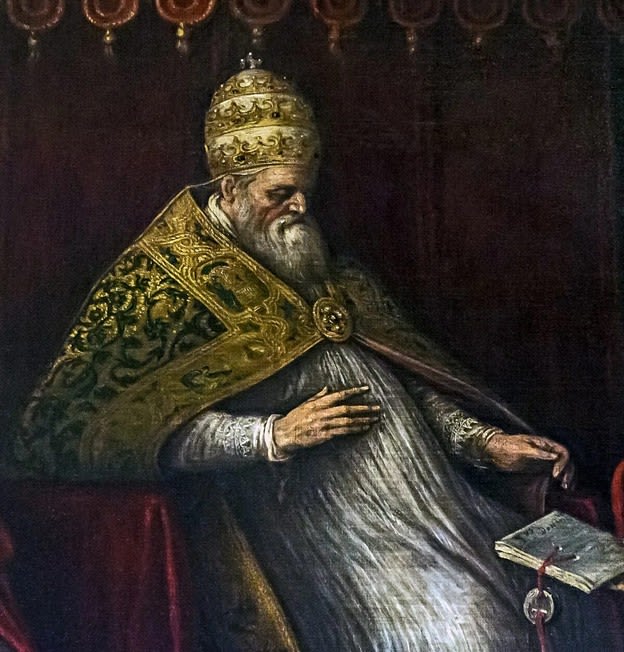
After the death of Innocent III in 1216 and the accession of Honorius III, Frederick began preparing for his imperial coronation.
He carefully maneuvered between the interests of Church and state.
He secured the title of King of Germany for his son Henry, while officially cancelling Henry’s Sicilian titles so as not to alarm the pope with the prospect of a permanent union between Germany and Sicily.
On 22 November 1220, in Rome, Frederick and Constance were crowned emperor and empress.
Returning to Sicily in December 1220, Frederick immediately summoned an assembly at Capua and issued the Assizes of Capua, a code consisting of twenty laws.
It represented a genuine legal revolution.
He ordered the demolition of all castles constructed without royal authorization since 1189, prohibited private warfare, and imposed strict supervision over aristocratic privileges.
Frederick II was building a new type of state.
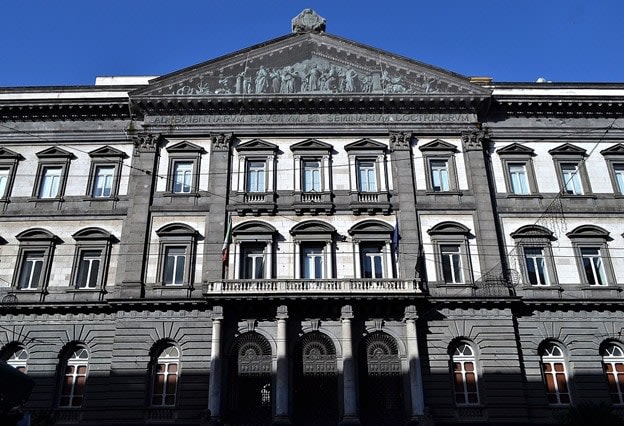
In 1224, he founded the University of Naples, the first European institution of higher education established directly by the will of a monarch and independent of ecclesiastical authority.
Frederick required loyal lawyers and state officials rather than clerics.
At the same time, he addressed the problem of Sicily’s Muslim population.
Following a prolonged war between 1222 and 1225, he adopted an unusual solution: thousands of Saracens were deported to the city of Lucera in Apulia.
Rather than exterminating his defeated enemies, Frederick transformed them into loyal servants of the Crown, allowing them to continue practicing Islam in exchange for military service.
Thus, amid the sounds of Muslim trumpets and the language of Latin law, there emerged an empire destined to represent both the height and the beginning of the decline of Hohenstaufen power.
Frederick II’s relations with Pope Honorius III were tense.
Between 1217 and 1221, while the armies of the Fifth Crusade fought in Egypt, the emperor repeatedly delayed his personal participation and concentrated instead on strengthening his authority in the German territories.
This caused growing irritation in Rome.
Relations deteriorated further when Honorius III demonstratively proclaimed Peter of Courtenay emperor of Constantinople, ignoring Frederick’s own claims.
Nevertheless, Frederick did not remain entirely uninvolved.
He sent a substantial fleet and troops to the Holy Land under the command of Duke Louis of Bavaria.
However, the arrogance of the papal legate Pelagius led to disaster.
Without waiting for Frederick’s main forces to arrive, Pelagius rejected a favorable proposal from Sultan al-Kamil, who offered to return Jerusalem to the Christians in exchange for Damietta.
As a result, Damietta was lost in 1221 and the crusade ended in complete failure.
Honorius III blamed the emperor for his absence, while Frederick, who had supplied provisions to the crusading armies, accused the Curia of dishonesty.
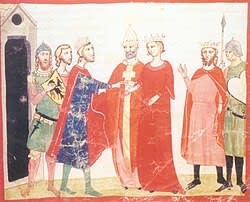
The disagreements were temporarily eased through the mediation of Hermann von Salza, the Grand Master of the Teutonic Order.
In 1222, following the death of his first wife Constance, Frederick accepted the pope’s proposal that he marry the eleven-year-old Yolande—also known as Isabella—the heiress to the throne of Jerusalem.
The marriage, celebrated in November 1225, had profound political implications.
By becoming King of Jerusalem, Frederick acquired a direct personal incentive to recover the Holy Land.
Immediately after the marriage, however, he revealed his uncompromising character by stripping his new father-in-law, John of Brienne, of his title and formally declaring himself ruler of Jerusalem.
Preparations for the crusade took place against the background of a worsening political situation in northern Italy.
In 1226, Frederick summoned a diet at Cremona, intending to restore imperial authority over the independent communes of Lombardy.
In response, the cities revived the Lombard League and blocked the Alpine passes, cutting the emperor off from the German princes.
This conflict would continue for decades.
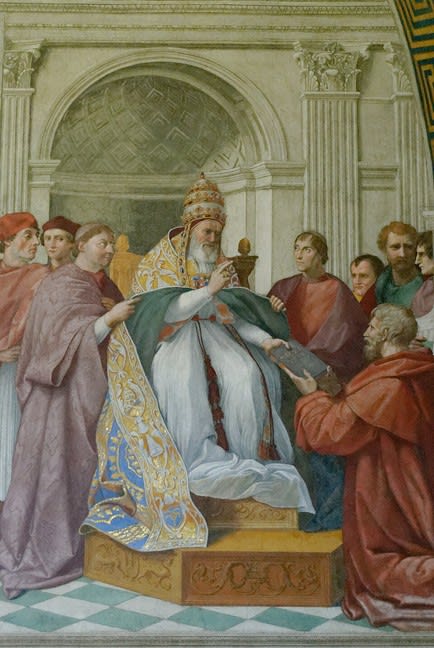
Meanwhile, Pope Gregory IX, who succeeded Honorius III in 1227, demanded the immediate fulfillment of Frederick’s crusading vow.
When Frederick finally sailed from Brindisi in August 1227 but returned only three days later because an epidemic had broken out among the troops, the pope’s patience was exhausted.
On 29 September 1227, Gregory IX excommunicated Frederick, accusing him of pretending to be ill.
Despite being excommunicated—which theoretically denied him the right to lead a crusade—Frederick set sail once again in 1228.
By then, his second wife Yolande had died in childbirth, leaving their son Conrad as heir to Jerusalem.
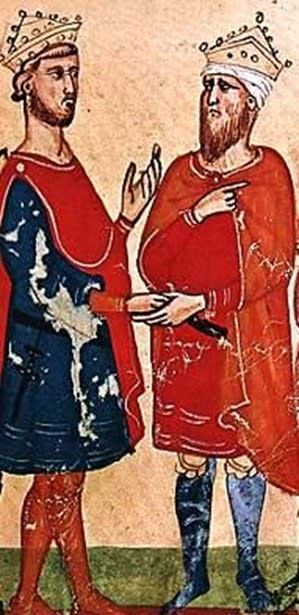
Arriving in the Holy Land with almost no support from the local military orders, which were obedient to the pope, Frederick played his strongest card: secret diplomacy with the Egyptian sultan al-Kamil.
While the Templars reportedly attempted to betray the emperor by informing the sultan of his movements, Frederick and al-Kamil reached an unprecedented agreement.
On 11 February 1229, they concluded a ten-year truce.
The Christians received Jerusalem, Bethlehem, and Nazareth, while the Muslims retained control over the Dome of the Rock and the al-Aqsa Mosque.
On 18 March 1229, Frederick II personally placed the crown of Jerusalem upon his own head in the Church of the Holy Sepulchre.
It was an extraordinary crusade in which its principal objective had been achieved not through bloodshed but through calculated diplomacy.
Yet this success only intensified the fury of the pope, who placed Jerusalem under interdict.
Returning to Italy in 1229, Frederick discovered that his territories had been invaded by papal troops commanded by his father-in-law John of Brienne.
With extraordinary speed, the emperor recovered his lost possessions.
In 1230, the Treaty of San Germano was concluded, and Frederick’s excommunication was lifted.
The period of relative peace allowed him to concentrate on the internal administration of the Kingdom of Sicily.
In August 1231, he promulgated the Constitutions of Melfi, or Liber Augustalis, a legal code revolutionary for its time.
Frederick effectively destroyed much of the autonomy of the feudal nobility.
Private warfare was prohibited, while traditional feudal levies were increasingly replaced by a permanent military force that included Saracen mercenaries.
He established a unified system of justice in which ordeals—the so-called “judgments of God”—were replaced by witness testimony and documentary evidence.
Particular attention was given to science, medicine, and public order.
The Edict of Salerno of 1231 legally separated the professions of physician and pharmacist, imposed strict standards for medical education, and regulated the prices of medicines.
Medicine in Frederick’s kingdom became an issue of state concern, requiring five years of education followed by mandatory practical training.
While the emperor reorganized his southern kingdom, disaster was developing in Germany.
His eldest son Henry, whom Frederick had left as king under the supervision of the princes, began pursuing policies directly contrary to his father’s interests.
Attempting to strengthen royal authority, Henry placed increasing pressure on the higher nobility.
This forced Frederick in 1232 to confirm the Statute in Favor of the Princes, effectively surrendering much of the emperor’s direct power in the German territories in exchange for the loyalty of the princes.
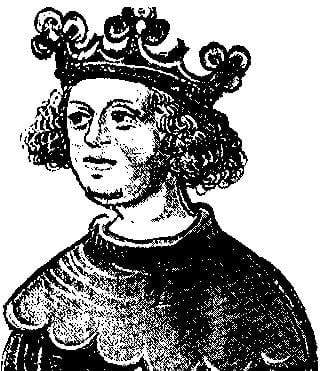
The conflict eventually developed into open rebellion.
Henry formed an alliance with the Lombard League and attempted to organize broader opposition to his father.
In 1235, Frederick arrived in Germany without an army.
Yet his prestige remained so immense that his son’s supporters quickly abandoned him.
At Worms, Henry threw himself at his father’s feet and begged for forgiveness.
Frederick was unforgiving.
He deprived his son of his crown and condemned him to lifelong imprisonment.
Henry’s fate was tragic. He died in 1242 at the age of thirty-one.
Modern examinations of his remains in Cosenza Cathedral have revealed evidence of leprosy, shedding new light on his isolation. It is possible that his imprisonment was motivated not only by his father’s anger but also by his terrible illness.
Another of Frederick’s sons, Conrad IV, was chosen to succeed him in Germany.
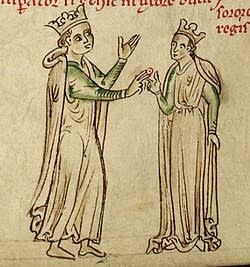
In 1235, a magnificent imperial assembly was held in Mainz, marking one of the great triumphs of Frederick’s reign.
There, the Mainz Landfrieden, or Peace of Mainz, was proclaimed—the first major collection of imperial legislation to be issued in the German language.
The emperor also formally reconciled with the House of Welf by granting Otto the Child the title of Duke of Brunswick-Lüneburg.
At around the same time, Frederick entered into his third marriage, marrying Isabella of England, sister of King Henry III.
The marriage deprived the German opposition of a major source of foreign support.
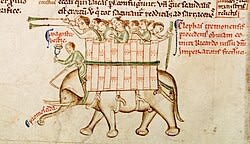
A particularly remarkable episode in Frederick’s life occurred at Fulda in 1236.
Following a fire at a mill, Jews were accused of ritually murdering Christian children.
While pogroms began erupting across Germany, Frederick demonstrated a level of rationalism highly unusual for the thirteenth century.
He summoned a council of Jewish scholars who had converted to Christianity, reasoning that they would understand the secrets of Judaism but would have no reason to conceal them.
On the basis of their conclusions, the emperor issued a decree completely clearing Jews of accusations that Jewish religious practice required the use of human blood and rejecting the blood-libel accusation within the Empire.
In 1237, Frederick left Germany for the last time and turned his attention toward destroying the Lombard League.
On 27 November, the Battle of Cortenuova resulted in a crushing defeat for the rebellious cities.
Frederick celebrated his victory in Cremona with a spectacle modeled on the triumphs of ancient Rome.
The captive son of the Venetian doge was paraded through the streets, chained to the Milanese war wagon—the carroccio—alongside a war elephant that had been given to Frederick by a sultan.
This period of Frederick’s power was also marked by extraordinary architectural activity.
The architect Riccardo da Lentini constructed masterpieces of fortification and architecture for the emperor, including the mysterious Castel del Monte in Apulia.
Between 1239 and 1241, Frederick restored or constructed more than 225 castles, establishing a formidable defensive network throughout the Kingdom of Sicily.
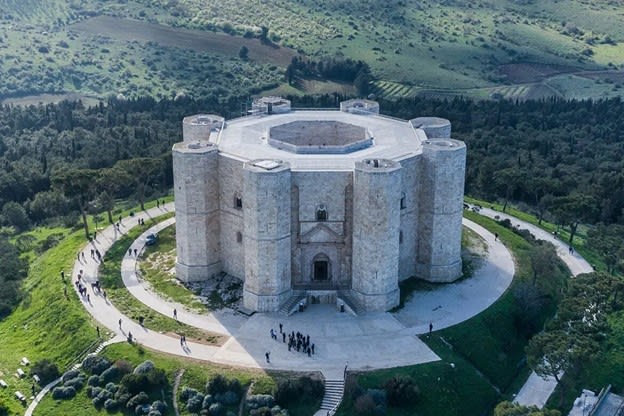
The final years of this period witnessed another outbreak of war with the Church.
After Frederick proclaimed his illegitimate son Enzo King of Sardinia, Pope Gregory IX excommunicated the emperor once again in 1239.
A furious campaign of demonization followed.
Frederick was denounced as the Antichrist.
The emperor responded by besieging Rome and seizing the initiative at sea.
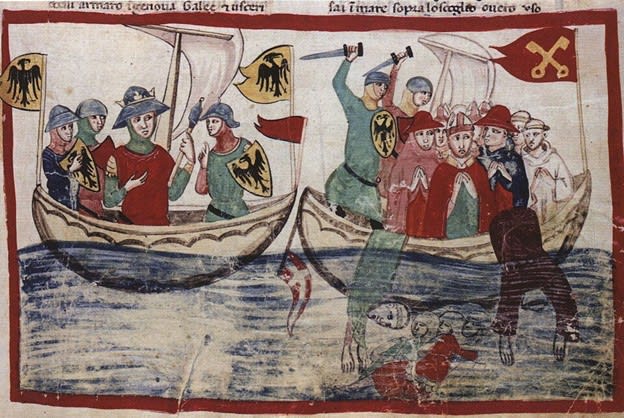
On 3 May 1241, at the Battle of Giglio, the Sicilian-Pisan fleet defeated a Genoese force transporting prelates to a council summoned by the pope.
More than one hundred senior churchmen were captured.
The road to Rome now lay open.
But on 22 August 1241, Gregory IX suddenly died.
The death of Frederick’s principal enemy created a temporary vacuum of power and left Europe wondering whether the emperor would finally be able to realize his vision of a universal empire.
The final stage of Frederick II’s life and reign was a period in which the grandeur of his empire confronted challenges of almost apocalyptic proportions.
While the emperor remained occupied with rebellious Italy and his seemingly endless struggles with Rome, a threat unlike anything Europe had previously encountered emerged on the eastern frontier of the Christian world.
As early as 1237, the Dominican friar Julian had brought news of approaching Mongol armies.
Yet the rulers of Western Europe, preoccupied with their own conflicts, underestimated the scale of the approaching catastrophe.
The disaster unfolded in the spring of 1241.
On 9 April, the Mongols destroyed a Polish army at the Battle of Legnica.
Two days later, King Béla IV of Hungary suffered a devastating defeat at the Battle of the Sajó River.
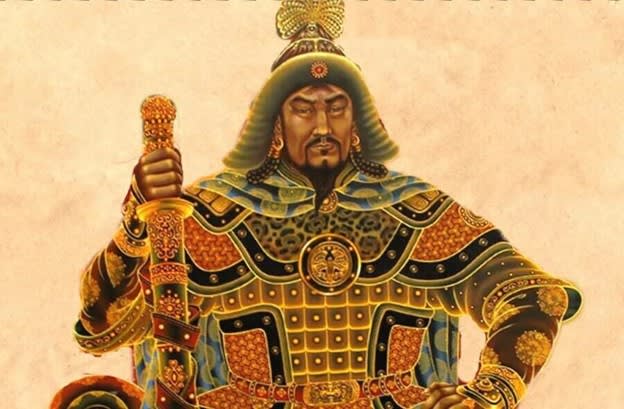
While Hungary was devastated and Béla IV fled for his life, desperately appealing to the emperor for protection, Frederick II displayed extraordinary—and to some observers disturbing—calm.
His conflict with Pope Gregory IX had reached such an intensity that unity between the emperor and the papacy remained impossible even in the face of a common enemy.
Frederick did not rush to commit all his forces to the defense of Hungary, whose rulers he regarded as supporters of the pope.
Instead, he concentrated on strengthening defenses “on this side of the Alps.”
He ordered his vassals in Swabia, Austria, and Bohemia to avoid open-field battles, reinforce their castles, and accumulate food supplies.
Rumors circulated that Frederick had formed a secret alliance with Batu Khan.
The rumors were encouraged by the emperor’s ironic response to a supposed demand that he submit to the Mongol ruler.
Frederick joked that, as an expert in falconry, he might make an excellent falconer at the khan’s court.
His military instructions, however, were extremely precise.
He recognized that Mongol tactics were far less effective against powerful stone fortifications and therefore placed his main defensive emphasis upon castles.
The Mongols ultimately withdrew eastward following the death of the Great Khan Ögedei.
After the death of Gregory IX in 1241 and the brief pontificate of Celestine IV, the papal throne remained vacant for approximately a year and a half.
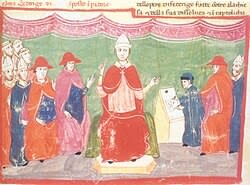
Finally, on 25 June 1243, Innocent IV was elected pope.
Initially, Frederick welcomed the choice, remembering his former friendship with the cardinal.
But reality proved different.
“I have lost the friendship of a cardinal, which is compensated by losing the hostility of a pope,” he reportedly remarked with characteristic wit.
Conflict soon erupted again following an uprising in Viterbo.
Innocent IV, who proved himself an exceptionally skilled and ruthless diplomat, secretly fled to Lyon, where in 1245 he convened the Council of Lyon.
The council marked the final rupture between emperor and pope.
Innocent declared Frederick deposed, accusing him of heresy, improper relations with Saracens, maintaining a harem, and betraying the Holy Land.
Europe descended into civil conflict.
In Germany, the pope supported rival “anti-kings”—first Henry Raspe and later William of Holland.
In Sicily itself, a conspiracy developed among Frederick’s own courtiers.
The plot was uncovered only in 1246, after which Frederick, according to tradition, had conspirators who had attempted to kill him during Lent blinded.
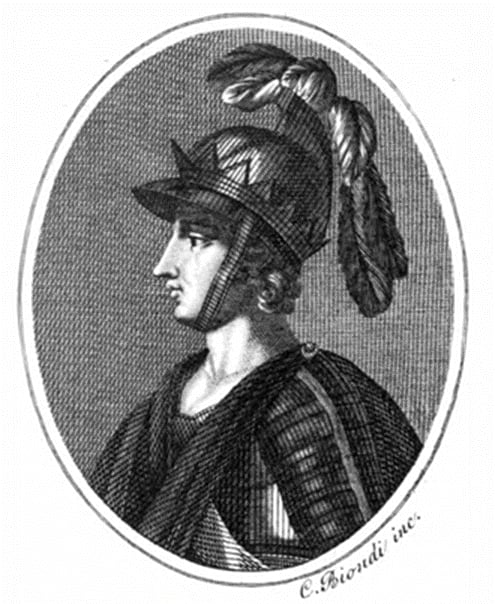
The decline of Frederick’s reign was marked by a series of painful blows.
In July 1247, the previously loyal city of Parma rebelled.
Frederick placed the city under siege and constructed a wooden fortress nearby, arrogantly naming it Vittoria — “Victory.”
He transferred his treasury, court, and even his menagerie there and spent much of his time hunting.
But on 18 February 1248, the citizens of Parma launched a daring sortie, captured the imperial camp, and burned it.
The loss of the treasury and the damage to Frederick’s prestige proved disastrous.
The emperor lost much of his control over central Italy.
Personal tragedy followed political defeat.
In 1249, Frederick’s beloved son Enzo was captured at the Battle of Fossalta.
Enzo was imprisoned in Bologna, where he would remain for the rest of his life.
At around the same time, Frederick lost his closest adviser, the brilliant jurist Pietro della Vigna.
Accused of corruption and of attempting to poison the emperor, Pietro was blinded and died in prison, leaving Frederick increasingly isolated.
Despite these blows, the emperor found the strength to counterattack.
In 1250, he defeated papal forces at Cingoli and restored his authority over Romagna.
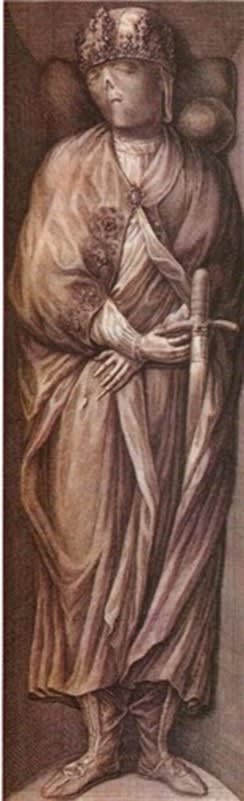
Death came suddenly to the “Wonder of the World.”
On 13 December 1250, suffering from severe abdominal pain—probably caused by dysentery—Frederick died at Fiorentino Castle.
By an irony of fate, he had once been told that he would die in a “place with a name connected to flowers.”
For years, this prophecy had caused him to avoid Florence.
Yet fate found him instead within the walls of an Apulian castle whose name carried the same floral association.
Legends later claimed that his illegitimate son Manfred had suffocated him with a pillow.
However, modern studies of Frederick’s mummified remains in Palermo have rejected theories of poisoning or violent death.
The emperor died modestly, dressed in the robes of a Cistercian monk.
He left behind the ruins of a magnificent political dream and a testament in which he attempted to preserve the throne for his sons, Conrad and Manfred.
The Hohenstaufen dynasty, however, did not long survive the collapse of Frederick’s political project.
Over the following decades, his children and grandchildren died in prisons or on execution grounds, while the imperial structure he had attempted to construct disintegrated.
Frederick II remained in history not merely as a ruler but as one of the greatest intellectuals of his age.
He transformed Sicily into a “focusing lens of culture.”
At his court emerged the Sicilian School of poetry, where sonnets were composed in the Italian vernacular rather than Latin.
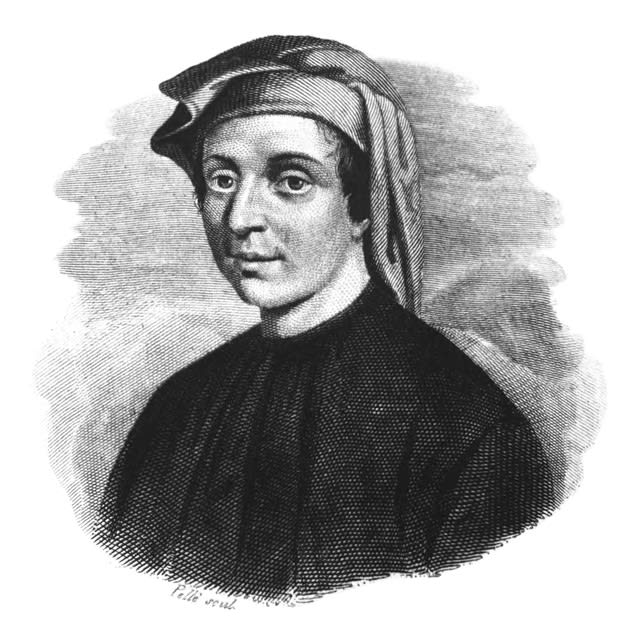
Frederick was a patron of Leonardo Fibonacci and corresponded with Muslim philosophers, sending them questions concerning the immortality of the soul and the structure of the universe in what became known as the “Sicilian Questions.”
His passion for knowledge sometimes assumed bizarre and even cruel forms.
The chronicler Salimbene of Parma described experiments allegedly conducted by Frederick.
According to Salimbene, the emperor once had two men fed the same meal and then ordered one to sleep while the other went hunting, after which both were dissected to determine which activity produced better digestion.
Another famous story claimed that Frederick attempted to discover humanity’s “original language” by ordering children to be raised in complete silence.
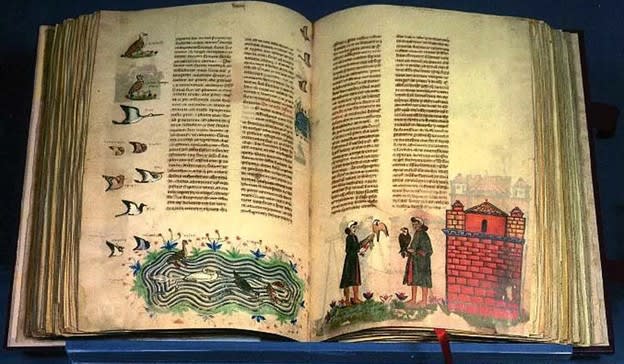
His book De Arte Venandi cum Avibus — “The Art of Hunting with Birds” remains one of the most remarkable intellectual works of medieval Europe.
It is often regarded as one of Europe’s earliest scientific works on ornithology based primarily on systematic observation rather than inherited authority or religious dogma.
Assessments of Frederick’s personality have always been deeply divided.
To his enemies in Rome, he was a monstrous ruler, even the Antichrist.
To Dante Alighieri, he was a heretic whose place lay in the Sixth Circle of Hell.
In much of the Arab world, however, Frederick retained the reputation of an intelligent monarch and a friend of Muslims.
During the Renaissance and later the Risorgimento, he was celebrated by some writers as the “first modern man on the throne” and as a precursor of Italian national unity.


