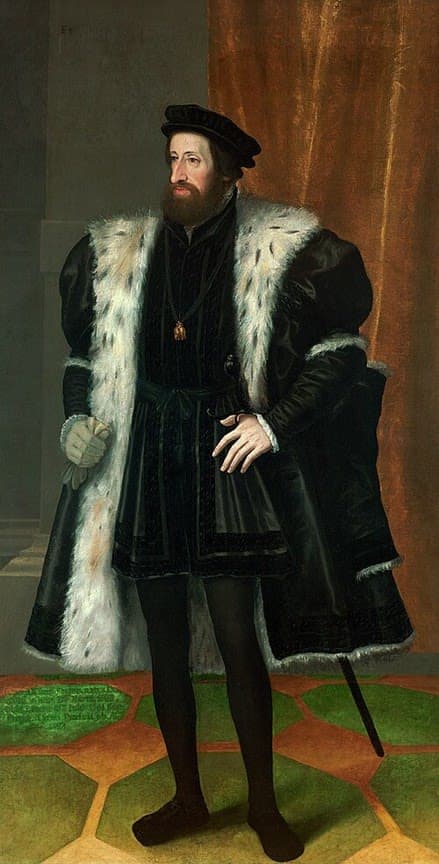

The future Holy Roman Emperor and architect of the Habsburg monarchy in Central Europe, Ferdinand I, was born in 1503 in the Castilian city of Alcalá de Henares.
As the second son of Philip I of Castile and Joanna of Castile, the boy was deeply connected to his Spanish roots. He bore the same name and shared the same birthday — March 10 — as his maternal grandfather, Ferdinand II of Aragon.
Curiously, the mothers of both rulers also had the same name: Ferdinand II’s mother was Joanna Enríquez, while the young prince’s mother was Joanna of Castile.
Raised in a cultural environment close to that of his grandfather and following many of the same customs, the boy quickly became Ferdinand II’s favorite grandson.
When Philip I died in 1506, Ferdinand II of Aragon personally assumed responsibility for the young prince.
At the royal court, Ferdinand received an excellent education, studying literature, the exact sciences, and foreign languages.
He proved to be an exceptionally capable student, something that would later help make him an outstanding patron of the arts and scholarship.
Music played a particularly important role in his life from an early age.
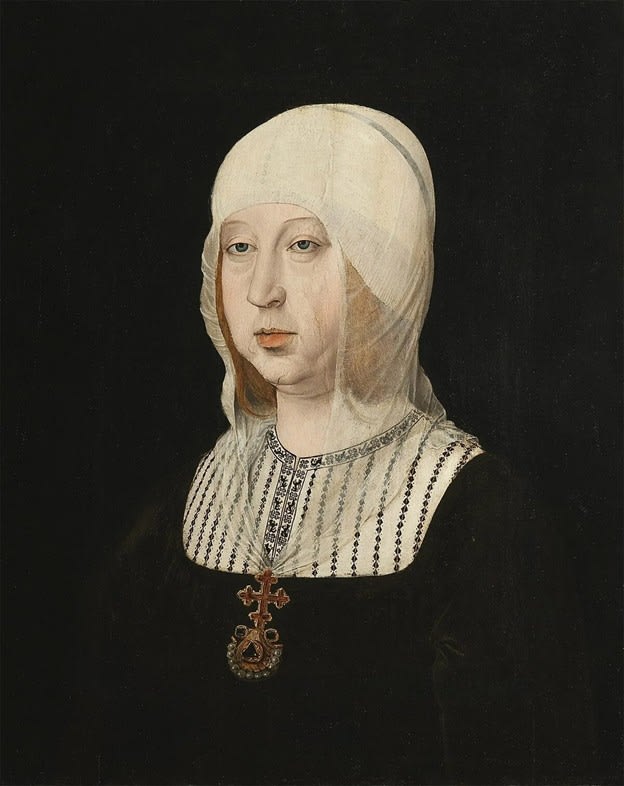
While Ferdinand was still an infant, his famous grandmother Isabella I of Castile ordered that among the twenty-four servants assigned to the child there should always be four musicians.
After her death in 1505, King Ferdinand II went even further, establishing a separate household of sixty-two servants for his younger grandson, including his own musical chapel.
Ferdinand’s peaceful life in Spain came to an end in the summer of 1518.
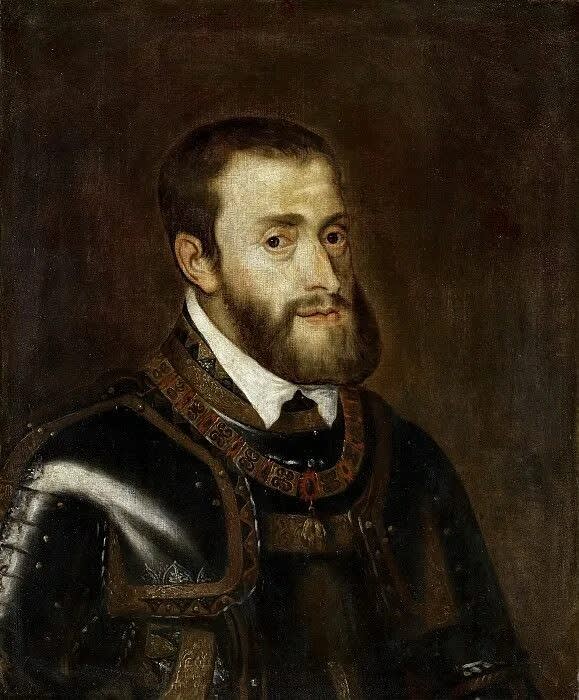
After his elder brother Charles arrived in Castile the previous autumn and became the new King Charles I, it was decided that Ferdinand should be sent to Flanders.
The journey proved extremely difficult.
The prince departed at the head of his brother’s fleet, but the ships lost their course in turbulent waters, forcing Ferdinand to spend four anxious days in Kinsale, Ireland, before finally reaching his destination.
Ferdinand’s destiny changed dramatically in 1519, when their paternal grandfather, Emperor Maximilian I, died.
The nineteen-year-old Charles V became ruler of the Holy Roman Empire, while Ferdinand was gradually entrusted with the administration of the hereditary Austrian lands — territories roughly corresponding to modern Austria and Slovenia.
From 1521 to 1564, he therefore bore the title Archduke of Austria.
Only at this relatively late stage of his youth did he begin learning German.
Gradually immersing himself in German culture, he succeeded in building close and trusting relations with the territorial princes of the Empire.
Charles V, occupied with global politics, definitively gave up direct administration of Austria in favor of his brother in 1522.
Although Ferdinand remained a loyal supporter of his elder brother and frequently represented him within the Empire during Charles’s long absences, he steadily strengthened his own domains.
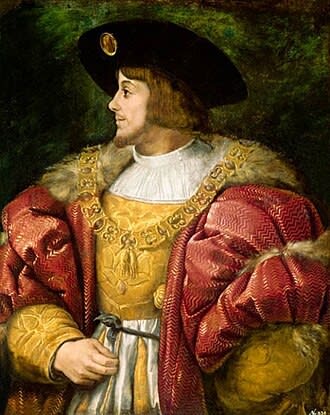
A genuine political earthquake followed the death of Ferdinand’s brother-in-law, Louis II, King of Hungary and Bohemia, at the Battle of Mohács in 1526.
As early as the First Congress of Vienna in 1515, an agreement had been reached under which Ferdinand married Anna Jagiellon, daughter of King Vladislaus II, on July 22.
Relying on this dynastic union, Ferdinand immediately asserted his claims to the now-vacant thrones of Bohemia and Hungary after Louis’s death.
Both kingdoms, however, were traditionally elective monarchies.
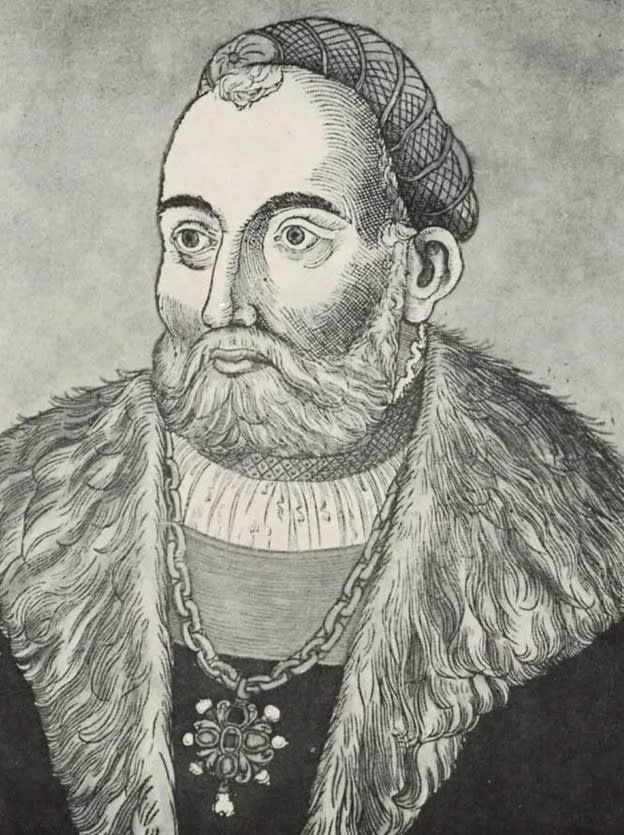
His success was spectacular, although not complete.
On October 24, 1526, the Bohemian Diet, strongly influenced by Chancellor Adam of Hradec, elected Ferdinand as its monarch.
In return, the new king was required to confirm the traditional privileges of the estates and move the Habsburg court to Prague.
The Diet, however, categorically refused to recognize him as hereditary ruler of Bohemia.
The situation in Hungary proved far more dramatic.
There Ferdinand was challenged by John Zápolya, Voivode of Transylvania.
The Hungarian nobility split into two camps.
On November 10, 1526, at Székesfehérvár, a Diet composed largely of untitled lesser nobles proclaimed Zápolya king.
In response, on December 17 at Pressburg, modern Bratislava, the high aristocracy and Catholic clergy elected Ferdinand King of Hungary, Dalmatia, Croatia, and Slavonia.
Even Miklós Oláh, former secretary of the deceased Louis II, sided with Ferdinand despite continuing to serve Ferdinand’s sister, the widowed Queen Mary of Hungary.
On November 3, 1527, Ferdinand was solemnly crowned at the Basilica of Székesfehérvár.
At the Croatian Parliament of Cetin in 1527, the Croatian nobility unanimously accepted his authority and recognized the hereditary rights of his descendants in exchange for Ferdinand’s oath to respect the historic rights and liberties of the Croats and defend their lands against Ottoman invasion.
As historian Brendan Simms has observed, it was Ferdinand rather than the far more powerful Charles V who obtained the Hungarian and Bohemian crowns largely because the emperor was already preoccupied with the Ottoman Empire and with wars in France, Germany, Italy, and the Mediterranean.
The defense of Central Europe therefore fell primarily upon Ferdinand.
In this way, he preserved Bohemia and Silesia from the collapse of the Hungarian kingdom and strengthened his northeastern flank.
At the Landtag in Linz in 1530, Ferdinand directly told the Austrian nobility:
“The Turks cannot be resisted unless the Kingdom of Hungary is in the hands of the Archduke of Austria or another German prince.”
The connection of Croatia and Hungary to the Habsburg monarchy was therefore contractual in nature and depended on the new ruler’s ability to resist Muslim expansion.
In recognition of Ferdinand’s growing importance, the German princes elected him King of the Romans in 1531, officially making him heir to the imperial throne.
The struggle for control in the east required enormous financial resources.
The Austrian lands were suffering from a severe economic crisis.
Ferdinand’s annual revenues were sufficient to pay only 5,000 mercenaries for two months.
As a result, he was constantly forced to borrow money from Charles V and from the powerful Fugger banking house.
To finance the wars, he introduced the burdensome Türkensteuer, or “Turkish tax.”
Nevertheless, the military system began to function.
In September 1527, Ferdinand defeated John Zápolya at Tarcal, and in March 1528 he defeated him again at the Battle of Szina.
Forced into exile, Zápolya made a fateful decision: he appealed for help to Sultan Suleiman the Magnificent.
This triggered the enormous Ottoman offensive of 1529, culminating in the famous First Siege of Vienna.
While Ottoman forces assaulted the capital, Ferdinand was forced to seek refuge in Bohemia.
Fortunately for Europe, Vienna held.
A new Ottoman invasion in 1532 also failed, largely because of the heroic defense of Güns.
Realizing that neither side could achieve a decisive victory, Ferdinand signed the Treaty of Constantinople in 1533.
Hungary was effectively divided: the western part passed to the Habsburgs, while the eastern territories remained under Zápolya as an Ottoman-dependent state.
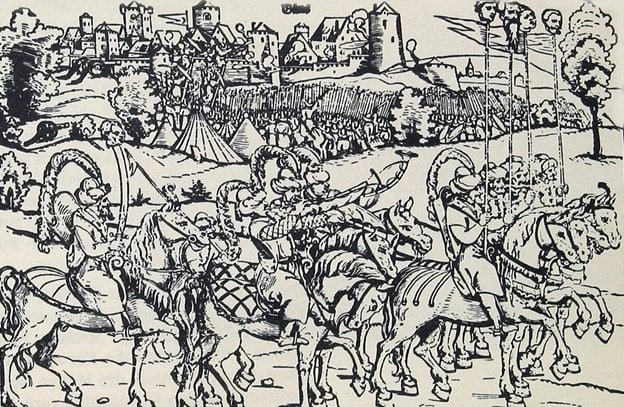
The Ottoman threat also dictated Ferdinand’s policies within the Empire.
In 1531, the German Protestant princes formed the Schmalkaldic League.
At the Diet of Regensburg in April 1532, Ferdinand initially resisted religious concessions while hoping for a favorable response from Suleiman.
As the Ottoman army advanced, however, he was forced to change his position.
On July 23, 1532, the Religious Peace of Nuremberg was concluded.
It temporarily guaranteed freedom to Protestant territories until the convocation of a general Church council and suspended legal actions against them in the Imperial Chamber Court.
The complicated diplomatic struggle over Hungary continued.
In 1538, the childless Zápolya signed the Treaty of Nagyvárad, recognizing Ferdinand as his successor.
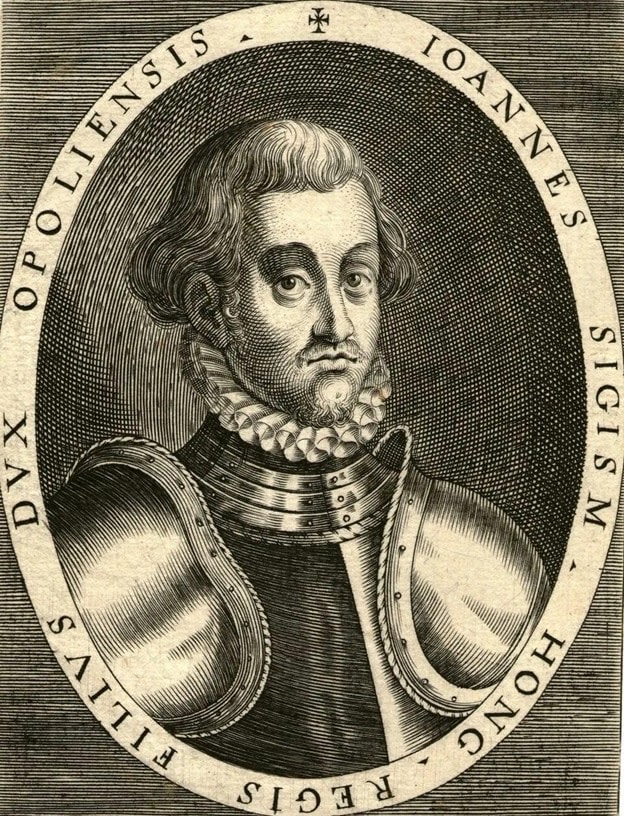
Yet shortly before Zápolya’s death in 1540, a son was born to him — John Sigismund Zápolya.
The Diet immediately proclaimed the infant king, while the regent George Martinuzzi, Bishop of Várad, appealed to the Ottomans.
In 1541, Suleiman personally led a campaign, occupied Buda, drove Ferdinand out of central Hungary, and forced him to pay tribute for his western territories.
For a time, John Sigismund was even supported by his Polish grandfather, King Sigismund I the Old.
However, the political marriage between Ferdinand’s daughter Elizabeth of Austria and the Polish king’s son, Sigismund II Augustus, together with the treaty of 1543, helped secure Polish neutrality.

In 1549, the intrigues of the young king’s mother, Isabella Jagiellon, together with the continuing Ottoman threat, persuaded the regent Martinuzzi to switch his allegiance to Ferdinand.
Under the Treaty of Weissenburg of 1551, Isabella surrendered the Holy Crown of Hungary and the royal regalia, while John Sigismund became a dependent Prince of Transylvania.
Martinuzzi, however, continued to pursue a double game with the Ottomans.
Suspecting treason, the imperial general Giovanni Battista Castaldo had the regent assassinated with Ferdinand’s authorization.
Because Martinuzzi was a cardinal, an international scandal followed.
Pope Julius III excommunicated both Ferdinand and Castaldo.
Ferdinand responded by sending an enormous dossier containing eighty-seven charges and testimony from 116 witnesses.
In 1555, the pope lifted the excommunication.
Despite the support of battle-hardened Spanish tercios, which had operated in Hungary since 1548 and were regularly sent by Charles V to assist his brother between 1527 and 1553, Ottoman forces captured additional territories in central Hungary in 1552.
The campaign included the famous siege of Eger.
Diplomatic missions led by Ogier Ghiselin de Busbecq to Constantinople failed in 1554, and only his second mission in 1556 produced a fragile settlement.
Meanwhile, the Diet once again recognized John Sigismund as ruler in the east.
Despite the loss of approximately seventy percent of its territory, devastated Royal Hungary paradoxically remained the most profitable Habsburg possession, generating more revenue than Austria or Bohemia.

Meanwhile, Ferdinand pursued a much harsher policy in Bohemia.
During the 1520s, he tolerated a complicated coexistence among Catholics, Lutherans, and Hussite Utraquists.
By the 1540s, however, tensions had grown considerably.
In 1547, when Protestant princes in Germany entered open war against Charles V, the Bohemian estates refused to support Ferdinand’s and his son Maximilian’s military campaign.
The monarch responded by suppressing the Bohemian Estates Revolt of 1547.
Ferdinand ruthlessly abolished municipal privileges, confiscated the property of rebels, established a new bureaucratic network to control the towns, and intensified the Catholic Counter-Reformation.
He invited the Jesuits to Vienna in 1551 and to Prague in 1556, and in 1561 restored the Archbishopric of Prague.
Victory over the opposition, the defeat of Margrave Albert Alcibiades, and Ferdinand’s reputation as a pragmatic ruler who had become thoroughly integrated into German political culture made him an ideal figure for resolving the religious crisis within the Empire.
In 1555, Charles V summoned the Diet of Augsburg but, exhausted by politics, delegated to Ferdinand the authority to “act and settle” the disputes.
On September 25, 1555, after long negotiations and threats, Ferdinand secured the historic Peace of Augsburg.
The agreement rested upon three principal concepts.
The first was the famous Cuius regio, eius religio — “whose realm, his religion” — granting territorial princes the right to determine the religion of their subjects, accompanied by the relatively innovative right of emigration for those who refused to conform.
The second was the Reservatum ecclesiasticum, or Ecclesiastical Reservation, which prevented ecclesiastical rulers who converted to Protestantism from secularizing Church lands, although this provision remained poorly defined.
The third, personally added by Ferdinand at the final stage, was the Declaratio Ferdinandei.
It protected mixed-confession cities and certain rights of the knightly estates in territories where the Reformed faith had existed since the 1520s.
The settlement brought Germany a long period of relative peace, although its limitations were already obvious.
It ignored Calvinists, Anabaptists — including followers of Menno Simons — and Zwinglians.
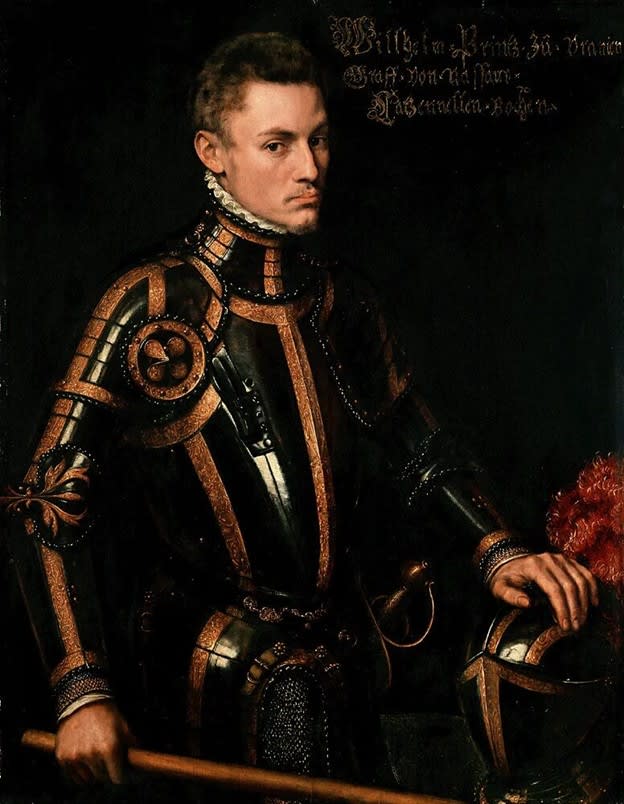
In 1556, the exhausted Charles V, leaning on the shoulder of the young William the Silent during his abdication ceremony, divided his global empire.
Philip II, Spanish in outlook and political culture, received Spain, Naples, Sicily, Milan, the Netherlands, Franche-Comté, and the American possessions.
Ferdinand formally assumed the title of “Emperor-Elect” and became the independent monarch of Austria.
The consequences of this division were enormous.
Philip’s uncompromising Catholic policies contributed to the Dutch Revolt and the creation of the military route later known as the “Spanish Road.”
The French Crown, fearing Habsburg encirclement, increasingly sought alliances with German Protestants.
Ferdinand, meanwhile, was regarded by some as a pragmatic Catholic and by others as a secret sympathizer of reform.
There are even reports that he refused the last rites.
He was formally recognized by the Imperial Diet only on May 3, 1558, and by the pope only in 1559 following the Peace of Cateau-Cambrésis.
Ferdinand’s diplomatic flexibility and his ability to speak several languages, frequently noted by Venetian ambassadors, later helped bring the Council of Trent to a conclusion through compromise with the papal legate Cardinal Morone.
As an administrator, Ferdinand proved to be a genuine innovator.
In 1556, he established the famous Hofkriegsrat, or Aulic War Council, to coordinate the armed forces across all Habsburg territories.
Together with the Imperial Court Chancellery, the Reichshofkanzlei, the financial Hofkammer, and the Reichshofrat, or Aulic Council, this administrative system survived into the eighteenth century.
In 1559, the imperial and Austrian chanceries were merged.
Ferdinand also brought an end to the traditional practice of the “itinerant monarchy.”
As early as 1533, he made Vienna his permanent residence.
He strengthened the city’s defenses following the Ottoman siege and, by 1558, transformed it into a brilliant imperial capital.
By issuing the Hofstaatsordnung in 1527, Ferdinand established centralized administrative bodies in Prague, Pressburg, and Breslau.
The Empire-wide Türkenhilfe, or “Turkish Aid” tax, introduced in 1542, helped finance defense.
Hungary, however, was formally outside the Holy Roman Empire and therefore received imperial assistance only when Vienna itself faced a direct threat.
Following the loss of Székesfehérvár, coronations and Diets were transferred to Pressburg from 1536 onward.
Although Ferdinand failed to merge the Austrian, Bohemian, and Hungarian diets into a single political institution, he laid the foundations of the personal union that would eventually, in 1723, lead to recognition of Habsburg hereditary rights even through the female line.
By skillfully managing Bohemia’s constitutional status, Ferdinand shielded it from imperial taxation while preserving the rights attached to its prince-electoral status.
At the same time, he enhanced the position of Silesia, Moravia, and the two Lusatias.
Career structures, however, remained divided along national lines.
It was extremely difficult for a Czech to serve in Austria or for an Austrian to obtain office in Bohemia, with exceptions such as Ferdinand’s Austrian favorite Florian Griespek.
During the final years of his life, Ferdinand secured the succession.
He arranged the election of his son Maximilian II as King of the Romans in 1562 and as heir to the Bohemian crown.
In 1563, Maximilian was also recognized as successor in Hungary.
Ferdinand I died in Vienna in 1564.
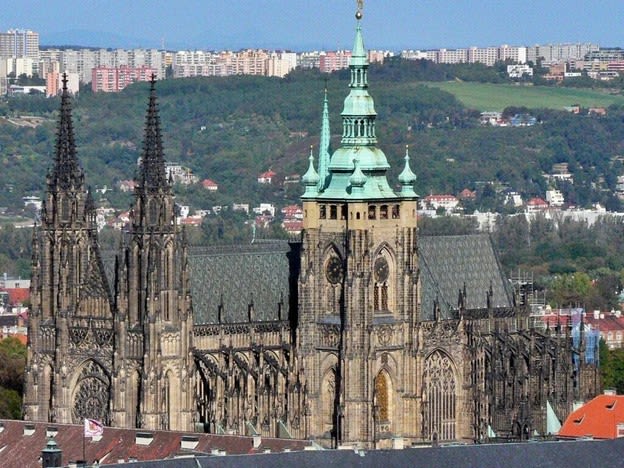
He was laid to rest in St. Vitus Cathedral at Prague Castle.