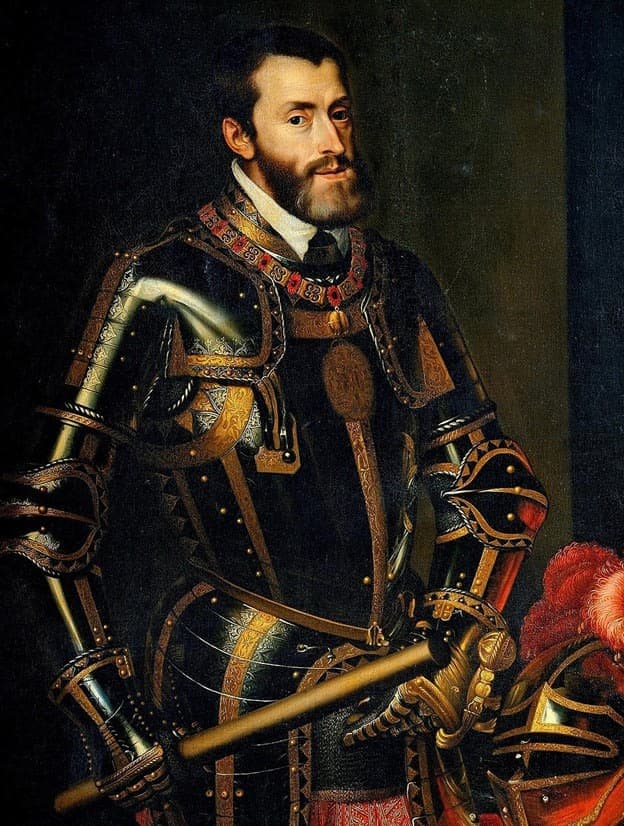

The story of one of the greatest monarchs in European history began on February 24, 1500, in the Flemish city of Ghent, behind the gates of the Prinsenhof — the “Court of the Princes.”
In the midst of a court ball, Joanna of Trastámara, daughter of the famous Catholic Monarchs of Spain, Ferdinand II of Aragon and Isabella I of Castile, suddenly felt the onset of labor.
A boy was born who was destined to unite almost half the known world under his authority.
His father was Philip the Handsome, eldest son of Holy Roman Emperor Maximilian I and Mary of Burgundy.
The political union between Philip and Joanna had been designed by Maximilian and Ferdinand as a powerful Austro-Spanish alliance against France amid the raging Italian Wars, but fate had other plans.
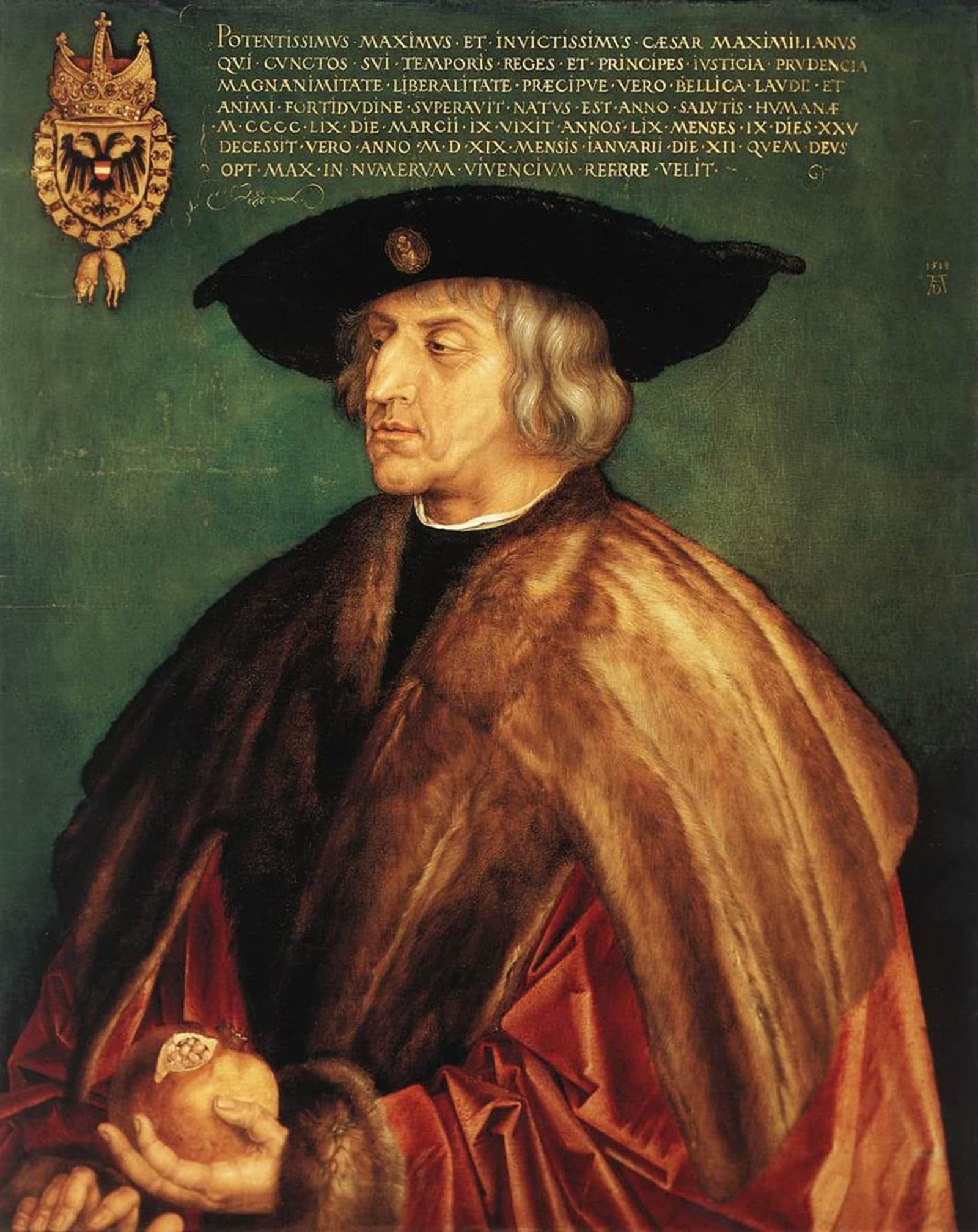
For generations, a saying popularized by Erasmus of Rotterdam circulated throughout Europe:
“Let others wage wars; you, happy Austria, marry; for the kingdoms that Mars gives to others, Venus gives to you.”
It appeared that the Habsburg Empire was expanding peacefully through dynastic unions.
Yet Charles’s paternal grandfather, Maximilian I, had pursued an extraordinarily risky policy of maximum territorial expansion from the moment he was elected King of the Romans in 1486, relying heavily upon the resources of Austria.
During forty years of rule, he passed through twenty-seven wars.
His strategy formed an extraordinarily complex web of alliances, threats, dynastic marriages, and armed conflicts, which ultimately forced Bohemia, Hungary, and Poland to accept the expansion of Habsburg influence.
The marriage contract between Philip and Joanna was signed in 1495, and the lavish wedding took place the following year.
After the death of Mary of Burgundy in 1482, Philip already bore the title Duke of Burgundy, although the duchy itself had long since been seized by the French Crown.
As an honorary archduke, he was also heir to Austria.
Joanna, by contrast, initially stood only third in line to the Spanish thrones, behind her elder brother John, Prince of Asturias, and her sister Isabella of Aragon.
By 1498, however, both had died.
The Catholic Monarchs, determined to keep the Iberian Peninsula within their own dynastic line, declared their Portuguese grandson Miguel da Paz the heir.
Only when he too died as an infant in July 1500 did the potential inheritance of the newborn Charles expand dramatically.
It now included Castile, Aragon, and the still largely unexplored overseas colonies in the Americas.
The fact that an anti-French marriage alliance would ultimately transfer the Spanish crowns to the male line of the Habsburgs came as a complete surprise to Europe.
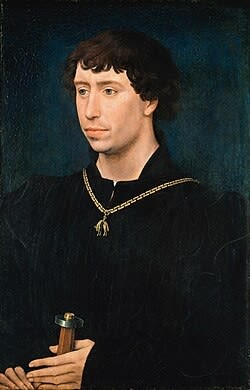
The boy was named after his great-grandfather, Charles the Bold of Burgundy, who had dreamed of creating a state stretching from the North Sea to Savoy.
Court poets enthusiastically wrote that after the infant’s birth, the inhabitants of Ghent shouted “Austria and Burgundy!” in the streets for three hours.
“Charles of Ghent,” as he was then called, was baptized in the Church of St. John by the Bishop of Tournai.
His godfathers were the Burgundian aristocrats Charles I de Croÿ and John III of Glymes, while Margaret of York and his aunt Margaret of Austria served as godmothers.
The infant was symbolically presented with a sword and helmet, representing war and peace in the tradition of Burgundian chivalry.

The death of his father in 1506 and his mother’s rapid descent into severe mental illness, after which she was confined in the palace at Tordesillas, effectively left the boy an orphan while his mother was still alive.
His parents had left him in Mechelen as early as 1501 when they departed to defend their claims in Spain, and Charles did not see his father again until 1503.
In 1504, after the birth of his brother Ferdinand I, his mother returned to the Netherlands, but dynastic politics soon separated them permanently.
His maternal grandfather, Ferdinand II of Aragon, took control of Spain, officially claiming to act in defense of his grandson, although in reality he attempted to push Charles away from the succession.
Only the failure of Ferdinand’s second marriage to Germaine de Foix to produce a surviving heir preserved Charles’s rights to the Iberian crowns.
Thus, the young prince became Duke of Burgundy, recognized Prince of Asturias, and heir to both Castile and Austria.
Charles’s Burgundian inheritance resembled a patchwork quilt.
It consisted of the Habsburg Netherlands, located across the territories of modern Belgium, the Netherlands, and Luxembourg, together with Franche-Comté and the County of Charolais.
His principal residence was the Coudenberg Palace in Brussels.
Charles spent his childhood in Mechelen with his sisters Mary, Eleanor, and Isabella under the guardianship of his wise aunt Margaret of Austria, who became his principal maternal figure.
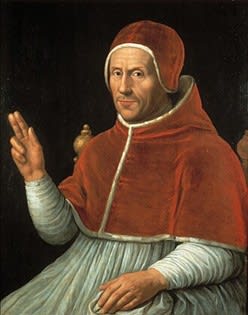
Together with his tutors Guillaume de Croÿ, his future chief minister who gave him a rigorous knightly education, and Adrian of Utrecht, the future Pope Adrian VI, she played a central role in shaping his mind.
Charles was raised according to the ideals of Christian unity, becoming a knight from childhood and later Grand Master of the Order of the Golden Fleece.

The Netherlands were extraordinarily wealthy, and Charles remained deeply attached to his homeland throughout his life.
While he was growing up, the regent Margaret successfully struggled against France to eliminate the obligation of paying homage to the French king for Flanders, Artois, and Charolais, with France finally renouncing those claims in 1528.
After assuming power personally, Charles suppressed the Frisian peasant uprising of 1515–1523 led by Pier Gerlofs Donia and Wijerd Jelckama, executing its final leaders.
He expanded his territories by incorporating Tournai, Artois, Utrecht, Groningen, and Guelders.
Victory in the Guelders Wars allowed him to complete the consolidation of the Seventeen Provinces.
In 1549, he formalized this arrangement through the Pragmatic Sanction, declaring the Netherlands a single and indivisible Habsburg inheritance.
Yet even though the region remained generally loyal to him, Charles could be ruthless.
When his native Ghent rebelled over taxation in 1539, Charles, supported by the troops of the Duke of Alba, punished and humiliated the city severely.
The Spanish inheritance was not easily secured.
In 1506 and 1510, the Cortes of Valladolid and Madrid recognized Charles as Prince of Asturias.
After the death of his grandfather Ferdinand II on January 23, 1516, enormous territories — Aragon, Majorca, Catalonia, Valencia, Naples, Sicily, and Sardinia — formally passed to Charles’s imprisoned mother Joanna.
Charles initially became merely regent, but his ambitious Flemish entourage, supported by Maximilian I and Pope Leo X, demanded that he assume the crown.
On March 14, 1516, Charles I was proclaimed King of Castile and Aragon as co-ruler with his mother jure matris.
Cardinal Cisneros, regent of Castile, recognized this act, but died in the autumn of 1517 while traveling to meet the newly arrived Charles, never seeing him.
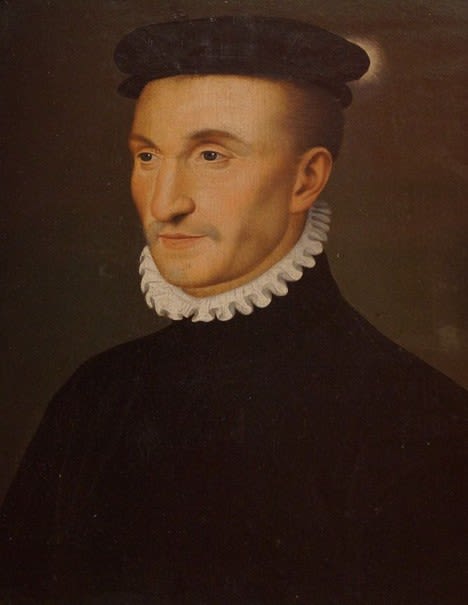
The beginning of Charles’s reign was difficult.
At the Cortes of Valladolid in 1518, the representatives imposed strict conditions.
The king was required to learn Castilian, which Charles later mastered exceptionally well, to refrain from appointing foreigners to office, to stop excessive exports of gold, and to respect his mother’s rights.
After overcoming resistance in Aragon and Catalonia, Charles faced the obstinacy of Navarre, conquered in 1512, whose elites demanded that he become Charles IV of Navarre.
The emperor ignored the request.
Many Spaniards regarded him as a foreign Flemish ruler.
Heavy taxation, the dominance of foreigners in government, and neglect of the local aristocracy ignited Spain through the Revolt of the Comuneros in Castile and the Revolt of the Brotherhoods in Valencia during the 1520s.
The Comunero rebels even released Joanna at Tordesillas, hoping to establish her as sole ruler, but she refused to act against her son.
After suppressing the rebellion, Charles became more cautious.
He increasingly relied upon Spaniards, spent considerable time at his Castilian residences in Toledo and Granada, while Joanna remained confined until her death.
At the same time, a war continued against Henry II of Navarre over Navarrese independence.
The conflict subsided only in 1524 after the capitulation of Hondarribia, while the last frontier clashes ended in 1528.

Spain, with its formidable tercios and silver from the New World, became the military and financial heart of Charles’s empire.
His personal motto, Plus Ultra — “Further Beyond” — became permanently incorporated into the coat of arms of Spain.
Yet the Spanish elite complained that American silver slipped through their fingers, being consumed by wars against Protestants in Germany while the Spanish coasts suffered from corsair attacks.
This burden would later contribute to the financial crises of Philip II’s monarchy.
After the death of Maximilian I in 1519, a struggle began for the crown of the Holy Roman Empire.
Charles I of Austria competed with Francis I of France, Henry VIII of England, and Frederick III of Saxony.
Thanks to enormous loans from banking houses, and especially after Frederick of Saxony withdrew his candidacy, acknowledging that the Empire required a powerful German ruler to defend it against the Ottomans, Charles was elected emperor on June 28, 1519.
The mysterious Habsburg motto A.E.I.O.U. — Austriae Est Imperare Orbi Universo, “Austria is destined to rule the whole world” — seemed to be taking tangible form.
On October 23, 1520, Charles was crowned in Germany.
On February 24, 1530, Pope Clement VII placed the imperial crown upon his head in Bologna.
Charles V thus became the last Holy Roman Emperor to be crowned by a pope.
Charles spent a considerable portion of his life at war with France.
During the first of his Italian conflicts with France beginning in 1521, imperial forces allied with Henry VIII and Pope Leo X expelled the French from Milan.
On Charles’s twenty-fifth birthday, February 24, 1525, commander Charles de Lannoy decisively defeated the French army at the Battle of Pavia and captured King Francis I himself.
Under the Treaty of Madrid of 1526, the prisoner promised to surrender Burgundy and renounce his claims to Navarre.
Once released, however, Francis immediately repudiated his oath with the support of the Parlement of Paris and joined the League of Cognac.
The vengeance of the imperial Landsknecht mercenaries was terrifying.
In 1527, they sacked Rome in the famous Sacco di Roma, making Pope Clement VII their prisoner.
This, incidentally, prevented the pope from annulling the marriage of Henry VIII and Charles’s aunt Catherine of Aragon, helping to catalyze the English Reformation.
The conflict with France temporarily ended in 1529 with the so-called Ladies’ Peace of Cambrai.
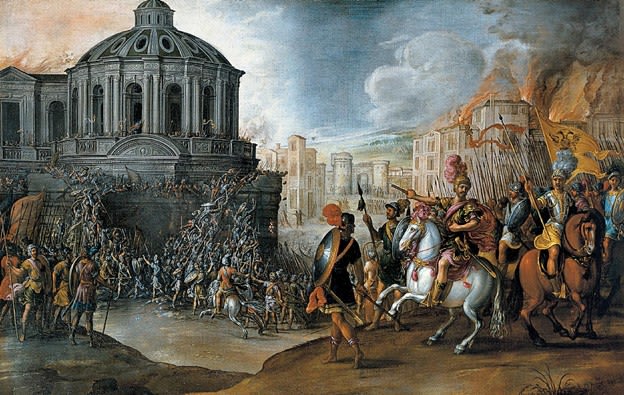

New wars followed one another.
The war of 1536–1538, during which Charles personally captured Aix-en-Provence while Francis responded by taking Turin, ended with the fragile Truce of Nice based on uti possidetis.
During the war of 1542–1544, Francis I took the unprecedented step of allying with Ottoman Sultan Suleiman the Magnificent, whose fleet devastated Nice.
Charles’s final war, beginning in 1551, was fought not against Francis but against his son, Henry II of France.
In the east and south, Europe trembled beneath Ottoman blows.
The catastrophe suffered by Hungary at Mohács in 1526 “sent a wave of terror across Europe.”
Charles managed to halt the Ottomans at Vienna in 1529, but central and southern Hungary had fallen under Ottoman rule by 1541.
The emperor searched for allies even farther east, attempting to establish a Habsburg-Persian alliance with the Safavids, whose wars against the Ottomans between 1532 and 1555 indeed diverted some of the sultan’s forces.

In the Mediterranean, Charles fought an exhausting struggle against the Barbary corsairs of Hayreddin Barbarossa.
In 1535, a large expedition personally led by Charles together with Andrea Doria, Álvaro de Bazán the Elder, and García de Toledo recaptured Tunis, although Barbarossa escaped.
Victories, however, alternated with disasters.
The Holy League suffered defeat at Preveza in 1538, and Charles’s expedition against Algiers in 1541 ended catastrophically.
Because of terrible weather, he lost approximately 150 ships and thousands of men, while Ottoman chronicles claimed that 12,000 had been killed by Berbers.
Exhausted by warfare, Charles concluded a humiliating truce in 1547.
In 1550, he organized another campaign against Mahdia, which soon had to be destroyed and abandoned.
The Protestant Reformation delivered an equally serious blow.
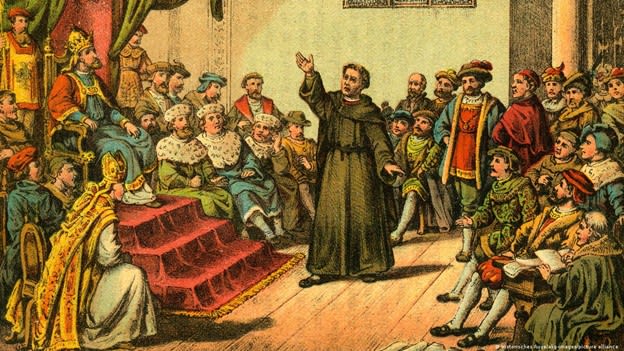
At the Diet of Worms in 1521, Charles listened to Martin Luther and, according to tradition, declared:
“This monk will never make me a heretic.”
After outlawing Luther through the Edict of Worms, Charles nevertheless kept his word and allowed him to leave safely.
Frederick III of Saxony sheltered the reformer at Wartburg Castle.
While Germany was shaken by the Knights’ Revolt of 1522–1523 and Thomas Müntzer’s Peasants’ War of 1524–1525, Charles attempted to find a compromise.
At the Diet of Augsburg in 1530, Philip Melanchthon presented the Confessio Augustana, but Charles rejected it.

The Protestants created the Schmalkaldic League.
Charles was forced to maneuver politically, concluding the Peace of Nuremberg in 1532 and organizing religious discussions at Regensburg in 1541.
When the Council of Trent opened in 1545, marking the beginning of the Counter-Reformation, the alliance of Protestant princes refused to recognize it.
Charles answered with force.
At the Battle of Mühlberg in 1547, he defeated his enemies and captured Elector John Frederick and Philip of Hesse.
He then issued the Augsburg Interim in 1548.
Yet fortune turned against him.
In 1552, his former ally Maurice of Saxony defected to the Protestant side and nearly captured the emperor, who was suffering severely from gout, at Innsbruck.
Charles escaped on a litter all the way to Villach.
Ultimately, in 1555, his brother Ferdinand signed the Peace of Augsburg, formally institutionalizing the religious division of Germany.

The secret of Charles’s power lay in men and resources.
His armies relied upon the legendary German Landsknechts associated with Georg von Frundsberg and the Spanish tercios, developed under Charles in 1536 as a continuation of the military reforms of Gonzalo Fernández de Córdoba.
The French reportedly said in fear:
“A Landsknecht expelled from heaven would not be admitted into hell, because even the Devil would be afraid of him.”
The army was equipped by the finest armorers and weaponsmiths of Augsburg, including the Helmschmids, as well as Milan’s Negroli family, and workshops in Nuremberg and Brescia.

Administering Charles’s empire was extraordinarily complex.
He introduced a remarkable communications revolution.
The Taxis family — Franz von Taxis and, from 1520 onward, Giovanni Battista de Tassis — covered Europe with a network of express postal routes.
Intelligence operations were led by Don Alfonso Granai Castriota of Naples.
The financial system depended heavily on credit.
Revenue from Castile, Naples, and the Netherlands increased from 2.8 million to 4.8 million ducats, while his brother Ferdinand possessed revenues of approximately 1.7–1.9 million.
Yet even these enormous sums were disastrously insufficient.
The Ottomans reportedly received approximately 10 million without comparable deficits.
Charles borrowed around 28 million ducats, becoming deeply indebted to banking houses such as the Fuggers, to whom he owed 5.5 million, and the Welsers, who provided around 4.2 million.
He even granted the Welsers a concession over part of Venezuela between 1528 and 1546, known as Klein-Venedig, or “Little Venice.”
The New World permanently transformed the character of Charles’s monarchy.
During his reign, the Aztec and Inca empires were conquered, while Magellan’s expedition completed its circumnavigation in 1522.
To administer the overseas territories, Charles established the Council of the Indies in 1524.
He later organized the territories into viceroyalties.
New Spain, with its capital in Mexico City, was created in 1535 under Viceroy Antonio de Mendoza.
The Viceroyalty of Peru, centered in Lima, followed in 1544.
Charles’s policies in the Americas were complex.
He recognized certain rights of Indigenous allies, including the Tlaxcalans and their leader Maxixcatzin in 1534, while simultaneously confronting the greed of the conquistadors.
Deeply affected by the reports of the Dominican friar Bartolomé de las Casas, Charles issued the New Laws in 1542, restricting the authority of the encomenderos.
In Peru, the reforms provoked the rebellion of Gonzalo Pizarro and the murder of Viceroy Blasco Núñez Vela.
The Crown’s plenipotentiary Pedro de la Gasca subsequently crushed the uprising.
The moral crisis of the Spanish Empire contributed to the unique Valladolid Debate of 1550.
There, Bartolomé de las Casas, Juan Ginés de Sepúlveda, Domingo de Soto, Bartolomé Carranza, Melchor Cano, and representatives of the intellectual school of Francisco de Vitoria debated the rights of Indigenous peoples.
Charles even suspended further conquests between 1549 and 1556.
Although Spain did not withdraw from the Americas, Indigenous peoples were recognized as human beings possessing rights, and their enslavement was prohibited.
Yet labor shortages were increasingly compensated through African slavery.
As early as August 28, 1518, Charles had issued a charter authorizing the direct slave trade from Africa.

Culturally, the age of Charles V was a period of remarkable flourishing.
He patronized the Italian scholar Pietro Martire d’Anghiera, author of the 1530 work De Orbe Novo on the New World, Abbot of Jamaica and Count Palatine.
He also supported the Spanish humanist Alfonso de Valdés and poets Garcilaso de la Vega and Juan Boscán Almogáver.
Titian immortalized the emperor in famous paintings, including the Equestrian Portrait of Charles V.
In Granada, architect Pedro Machuca constructed for him an extraordinary Renaissance-Mannerist palace beside the Alhambra.
Charles’s private life was marked by both deep affection and severe physical suffering.
His appearance was characterized by pronounced mandibular prognathism, the famous “Habsburg jaw,” associated with generations of dynastic intermarriage.
He suffered from epileptic seizures and severe gout, possibly aggravated by his heavy consumption of red meat, which eventually left him physically disabled.
At the same time, he was multilingual.
French was his native language, but he also learned Dutch, Castilian, German, Latin, Portuguese, and some Basque.
Legend attributes to him the phrase:
“With God I speak Spanish or Latin, with women Italian, with men French, and with my horse German.”
There is, however, no reliable evidence that he actually said it.
Charles had five siblings whose marriages formed a political network across Europe: Eleanor, Isabella, Ferdinand I, Mary, and Catherine.
Charles himself remained unmarried for a long time.
Engagements to Mary Tudor in 1507 and to the young future Mary I of England in 1521 were both broken.
Finally, on March 10, 1526, at the Alcázar of Seville, the twenty-six-year-old emperor met his cousin Isabella of Portugal.
She was the sister of John III of Portugal, who had married Charles’s sister Catherine.
What began as a political union accompanied by an enormous dowry of 900,000 doblas reportedly became love at first sight.
The couple married that same night in the Hall of Ambassadors and spent their honeymoon at the Alhambra.
Isabella became an exceptionally capable regent during her husband’s prolonged absences.
Their marriage produced seven children.
Philip II, Mary, and Joanna survived to adulthood, while Ferdinand, John, and two stillborn sons died in infancy.
In 1539, while pregnant with their seventh child, the thirty-five-year-old Isabella died of fever and infection.
Charles was devastated.
He withdrew temporarily to a monastery, dressed permanently in black afterward, commissioned Titian to produce a series of posthumous portraits of her, including La Gloria, and instructed Thomas Crecquillon to compose the mass Missa Mort m’a privé.
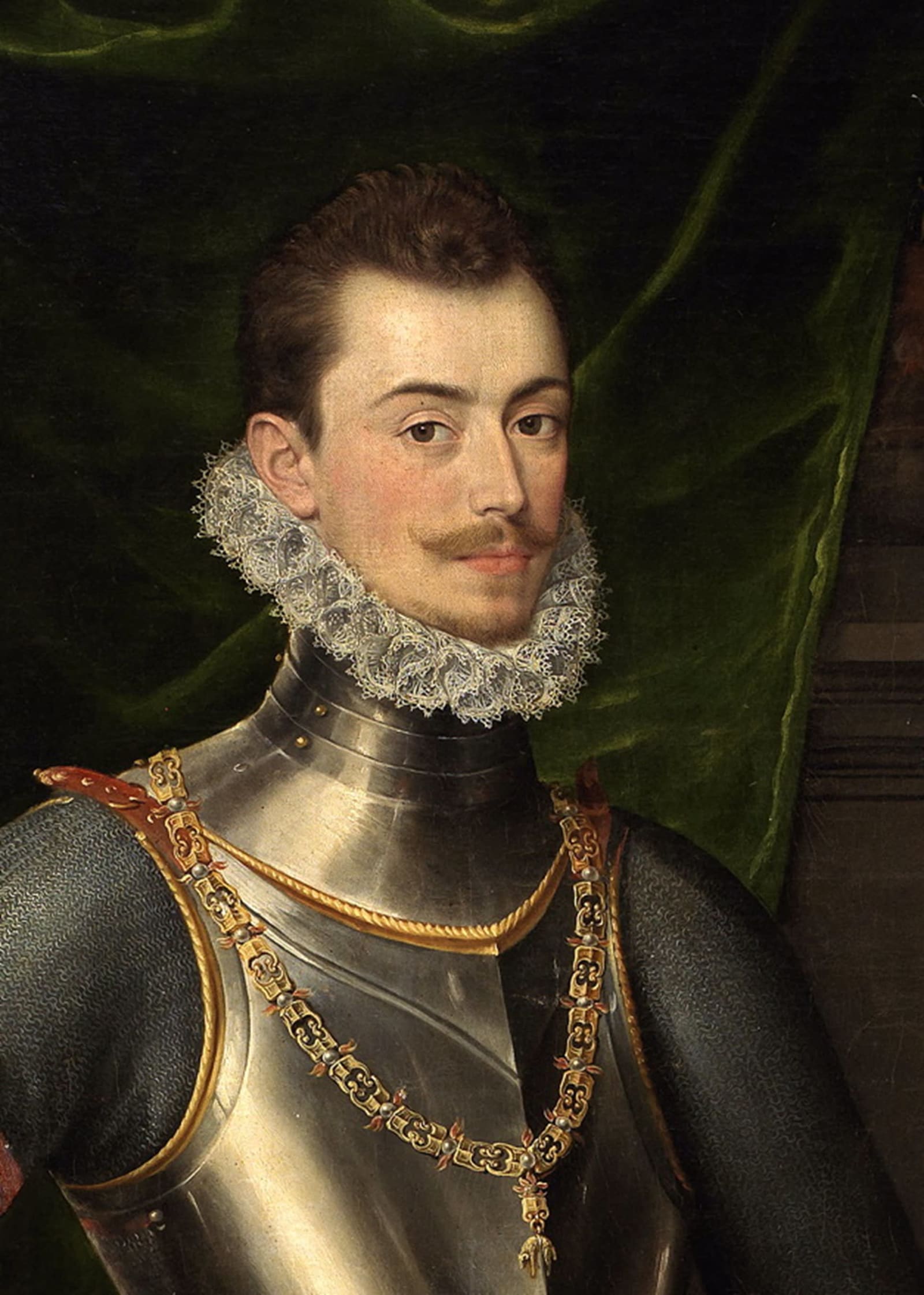
In addition to his legitimate heirs, history has preserved the names of several alleged or acknowledged illegitimate children of the emperor.
They included Margaret of Parma, daughter of Johanna van der Gheynst; Tadea, born to Orsolina della Penna; Joanna; Isabella of Castile, whose alleged connection with Germaine de Foix is disputed; the cartographer Cornelis de Hooghe; and the famous John of Austria.
John, the son of the young Barbara Blomberg, would later become the hero of Lepanto.
Charles acknowledged him only in a secret testament.

The burden of power eventually broke the emperor.
During his lifetime, Charles spent an enormous amount of time on horseback and aboard ships.
He made ten journeys to the Netherlands, nine to Germany, seven to Spain, seven to Italy, four to France, and two each to England and Africa.
Between 1554 and 1556, the Coudenberg Palace in Brussels became the setting for the great drama of his abdication.
Charles first transferred Milan, Naples, and Sicily to Philip II, with the investiture formally confirmed by Pope Julius III.
On October 25, 1555, leaning on the shoulder of William of Orange, the weeping Charles renounced his authority as ruler of the Netherlands.
Addressing the States General, he confessed:
“I must admit that I have often been mistaken — whether because of the inexperience of youth or the pride of mature years... My life has been one long journey.”
In 1556, Spain and the Americas passed to Philip, while the Holy Roman Empire went to Charles’s brother Ferdinand I.
In the autumn of 1556, accompanied by his sisters Mary of Hungary and Eleanor of Austria, Charles departed for Spain and withdrew to the secluded Monastery of Yuste in Extremadura.
Surrounded by paintings by Titian and clocks — symbols of the endless struggle against time — he continued following political affairs until malaria ended his life.
The emperor, whose coat of arms displayed the Burgundian Cross, the imperial eagle, the crowns of Castile and Aragon, the Golden Fleece, and the Pillars of Hercules, died on September 21, 1558, at the age of fifty-eight.
In his hands he held the cross that had belonged to his deceased wife Isabella.
He left behind enormous debts, but ordered 30,000 ducats to be distributed to the poor and used for the ransom of captives, while commissioning 30,000 masses for his soul.
In his will, he asked to be buried beside Isabella:
“Half my body beneath the altar and half beneath the feet of the priest.”
Philip II fulfilled his father’s wish by constructing the magnificent El Escorial.
In 1574, the remains of Charles and Isabella were transferred there.
Later, in 1654 under Philip IV, they were finally placed in the Royal Pantheon.



