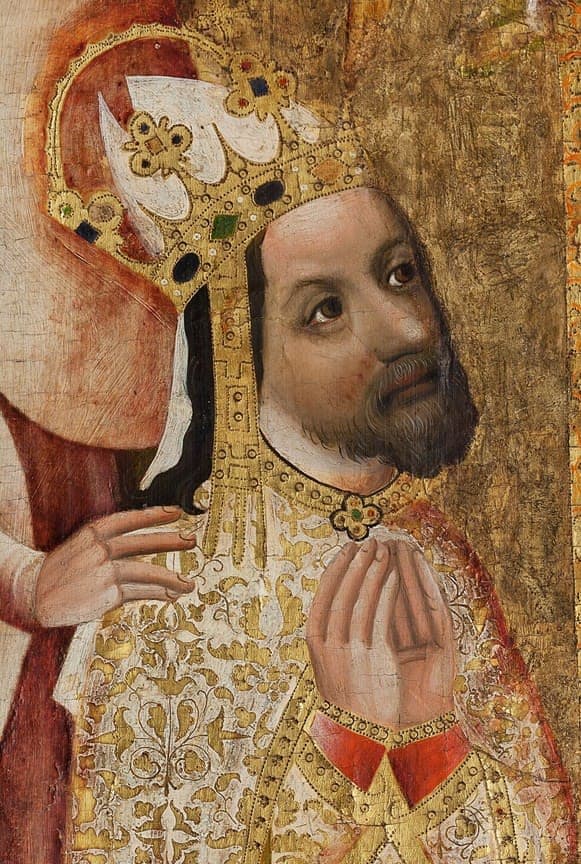

Charles IV, who went down in history as one of the most outstanding monarchs of the Middle Ages and the architect of Bohemia’s “Golden Age,” was born in Prague. He was the son of John of Luxembourg, a representative of the noble House of Luxembourg, and Queen Elizabeth of Bohemia, whose ancestry went back to the ancient Czech Přemyslid dynasty (her father was King Wenceslaus II of Bohemia).
At his confirmation, the future emperor took the name Charles as a sign of deep respect for his great-uncle, King Charles IV of France. The young prince spent seven years at the brilliant French royal court in Paris, where he received an excellent education by the standards of his time. As a result, he became a man of encyclopedic knowledge who was fluent in five languages: Latin, Czech, German, French, and Italian.
Charles gained his first military experience as early as 1331, fighting side by side with his father in the fragmented Italian lands. Two years later, at the beginning of 1333, Charles went to the Tuscan city of Lucca in order to establish his authority there. Demonstrating the qualities of a farsighted strategist, he built a strong fortress nearby to protect the city and founded the settlement of Montecarlo, literally meaning “Charles’s Mountain.”
In the same year, he assumed the heavy responsibility of governing all the lands of the Bohemian Crown because his father was frequently absent from the country and his eyesight was rapidly deteriorating. In recognition of his son’s achievements, John granted him the title of Margrave of Moravia in 1334, a title traditionally held by heirs to the throne. Soon afterward, in 1336, Charles took over the administration of Tyrol on behalf of his brother John Henry and became deeply involved in an intense political struggle for control of this strategically important county.
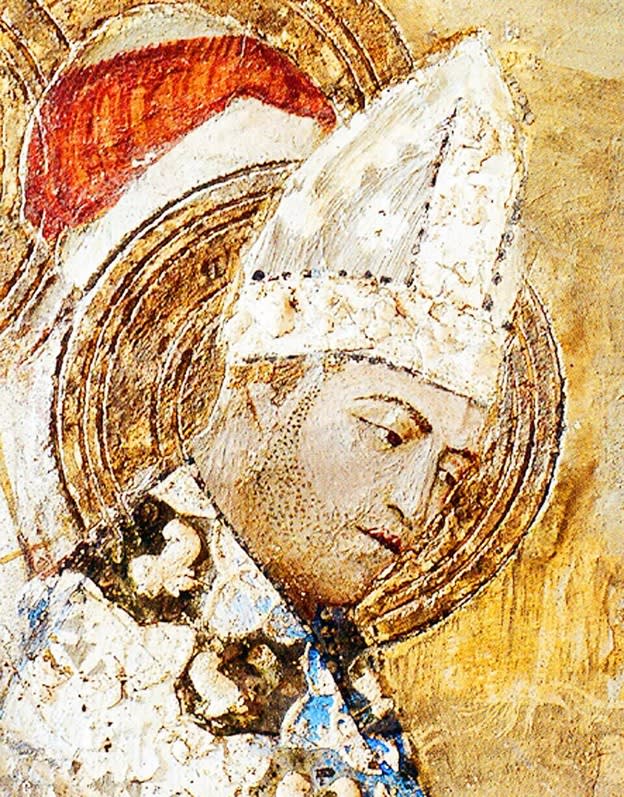
Charles’s path to supreme power in the Holy Roman Empire was extraordinarily difficult. On July 11, 1346, at Rhens, thanks to his father’s political alliance with Pope Clement VI, the bitter enemy of the reigning Emperor Louis IV of Bavaria, a group of prince-electors elected Charles King of the Romans.
In return for this support, Charles was forced in 1347 to make enormous concessions to the Avignon Papacy. He confirmed extensive territorial rights of the Church, swore to repeal all of Louis IV’s anti-papal decrees, pledged not to interfere in the internal affairs of Italy, and promised to defend the Catholic faith.
Initially, his position in Germany was extremely fragile. Because of his obvious dependence on the will of the pope, his opponents contemptuously nicknamed him the “Priests’ King” (Pfaffenkönig). Most bishops and almost all imperial cities remained loyal to the Wittelsbach dynasty.
The situation was further complicated by Charles’s support for France at the beginning of the Hundred Years’ War. In August 1346, during the disastrous Battle of Crécy, he lost his father and many leading knights, while Charles himself was wounded and forced to leave the battlefield.
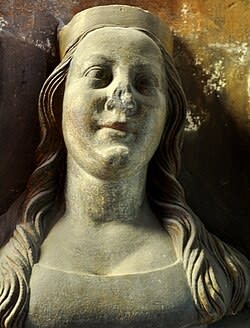
Fortune, however, favored the young king. The approaching civil war in Germany never took place: on October 11, 1347, Emperor Louis IV suddenly died of a stroke while hunting a bear.
In January 1349, the Wittelsbach opposition attempted to put forward a new claimant, Günther von Schwarzburg. However, he failed to gain sufficient support and by May suffered a decisive defeat at the hands of Charles’s forces during the siege of Eltville.
Having eliminated the immediate threat, Charles skillfully took advantage of his opponents’ weakness. On June 17, 1349, he was elected again in Frankfurt, and on July 25 of the same year he was solemnly crowned in Aachen. Through generous gifts and promises, he won over the free cities of Swabia and the Rhineland.
His dynastic marriage to Anna of Bavaria, daughter of Count Palatine Rudolf II of the Rhine, which Charles concluded in 1348 after becoming a widower, helped neutralize hostility with Bavaria, while another alliance secured the friendship of the Habsburgs.
Having become the undisputed ruler of the Empire, Charles concentrated his main efforts on the economic and intellectual development of his native Bohemia, which, fortunately, was largely spared from the plague epidemic.
He rebuilt his capital, Prague, on a scale worthy of Paris, establishing the extensive New Town (Nové Město). The greatest triumph of his educational policy was the foundation of Prague University in 1348 — the first institution of higher education in Central Europe, which would later bear the name of its founder.
The university became a training center for civil servants and lawyers as well as a refuge for early humanists, quickly transforming Prague into one of Europe’s brightest cultural centers.
At the same time, Charles sought to expand the territories of the Bohemian Crown, using his imperial authority to acquire Silesia, the Upper Palatinate — part of which he obtained in 1353 — and Franconia.
From these territories, he formed the so-called “New Bohemia,” intended to create a territorial connection between Bohemia and the Luxembourg possessions on the Rhine. At the same time, he prudently transferred the Duchy of Luxembourg itself to his half-brother Wenceslaus in 1353.
Nevertheless, attempts at strict centralization within Bohemia were not always successful. When Charles attempted in 1355 to systematize Czech law in the legal code known as the Maiestas Carolina, he encountered fierce opposition from the estates and was forced to pragmatically scale back his centralizing ambitions.
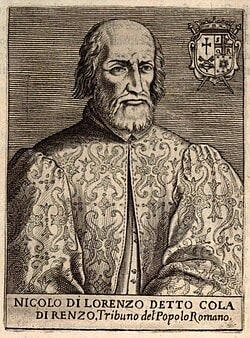
Charles’s Italian policy differed sharply from the expansionist plans of his predecessors. In 1350, the exiled Roman tribune Cola di Rienzo arrived in Prague and passionately urged the king to travel to Italy.
Similar appeals came from the citizens of Florence and from the great poet Francesco Petrarch, with whom Charles corresponded and whom he unsuccessfully invited to Prague. Petrarch hoped that the emperor would move his residence to Rome and restore the former glory of the Empire.
Charles, however, was a pragmatist and chose a different course. He kept Cola di Rienzo imprisoned for about a year before handing him over to Pope Clement in Avignon.
Only in 1354 did Charles cross the Alps without an army. On January 6, 1355, in the Basilica of Sant’Ambrogio in Milan, he received the Lombard Crown. On April 5, a cardinal crowned him in Rome with the long-awaited crown of Holy Roman Emperor.
Keeping his promise to the pope not to become involved in the local conflicts between the Guelphs and Ghibellines, Charles remained in the Eternal City for only a few hours. Abandoning imperial claims to Italian territories, he returned across the Alps with immense wealth, accompanied by Petrarch’s bitter mockery.
Charles later visited Italy several more times. In 1365, he met Pope Urban V in Avignon and promised to accompany him to Rome. In 1368, he made a second journey, meeting the pontiff in Viterbo, but left the Italian peninsula before the end of 1369, when Urban found himself besieged in Siena.

After returning to Germany, the emperor began implementing major governmental reforms. In 1356, he issued the famous Golden Bull, a fundamental constitutional document that strictly regulated the procedure for electing the King of the Romans.
The system proved so durable that it remained in force for the next four centuries.
Charles’s imperial policy moved away from the elevated ideal of a universal monarchy encompassing the entire Christian world and instead focused on dynastic interests and the preservation of peace.
To achieve this, he created regional confederations, including the Swabian Landfriede league of 1370, which consisted primarily of imperial cities that received special privileges from the crown in exchange for maintaining order.
He secured his eastern frontiers through farsighted inheritance agreements with the Habsburgs and also asserted formal overlordship over the crusader states of the military orders in Prussia and Livonia.

The ambitions of the House of Luxembourg continued to grow. In 1363, following the death of Meinhard III, Duke of Upper Bavaria and Count of Tyrol, a succession dispute broke out.
Charles recognized the claims of both the sons of Louis IV and the Austrian Duke Rudolf IV, but imposed one condition: should these dynastic lines become extinct, both territories would pass to the Luxembourgs.
In 1367, Lower Lusatia was incorporated into Bohemia. Charles’s third marriage to Anna of Świdnica, daughter of Duke Henry II and Catherine of Hungary, brought him a significant part of Silesia.
However, Brandenburg remained the most coveted prize. A conspiracy against Charles was organized involving King Casimir III of Poland, King Louis I of Hungary, and Margrave Otto V of Bavaria.
When Otto broke the inheritance agreement in July 1371, Charles decisively invaded Brandenburg. The two-year war ended in the emperor’s victory, and in 1373 Brandenburg became part of the Bohemian lands for his son Wenceslaus.
To establish order in the newly acquired territories, Charles ordered a large-scale census. Its results were recorded in the famous Landbuch Karls IV (“Land Book of Charles IV”) of 1375, in which many settlements were mentioned for the first time.

Charles’s sphere of influence also extended to the old Kingdom of Burgundy, or Arles. A brilliant diplomat, he skillfully maintained close relations with France.
His sister Bonne had married the future King John II of France in 1335, making Charles the uncle of King Charles V of France.
This connection played a role in 1356, when the French Dauphin Charles rendered homage to the emperor at Metz for the Dauphiné of Viennois, which the House of Valois had acquired in 1349. In return, he received confirmation of his rights and the position of imperial vicar. It was during this meeting that the dauphin asked the emperor for advice amid the unrest in Paris.
Seeking to strengthen his influence in Arles, in the spring of 1365 Charles appointed Count Amadeus VI of Savoy as imperial vicar over the central territories of the kingdom. On June 4 of the same year, Charles was solemnly crowned King of Burgundy at Arles, becoming the last emperor to receive this crown.
Later, in 1366, he relieved Amadeus VI of the vicariate. In 1378, he transferred these powers to the French Dauphin Charles, but only for the duration of his lifetime.

The final years of the great emperor, who had long suffered from gout — a painful form of metabolic arthritis — were largely devoted to securing his legacy.
Charles minimized his involvement in German affairs and concentrated his efforts on ensuring the election of his son Wenceslaus as King of the Romans in 1376, as well as on peaceful negotiations between the Swabian League of Cities and the local nobility in 1378.
One of the final highlights of his diplomacy was his ceremonial visit to his nephew Charles V in Paris shortly before his death. The event was documented with extraordinary detail in the Grandes Chroniques de France, which were decorated with magnificent illuminated miniatures.
After dividing his territories among his sons and nephews, Charles IV died in November 1378 in his beloved Prague.
At his funeral, the scholar Adalbertus Ranconis de Ericinio called the deceased monarch the “Father of the Fatherland” (Pater Patriae) for the first time.
The emperor left behind an extraordinary cultural legacy: the first flourishing of Prague book illumination, the magnificent St. Vitus Cathedral, on which the famous architect Peter Parler worked, Prague Castle, Charles Bridge, and Charles Square.
He also maintained an exceptionally close connection with Nuremberg, a city he visited 52 times. He strengthened its prestige and supported the construction of the magnificent Frauenkirche between 1352 and 1362, where the imperial court regularly attended religious services.
His contribution was considered so monumental that in 1848 grateful descendants erected a monument to him near Charles Bridge, created by Ernst Julius Hähnel.
In 2005, during a major nationwide television project, Charles IV was decisively chosen as the “Greatest Czech” in the history of the nation.



