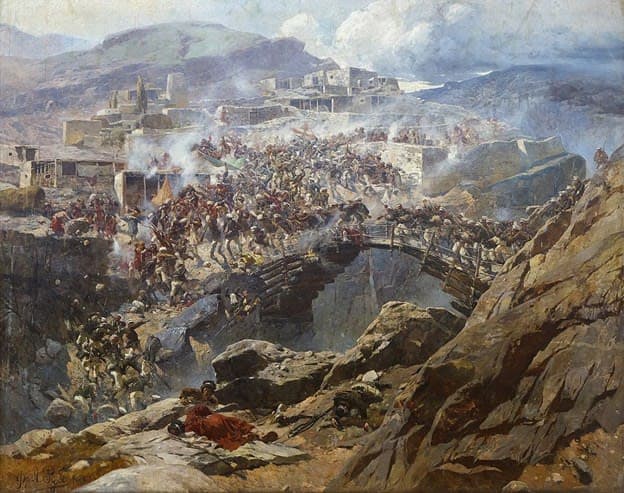
Russia’s penetration into the Caucasus began as early as the 16th century under Ivan the Terrible, when the first Russian forts the Terek and Sunzha outposts were founded. Systematic, planned expansion, however, started only in the 18th century. From 1735, with the founding of Kizlyar, construction of the Caucasian Line of fortifications began, and by 1785, with the building of Vladikavkaz, it had been completed.


During this period, Russia actively consolidated its position in the region. In 1783, by the Treaty of Georgievsk, Heraclius II, king of Kartli-Kakheti, was taken under Russian protection. That same year, after the annexation of Crimea, the Nogai tribes north of the Kuban entered Russian subjecthood. Their uprising fueled by fears of forced resettlement was harshly suppressed by Suvorov. Some Nogais moved to the Ottoman Empire, others migrated to Dagestan, opening the way for Russia to colonize the steppe Fore-Caucasus. In 1792, Empress Catherine II granted the lands from Taman to the mouth of the Laba to the Black Sea Cossack Host; the next year the city of Yekaterinodar was founded.
In 1785, the Islamic preacher Sheikh Mansur appeared in Chechnya and Dagestan, calling the mountaineers to rise against Russia. That same year a combined highlander force under his command unsuccessfully besieged Kizlyar. Seeking support from the Ottoman Empire, he retreated into Circassia after defeat at Tatartup.

In 1787, on the eve of a new Russo-Turkish War, Russian troops were drawn back to the fortified line. The situation in the Caucasus remained unstable: raids continued, and communication with Transcaucasia was nearly severed. In 1791, the commander of the Caucasian Line, I. V. Gudovich, stormed and captured the Ottoman fortress of Anapa, where a wounded Sheikh Mansur was taken prisoner.
After the Russo-Turkish War of 1787–1792, the Caucasian Line was strengthened further. The right bank of the Kuban was settled by Cossacks, cementing Russia’s grip on the region.
In 1795, Agha Mohammad Shah Qajar of Persia took advantage of Georgia’s plight and devastated Tiflis. In response, Russian forces under Valerian Zubov entered Dagestan, where they suffered a bloody defeat by the troops of Surkhay Khan and Shikh Ali Khan, losing an entire battalion. Nevertheless, the Russians took Derbent and Baku, but after Catherine II’s death, Paul I ordered a halt to operations. Russian troops withdrew from Transcaucasia, leaving only two battalions in Tiflis.

In 1801, at the request of King George XII of Georgia, who sought Russian aid, a Manifesto was issued annexing Georgia to the Russian Empire. Prince Pavel Tsitsianov was appointed Commander-in-Chief in the Caucasus and pursued further incorporations. In 1803–1804, Mingrelia, Imeretia, and Guria were brought into the empire. In January 1804, Tsitsianov stormed Ganja, annexing the Ganja Khanate.
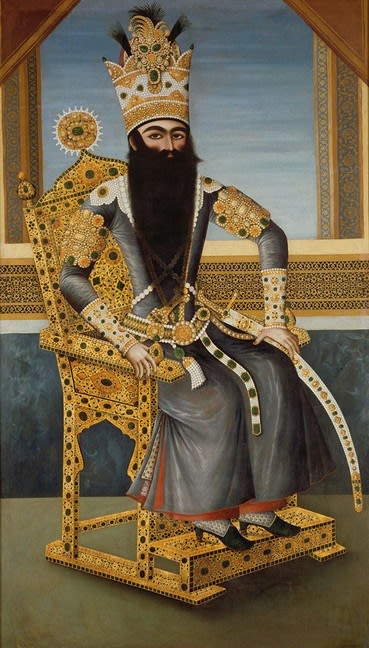
In 1804, Persian shah Fath-Ali declared war on Russia. Tsitsianov’s forces repelled Persian attacks and annexed new khanates Shirvan, Karabakh, and Sheki. In 1806, during the surrender of Baku, Tsitsianov was assassinated, complicating the situation. Gudovich replaced him, suppressing uprisings and resisting Persian and Ottoman incursions.

The war with Napoleon drew off Russia’s main forces, leaving the Caucasian troops without reinforcements. Nonetheless, in 1813 the Treaty of Gulistan was concluded: Persia renounced claims to Georgia, Dagestan, Abkhazia, Mingrelia, and other territories conquered by Russia, ending that phase of the conflict.
In the North Caucasus, under Generals Gudovich, Tormasov, and N. F. Rtishchev, Russia pursued relatively conciliatory policies toward the mountaineers. With the Chechens, relations were improved through economic and political means. Barter posts were opened in Naurskaya and Lashurin, facilitating peaceful accommodation. As Delpozzo wrote, the mountaineers “are much inclined to bring their products to our borders and sell them.”
Another important direction was the resettlement of Chechens to the Terek and the Kumyk Plain. Begun in the late 18th century, this policy angered local Kumyk princes as the newcomers became a significant military-political force. General Tormasov, however, believed the priority was “to pacify them, accustom them to trade, and draw them from the mountains to settle on the plains.” He even forbade his troops from crossing the cordon to avoid provoking conflicts.

Alongside trade and resettlement, Russia continued a policy of buying off influential Chechen leaders and clergy. Special attention was paid to the respected Beybulat Taymiyev, who was promised restoration of his officer’s rank. In 1811, a delegation of Chechen elders asked Russian authorities to take them “under protection and subjecthood,” promising to end raids.

By contrast, a harsher line was pursued against the Circassians beyond the Kuban. In 1810, General Bulgakov led an expedition across the Kuban despite Tormasov’s objections; many villages were destroyed, yet raids continued.
In Transcaucasia, Russian generals faced constant unrest. In 1811, F. O. Paulucci became commander-in-chief, simultaneously fighting Turks and Persians and suppressing revolts. In 1812, General Nikolai Rtishchev succeeded him and confronted the thorny issue of South Ossetia, where two Georgian feudal factions struggled over holdings. In autumn 1812, a new uprising flared in Kakheti, led by fugitive Georgian prince Alexander; Khevsurs and Ingush took part. In response, in May 1813, Rtishchev carried out a punitive expedition into Khevsureti, sacking Shatili a move Tsar Alexander I disapproved, ordering henceforth to proceed with “friendliness and forbearance.”

In 1813, Abkhazia saw an uprising led by Aslan-Bey Chachba-Shervashidze against his brother Safar-Bey; a Russian battalion and Mingrelian militia saved Safar-Bey’s life and power.
In 1814, after a report by A. N. Golitsyn, Ober-Procurator of the Holy Synod, Alexander I ordered Rtishchev to strip the Georgian nobles Eristavi of their estates in South Ossetia, provoking outrage among the Georgian elite. Enforcement lagged and in 1817 the order was rescinded.
Overall, as historian I. P. Petrushevsky noted, Russia’s expansion in this period aimed at contesting Turkey and Persia for control of the region, seen as a springboard for further imperial expansion.
In summer 1816, Lt. Gen. Alexei Yermolov renowned for his harsh, decisive policy was appointed commander of the Separate Georgian Corps and civil administrator in the Caucasus. After studying the situation, he devised a plan he pursued relentlessly: cutting clearings, building roads, and erecting fortifications.
“The Caucasus,” Yermolov said, “is a vast fortress defended by a half-million garrison. We must either storm it, or take its trenches. A storm would be too costly so let us conduct a siege!”
Yermolov shifted the left flank of the Caucasian Line from the Terek to the Sunzha, where in October 1817 he laid the Prigradny Stan fort an event considered the beginning of the Caucasian War. In 1818, the Grozny fortress was founded; in 1819, Vnezapnaya.


Yermolov also vigorously fought uprisings in Dagestan and Chechnya. Almost annually he led punitive expeditions through Kumyk villages, burned the capital of the Mehtuli Khanate, and defeated the Akusha militia, forcing them to swear loyalty to the Russian Emperor. In 1820, he routed the troops of Surkhay Khan of Kazikumukh, who fled to Persia.
Reporting these operations, Yermolov wrote to the Emperor: “The subjugation of Dagestan has been completed… this proud, warlike land, for the first time obedient, has fallen at the sacred feet of Your Imperial Majesty.”
In 1820, the Caucasian Corps was reinforced; in 1821, Fort Burnaya was built near the Caspian. In 1822, to pacify Kabarda, a chain of fortifications including Nalchik was erected.
In 1825, a Chechen uprising broke out. On July 15 in Gerzel-aul, tragedy struck: during a reprimand delivered by Generals Lisanovich and Grekov to the elders, a mullah killed them; Russian troops then massacred those present.

Yermolov’s tenure ended in 1827, when Nicholas I recalled him suspicious of ties to the Decembrists and retired him. On March 29, 1827, Ivan Paskevich was appointed commander-in-chief.

In 1823, a new Sufi movement Muridism appeared in Dagestan. Brought by a Bukharan, Khass-Muhammad, it converted Muhammad of Yarag (Muhammad Yaragsky), who began preaching and gathering murids calling for ghazavat holy war against the infidels wooden sabers in hand. The message electrified the mountaineers.

Yermolov knew of the nascent movement but was distracted and could not focus on it. In 1824, Avko Ungayev, backed by clerics and Chechen leader Beybulat Taymiyev, proclaimed himself imam of Chechnya and joined the 1825 uprising.
In 1828, Muhammad Yaragsky declared his disciple Qazi-Mulla the new imam to raise the banner of ghazavat. In 1830, Chechen leaders including Beybulat recognized Qazi-Mulla as imam of Chechnya.
Qazi-Mulla (Ghazi-Muhammad), from Gimry, studied under the renowned theologian Said Effendi; after meeting Muhammad Yaragsky, he embraced the Sufi path, was proclaimed imam in 1828, and blessed to wage holy war.

Within a year, Qazi-Mulla subdued several Dagestani auls. By late 1829, Koysu-Bu, Gumbet, Andi, and other small communities recognized his authority. The influential Avar Khanate, already sworn to Russia, refused.
Qazi-Mulla met resistance not only from khans but also the Muslim clergy. The prominent mullah his former teacher Said of Arakan openly opposed him. Early 1830, Qazi-Mulla attacked Arakan, failed to find Said, ordered his house and writings destroyed, and threw dissenters into pits actions that scandalized even supporters. Attempts to subdue Kumyk princes also met resistance.
In early 1830, responding to pleas from the Jaro-Belokan region threatened by a Russian expedition, Qazi-Mulla convened representatives from across Dagestan and called passionately for ghazavat against the Russians, swelling his ranks.
Instead of marching on the Russians, he moved into Avaria and besieged its capital Khunzakh, intending to exterminate the khan’s house. The Avar militia, led by the young Abu-Nutsal-Khan, sallied out and routed the murids, forcing Qazi-Mulla to retreat.

After this defeat, Qazi-Mulla’s influence waned. A new Russian offensive, made possible by the end of the Russo-Turkish War, detached troops to fight him. A Russian detachment that approached his base at Gimry withdrew after taking oaths from the Koysubulins; Qazi-Mulla attributed the withdrawal to divine aid, which helped restore his authority.
In 1831, he sacked Tarki and launched a major raid on Kizlyar; vast territories fell under his sway. By year’s end, the uprising ebbed; on October 17, 1832, Russian troops took Gimry, and Qazi-Mulla was killed.
After his death, Hamzat-bek proclaimed himself imam. In 1834, he invaded Avaria and annihilated the khan’s family, but was soon assassinated by conspirators.
Shamil then became head of the murids. Far more formidable than his predecessors, he united the Eastern Caucasus tribes under his rule; his personal guard of devoted murids became a key force.

In 1835, Shamil attacked Khunzakh to avenge Hamzat-bek, but Russian troops held the fortress. To secure control, Temir-Khan-Shura and Zirani were fortified.
In 1837, General Fezi defeated Shamil’s detachments and besieged Tilitl, where Shamil had holed up. Shamil opened negotiations and pledged submission, enabling the Russians short of provisions to withdraw.
That autumn, Emperor Nicholas I first visited the Caucasus, was displeased with the war’s progress, and appointed General Golovin as commander.
In 1839, Russian troops under General Grabbe stormed Shamil’s fortified position near Argvani. Shamil, with a small band, withdrew to the restored stronghold of Akhulgo. After a fierce siege, Akhulgo fell on August 22, but Shamil escaped.


In late February 1840, Shamil returned to Chechnya, where an uprising was already underway, and was proclaimed imam of Chechnya. The aul Dargo became the capital of his imamate.
After Russia’s victory over Turkey and the Treaty of Adrianople (1829), control of the Black Sea coast of the Caucasus passed to Russia. The mountaineers offered fierce resistance. In August 1830, the Ubykhs and Sadz, led by Hajji Berzek Dagomuko, stormed the newly built Gagra fort. Such resistance forced General Hesse to halt the advance; much of the coast remained in highlander hands.
Pressure from Britain and Turkey, along with arms smuggling and slave trading, compelled Russia to act decisively. In 1837–1839, the Black Sea Coastal Line of forts was built, and the Black Sea Fleet blockaded the coast. In 1840, Circassians captured several forts including Lazarevskoye and Mikhaylovskoye, where defenders blew themselves up rather than surrender. The forts were rebuilt the following year.
In 1840, a general uprising in Chechnya, stirred by Shamil, greatly complicated the situation along the Caucasian Line. General Galafeyev’s troops conducted bloody sweeps in the Chechen forests, where the famed Battle of the Valerik River occurred on July 11. By autumn, all Chechnya was on Shamil’s side, and the Russian troops were in dire straits.

In 1841, Avaria erupted under Hadji Murad; Russian losses were heavy. At the same time, Shamil extended his authority over the mountain communities on the right bank of the Avar Koysu.
In 1842, the Russians suffered a crushing defeat in Ichkeria: a 10,000-strong column under General Grabbe, marching on Dargo, was destroyed by Chechens led by Shoip-Mullah of Centaroy; the Russians lost 66 officers and over 1,700 soldiers. Concluding offensive operations were futile, War Minister Chernyshev had Nicholas I ban all expeditions for 1843.
This enforced inactivity emboldened the mountaineers. Shamil seized several Russian forts, cutting communications with Temir-Khan-Shura and Derbent.
In late 1844, Count M. S. Vorontsov became commander-in-chief. In May 1845, a major imperial force invaded the imamate; Vorontsov’s main column advanced on Dargo. The Dargin Campaign (July 8–20) brought heavy losses: officially 4 generals, 168 officers, and up to 4,000 soldiers killed.


After Dargo, the Russians changed tactics. From 1846, they focused on systematic deforestation in Chechnya and building new forts. In 1847, Vorontsov besieged Gergebil but withdrew due to cholera; the next year, Prince Argutinsky captured the aul.
From 1850–1852, continued deforestation compelled many hostile communities to submit. In February 1853, Prince Baryatinsky defeated Shamil’s forces on the Michik River. Despite successes, the war raged on.
With the onset of the Crimean War (1853), hope of liberation rekindled among the mountaineers. Shamil and Muhammad-Amin, naib of Circassia and Kabarda, called for jihad against Russia, claiming the sultan would send troops. Despite their efforts, the spirit of resistance was broken; many submitted only under threat of severe punishment, and their planned raids failed.
Russia adopted a defensive posture but continued clearing forests and destroying enemy provisions. In 1854, Shamil invaded Kakheti, ravaged Tsinandali, and captured Prince David Chavchavadze’s family, but retreated as Russian detachments approached. On the right flank, Russian troops abandoned and blew up the Black Sea Coastal Line forts, redeploying their garrisons to Crimea.
In early 1855, General Muravyov assumed command; by spring 1856, after the Treaty of Paris, it was decided to use the troops active in Asiatic Turkey to finish the conquest of the Caucasus.

The new commander-in-chief, Prince A. I. Baryatinsky, concentrated on subduing Chechnya, entrusting the task to the experienced General Evdokimov. In 1856–1857, Russian troops made major gains: the so-called “Russian Road” from Vladikavkaz was completed, broad forest aisles cut, and parts of the hostile Chechen population forced to move into open terrain isolating the enemy from resources and sapping his strength.
Operations in 1858 seized the once-impregnable Argun Gorge. Recognizing his power was broken, Shamil withdrew to his new residence at Vedeno. On April 1, 1859, Vedeno was stormed; Shamil with his remaining murids took refuge on Mount Gunib.
After Vedeno fell, three Russian columns converged on Gunib. Seeing no escape, Shamil entrenched himself on the mountain with 500 murids. Baryatinsky sent him a letter offering surrender in exchange for full pardon and the possibility of pilgrimage to Mecca. Some historians believe Baryatinsky deceived Shamil, who wished to remain in Dagestan. Nevertheless, on August 25, 1859, under pressure from the encirclement and pleas of women and children, Shamil accepted the terms and surrendered to Prince Baryatinsky.

The surrender was greeted by Russian shouts of “hurrah.” Shamil was taken to Russia and spent almost the rest of his life in honorable captivity in Kaluga.
Despite Shamil’s capture, fighting did not end. On May 8, 1860, former naibs Baysangur Benoisky, Solta-Murad Benoisky, Uma Duev, and Atabay Ataev raised a new Chechen revolt. Their forces were defeated in a series of battles and the uprising was crushed. On March 1, 1861, Baysangur Benoisky was captured after a fight and executed.
With the suppression of this uprising, the Caucasian War was effectively over.
After Shamil’s capture in 1859, the last unconquered center of resistance remained Western Circassia. Russia’s plan was to gradually expel the Circassians from their ancestral lands: the mountaineers were to resettle on the plains under Russian control, or withdraw into the mountains and then to the coast for evacuation to Turkey; vacated lands were immediately settled by Cossack stanitsas.
In 1861, the Ubykhs, Shapsugs, Abadzekhs, and other Circassian tribes created a parliament the “Great and Free Assembly” in Sochi attempting to unite against the Russian advance. Their resistance was crushed; command of the final phase was entrusted to General N. I. Evdokimov, the conqueror of Chechnya.
His forces were divided into several columns, systematically cutting clearings and building roads through impenetrable forests. In 1862, despite fierce resistance, Evdokimov’s detachment forced its way into the Dakhovskaya Valley and founded a new Cossack stanitsa there. By year’s end, Russian troops were firmly established in the territory between the Pshish, Pshekha, and Kurdzhips rivers.
The final subjugation was led by Grand Duke Mikhail Nikolayevich, appointed Viceroy of the Caucasus. In 1863, Russian colonization advanced from two directions, trapping the mountaineers. Many emigrated en masse to Turkey. By late summer, 30,000 people had resettled to the Kuban and Laba. In October, Abadzekh elders signed an agreement: those willing to accept Russian subjecthood must move to the plains; the rest were given time to depart for Turkey.
By early 1864, the northern slope of the Greater Caucasus Range was fully subjugated. Russian troops began an offensive on the southwestern slope, pushing the remaining tribes toward the Black Sea. Masses of Circassians were driven to the coast and shipped to Turkey.
On May 21, 1864, in the mountain village of Kbaade, in the presence of the Grand Duke, a thanksgiving service was held to mark the end of the Caucasian War. The event became a symbol of the conclusion of a long and bloody conflict that would define the region’s fate for decades.



