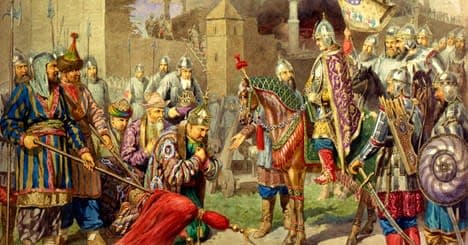

The struggle against the Kazan Khanate began as early as the 1460s but met with mixed success. By the mid-16th century, Russo-Tatar relations had sharply deteriorated, and in 1534–1545 the Kazan Tatars regularly raided Russian lands. Ivan the Terrible responded with a series of “Kazan campaigns” from 1545 to 1552. The Russian government recognized the need to establish a permanent military base in the immediate vicinity of Kazan. In 1551 the Russian military engineer Ivan Vyrodkov built the wooden fortress of Sviyazhsk near Kazan in just 28 days; it became the main staging point for the coming siege.

The construction of Sviyazhsk also encouraged the inhabitants of the “Hill Side” (the Chuvash and Mari), dissatisfied with Kazan rule, to switch to Moscow’s side. Their territories were annexed by Russia, which became an additional casus belli.
In 1551 an attempt was made to annex the Kazan Khanate to the Russian state peacefully. The Kazanites overthrew their khan and agreed to accept Moscow’s nominee, Shah-Ali. However, disputes between Ivan the Terrible and the people of Kazan over the “Hill Side,” as well as mass executions carried out by Shah-Ali, doomed the peaceful project. In March 1552 Shah-Ali left Kazan, and the townspeople invited the Nogai prince Yadiger-Muhammad to the throne, prompting the Russians to prepare for a new campaign against Kazan.
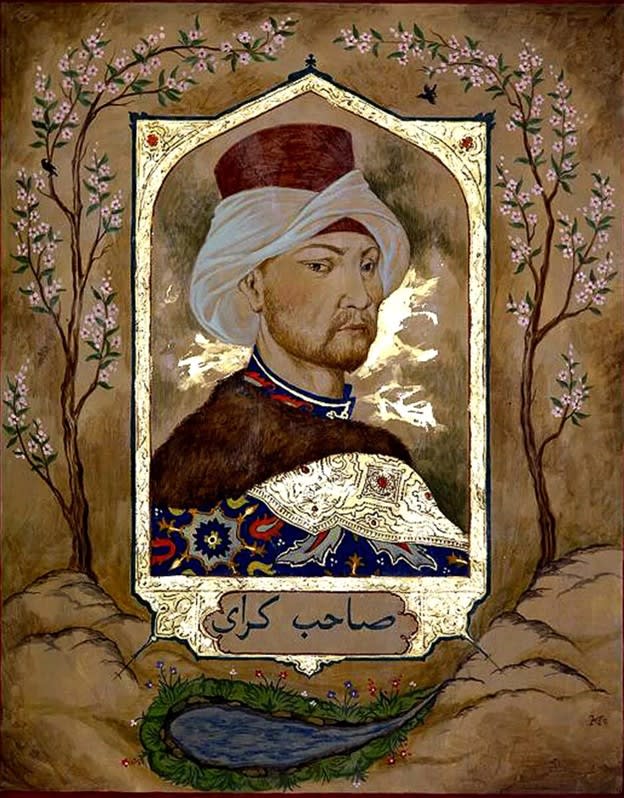
The Russian forces prepared for the siege methodically. On 16 June 1552 they set out from Moscow. An attempt by Crimean Khan Devlet Giray to impede them by attacking Tula was successfully repelled. The Russian army—including Tatar detachments loyal to Shah-Ali and foreign mercenaries covered the distance to Sviyazhsk in five weeks.
On 15 August the Russian forces under Ivan the Terrible crossed the Volga and encamped on the Arsk Field. In the first clash with the Kazan army, numbering about 10,000 men, the Russians won a victory that allowed them to take up positions around the city without hindrance.
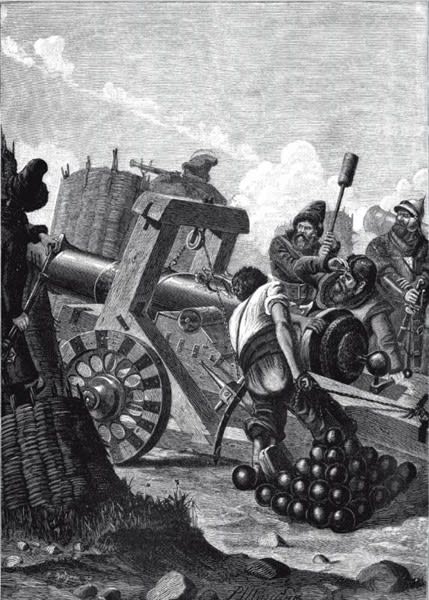
The siege of Kazan began on 23 August. The Russian forces—whose numbers are exaggerated in the chronicles but were undoubtedly very large—encircled the city and began constructing siege works. Russian artillery, numbering about 150 guns, played a crucial role. Russian engineers successfully employed mining tactics. On 4 September a mine was detonated beneath the city’s water source, causing disease within the walls, and on 30 September another explosion destroyed part of the city wall.
Despite the courageous resistance of the Kazanites and their sorties, the outcome of the siege was foreordained. The second, decisive assault took place on 2 October. Russian troops broke into the city, where fierce fighting ensued. In the mosque of the khan’s palace, the imam Kul Sharif fought heroically and fell. Kazan fell; the men were slain, and the women and children were taken captive. Khan Yadiger-Muhammad was captured and baptized.

The capture of Kazan became a turning point in the history of the Russian state. It led to the annexation of the entire Middle Volga region and was Russia’s first major step toward building a multiethnic empire. Soon afterward Astrakhan was taken in 1556, and the Siberian Khanate in 1582.
For Russia, this event marked the end of a long confrontation and affirmed it as a powerful eastern power. For the Tatars, Chuvash, Mari, and other peoples of the Kazan Khanate, a new chapter of history within the Russian state began. According to the historian Andreas Kappeler, it is precisely the capture of Kazan that can be considered the beginning of Russia’s history as a multiethnic state.


