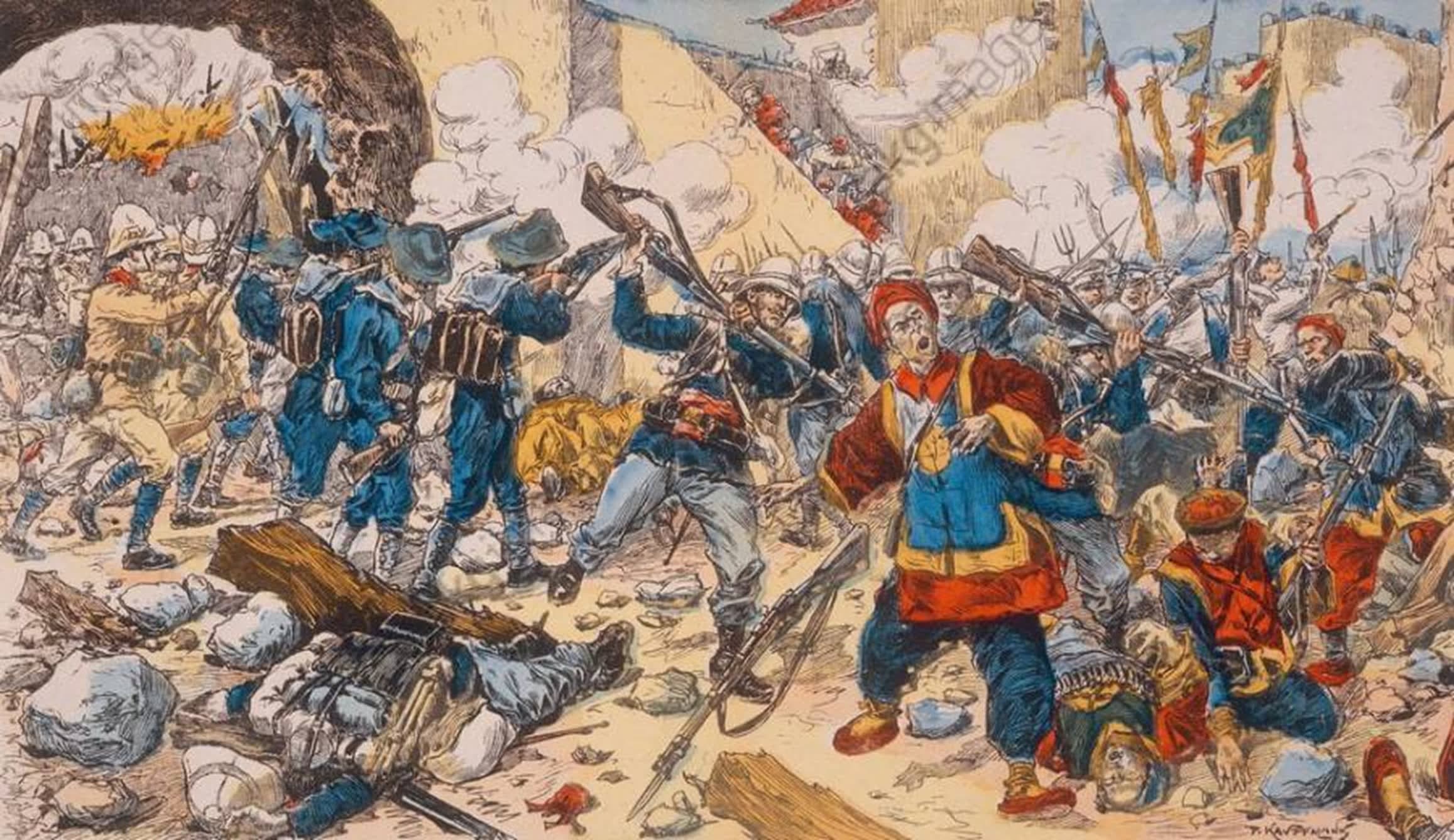

From the beginning of the 19th century, the European powers, especially Great Britain, actively penetrated China, seeking to establish control over its markets. The weakened Qing Empire could not resist technologically superior nations, which led to a series of military defeats and the signing of so-called “unequal treaties.” Gradually, China was turning into a semi-colony.
This foreign encroachment provoked an extremely painful reaction, particularly in the northern provinces such as Zhili, Shandong, and Manchuria. The construction of railways, the development of the telegraph, and the import of factory-made goods devastated traditional crafts and transport. Thousands of boatmen, cart drivers, and porters lost their livelihoods, while new roads destroyed fields and ancestral graves, which locals saw as acts of sacrilege.
The situation was worsened by droughts and epidemics, which the people blamed on the “foreign devils.” The rule of Empress Dowager Cixi, who had rejected liberal reforms, was also deeply unpopular, fueling further anti-foreign sentiment.

Under these conditions, in 1898, spontaneous peasant militias began forming across northern China. The most famous among them were known as the Yihequan (“Fists of Righteous Harmony”) or Yihe tuan (“Righteous and Harmonious Militias”), which Europeans nicknamed the Boxers. Their ranks consisted mainly of impoverished peasants, craftsmen, and demobilized soldiers.

A distinctive feature of the Boxers was their deep hatred toward foreigners, especially missionaries and Chinese converts to Christianity. Many believed that religious and mystical rituals made them invulnerable to bullets. They practiced daily martial-arts-like exercises, which reminded Europeans of boxing hence the nickname. The Boxers followed a strict code of conduct: Obey your leaders. Help your comrades. Kill foreign Christians. Give Chinese Christians a choice renounces their faith or die.
Their slogan was “Support the Qing, Exterminate the Foreigners.” This meant that, unlike most rebels, they did not seek to overthrow the dynasty, but rather to defend it from foreign domination.
The uprising began in 1897 in Shandong Province, following the murder of two German missionaries. It soon spread to Zhili Province and threatened Beijing. During this turmoil, a palace coup took place: Emperor Guangxu was removed from power, and control returned to Empress Dowager Cixi. Fearing the foreigners more than the Boxers, she secretly supported the movement.

Foreign diplomats, missionaries, and merchants, alarmed by rising violence, gathered in the Legation Quarter of Beijing in May 1900. The Boxers, now supported by parts of the Qing government, advanced on the city. On June 9, 1900, British Vice Admiral Edward Hobart Seymour led a small international relief force toward Beijing but was blocked and repelled by Boxer forces.
Tensions reached their peak on June 20, 1900, when the Boxers laid siege to the Legation Quarter. During the bombardment, German ambassador Clemens von Ketteler was killed an event that shocked the Western world. On June 21, the Qing Empire officially declared war on the foreign coalition.
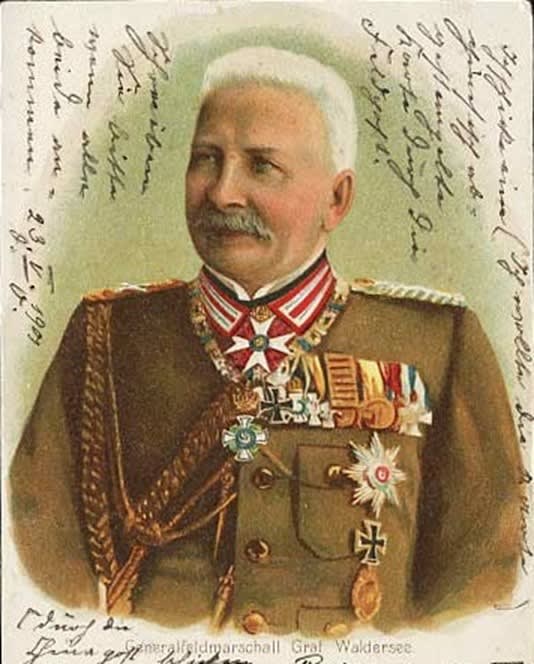
Soon, warships and troops from eight nations Russia, Japan, Britain, the United States, France, Germany, Austria-Hungary, and Italy were dispatched to China. The coalition army, commanded by German General Alfred von Waldersee, advanced rapidly.
After fierce battles near Tianjin, the allied forces defeated the Chinese armies and the Boxers. Tianjin fell on July 14, and on August 2, the coalition began its march toward Beijing.
On August 13, Russian troops reached the capital first and opened artillery fire. The next day, August 14, the general assault on Beijing began. Realizing defeat was inevitable, Cixi fled the city. By August 16, most of Beijing was under foreign control, and on August 28, the imperial palace was stormed marking the final collapse of the Boxer movement.

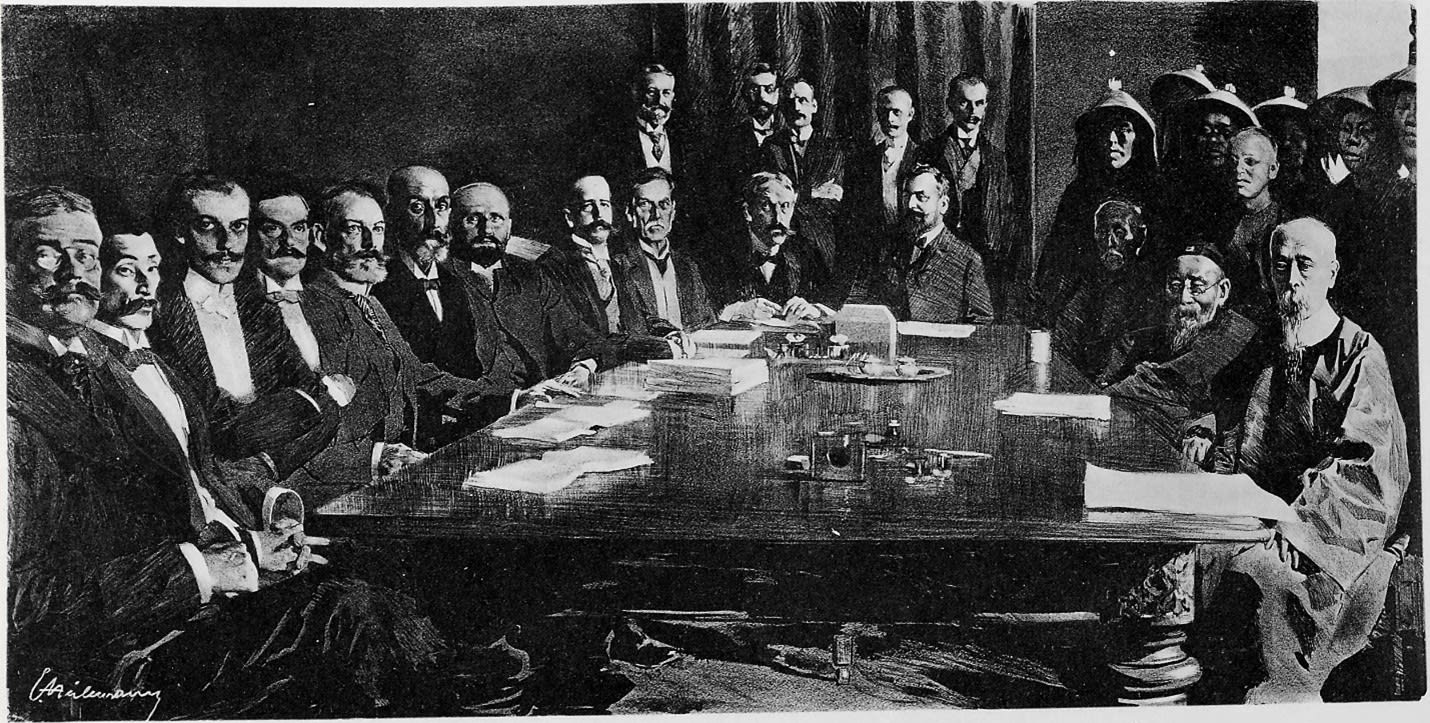
On September 7, 1901, the Final Protocol (also known as the Boxer Protocol) was signed another humiliating treaty for China. According to its terms: China was to pay a huge indemnity of 450 million taels of silver. The leaders of the rebellion were to be executed. The Legation Quarter in Beijing would remain under permanent foreign military protection. The Chinese government was banned from importing weapons or forming anti-foreign organizations.
The Boxer Rebellion and the subsequent foreign intervention further deepened China’s crisis, bringing the country to the brink of partition. In its aftermath, rivalry among the great powers in East Asia intensified, eventually leading to the Russo-Japanese War (1904–1905) and the start of Japan’s imperial expansion on the Asian continent.


