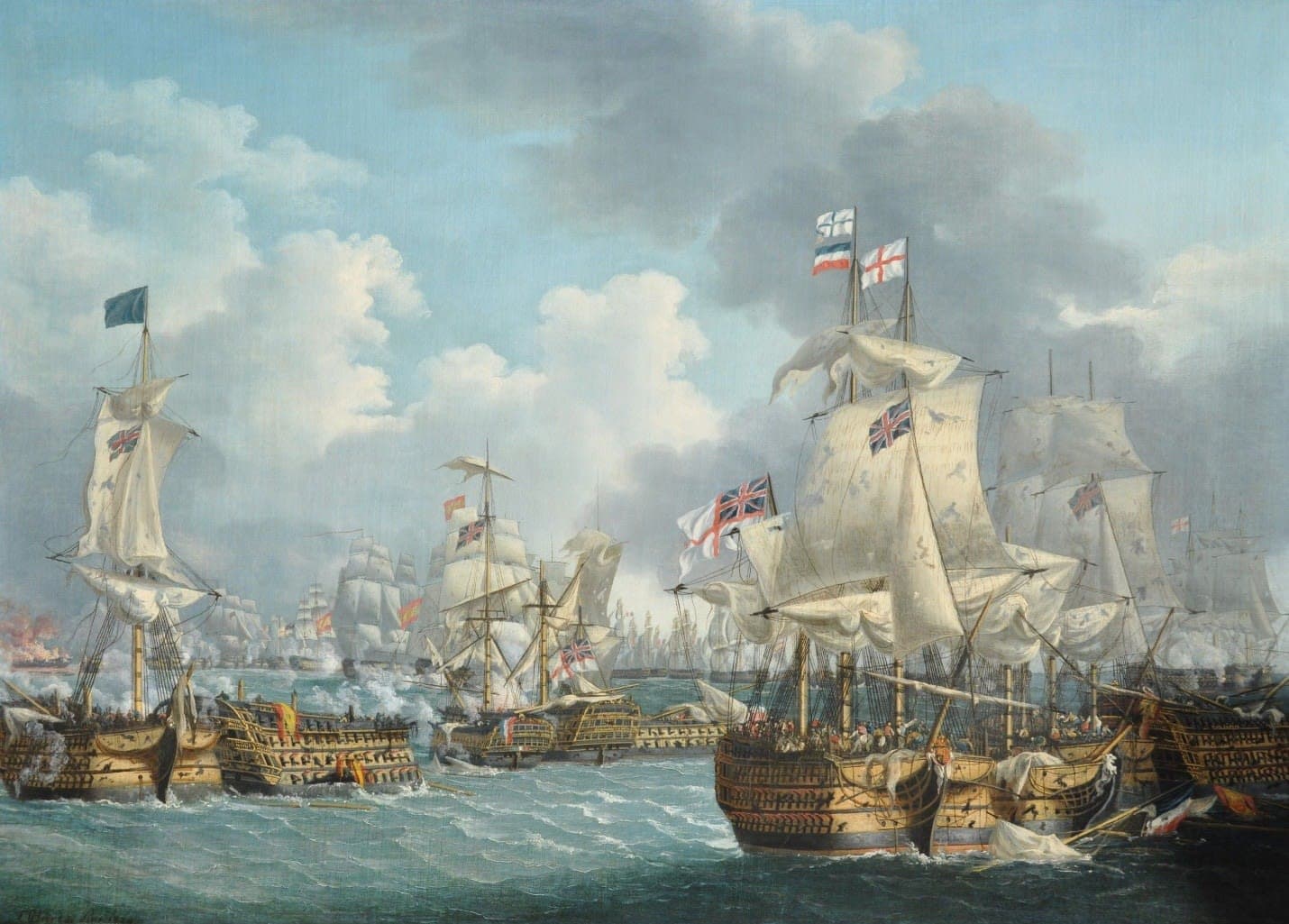

When the Treaty of Amiens expired in May 1803, war broke out once again between Britain and France. Determined to crush his greatest rival, Napoleon Bonaparte conceived a bold plan to invade the British Isles. By 1805, his army was the dominant land force in Europe, but the Royal Navy still ruled the seas. Britain’s naval blockade of the French coast crippled trade and confined the French fleet to its ports.

Most of the French navy was concentrated at Brest and Toulon, with smaller squadrons stationed along the Atlantic coast. The navy had been severely weakened during the French Revolution, when many of its best aristocratic officers were executed or dismissed. Napoleon was forced to entrust command to the relatively inexperienced Pierre-Charles Villeneuve.
In October 1804, after a British attack on Spanish frigates, Spain joined France, adding its fleet from Cádiz and Ferrol to the French forces. Meanwhile, Napoleon gathered his massive invasion army at Boulogne, along with hundreds of transport barges ready to cross the Channel. Yet these craft were utterly defenseless against the British battleships. In March 1805, Napoleon ordered Villeneuve to distract the Royal Navy by sailing to the Caribbean, but the British, anticipating this, maintained their blockade. On his return, Villeneuve’s fleet was intercepted off Cape Finisterre and forced to take refuge in Cádiz, where it was bottled up by the British.
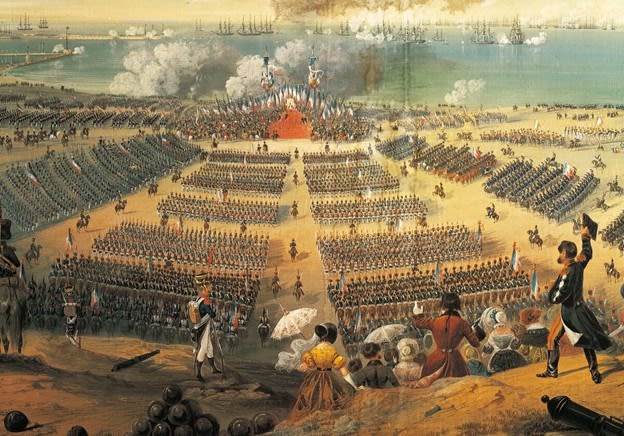
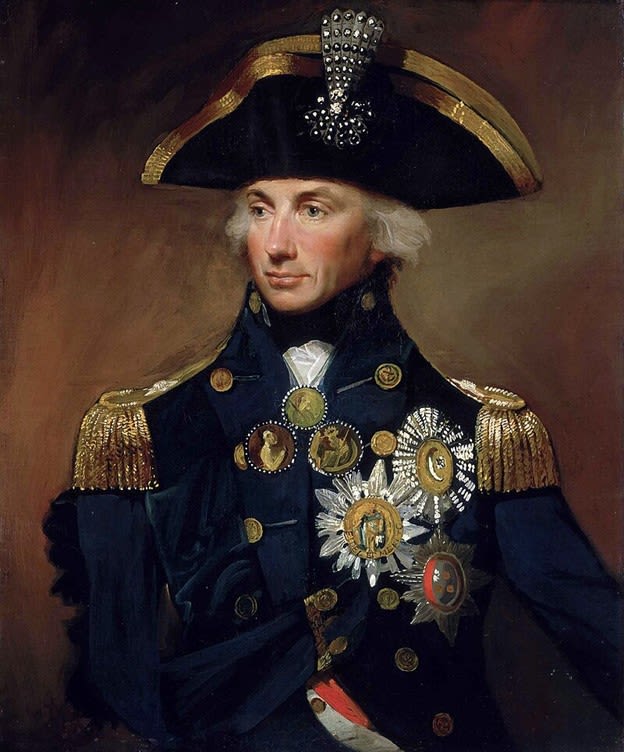
On September 17, 1805, Napoleon instructed Villeneuve to sail for Naples to support French land operations, a move that required breaking through the British blockade. On October 21, 1805, the combined Franco-Spanish fleet, under Villeneuve’s command, left Cádiz and steered southward. Aboard his flagship Victory, Vice Admiral Horatio Nelson raised his legendary signal:
“England expects that every man will do his duty.”
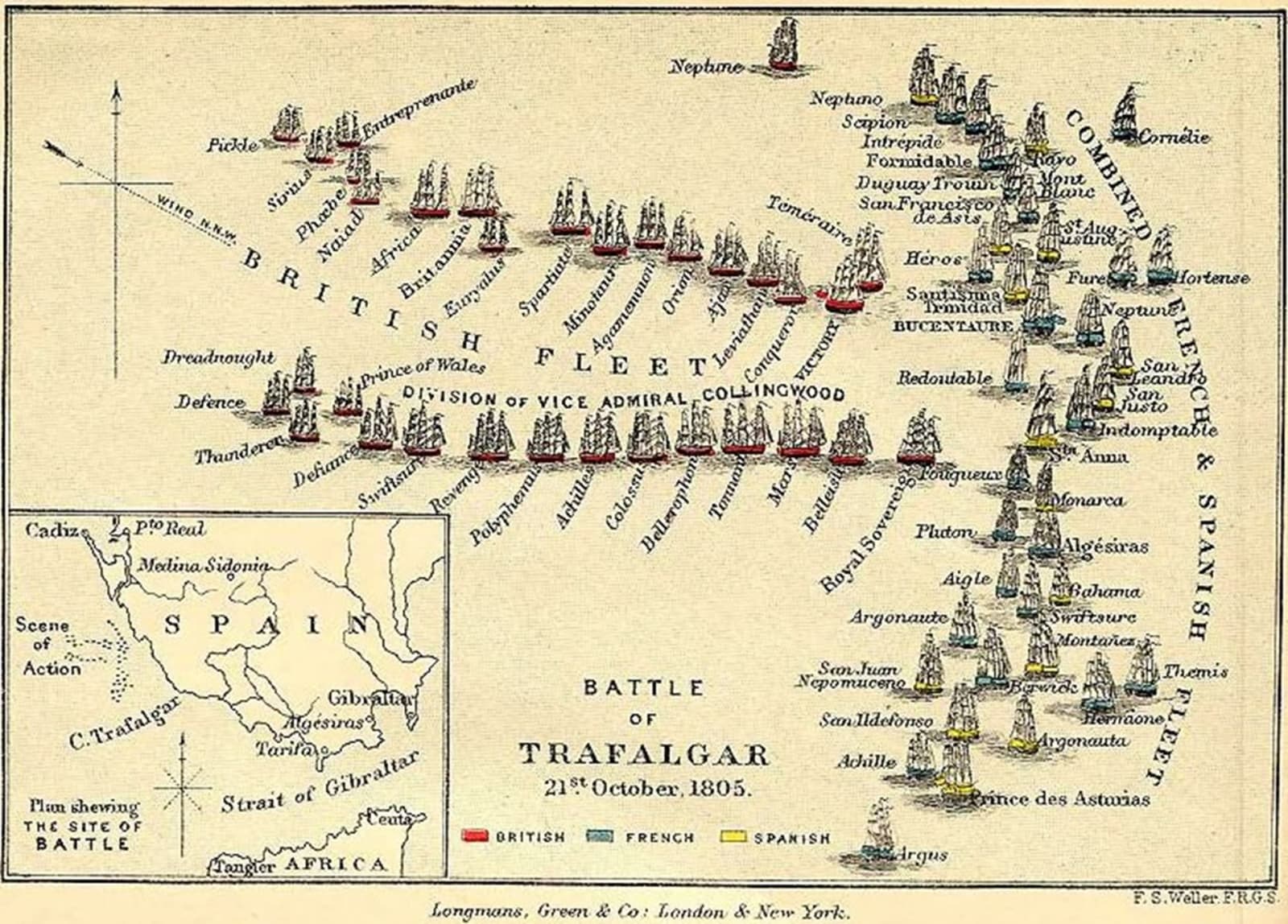
Ignoring his subordinates’ advice, Villeneuve deployed his ships in a single, extended line. Early that morning, lookouts spotted the approaching British fleet. Hesitant at first, Villeneuve then ordered his ships to turn back toward Cádiz a maneuver that, in light winds and rough seas, threw his formation into confusion.
Nelson seized the opportunity. Abandoning traditional line tactics, he split his fleet into two attack columns: the Victory led the left under his direct command, while Rear Admiral Cuthbert Collingwood led the right aboard Royal Sovereign. The goal was to pierce the enemy line in two places, sowing chaos and preventing coordination among the allied ships.
At 11:00 a.m., the battle began. The Spanish ship Santa Ana fired the first broadside at the approaching Royal Sovereign. As the British advanced perpendicularly to the enemy line, they endured punishing fire before being able to respond. Around 12:30 p.m., Collingwood’s Royal Sovereign broke through between Santa Ana and the French ship Fougueux, fighting both alone for twenty minutes. Forty-five minutes later, Nelson’s Victory smashed into the line between the French flagship Bucentaure and Redoutable.
Nelson, in full uniform and wearing his decorations, stood proudly on the quarterdeck, rallying his men. The Victory’s well-trained gunners fired devastating broadsides from both sides, crippling enemy ships. Disorganization plagued the Franco-Spanish fleet Admiral Dumanoir’s vanguard became separated and, ignoring Villeneuve’s signals, steered for Cádiz, taking nine ships out of the fight.
Soon Victory was locked in a fierce boarding duel with Redoutable. During the exchange, a French sniper fired from the mainmast, striking Nelson in the shoulder the bullet lodged in his spine. Mortally wounded, he was carried below deck but continued to demand updates on the battle’s progress.
Around 2:00 p.m., Bucentaure struck her colors, and Villeneuve surrendered. Twelve allied ships had been destroyed or captured. When Captain Hardy informed the dying admiral, “My Lord, the day is ours,” Nelson whispered his last words: “Thank God, I have done my duty.”
Meanwhile, fierce fighting raged in the rear, where Spanish Admiral Federico Gravina fought heroically, though mortally wounded. He managed to save several damaged ships from capture. Dumanoir’s squadron, attempting to reengage, collided with the British line, sparking renewed fighting.
By 4:30 p.m., Nelson was dead; by 5:30, the battle was over. That night and the following day, a violent storm wrecked many battered ships both sides struggled to survive. The British lost several captured prizes, including the massive Santisima Trinidad.


On October 23, Gravina, having repaired his remaining ships, tried to recapture the prizes. The crew of Santa Ana, which had been taken the previous day, mutinied and re-hoisted the Spanish flag. Gravina rescued her and brought her safely to Cádiz, though he succumbed to his wounds soon after.
The Battle of Trafalgar ended in a complete defeat for the combined Franco-Spanish fleet. The allies lost 18 ships and about 15,000 men, while the British lost no ships and about 2,000 casualties.
Strategically, the consequences were immense. France and Spain lost their naval power forever. Napoleon, who had already abandoned plans to invade Britain, now curtailed all major maritime operations. Britain’s command of the seas was secured and would remain unchallenged until the Second World War.
For Spain, the defeat was a national disaster. The loss of its navy crippled communication with its American colonies, hastening their movements for independence.
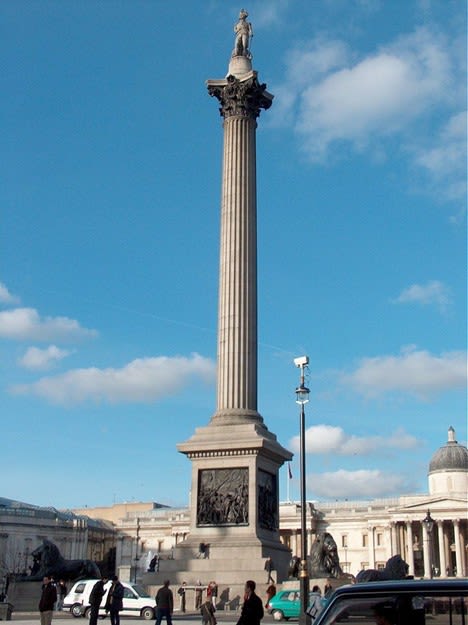
In Britain, Nelson’s death transformed him into a national hero. His state funeral at Westminster Abbey and the monuments erected in his honor foremost among them the Nelson Column in Trafalgar Square turned the victory into a symbol of British naval invincibility and patriotic unity. Since then, Trafalgar Day has been celebrated each year as one of the proudest moments in British history.


