
In 1218, during Genghis Khan’s campaign against the Khwarazmian Empire, the Mongols directed their full strength toward Central Asia. The Shah of Khwarazm, Ala ad-Din Muhammad II, made a strategic mistake by choosing an ineffective tactic to counter the Mongol threat. Instead of meeting the Mongols in a decisive battle — despite having an army three times larger than theirs — he decided to disperse his forces across fortified cities, believing the Mongols would be unable to capture them. However, by that time the Mongols had already mastered siege warfare. After conquering China, they had adopted numerous Chinese technologies, including siege engines and catapults, and had hired Chinese engineers to construct them. Using these advanced techniques, the Mongols began easily capturing one Khwarazmian city after another, despite their fortifications.
During that campaign, Genghis Khan ordered two of his best generals, Subutai and Jebe, to hunt down and capture Ala ad-Din Muhammad II, who at the time was hiding in Persia. Leading three tumens (one tumen = 10,000 warriors), the Mongol commanders conducted a relentless pursuit and came within two days’ march of the Shah. However, Muhammad managed to escape to the island of Ashur-Ada, where he soon died. Not stopping there, the Mongols continued their march westward as a reconnaissance-in-force. They crossed the Caucasus, defeated the Georgian army, plundered Derbent, and, destroying all resistance, moved further into the steppes inhabited by the Cumans (Polovtsians) and Alans.
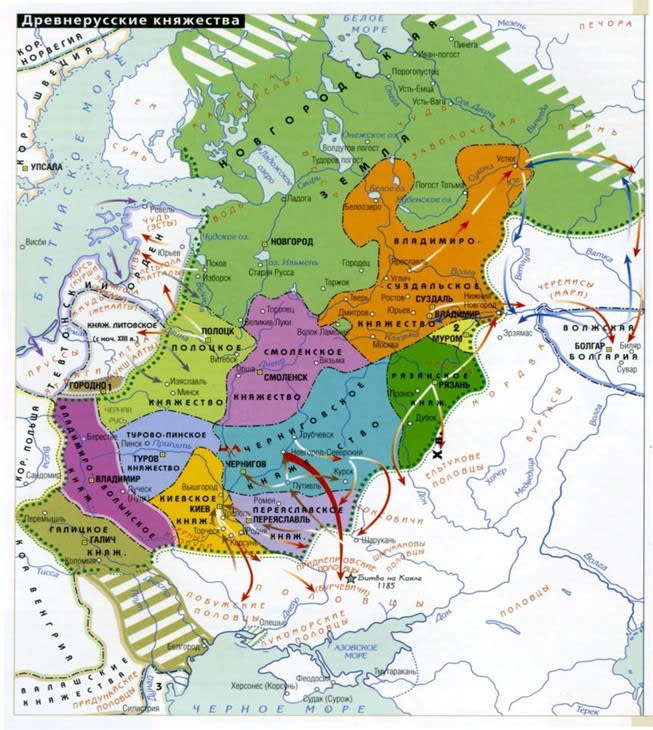
The Alans, in alliance with the Cumans, fought two battles against the Mongols, but neither side gained a decisive victory. The Mongols then resorted to trickery. They sent envoys to the Cumans with rich gifts, persuading them that the Alans were not their friends and that the Mongols and Cumans had more in common. The Cuman khans believed their words and abandoned the Alans, who were then immediately defeated by the Mongols. Right after this, the Mongols turned on the Cumans themselves, betraying them. The Cumans suffered one defeat after another, and to save themselves, one of their leaders, Khan Kotyan Sutoevich, decided to appeal to his son-in-law, Mstislav Mstislavich the Bold, Prince of Galicia, and to other Rus’ princes, asking for help against the Mongols and warning that once the Mongols were finished with the Cumans, they would attack Rus’. The Cuman khan supported his plea with rich gifts, and soon the southern Rus’ princes gathered in Kiev for a council. They decided to confront the Mongols not on their own land, but on Cuman territory, and set out on campaign.
After the Rus’-Cuman army united and marched out, Mongol envoys arrived with a peace proposal. They assured the princes that they had not attacked Rus’ lands and had no intention of doing so, claiming there was no reason for conflict. However, swayed by the Cumans’ urging, the Rus’ princes decided to execute all the envoys.
In response, the Mongols advanced, and the Rus’ forces, choosing to meet the enemy head-on, attacked in a disorganized fashion, defeating the Mongol vanguard and pursuing them. The main weakness of the Rus’ army was its disunity. Years of internal strife and mutual distrust among the princes meant that each commanded his own troops independently, without a unified chain of command. This disorganization played a decisive role in their defeat.
When the united army reached the Kalka River, the princes argued over tactics: some proposed setting up camp and waiting for the enemy, while others insisted on crossing the river and forcing a decisive battle. In the end, no unified decision was made, and each acted on his own.
On the morning of May 31, 1223, the Cumans and part of the Rus’ troops began crossing the river, while the rest stayed behind to build a camp. The forward detachments of the Rus’ and Cumans encountered the Mongols and attacked them, initially achieving success — the Mongols retreated. However, instead of waiting for reinforcements, the Cumans eagerly pursued the fleeing enemy, committing a fatal mistake. At that moment, Subutai and Jebe ordered the main Mongol forces to launch a decisive counterattack.
The Mongols, better organized and more disciplined, quickly regrouped and began coordinated assaults, causing panic among the Cumans and Rus’. The disunited allied ranks were soon crushed, and chaos erupted at the river. The Rus’-Cuman forces were routed and began a mass retreat. The Prince of Kiev remained with his troops in the camp, but soon his positions were surrounded by the Mongols. Although his men resisted, morale collapsed, and shortages of food and water began to take their toll.
Subutai, seeking to increase pressure on the besieged, brought forward a brodnik (local river pirate) named Ploskynya, who swore on the cross that if the Rus’ surrendered, the Mongols would spare them and release them for ransom. The Prince of Kiev and other Rus’ commanders believed the promise, and after three days of siege, the camp surrendered.
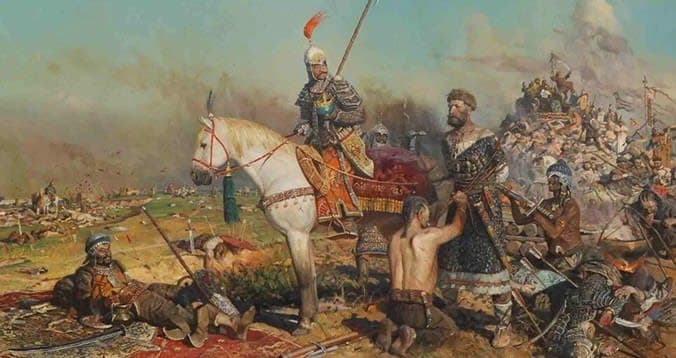
Among the Mongols, the life of an envoy was considered sacred, and the killing of an envoy demanded blood vengeance. As soon as the last defenders left their positions, the Mongols broke their promise and carried out a brutal massacre in revenge for their slain envoys. The princes were captured, tied up, and laid on the ground, while Mongol commanders held a feast on boards placed atop the bodies of the defeated.

After their victory at the Kalka River, the Mongols continued to pursue the fleeing Rus’ and Cumans as far as the Dnieper River. However, learning of approaching reinforcements from northeastern Rus’, the Mongol commanders decided to withdraw, avoiding the risk of facing a larger, fresher army. On their way home, the Mongols passed through the lands of Volga Bulgaria, where the locals set fierce ambushes against them. In these battles, Jebe was killed and many of his warriors were destroyed. Only about 4,000 Mongol horsemen and Subutai himself survived, and after suffering heavy losses, they hurried back to Mongolia.


