
The roots of the conflict stretched back to 499–494 BC, when the Greek city-states supported the revolt of their fellow Greeks in Ionia against Persian rule. King Darius’s desire for revenge for the burning of Sardis led to the first wave of invasion, which ended in the Greek triumph at Marathon in 490 BC. Yet the death of Darius only postponed the catastrophe for a time. His successor, Xerxes, assembled an army unprecedented for that age, made up of dozens of peoples — from Bactrians and Indians to Ethiopians and Libyans.
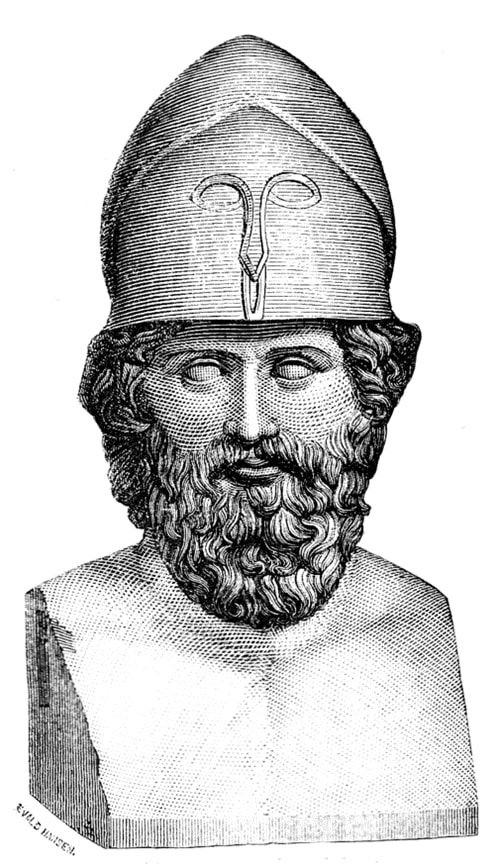
While Persia was gathering its strength, the star of Themistocles rose in Athens. Possessing rare foresight, he persuaded his fellow citizens to direct the revenues from the silver mines of Laurion toward the construction of a powerful fleet. That decision became the foundation of the future victory. In 480 BC, Xerxes invaded Greece. After the heroic death of Leonidas at Thermopylae and the burning of Athens, it seemed that the fate of Hellas had been sealed. However, the destruction of the Persian fleet at Salamis reversed the course of the war. Fearing the prospect of being cut off from Asia, Xerxes fled, leaving in Greece his finest commander, Mardonius, with the elite portion of the land army.

The winter of 480–479 BC passed in tense diplomatic maneuvering. Mardonius tried to split the Greek alliance by offering Athens a separate peace on incredibly favorable terms: the status of a free city and any lands it desired. But the Athenians showed firmness, declaring that “so long as the sun follows its course,” they would never come to terms with the invader. Moreover, they threatened Sparta that if it did not send help, Athens would find its own “means of salvation,” which in effect would have meant the end of Hellenic resistance. Under this pressure, Sparta sent an army under the command of the regent Pausanias.
The Greek army at Plataea was probably the largest in the history of the Hellenic alliances. According to Herodotus, it consisted of:
38,700 hoplites (of whom 10,000 were Spartans and perioikoi, and 8,000 were Athenians under the command of Aristides).
About 70,000 light-armed troops (including helots).
Total: around 110,000 men (modern historians often reduce this figure to 40,000–80,000 effective combatants).
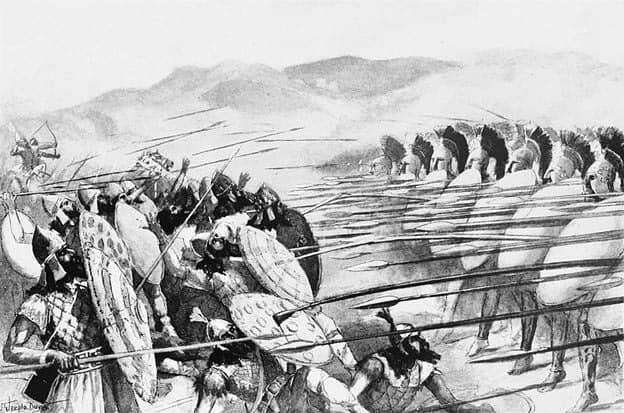
Opposing them stood the army of Mardonius. Herodotus speaks of 300,000 Persians and 50,000 Greek allies fighting for them (mainly Thebans). More realistic modern estimates range from 70,000 to 120,000. The key difference lay in tactics: the Greek phalanx was a solid wall of bronze hoplon shields, helmets, and long spears. The Persians, by contrast, though masters of ranged combat and cavalry raids, wore soft armor and carried wicker shields, which were helpless against the battering shock of the hoplites.


Mardonius chose Boeotia for the decisive battle, since its flat terrain suited his cavalry. He burned Athens a second time and entrenched himself on the northern bank of the Asopus River. The Greeks took up positions on the slopes of Mount Cithaeron. For eight days both sides waited, since the omens promised victory only to the side that remained on the defensive.
The Persian cavalry constantly harassed the Hellenes. In one of the clashes, Masistius, a high-ranking Persian commander, was killed, and his death temporarily demoralized Mardonius’s army. Soon, however, the Persians succeeded in cutting the Greek supply lines and, most critically, in blocking the Gargaphia spring, depriving the allies of water. Under these conditions, Pausanias decided on a night retreat toward Plataea.
The retreat turned into disorder. In the darkness, the center of the Greek army lost its bearings and moved toward the city of Plataea itself. On the right flank, the Spartan Amompharetus flatly refused to retreat, considering it a disgrace for Sparta. While Pausanias was trying to persuade the stubborn commander, morning came, and the Persians saw that the Greek camp was empty and the army divided into separate parts.

Mardonius, deciding that the Greeks were fleeing in panic, ordered an immediate attack. The Persian infantry, forming a wall of shields, began showering the Spartans with a hail of arrows. Pausanias, maintaining icy calm, continued making sacrifices to the gods, waiting for favorable signs while his men were dying under the barrage. At last, when the omen was received, the Spartan phalanx moved forward.
It was a crushing blow. Despite desperate bravery, the Persians, who tried to break the Greek spears with their bare hands, could not break through the ranks of the hoplites. The climax came when the Spartan Arimnestus struck down Mardonius himself with a stone or a spear. With the death of their commander, the Persian army turned into an uncontrollable crowd. At the same time, on the other flank, the Athenians, after a hard fight, defeated the Thebans — the Greek allies of Xerxes.
Only the detachment of Artabazus (about 40,000 men), foreseeing disaster, preserved its discipline and began a hasty retreat toward the Hellespont. The remnants of the Persian army took refuge in their fortified camp, which was soon stormed and turned into a scene of bloody slaughter. According to Herodotus, out of 300,000, only 3,000 survived (the numbers are certainly exaggerated, but the scale of the defeat was absolute).

The victory at Plataea forever freed mainland Greece from the threat of subjugation. Among the spoils, the Greeks seized immense riches. Pausanias, wishing to teach his warriors a lesson, ordered the captured cooks to prepare Mardonius’s luxurious feast, and beside it, a modest Spartan meal. Laughing, he said to his companions: “Men of Greece! I gathered you here to show you the folly of this commander, who, possessing such luxury, came to take away our crumbs.”
In honor of the victory, the famous Serpent Column was erected at Delphi, cast from the weapons of the fallen Persians. The names of the cities that had taken part in the battle were inscribed upon it, forever commemorating the unity of the Greeks in the face of a common enemy.


