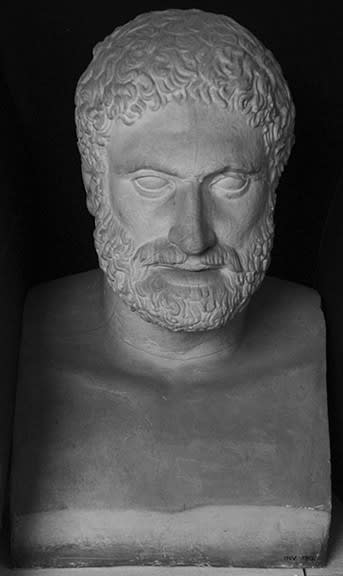
After the fall of the tyranny of Peisistratus in 527 BC and of his sons, Hipparchus and Hippias, a democracy instituted by Cleisthenes was established at Athens.

The aristocracy, supported by Sparta, tried to regain power, which led to Cleisthenes’ expulsion. In response a popular uprising drove out both the aristocrats and the Spartans, and democracy was restored. Fearing Spartan revenge, in 508–507 BC the Athenians sent an embassy to the Persian city of Sardis to the satrap Artaphernes to ask for help. The envoys agreed to the Persian demand for “earth and water,” a symbol of submission. Although they were condemned on their return, the Persians henceforth regarded the Athenians as rebellious subjects—one of the causes of the ensuing campaigns.
In 499 BC the Greek city-states in Asia Minor, under the rule of the Persian king Darius I, rose in revolt. Athens sent twenty ships to help them. The Athenians and the rebels managed to seize and burn Sardis, the satrapal capital. Darius swore to take revenge.
In 492 BC the Persian commander Mardonius subdued Thrace and Macedonia, securing an overland route into Greece. In 491 BC Darius sent envoys throughout Greece demanding “earth and water.” All cities except Athens and Sparta complied. The Athenians executed the envoys, and the Spartans threw them into a well—making war inevitable.
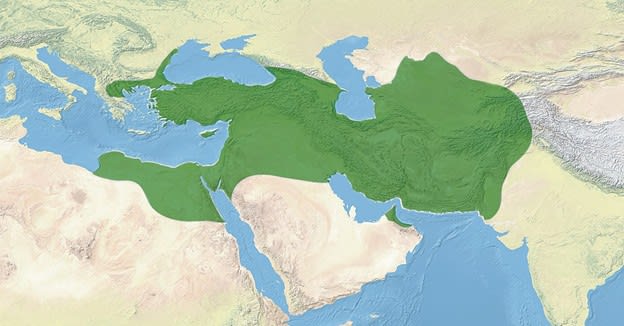
Darius removed Mardonius from command and appointed his nephew Artaphernes and the experienced general Datis to lead the expedition against Hellas. Their chief targets were Athens and Eretria, as well as the Cyclades. With them sailed the exiled Athenian tyrant Hippias. The Persians besieged and captured Eretria, sacked and burned the city, and enslaved its inhabitants.
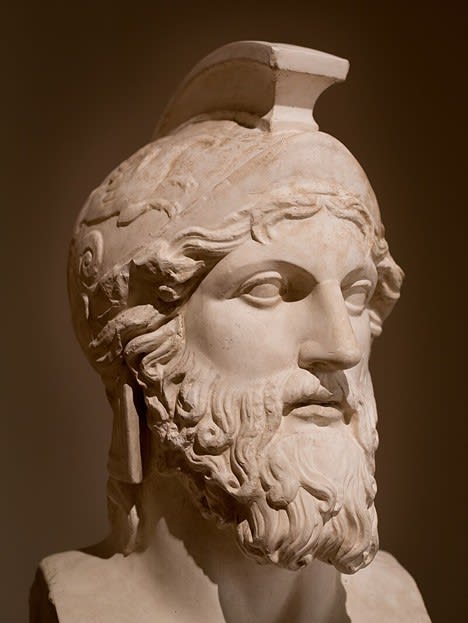
After taking Eretria, the Persian fleet sailed to Attica and, on Hippias’ advice, landed on the plain of Marathon—ideal ground for Persian cavalry. Learning of this, the Athenians, led by their ten strategoi, and a levy from Plataea, marched to Marathon. The generals were divided: some urged waiting, others an immediate battle. The deciding vote belonged to the polemarch Callimachus, whom the strategos Miltiades persuaded with a famous speech. Callimachus then resolved to fight, and the other generals yielded their command to Miltiades. The Greeks encamped on the slopes of Mount Pentelikon, blocking the only road to Athens. For several days both armies stood inactive.

According to ancient historians, the Greek force numbered 9–10,000 Athenians and 1,000 Plataeans; modern scholars broadly agree. The Persian army is now estimated at roughly 25,000 infantry and 1,000 cavalry, though ancient authors greatly exaggerated its size to as many as 600,000. The equipment of the Greek hoplites was far superior to that of most Persians. They fought in a tight phalanx, protected by large round shields, bronze helmets, and armor.

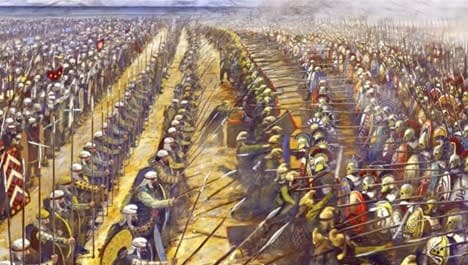
The battle took place on 12 September 490 BC. Miltiades chose to attack without waiting for the Spartans because the Persians had begun embarking their cavalry to sail around and strike undefended Athens from the sea. The Greeks deployed so that their battle line matched the Persians in width, thinning the center (only a few ranks deep) and strengthening the wings. The Greeks advanced, covering about 1.5 kilometers. Herodotus says they ran the whole distance, but modern scholars think the hoplites marched most of the way and only at the end, to minimize losses from archers, broke into a run. The Persians were caught off guard.
In the center, where picked Persian and Saka troops stood, the Persians broke the Greek line and began a pursuit. On the wings, however, where the Greeks were stronger, they won, then wheeled inward and struck the Persians who had pierced the center. Panic spread in the enemy ranks, and they fled in disorder to their ships. The Greeks captured seven Persian vessels. Greek losses were only 192 men, including the polemarch Callimachus, while the Persians lost 6,400.
After the defeat, the Persians sailed for Athens, hoping to seize the undefended city. Miltiades divined their plan. Leaving a detachment to guard the spoils, he forced the entire army, in full armor, to make a rapid march back to Athens. When the Persians reached Phaleron Bay, they found the Greek army already drawn up and, not daring to risk another battle, they sailed home. The next day the Spartans arrived, too late for the fight. They surveyed the battlefield, praised the Athenians, and returned home. The Athenians who had fallen were buried on the field of battle itself—the highest of honors.
The significance of the Battle of Marathon for the Greeks was immense. It was the first victory over the seemingly invincible Persian Empire, shattering the myth of its invulnerability and greatly boosting Hellenic morale. For the Persians, with their vast resources, it was only an annoying setback. Darius began preparations for a new, larger campaign, but an Egyptian revolt in 486 BC and then his death thwarted his plans. His son Xerxes continued the buildup.
In the ten years before the renewed invasion, one of the battle’s veterans, Themistocles, enacted reforms that created a powerful Athenian fleet, which would later play a decisive role in the Persian defeat.
The battle also inspired the legend of the marathon run. According to Plutarch, a messenger named Eucles ran about 40 kilometers to Athens to announce the victory, cried, “Rejoice, Athenians, we have won!” and died. The story is historically doubtful (Herodotus writes of the messenger Pheidippides, who ran to Sparta and back), but it gave its name to the modern sporting event.


