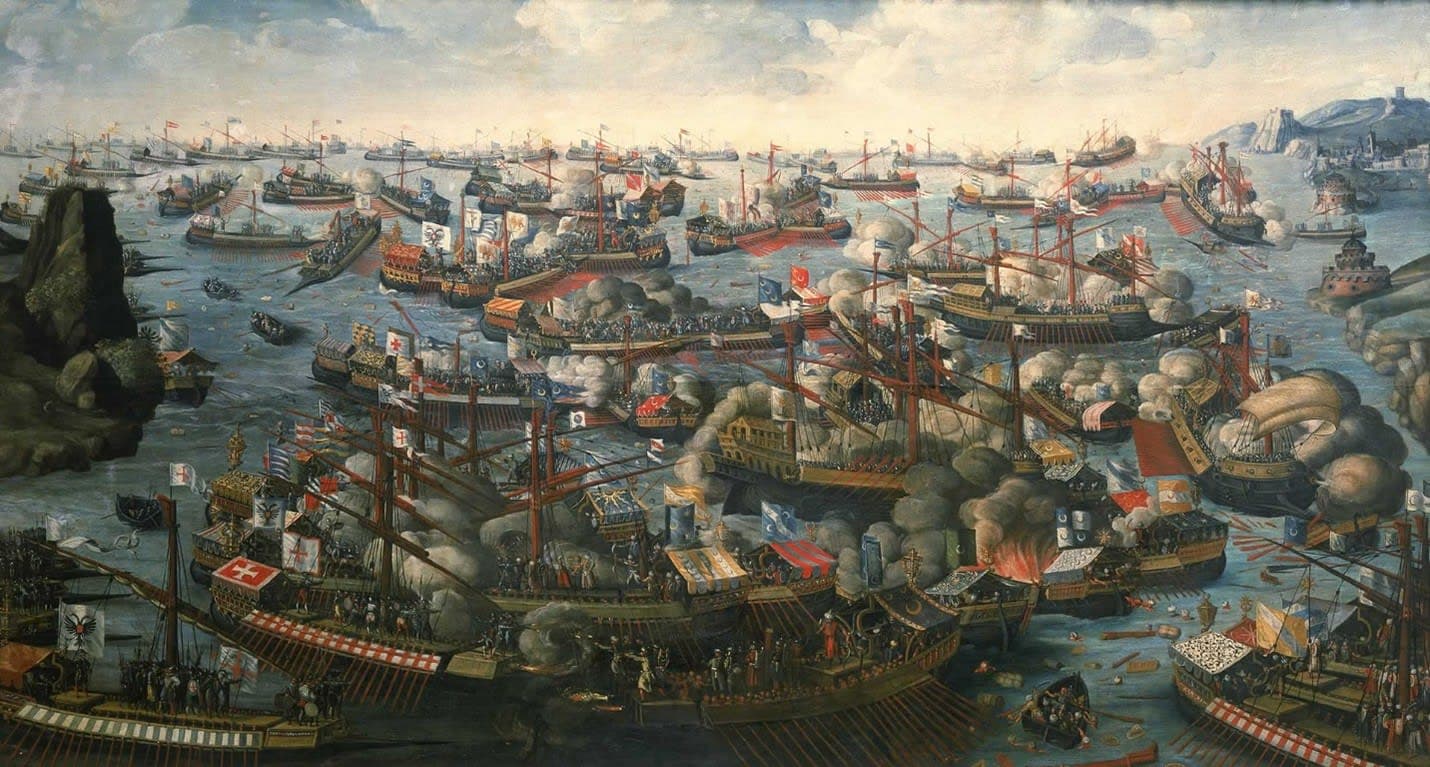
By the autumn of 1571, two of the most powerful fleets of the age faced one another in the Mediterranean. The Holy League an alliance of Spain, Venice, the Papal States, and several Italian principalities mustered about 300 ships, including 108 Venetian galleys. Of particular menace to the Ottomans were six massive galleasses heavily armed hybrid sailing and rowing ships equipped with powerful artillery. The total manpower reached 84,000, including 20,000 soldiers from Spain, Italy, and Germany. Command of the allied fleet was entrusted to the young Don John of Austria.


Opposing them was the formidable Ottoman fleet, composed of roughly 210 galleys and 66 galliots, manned by 88,000 sailors and soldiers. Command rested with Müezzinzade Ali Pasha, a man contemporaries considered brave but lacking naval genius. The Ottoman right wing was commanded by Mehmet Sirocco, and the left by the seasoned corsair Uluç Ali an Italian renegade who had embraced Islam. Many Ottoman officers and sailors were European converts or captives.
On the morning of October 7, 1571, the two fleets unexpectedly encountered each other near the entrance to the Gulf of Patras, about 60 kilometers from the town of Lepanto. Both sides hastily formed battle lines.
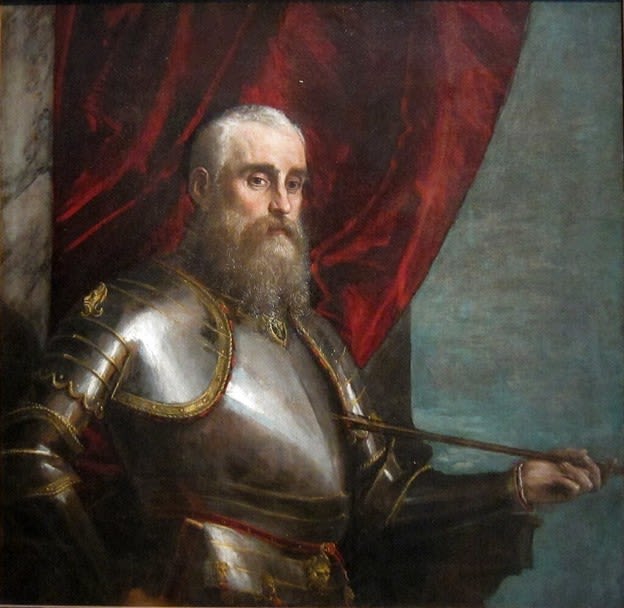
The Venetian admiral Agostino Barbarigo, commanding the Christian left wing, stayed away from the shore, wary of running aground. This allowed Mehmet Sirocco’s squadrons to slip along the coast and attack from the rear. Yet the Christians’ superiority in firepower and boarding troops proved decisive each Holy League galley carried at least 150 soldiers, compared to 30–40 on the Ottoman ships. After fierce hand-to-hand combat, the Turks were routed, though Barbarigo himself was killed.
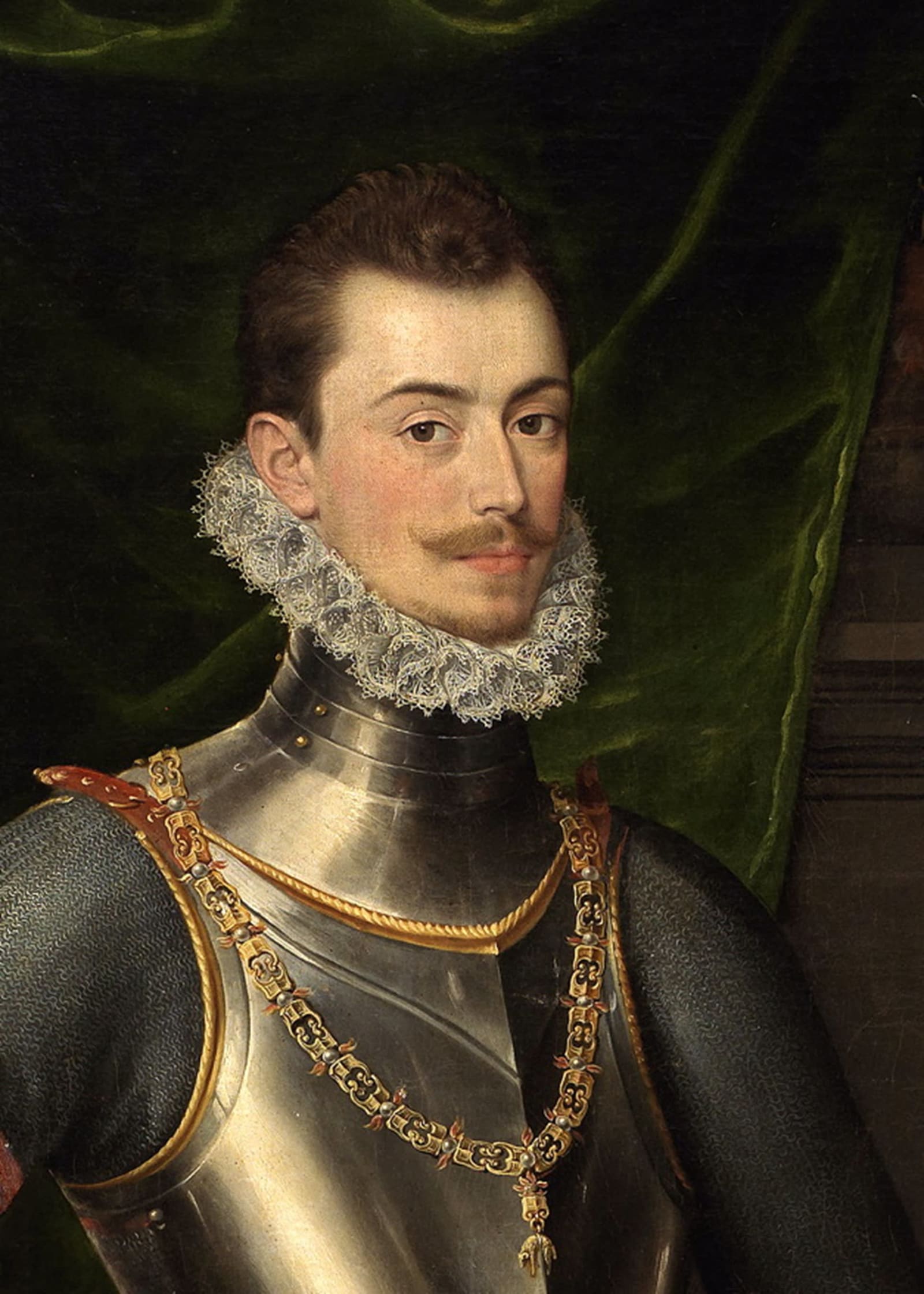
At the center raged the bloodiest fight. Don John’s flagship Real collided with Ali Pasha’s Sultana. A brutal firefight and boarding action followed; Ali Pasha was killed, and his severed head raised aloft on a pike, throwing the Ottoman ranks into panic. Their center began to collapse under the Christian assault.

On the Ottoman left, Uluç Ali executed a brilliant maneuver swinging his ships around to strike the weakened Christian center. For a time, the outcome hung in the balance. But reinforcements under the Marquis of Santa Cruz rushed to Don John’s aid, and the Holy League’s right wing, led by Giovanni Andrea Doria, wheeled around, threatening to encircle Uluç Ali. Seeing the danger, the corsair broke off the fight, managing to capture only the flagship of the Knights of Malta before withdrawing.
The Ottoman defeat was total. Out of about 280 vessels, 224 were lost, including 117 captured. Roughly 15,000 Ottoman sailors and soldiers were killed, and another 10,000 galley slaves perished. The victors freed 12,000 Christian captives. The Holy League lost only about 13 galleys and 7,500 men killed and wounded.
This became the largest naval battle of the 16th century and shattered the myth of Ottoman naval invincibility. Among the wounded was Miguel de Cervantes, who, despite three gunshot wounds two to the chest and one that crippled his left hand fought bravely aboard the galley Marquesa.
The aftermath of Lepanto was more symbolic than strategic. The victory halted Ottoman ambitions in Italy but did not alter the broader course of the war. Disunity among the allies prevented follow-up action, and the Ottoman navy was swiftly rebuilt. In 1573, Venice signed a separate peace, ceding Cyprus to the empire and paying indemnities. Thus, despite its brilliance, the Battle of Lepanto did not reverse the territorial losses inflicted by the Ottomans.



