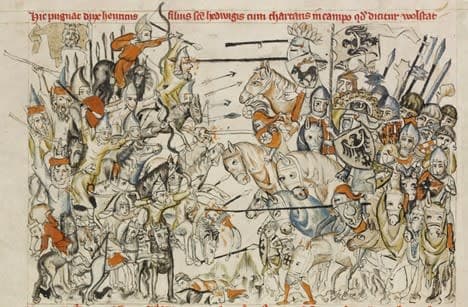
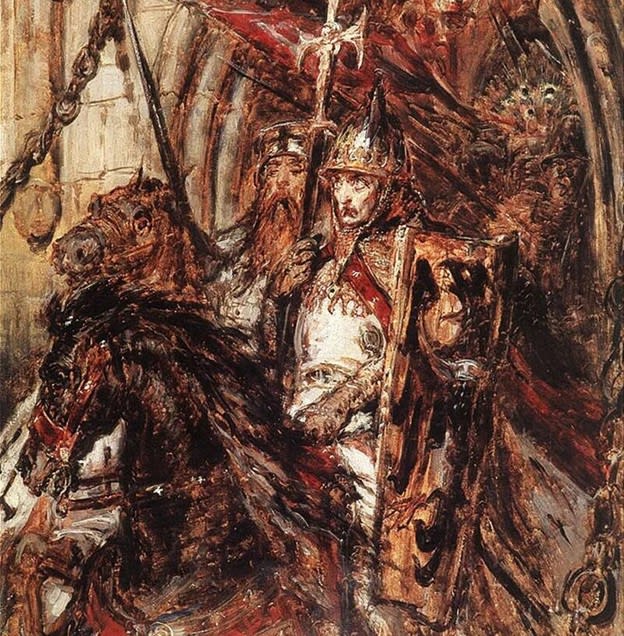
The Battle of Legnica, fought on the fields of Silesia in the spring of 1241, became one of the most dramatic episodes in the history of medieval Europe. It was a clash of two worlds, and it began with the tragic سقوط of the Principality of Volodymyr-Volynskyi in December 1240. It was then that the colossal Mongol army, driven by the iron will of Batu Khan and the genius of Subedei, split into several deadly streams. While the main forces rushed through the Carpathian passes toward Hungary, and the corps of Kadan burned the lands of Transylvania, the northern wing under the command of Baidar burst into Poland, bringing with it chaos and the previously unseen tactics of scorched earth.
January 1241 became a time of terror for the Polish lands: one after another, Lublin and Zawichost fell, and already on 13 February the levy of Lesser Poland was utterly defeated at the Battle of Tursko. This was followed by the fall of Sandomierz. The finest warriors of Kraków and Sandomierz, under the command of the voivodes Włodzimierz and Pakosław, as well as the castellan Jakub Ratiborowicz, desperately tried to block the road to the capital, but the Mongol whirlwind crushed them in the battles of Chmielnik on 18 March and Torczek on 19 March. The road to Kraków lay open, and on 22 March 1241 the ancient city was taken and consigned to flames. Without slowing their pace, Baidar moved through Racibórz and Opole toward Wrocław, where the decisive battle was approaching.
At that time, Duke Henry II the Pious, realizing the scale of the threat, frantically gathered under his banners all who were capable of bearing arms. Wrocław became the gathering point for a diverse but determined army: there were levies from Greater Poland and Lesser Poland under the command of Sulisław, Upper Silesian contingents of Duke Mieszko, and Henry’s own household guard. Yet this was not a purely Polish force — at Legnica, a truly international contingent assembled. The son of the Margrave of Moravia, Boleslav, brought a detachment of foreign mercenaries, among whom French Templar knights and the grim warriors of the Teutonic Order stood out. Even miners from Złota Góra joined them, ready to defend their land. Henry looked to the horizon with hope, awaiting King Wenceslaus I of Bohemia, who had promised to arrive with powerful reinforcements, but time was running out inexorably. Making the bold decision not to shut himself up behind the walls of Wrocław, but instead to give the enemy a field battle, the duke led his forces toward Legnica, while the Czech army was only one day’s march from the site of the coming slaughter.

On the morning of 9 April 1241, the battle began with a long-range duel in which the Mongols employed one of their famous stratagems — the use of a smoke screen. A dense haze covered the battlefield, depriving the European archers of visibility and sowing confusion in their ranks. Under cover of this fog, Mongol mounted archers began enveloping the flanks of the allied army. The knights, faithful to their code of honor but blinded by smoke and fury, launched an attack, charging almost blindly into the Mongol vanguard. The light cavalry of the steppe warriors began to retreat, and for a moment the Europeans believed victory was close — but this was only another trap.
When the wedge of knights had pushed deep into the enemy ranks, the main forces entered the battle — the heavily armed Mongol cavalry. The blow came from the right flank and was accompanied by a psychological attack: amid the thunder of battle, cries rang out in clear Polish: “Run! Run!” This treacherous tactic finally broke the defenders’ spirit. The ranks of the Poles, Templars, and Teutonic Knights became mixed together, discipline collapsed, and an organized withdrawal instantly turned into a panicked rout. In this bloody confusion, Duke Henry the Pious himself also fell. His death was shrouded in darkness: later, his decapitated body was identified only by a rare anatomical feature — six toes on his left foot. The head of the brave duke was mounted on a spear and displayed before the gates of Legnica as a symbol of the absolute triumph of the nomads. To report their success to their khans, the Mongols filled nine huge sacks with the severed ears of the fallen enemy.

The consequences of the battle were catastrophic, yet strangely short-lived. For two weeks the Mongols remained encamped in Silesia, reaching the borders of the Holy Roman Empire near Meissen, but a sudden order received by Baidar from Batu forced them to change their plans. The horde turned south in order to join the main forces in Hungary. This change of direction fell upon defenseless Moravia, which in April and May 1241 was subjected to total devastation. On its way to Hungary, Baidar’s corps wiped dozens of towns from the face of the earth, including Opava, Benešov, and Přerov, leaving behind nothing but ashes.
Despite the military defeat, the death of Henry II acquired a martyr-like and heroic character in popular memory. His mother, Duchess Hedwig of Silesia, and his widow, Anna of Bohemia, perpetuated the memory of the fallen by founding a parish and entrusting it to the Benedictines. Every year, beginning with that fateful 9 April 1241, a service has been held in the churches of Legnica in memory of the defenders of Europe. And although later nineteenth-century mystifications, preserved in the Dvůr Králové Manuscript, tried to attribute a victory over the Mongols near Olomouc to the Czech warrior Jaroslav of Sternberg, the historical reality remains harsh: Legnica was the high-water mark of Mongol power in the West, after which the nomads left these lands forever.


