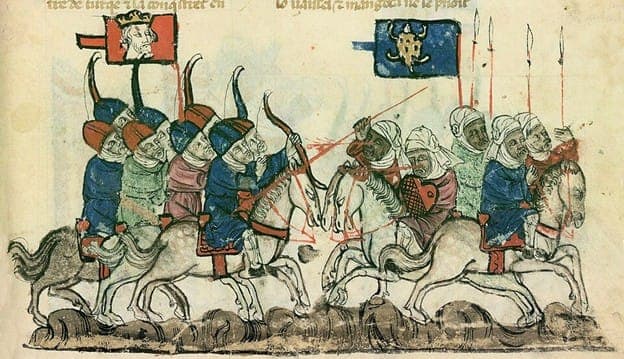
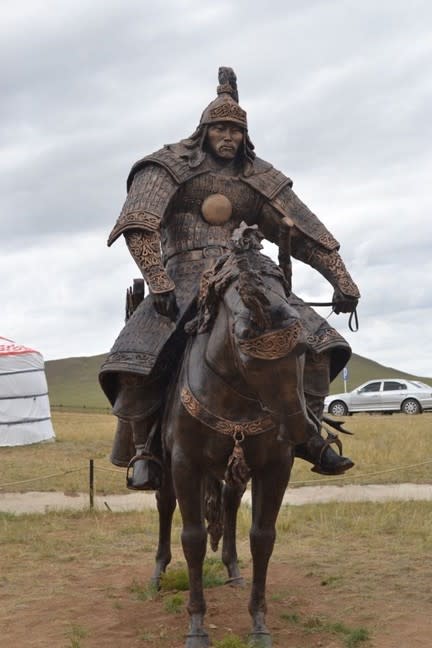
The first flashes of the Mongol threat illuminated the borders of the Seljuk domains as early as 1231–1232. At that time, advance detachments under the command of Chormaqan carried out daring raids, reaching the walls of Sivas and Malatya. The great sultan Ala ad-Din Kayqubad I, who possessed exceptional political instinct, managed for a time to avert disaster. In 1236, after the Mongols demanded regular tribute, he concluded a peace treaty with the great khan Ögedei, securing a brief respite for his country.

However, after the death of Kayqubad and the enthronement of his son, Kaykhusraw II, the situation sharply deteriorated. The sultanate was torn apart by internal contradictions, culminating in the bloody revolt of Baba Ishak. The state, weakened and exhausted by internal unrest, became easy prey. At the end of 1242, the Mongol commander Baiju Noyan approached Erzurum. After a two-month siege, the city fell, which became a signal for Kaykhusraw to take immediate action.

Realizing the scale of the threat, the sultan announced an urgent mobilization. Not only Seljuk troops but also numerous allies and vassals gathered under the Seljuk banners. Detachments from the ruler of Aleppo and the emperor of Trebizond joined the army. Among the defenders of Anatolia were the Abkhaz prince Dardin Shervashidze and the Armenian prince Van. A special place was occupied by the “Frankish” mercenaries — two thousand battle-hardened fighters under the leadership of John of Cyprus and Boniface of Genoa, as well as a thousand-man detachment from the Empire of Nicaea.
The sources of the time paint fantastic pictures of the size of Kaykhusraw’s forces: Georgian chronicles speak of 400,000 men, while William of Rubruck mentions 200,000 horsemen. Historians, however, tend to trust the chronicler Ibn Bibi, who estimated the sultan’s forces at 70,000 warriors. Against them, Baiju Noyan fielded an army half as large, but far more disciplined and experienced, numbering around 30,000–40,000 men.
At the end of June 1243, the armies met in a narrow gorge near Mount Köse Dağ, meaning “Bald Mountain,” located 60 kilometers northeast of Sivas. The Seljuks occupied tactically advantageous positions, relying on their numerical superiority and the protection of the mountain slopes. Baiju Noyan, however, had no intention of launching a frontal assault.
The Mongol commander used a classic steppe stratagem — the feigned retreat. Elite Mongol units, reinforced by detachments of Georgian and Armenian princes allied with them, pretended to flee, luring the Seljuks out of their fortified positions. When the vanguard of the sultan’s army was drawn into pursuit, a sudden counterattack followed. Mongol archers literally showered the enemy with a hail of arrows. As Grigor of Akner reports, it was precisely the Armenian and Georgian troops fighting on the Mongol side that delivered an especially devastating blow to the Seljuks’ right wing.
By the evening of 26 June 1243, the Seljuks had completely lost the battle. Kaykhusraw II, seeing the collapse of his hopes and fearing betrayal by his own emirs, was among the first to flee the battlefield. After the sultan, his entire army turned to flight in panic. The Mongols captured the camp, full of luxurious tents and provisions, while the main trophy was Kaykhusraw’s personal banner bearing the image of a lion.

The defeat was total. Baiju Noyan developed his success, passing through the cities of Anatolia with fire and sword. Kayseri was wiped from the face of the earth for refusing to surrender, Erzincan was captured by cunning, while Sivas and Turike opened their gates voluntarily. Kaykhusraw, hiding in Konya, desperately tried to find allies among the Latin emperor Baldwin II and the Nicaean ruler John III, but was refused.
The sultan had to accept a humiliating peace. His vizier convinced the Mongols that the full conquest of the country would require too much effort, and the parties agreed on a colossal annual tribute: 12 million silver coins, or hyperpyra, 500 pieces of expensive silk, 500 camels, and 5,000 sheep. Kaykhusraw recognized himself as a vassal of Batu Khan, the ruler of the Ulus of Jochi.
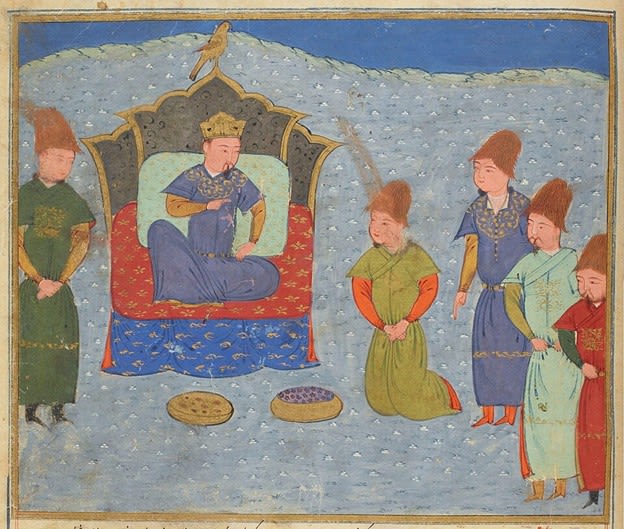
The Battle of Köse Dağ set in motion the irreversible process of the state’s collapse. Agriculture fell into decline, fields remained uncultivated, and a terrible famine descended upon Anatolia. Crowds of refugees moved along the roads, seeking safety on the western frontiers. The authority of the central government fell so low that soon an impostor appeared, claiming to be the son of the late Kayqubad I. His rebellion was suppressed, and he himself was hanged in Alaiye, but this did not stop the degradation of power.
After the death of Kaykhusraw II in 1245, his young sons ascended the throne, becoming puppets in the hands of court factions and Mongol governors. Applying the policy of “divide and rule,” the Mongols finally strangled Seljuk independence, which by the end of the thirteenth century led to the complete disappearance of the Sultanate of Konya from the political map of the world.


