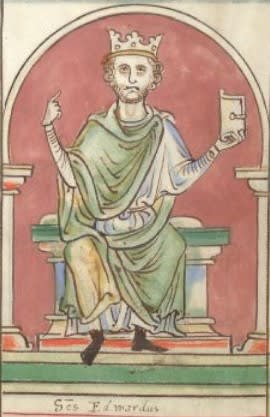
By the mid-11th century, England had become the focus of geopolitical intrigue. The Anglo-Saxon king Edward the Confessor had spent many years in exile in Normandy and never had children.

According to one version, in gratitude for refuge he promised the English throne to his kinsman on his mother’s side, Duke William II of Normandy. However, when Edward died in 1066, the English council of nobles the Witenagemot elected as the new king Harold Godwinson, the brother of the late king’s wife.
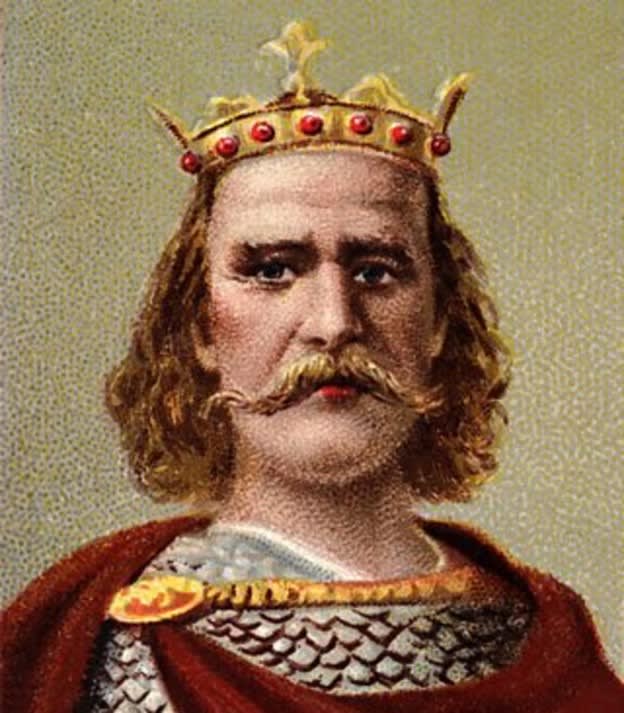
William immediately contested the decision. His claims rested on two key arguments. First, he maintained that Harold himself, during a visit to Normandy in 1064, had voluntarily sworn upon holy relics to recognize William as heir. Second, William invoked the late King Edward’s alleged promise.

The situation was further complicated by a third contender: the Norwegian king Harald Hardrada, supported by Harold’s own brother, Tostig. Harold crushed the Norwegians at the Battle of Stamford Bridge on 25 September, but immediately after this victory he received news of William’s landing on England’s southern coast.

The armies that met at Hastings were roughly equal in number but radically different in tactics and armament.
William’s force numbered about 7,000 men, of whom 2,000–2,500 were highly effective knightly cavalry. The rest were infantry, archers, and mercenaries from across northern France. The Normans had rich combat experience and excelled in tactics based on coordinated action by cavalry, infantry, and archers.

Harold’s army also numbered around 7,000, but consisted mostly of infantry. Its core was the royal housecarls, armed with heavy battle-axes, and thegns, along with a levy of peasants armed with whatever they had. The Anglo-Saxons had no cavalry arm and used few archers. Their tactics centered on defense the famed “shield wall.”
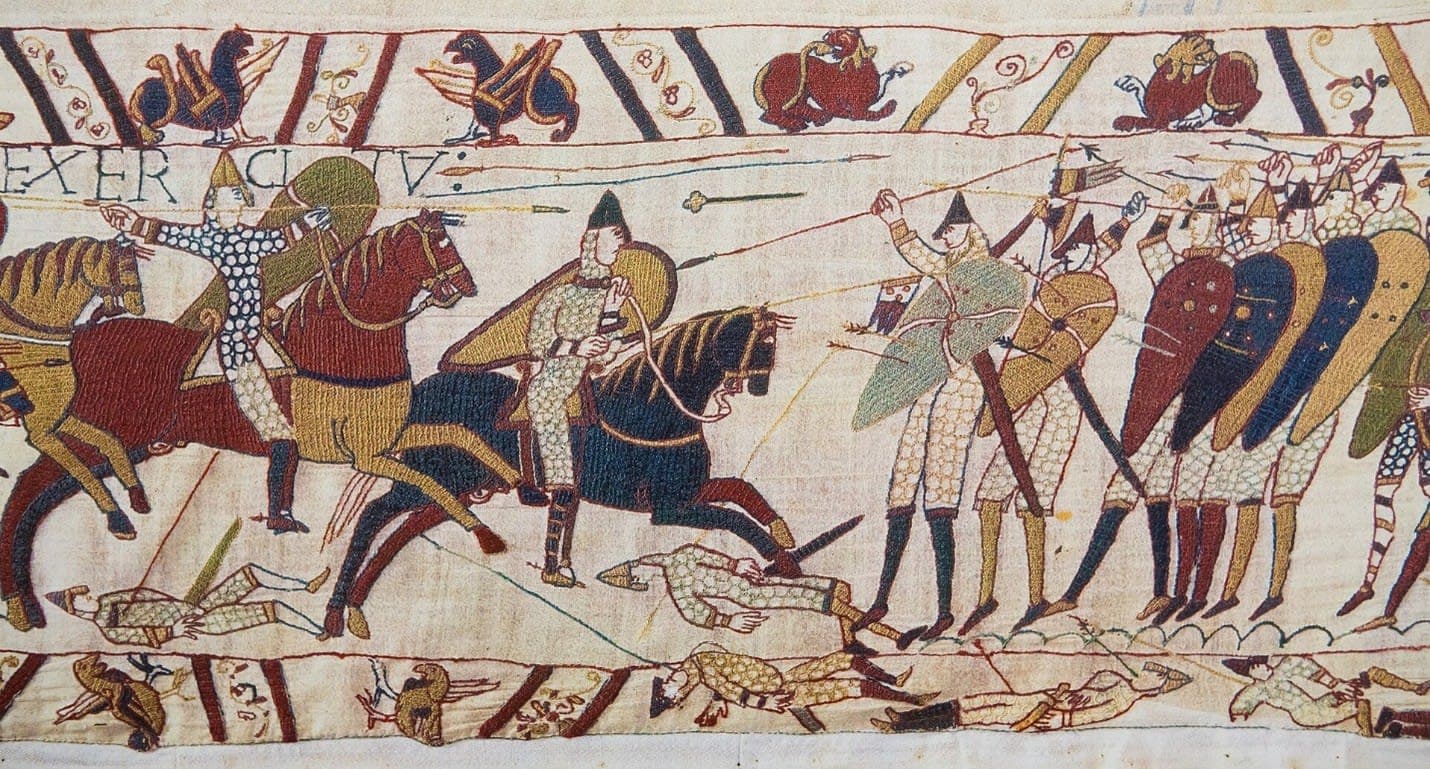
On 14 October 1066, on Battle Hill near Hastings, William’s and Harold’s forces came to blows. The Anglo-Saxons took up a strong position atop the hill, protected by a shield wall. William divided his army into three parts, placing archers and infantry in front and the knightly cavalry behind them.

The battle opened with a volley by Norman archers against the English positions, which proved largely ineffective against the shield wall. Norman infantry then advanced, followed by the knightly cavalry. Repeated cavalry charges broke against the impenetrable wall of English shields, while the housecarls’ heavy axes could fell both rider and horse with a single blow.
The turning point was the Normans’ “feigned retreat.” During one assault they pretended to flee. The Anglo-Saxons, taking the bait, abandoned their impregnable positions and gave chase. It was a fatal mistake. Wheeling about, the Norman knights surrounded and annihilated English detachments on the open ground. Realizing the tactic’s effectiveness, William repeated it again and again, gradually thinning the enemy ranks.
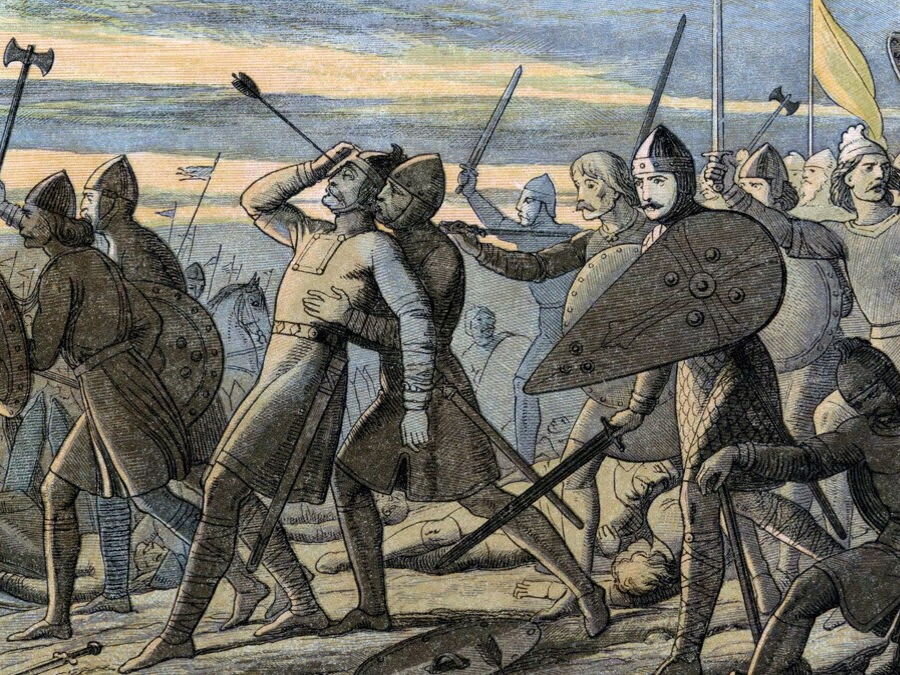
The battle’s outcome was sealed by King Harold’s death. By one account he was struck in the eye by a stray arrow; by another, he fell beneath the blows of four Norman knights who broke through to him. The deaths of the king and his brothers Gyrth and Leofwine led to the final collapse of the Anglo-Saxon army.
The Battle of Hastings was one of those rare engagements that completely altered a nation’s fate. With Harold’s death, England lacked a leader capable of organizing resistance. After brief opposition, on 25 December 1066 William was crowned king of England in Westminster Abbey.
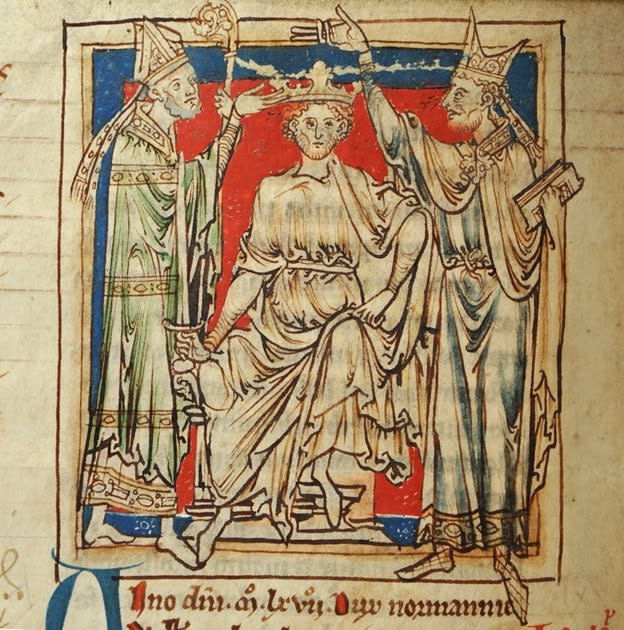
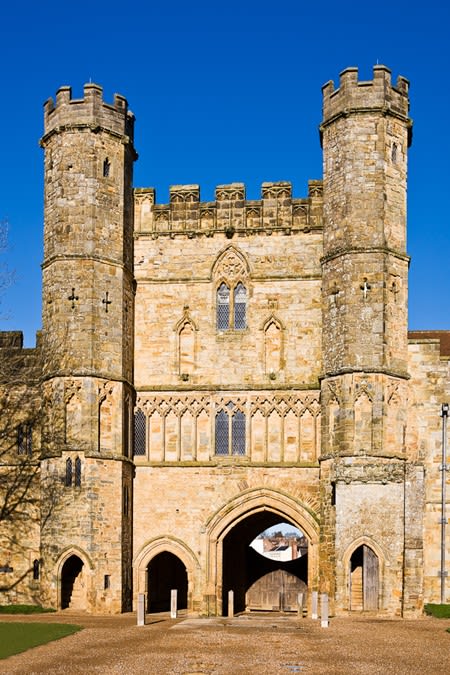
The Norman Conquest destroyed Anglo-Saxon statehood, replacing it with a centralized feudal monarchy under strong Norman royal authority. Lands were confiscated from the Saxon nobility and granted to Norman knights. This event gave a powerful impetus to England’s development, transforming it into one of Europe’s strongest powers. On the battlefield site rose Battle Abbey, whose high altar stood precisely where King Harold fell a symbol of the new era.


