In the mid-15th century, the Sufi order Safaviyya, based in Ardabil and led by Shaykh Junayd (1447–1460), transformed into a militarized religious-political movement. Seeking to attract Turcoman tribes, Junayd gravitated toward Shiism and even falsified his genealogy to claim descent from ʿAlī. His followers, who wore red turbans, became known as the Qizilbash. They believed in the divine nature of their shaykhs and rejected orthodox Sunni dogma.


Meanwhile, the Ottoman Empire which had itself emerged from a heterodox current began pursuing centralization and suppressing heterodox beliefs. This fueled discontent among Turcomans who did not wish to abandon the nomadic way of life or pay taxes. Humiliated and marginalized, they embraced Safavid ideas promising them a dignified place in a new state. The flow of supporters of Ismail I from Ottoman lands grew so large that Sultan Bayezid II ordered tighter border controls and even the execution of those attempting to join the Qizilbash.
After Ismail I seized Tabriz in 1501 and proclaimed himself shah, founding the Safavid state, relations with the Ottomans grew extremely tense. Though Bayezid II initially avoided open conflict, his son Prince Selim, governor of Trebizond, took a more aggressive line, raiding Safavid territory and courting the military class displeased with the sultan’s peace policy.


Social tensions in Anatolia were heightened by natural disasters and corruption. In 1511 the province of Tekke saw a major Qizilbash uprising under Shahkulu Tekeli. Though suppressed, it revealed the scale of the threat and weakened Selim’s rivals in the struggle for the throne. In the end Selim, backed by the Janissaries, prevailed and became sultan.
Upon taking power, Selim I launched harsh repressions against the Qizilbash, killing up to 40,000 people in Anatolia. In 1514 he mustered a vast army and marched against the Safavids, trying to provoke Ismail into a quick battle to avoid supply problems. Ismail, though he wished to avoid a pitched fight, yielded to Ottoman agents’ provocations claiming Selim’s ranks contained many Safavid sympathizers ready to defect. He therefore led out his forces to meet Selim on the Chaldiran Plain.
Safavid commanders, familiar with Ottoman tactics, urged an immediate attack before the enemy could deploy and bring up artillery. Ismail, considering such tactics unworthy, chose to wait for the Ottomans to form their battle line, hoping to display his army’s courage.

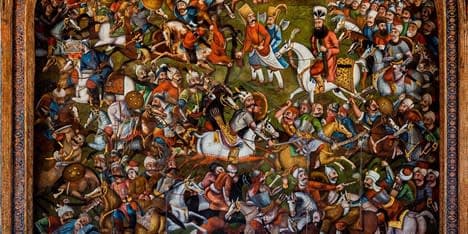
The battle, fought on 23 August 1514, showcased the Ottomans’ colossal technological superiority. Their roughly 100,000-man army fielded about 300 guns, linked by chains to form an impenetrable front, and a corps of Janissaries armed with firearms. The Safavid force—20,000 to 40,000 by various estimates—consisted solely of mounted archers and had neither artillery nor handheld firearms.

The fighting opened with a Safavid cavalry charge which, despite some success on the flanks, stalled under Ottoman artillery fire. Ottoman guns and arquebuses dealt a crushing blow to the Safavid horsemen. Ismail personally led several attacks—many Ottoman commanders were killed—and showed remarkable bravery, but he was forced to withdraw, losing numerous officers of his own. That evening, wounded, he fled with the remnants of his army.

After the victory, Selim ordered all captured Qizilbash executed; Ismail’s wife also fell into his hands and he made her a concubine. Yet despite the triumph, Selim could not destroy the Safavid state outright. He occupied and plundered Tabriz, seizing the shah’s personal belongings, but was compelled to return to Anatolia due to Janissary discontent—perhaps even sympathy for Ismail. In the aftermath Selim annexed Dulkadir, which had refused Ottoman aid, while Ismail, having learned from defeat, began equipping his army with firearms, making the Safavid state less vulnerable in the future.


