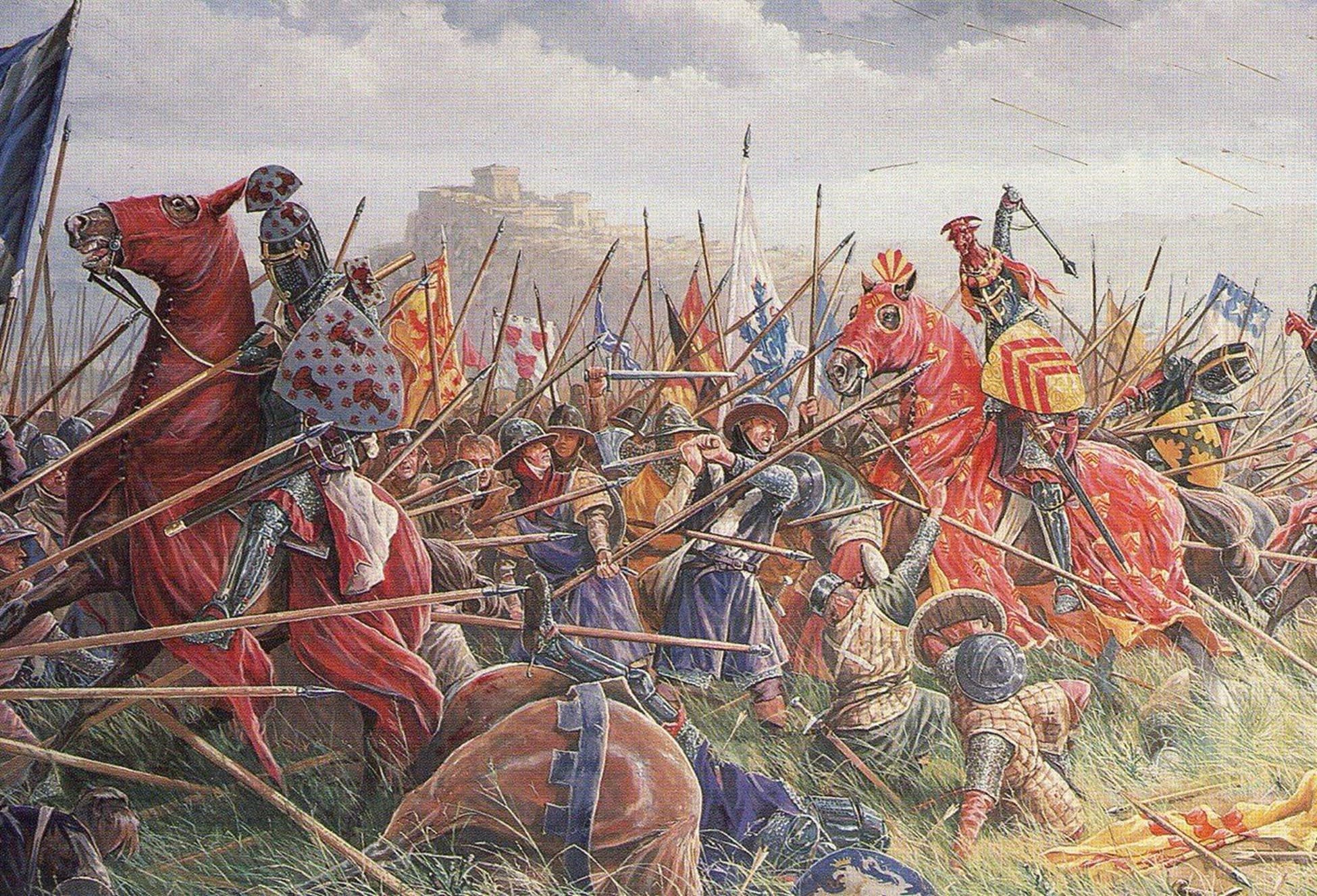

The history of the great Battle of Bannockburn is not merely the chronicle of a single engagement, but an epic canvas depicting the rebirth of the Scottish nation, the culmination of many years of struggle, and the triumph of tactical genius over numerical superiority. The beginning of this grand drama was laid as early as May 10, 1307, when Robert I Bruce won a significant victory over Aymer de Valence at the Battle of Loudoun Hill. That success became the spark that kindled the flame of national liberation: between 1307 and 1312, the supporters of the rebel king methodically drove the English occupiers from the northern and western parts of the country. By 1313, the initiative had passed completely to the Scots; the celebrated commanders James Douglas and Thomas Randolph captured Roxburgh and Edinburgh by storm, forcing the English garrisons to flee for their lives.

In the spring of 1314, the strategic knot tightened around Stirling Castle — the key fortress controlling the routes into western Scotland. Besieged by Bruce’s forces, the English governor Philip Mowbray entered into a risky agreement: he promised to surrender the fortress if a relieving army did not arrive by June 24. This ultimatum forced King Edward II of England to act without delay. Despite a sharp conflict with the powerful Lords Ordainers, who refused to support the campaign with their own forces, Edward managed to gather a colossal army for that age, numbering around 25,000 men. This army crossed the border unopposed, advancing confidently toward Stirling with the aim of finally crushing Scottish resistance.

On June 23, 1314, the English vanguard reached the banks of the Bannock Burn, only a few kilometers from the besieged castle. Robert Bruce, commanding forces estimated at 5,000 to 10,000 warriors, chose an ideal defensive position on the wooded heights flanking the road. The core of his army consisted of experienced infantry spearmen divided into three massive divisions, commanded by his battle-tested companions: Edward Bruce, James Douglas, and Thomas Randolph. Despite the overwhelming English advantage in heavy cavalry and their famous archers, the Scottish army was united as one — under the king’s banners stood knights, ordinary townsmen, and merchants alike, bound together by a common purpose and iron discipline.
The first day of the battle opened with an episode that would forever enter the legends of chivalry. A group of English horsemen under the command of Henry de Beaumont and Robert Clifford crossed the stream, attempting to cut the Scots off from the forest. Riding at the head of this detachment was Henry de Bohun, who suddenly noticed ahead of him a lone rider on a gray horse. On the warrior’s head, above his steel helmet, gleamed a crown — it was Robert Bruce himself. Yielding to the temptation to end the war at a stroke and win immortal glory, Bohun, clad in heavy armor, lowered his visor and spurred his horse straight at the king. Bruce, armed only with a light axe, did not flinch. When the knight was a moment away from striking, the king swiftly turned his horse out of the line of attack and, rising in the stirrups, brought his axe down upon Bohun’s helmet. The blow was of such incredible force that the knight’s helmet and skull were split in two, while the shaft of Bruce’s axe shattered. Inspired by this feat, the Scots charged and threw back the English vanguard, while the Earl of Gloucester barely escaped death after being unhorsed. Later, when his commanders reproached him for such recklessness, Bruce merely remarked with irony that he regretted only the loss of his favorite axe.

While clashes thundered on the main front, the detachment of Clifford and Beaumont attempted to outflank the Scots in order to break through to Stirling. But Bruce correctly anticipated the maneuver and sent Thomas Randolph’s schiltron to intercept them. The English knights, deprived of infantry and archery support, proved helpless against the forest of pikes formed by the Scottish spearmen. Randolph’s dense and mobile formation withstood every cavalry assault, forcing the English to retreat in humiliation. The first day ended in a complete moral and tactical victory for Scotland.
The decisive events unfolded at dawn on the second day. Edward II made a fatal strategic error: he ordered his army to redeploy onto a narrow, marshy plain between the Bannock Burn and the River Forth. When the sun rose, the English king saw with astonishment that the Scots were not fleeing, but emerging from the forest in three orderly battle lines. Before the fighting began, Bruce’s warriors knelt in prayer. Edward, mistaking this for a plea for mercy, was quickly corrected by his advisers: the Scots were asking mercy from God, not from him. The impatient Earl of Gloucester, eager to redeem the failures of the previous day, was the first to charge the Scottish schiltron and found his death among hundreds of other knights.
The cramped terrain and marshy ground became the grave of the English army. Edward’s massive host had no room to maneuver; the archers could not fire over the heads of their own men, while the cavalry became stuck in mud and among the bodies of the fallen. At this critical moment, Robert Bruce committed his reserve to battle, reinforced by fierce Gaelic warriors from the Isles. The huge English army turned into a disorganized crowd, methodically driven back toward the river. Panic began. Edward II, barely escaping capture, fled to Dunbar under the protection of his bodyguards, and this became the signal for total collapse. The remnants of the English army were pursued for 145 kilometers by the Scots and local inhabitants; only the Welsh spearmen managed to preserve some semblance of order. On that day, more than 10,000 Englishmen fell on the banks of the Bannock Burn, making it one of the most devastating defeats in the history of the English crown.
The significance of the Battle of Bannockburn cannot be overstated. Although military operations formally continued for more than another decade, the scales had definitively tipped in favor of Scottish independence. Robert Bruce passed to a determined counteroffensive, carrying the war onto the territory of England and Ireland. The defeat caused a profound political crisis in London, leading to the overthrow of Edward II in 1327. The result was the Treaty of Northampton of 1328, which officially recognized Scotland as a sovereign state. Bannockburn became an eternal symbol of the unity and unbreakable will of the Scottish nation for independence.


