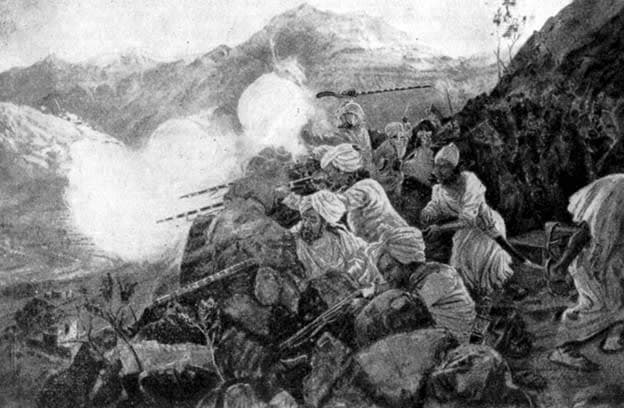

After the Russian Empire conquered the Fergana Valley, peace settled over the region for a time. The local population was surprised to find that the new rulers did not interfere with their traditional way of life, suppress mosques, or obstruct trade. Yet this period of calm did not erase underlying tensions. As the initial fear of the conquerors faded, the people naturally inclined to rebellion became increasingly receptive to anti-Russian propaganda spread by Muslim clerics.
The uprising’s organizer was Muhammad Ali ishan, known as Dukchi ishan. Though illiterate and from a poor family, after completing the pilgrimage to Mecca he became the successor of a prominent Sufi and gained immense influence among the populace. His followers spread rumors that he was destined to be his people’s liberator.
Despite reports of an impending revolt, Russian authorities paid them little heed such rumors were common and often false. Meanwhile, Dukchi ishan and his associates devised a plan: at night, rebels would attack the barracks in Margilan, Osh, and Andijan, seize the towns, and restore the Kokand Khanate. Dukchi ishan promised his followers “magic wands” that would shield them from bullets, claiming Russian rifles would fire water and that their soldiers would fall by his hand. He also assured them of aid from the Turkish sultan, the Afghan emir, and the British.
Around 7 p.m. on 17 May 1898, about 900 supporters gathered at the ishan’s estate to rise in arms. Dukchi ishan, clad in green robes, led his mounted and foot soldiers toward Andijan. More joined along the way, and two Russian merchants they encountered were brutally murdered.
The rebels relied on surprise. They knew the camp of the 4th Company of the Turkestan Line Battalion had only 52 men and no fortifications. Sneaking up, they killed the sentry and began beating and stabbing the sleeping soldiers. One noncommissioned officer escaped to alert the nearby 5th Company, while a young lieutenant, woken in the infirmary, opened fire with his revolver.
When the 5th Company arrived and fired volleys from their rifles, the illusion shattered the guns did not shoot water. In 15 minutes, the fight was over. The rebels, trusting in magic, were crushed. Eighteen insurgents were killed; the Russians lost twenty-two men with nineteen severely wounded.
The next day Dukchi ishan and his closest allies were arrested. Of 777 detained, 417 stood trial; 19, including the ishan, were sentenced to death. On 13 July 1898, Muhammad Ali ishan and five aides were hanged in Andijan. Many others were pardoned or sent to penal labor.


Interrogation revealed that Dukchi ishan was driven by personal resentment toward Russian rule and ambition to restore the Kokand Khanate under himself as ruler. His key supporters were elderly men who had once served the khan motivated by nostalgia for the old order.
The suppression of the revolt was followed by punitive measures. By decree of Emperor Nicholas II, residents of several villages involved in the attack were forcibly resettled, and their lands were transferred to Russian colonists.
Though swiftly and harshly crushed, the Andijan Uprising was a turning point. It showed that despite apparent peace, strong anti-colonial sentiment endured in the region. Heated debates arose in St. Petersburg and Tashkent over the causes. Many officials, including General Mikhail Terentiev, linked it to the weakening of military control, neglect of the Muslim clergy’s growing influence, and the Russian administration’s ignorance of local languages and customs.
The Andijan revolt was the last major armed conflict in Turkestan until the 1916 uprising.



