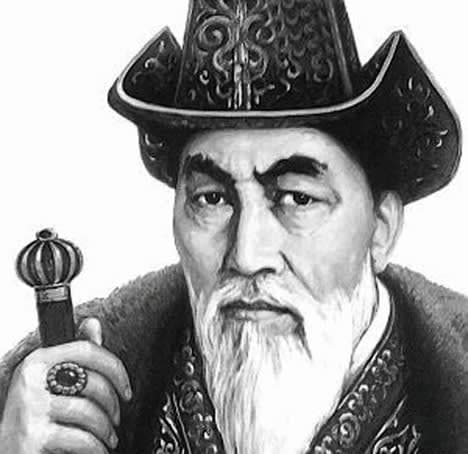
Tauke Khan was the son of Khan Salkam Zhangir and became one of the most significant figures in the history of the Kazakh Khanate. Even at a young age at 15 he proved himself a talented diplomat when his father sent him as an envoy to Kashgaria to strengthen peace with Moghulistan. Even before assuming the title of supreme ruler, he became khan of the Junior Juz. Thanks to his determination and organizational skill, he managed to suppress internecine strife and unite most Kazakh clans. After his father’s tragic death, he was proclaimed senior khan of the Junior and Middle Juzes, receiving the honorary titles Bahadur and Gazi.
The foreign-policy situation for the Kazakh Khanate in the late 17th and early 18th centuries was extremely difficult. From the west, Volga Kalmyks and Yaik (Ural) Cossacks raided Kazakh lands; from the north came Siberian Cossacks and Bashkirs; and from the south, the Bukharans and Khivans. But the greatest threat came from the east from the Dzungar Khanate.

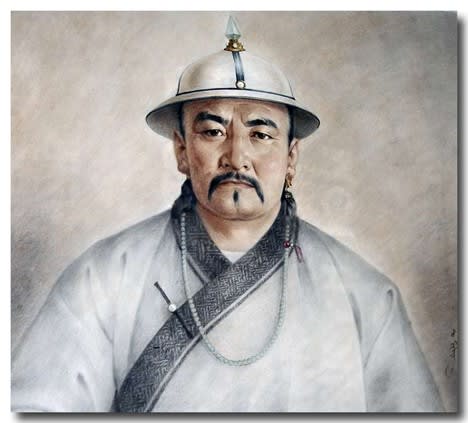
With the rise to power of the Dzungar ruler Galdan Boshogtu, raids on Kazakh lands intensified. Tauke Khan was unable to stop the Dzungars, and between 1681 and 1685 Galdan launched seven military campaigns, attempting to force the Kazakhs and Kyrgyz to adopt Lamaism. In one battle in 1683, Tauke Khan’s son was captured by the Dzungars. He returned home only 14 years later, thanks to the new Dzungar ruler Tsevan Rabdan (Tsewang Rabtan).

Despite the Dzungar threat, Tauke Khan also dealt with problems on other borders. After the suppression of the Bulavin Rebellion, he routed Cossacks who had taken part in it and were raiding Kazakh encampments.
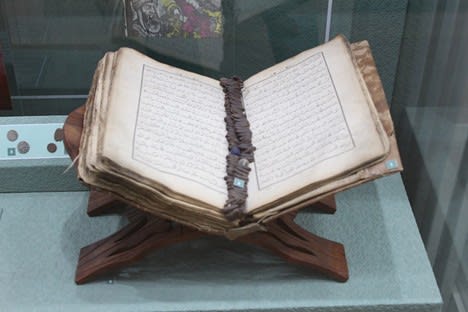
In 1687, Tauke Khan attempted to establish relations with the Russian Tsardom. He sent an embassy to Tobolsk with gifts and a letter to the tsar, seeking to restore trade and political ties. Negotiations, however, were complicated by mutual raids. The Russians accused the Kazakhs of attacking trade caravans, while Tauke Khan, in turn, accused the Russian authorities of unlawfully capturing his murzas, such as Keldei.
In 1692, a Russian embassy that arrived in Turkestan was taken prisoner, as Tauke Khan demanded Keldei’s release in exchange. He condemned raids by his subjects but continued to use prisoners as leverage. The intensity of conflicts with Russia decreased only during wars with the Dzungar Khanate, though the raids never ceased entirely.
Tauke Khan also supported the Bashkir uprising against Russia. In 1708, he sent detachments of Kazakhs and Karakalpaks to the Bashkirs. In September, the voivode of Ufa reported to Kazan that the Karakalpak khan Tauke had sent envoys to the Bashkirs to learn what was happening between them and the Russians. However, due to the escalation of the Kazakh–Dzungar war, Tauke Khan was forced to cease supporting the uprising in 1710.
The reign of Tauke Khan was a period of profound internal reforms. By the 1690s, his influence extended not only over the nomadic regions but also over the trading towns along the Syr Darya.
Tauke Khan is regarded as the founder of Kazakh customary law. His principal achievement was the systematization of the activities of the biys (judges and elders). He made the sessions of the Council of Biys permanent, turning it into the most important state institution. This limited the power of the hereditary elite, the tore, and strengthened the authority of the government among the common people.
These changes were legally enshrined in a kind of constitution — “Zhety Zhargy” (The Seven Statutes). This code defined the powers of the khan, the biys, and the batyrs (warriors), as well as their mutual rights and responsibilities. The Maslikhat, the supreme legislative body, still met once a year, but now included only the most influential representatives of the communities.
Tauke Khan also completed the juz organization of Kazakh society, dividing all lands into three juzes, each headed by a biy. The power of the biys rested solely on their personal authority, and the Council of Biys limited the khan’s authority.
After Tauke Khan’s death, each of the three juzes became a separate khanate, which led to further fragmentation.



