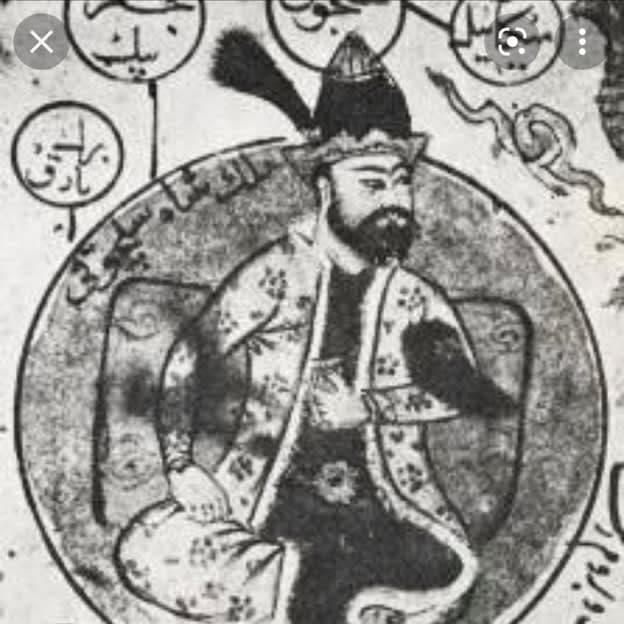

Malik-Shah was born in 1096 into the family of the powerful sultan Kilij Arslan I. As the eldest surviving heir at the moment of crisis, he found himself drawn into the whirlpool of high politics from an early age. In 1107, when the boy was only eleven, his father took him along on an ambitious campaign against Mosul. The city’s inhabitants, frightened by rumors of the cruelty of Emir Jawali, themselves called upon the Seljuks for help. On 22 March 1107, Kilij Arslan solemnly entered Mosul, bringing with him Malik-Shah, one of his wives, Ayshe Khatun, and his younger son Tughril Arslan. It was here that Malik-Shah was officially proclaimed malik, or ruler, while the experienced emir Bozmish became his tutor and guardian.

However, the triumph was short-lived. A powerful coalition led by Jawali, supported by the emirs of Mardin and Aleppo, rose against Kilij Arslan. The decisive battle took place on 13 July 1107 on the banks of the Khabur River. Because of the betrayal of the Anatolian emirs, who were frightened by the enemy’s numbers, the sultan was left almost without an army and drowned in the river during the retreat. After this catastrophe, Jawali occupied Mosul. The young Malik-Shah was captured and sent into honorable but harsh captivity in Isfahan, to the Great Seljuk sultan Muhammad Tapar. While his brother Tughril Arslan, with the help of his mother, took power in Melitene, Malik-Shah spent several years in Persia, remaining a hostage in a larger political game.

At the end of the summer of 1109, according to Ibn al-Qalanisi, or slightly later, Malik-Shah managed to leave Isfahan. There are versions that describe this either as a daring escape or as a release granted by Muhammad Tapar himself, who had realized that without a legitimate heir in Anatolia, a dangerous power vacuum had emerged — one that the Byzantine emperor Alexios Komnenos was successfully exploiting.
Returning to Anatolia in 1110, Malik-Shah first decided to secure his throne. He did not rely on family ties and imprisoned his brothers — Mesud and Arab. Having established himself in Konya, he directed his ambitions against Byzantium. The sultan sent a 24,000-strong army under the command of the general Hasan Qutlugh, whom Anna Komnene called Asan Katukh. However, the campaign ended in failure. Enraged, Malik-Shah ordered Hasan’s execution for “recklessness,” which became a fatal mistake: this decision planted the seeds of discontent among the military commanders, who would later defect to the side of his brother Mesud.
After an unsuccessful attempt to conquer Cilician Armenia in 1110, the sultan continued the war against Alexios Komnenos. Despite a series of clashes, he failed to achieve a decisive advantage and in 1112 was forced to conclude peace. But the lull was temporary. Already in 1113 and 1114, his 50,000-strong army was devastating coastal cities: Nicaea, Prusa, and Pergamon.

In 1116, the conflict with Byzantium reached its climax. While Emperor Alexios was in the Balkans, Malik-Shah tried to recover the lost territories. The Byzantines launched a counteroffensive, advancing toward Konya. The Seljuks used a scorched-earth strategy, burning fields and depriving the enemy of provisions. Near the city of Akşehir, the emperor found himself in an extremely difficult position: his troops were exhausted, while the Seljuks were preparing for a decisive strike. Malik-Shah’s victory seemed inevitable.
Yet at that very moment, the sultan suddenly proposed peace. The reason was not military failure, but terrible news from the rear: his brother Mesud had escaped from prison and, with the support of the Danishmendid Malik Ghazi, had raised a rebellion. Realizing that power was slipping from his hands, Malik-Shah signed a peace treaty in the camp near Afyonkarahisar. He ceded Dorylaeum to Byzantium, receiving gold and recognition in return.
Alexios Komnenos, showing unexpected nobility, warned the sultan about the conspiracy and offered him an escort, but Malik-Shah, blinded by pride, refused. “Such is the arrogant nature of barbarians,” Anna Komnene would later write sarcastically about this moment.
On the road to Konya, the betrayal became clear. The sultan’s reconnaissance detachments, upon encountering Mesud, immediately went over to his side. In a skirmish near Akşehir, Ghazi, the son of the executed Hasan Qutlugh, nearly killed the sultan with a spear thrust. The wounded Malik-Shah took refuge in Tyragion, but the inhabitants of the town, incited by Emir Pukhai, handed him over to his brother.
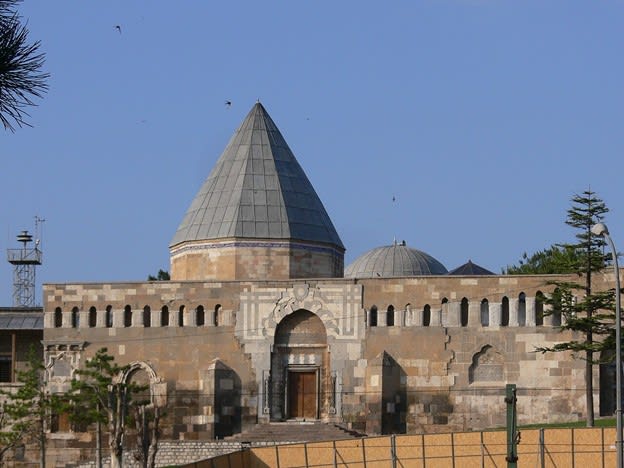
In 1116, the final drama unfolded in Konya. Mesud ordered his brother to be blinded. Since the proper instruments were not at hand, the executioners used a massive golden candlestick — a gift from the Byzantine emperor. The blinded Malik-Shah was thrown into prison. Some time later, he carelessly admitted to his wet nurse that his sight had partly returned and that he had begun to see light. Upon learning this, Mesud, fearing a renewed struggle for power, ordered his brother to be killed.
In 1117 or 1118, Malik-Shah was executed according to the ancient steppe custom that forbade the shedding of blood of members of the ruling dynasty: he was strangled with a bowstring. He was only 21 years old. Malik-Shah ruled for six turbulent years and, according to contemporaries, combined youthful arrogance with inexperience, which ultimately led to the collapse of his ambitious undertakings. Most likely, he found his final resting place in the tomb near the famous Alaeddin Mosque in Konya.


