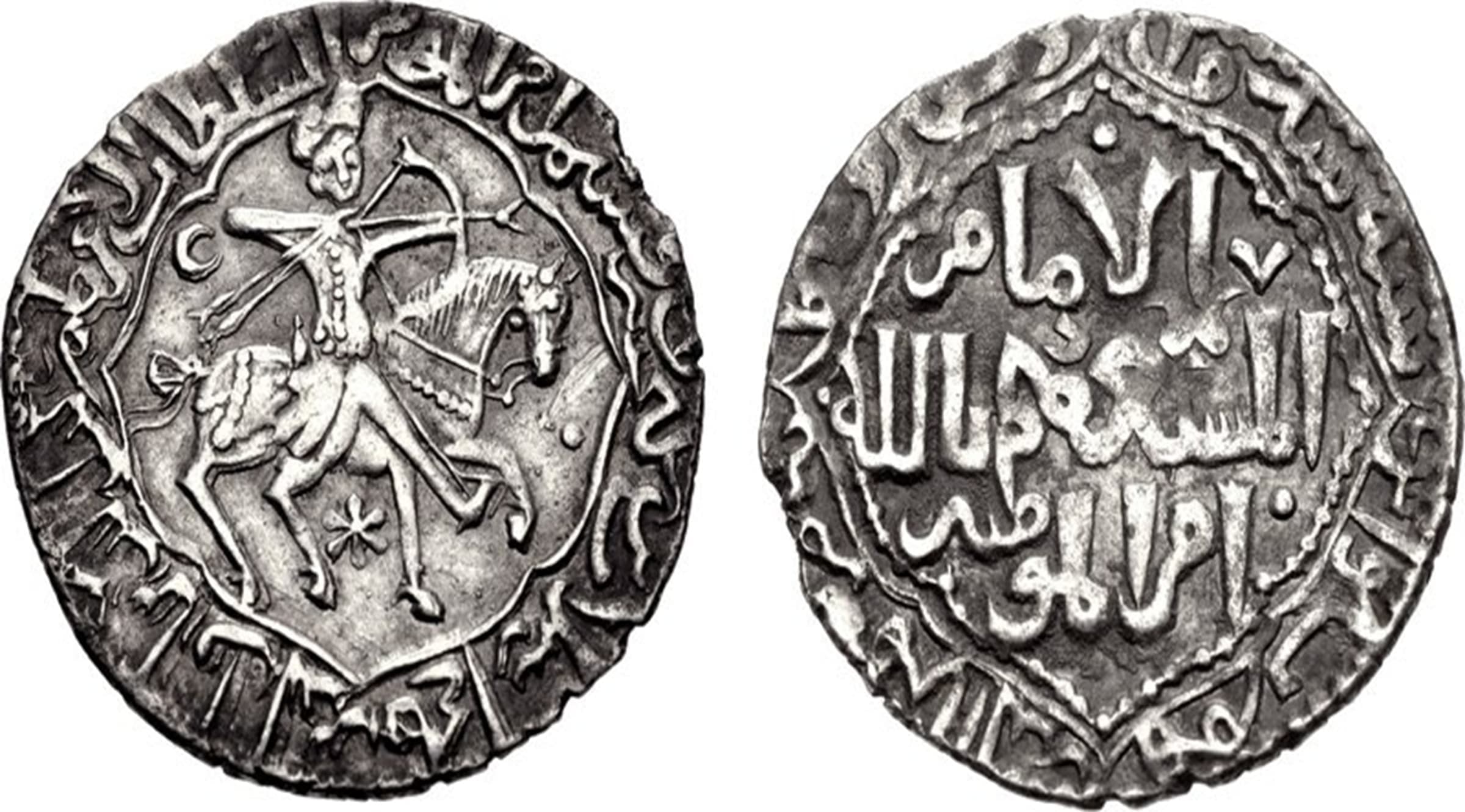

Kilij Arslan IV, who became the second son of Sultan Ghiyath al-Din Kaykhusraw II, was born at a turning point for the state — sometime between 1237 and 1240. His origin reflected the complex ethnic mosaic of that period: the prince’s mother was a Greek woman, whom the sources call the daughter of a magistrate of Konya, although some historians, such as Claude Cahen, suggested that she may have had Turkic roots.
Kilij Arslan’s childhood passed in an atmosphere of growing chaos. His father, Kaykhusraw II, went down in history as a ruler who exchanged affairs of state for a life of indulgence. While the sultan gave himself over to amusements, the country was shaken by the Babai revolt of 1239–1241, and in 1243 the fateful Battle of Köse Dağ took place. When the Mongols of Baiju Noyan burst into Sivas and Kayseri, the young prince and his family barely managed to escape, forever remembering the terror inspired by the seemingly invincible power of the nomads.


After the death of Kaykhusraw II in 1246, the political elite of the sultanate, led by the vizier Shams ad-Din Isfahani and the legendary Jalal ad-Din Karatay, proclaimed the eldest brother, Kaykaus II, as sultan. However, the Mongols, who had become the real masters of Anatolia, demanded the personal presence of the sultan at the kurultai in Mongolia. Kaykaus, fearing for his life or unwilling to leave Konya, made a strategic mistake: he sent his younger brother Kilij Arslan in his place.
In distant Karakorum, at the election of the Great Khan Güyük in 1246–1248, Kilij Arslan showed himself to be a capable diplomat. Güyük, displeased by Kaykaus’s absence, judged the matter simply: the decree of rule and the honorific paiza went to the one who had come to pay homage. Thus Kilij Arslan was officially appointed sultan, effectively deposing his brother by the will of the khan.

At the beginning of 1249, Kilij Arslan IV returned to Anatolia, supported by a Mongol detachment of two thousand men. He established himself in Sivas, declaring his rights over vast lands stretching from Erzincan to Kayseri. This led to an immediate confrontation. On 14 June 1249, near Sultanhanı, close to Aksaray, the armies of the brothers met in a fratricidal battle. Kilij Arslan was defeated and taken prisoner.
However, the wisdom of the regent Jalal ad-Din Karatay prevented the country from falling apart. He persuaded the brothers to take a step that later historians considered “unprecedented and absurd” — the joint rule of three brothers, including the youngest, Kayqubad. From 1249 to 1254, a strange balance was established in the sultanate: the names of all three brothers were struck on coins and mentioned in prayers.
Peace collapsed in 1254. After Karatay’s death, Kaykaus returned to dissipation, while Kilij Arslan once again raised the banner of rebellion in Kayseri. And once again there was defeat — in the Battle of Ahmedhisarı in 1255 — followed by captivity and imprisonment in the harsh castle of Uluborlu.
Kilij Arslan’s fate took another sharp turn in 1256, when Baiju Noyan again invaded Anatolia and defeated Kaykaus II. The elder brother fled to the Empire of Nicaea, while the Mongols triumphantly brought Kilij Arslan out of the prison of Uluborlu and, in March 1257, once again placed him on the throne in Konya.
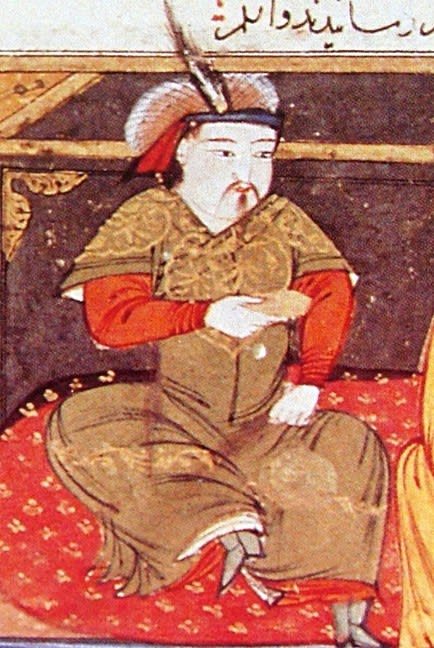
However, Kaykaus returned with Greek mercenaries, and a period of exhausting confrontation began. In 1258, by decree of Hülegü Khan, the sultanate was officially divided: Kaykaus received the lands west of the Kızılırmak River, while Kilij Arslan received the lands to the east. It was at this time that Mu‘in ad-Din Suleiman Pervane entered the historical stage — an ambitious vizier who decided to turn Kilij Arslan into his puppet.
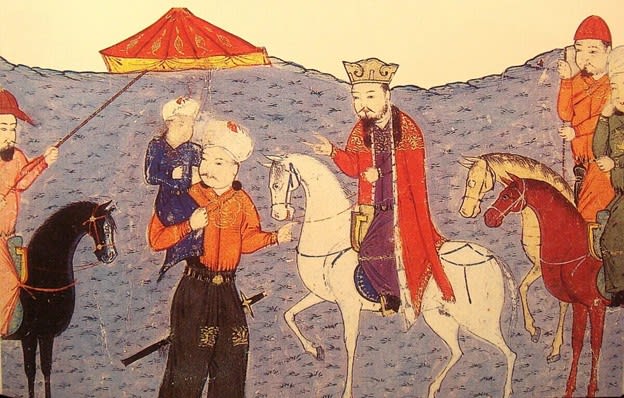
Pervane skillfully wove intrigues, accusing Kaykaus of secret ties with the Mamluk sultan Baybars. By 1262, Kaykaus had been definitively expelled, and Kilij Arslan became nominally the sole ruler. But real power now belonged not to him, but to his vizier and the Mongol governors.
One of the few bright moments of his reign was the recovery of Sinop. The city had been captured by the Empire of Trebizond in 1259. In 1265, Pervane, having received permission from Khan Abaqa, besieged and captured this key port. Kilij Arslan, remaining in Konya, was forced to endure yet another humiliation: he transferred the recovered Sinop into Pervane’s personal possession, understanding that resistance was useless.
The end of the sultan’s life was as tragic as his reign. Mu‘in ad-Din Pervane, seeing that the sultan was beginning to chafe under his control and perhaps was truly seeking an alliance with the Mamluks, decided to act preemptively. In 1266, the sultan was summoned to Aksaray. After a lavish feast, Kilij Arslan IV died. The official cause was declared to be drunkenness, but in the corridors of power everyone knew: the sultan had been murdered. Pervane sent his horse and weapons to Tabriz, to Khan Abaqa, as proof of the “traitor’s death,” and placed the young Kaykhusraw III on the throne.
Kilij Arslan IV remained in the memory of his contemporaries as a contradictory man. Although he was a “lover of drink and merriment,” he was also drawn to spirituality: his close relations with the great mystic Jalal ad-Din Rumi, or Mevlana, are well known. As a politician, however, he failed. His unwillingness or inability to support the Turkmen tribes in their struggle against the Mongol yoke led to economic decline and the ruin of the landholding sipahis.
Modern research on the remains from the mausoleum in Konya, including DNA analysis, has confirmed his identity and the details of his burial, restoring for us the image of a ruler who, despite the title “Lion of the Sword” — Kilij Arslan — was never able to break free from the cage built for him by the Mongols and by his own vizier.


